Visual Perception Skills Easy Worksheets for Ages 3-4
4 filtered results
-
From - To
Enhance your child's visual perception skills with ourEasy Worksheets designed specifically for ages 3-4! These engaging activities encourage young learners to develop essential visual literacy by focusing on identifying, matching, and sorting objects. Our worksheets are crafted to nurture critical thinking and problem-solving abilities through fun and interactive exercises that capture your child's interest. Perfect for parents and teachers alike, our resources foster early learning in a playful manner and support cognitive development. Dive into a world of discovery today and watch your child's confidence soar as they master valuable visual perception skills! Ideal for home or classroom use!
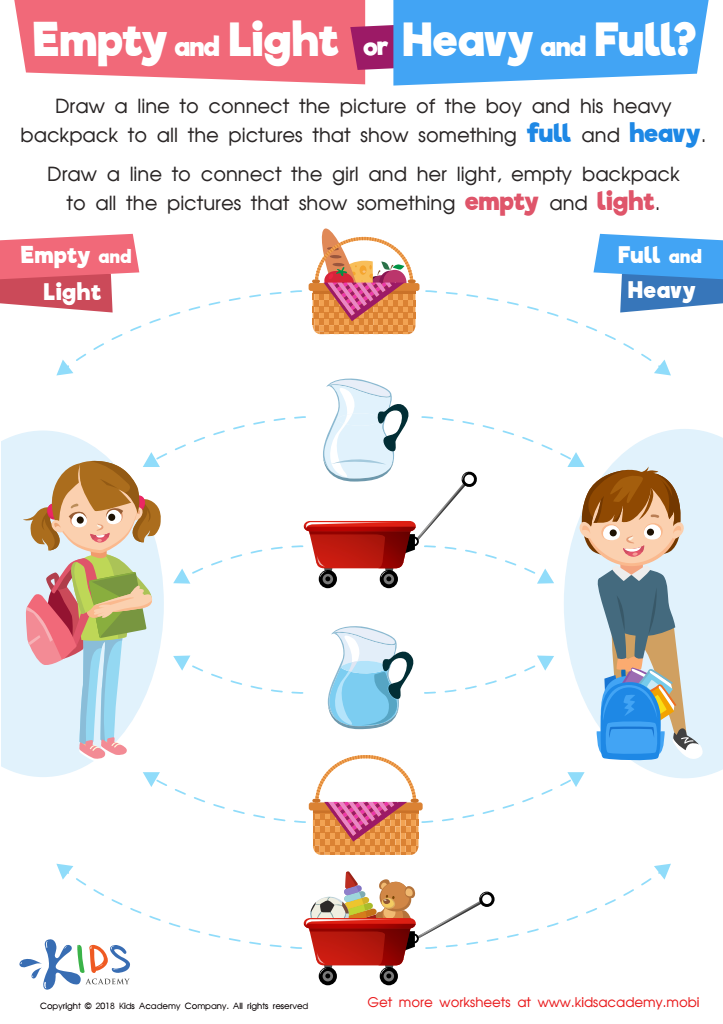
Empty and Light or Heavy and Full? Worksheet
 Assign to My Students
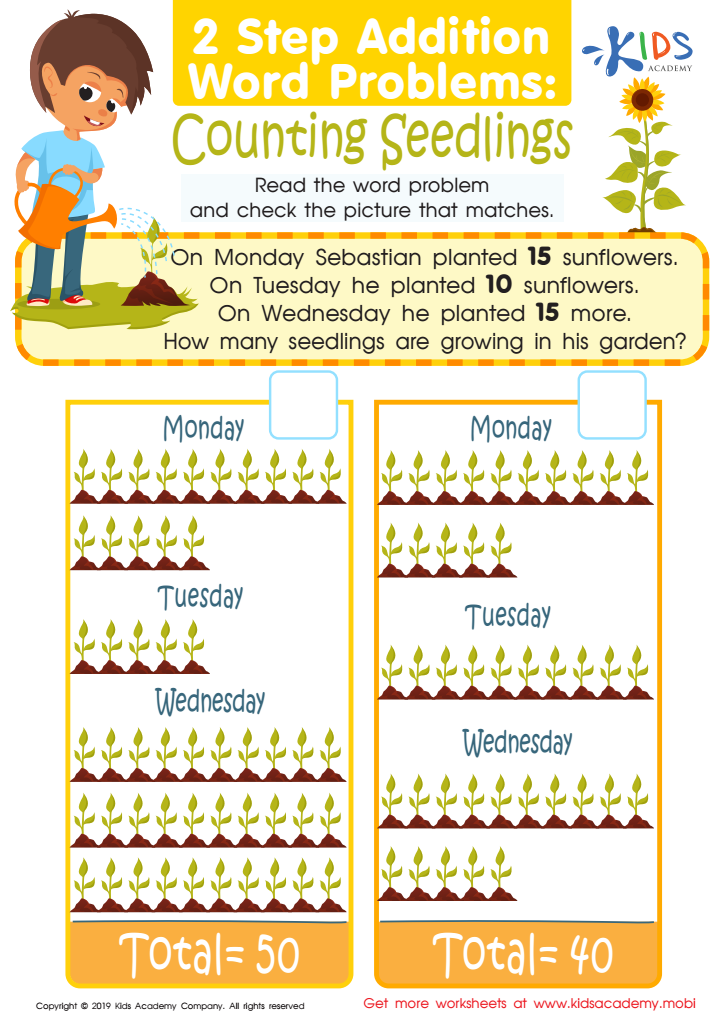
Counting Seedlings Worksheet
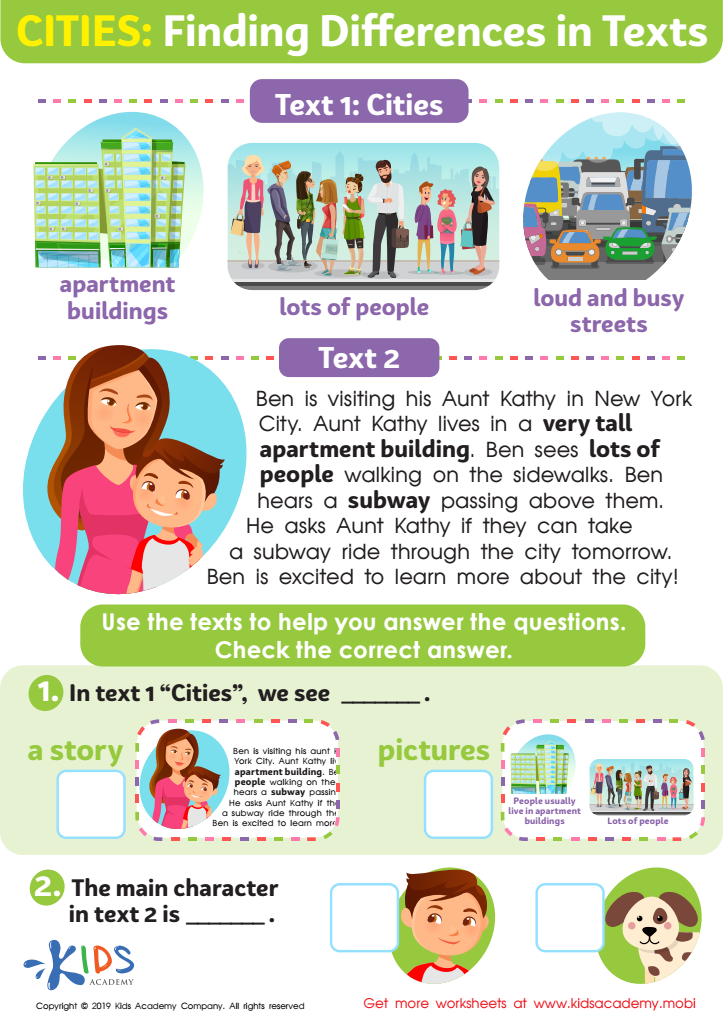
Cities: Finding Differences Worksheet
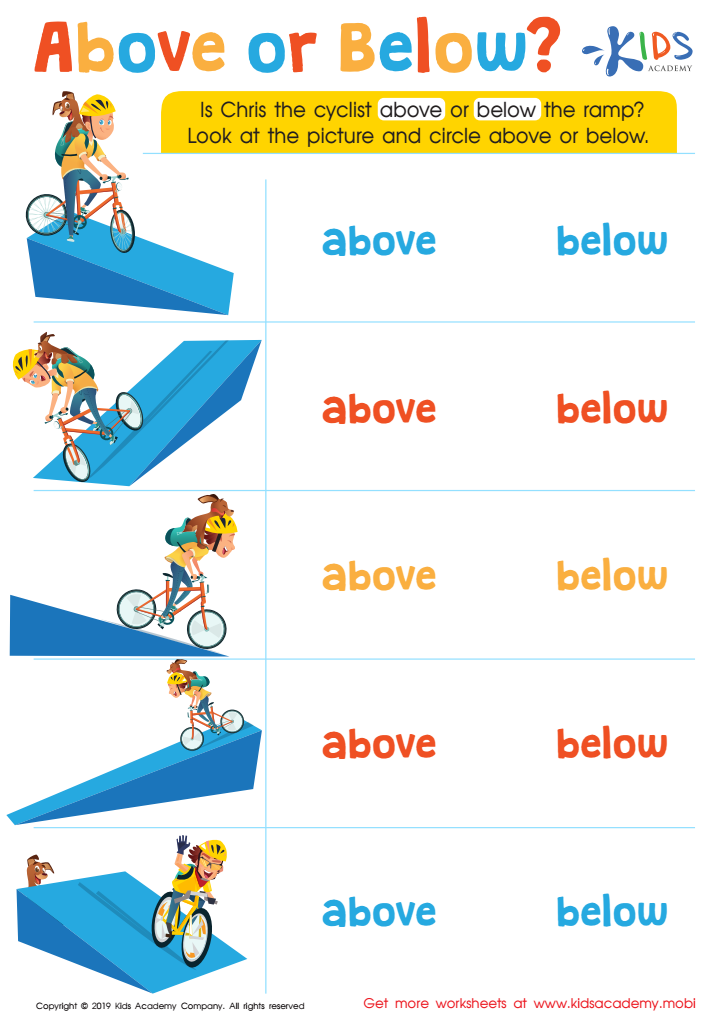
Above or Below? Worksheet







Visual perception skills are essential for young children, particularly those aged 3-4, as they form the foundation for learning and everyday functioning. These skills enable children to interpret visual information from their surroundings, which is crucial for tasks such as recognizing letters, numbers, shapes, and even navigating their environment safely.
For parents and teachers, understanding the development of visual perception skills can significantly enhance a child's learning experience. At this age, children become more engaged in activities like drawing, building, and playing games, all of which require strong visual perception. When children struggle with these skills, they may face challenges in academic settings later on, particularly in subjects like reading and mathematics.
Moreover, nurturing visual perception skills through interactive activities—like puzzles, sorting games, or art projects—can boost a child's confidence and motivation. Engaging in these activities also promotes social skills as children collaborate and communicate with peers.
Ultimately, by prioritizing visual perception skills, parents and teachers can set young children on a path to success in school and life, fostering critical thinking, problem-solving capabilities, and a love for learning that lasts a lifetime.








