Counting practice Easy Addition & Subtraction Worksheets for Ages 3-4
6 filtered results
-
From - To
Boost your child's math confidence with our "Counting Practice Easy Addition & Subtraction Worksheets" designed for ages 3-4! These engaging worksheets are perfect for young learners, offering fun exercises that introduce basic counting concepts and simple arithmetic operations. Each activity nurtures essential math skills while making learning enjoyable and interactive. Kids will love solving colorful, age-appropriate problems that encourage them to explore addition and subtraction through counting. Our resources aid in developing foundational skills necessary for future math success. Download our printable worksheets today and watch your little one's mathematical abilities flourish while having fun! Perfect for home or classroom use!
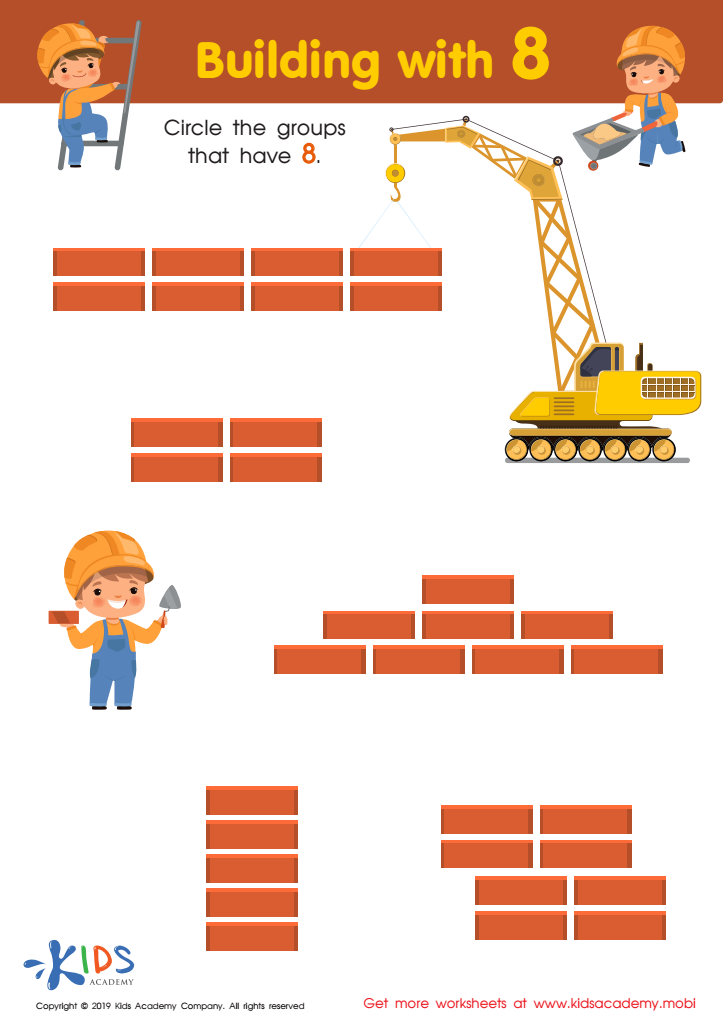
Building with 8 Worksheet
 Assign to My Students
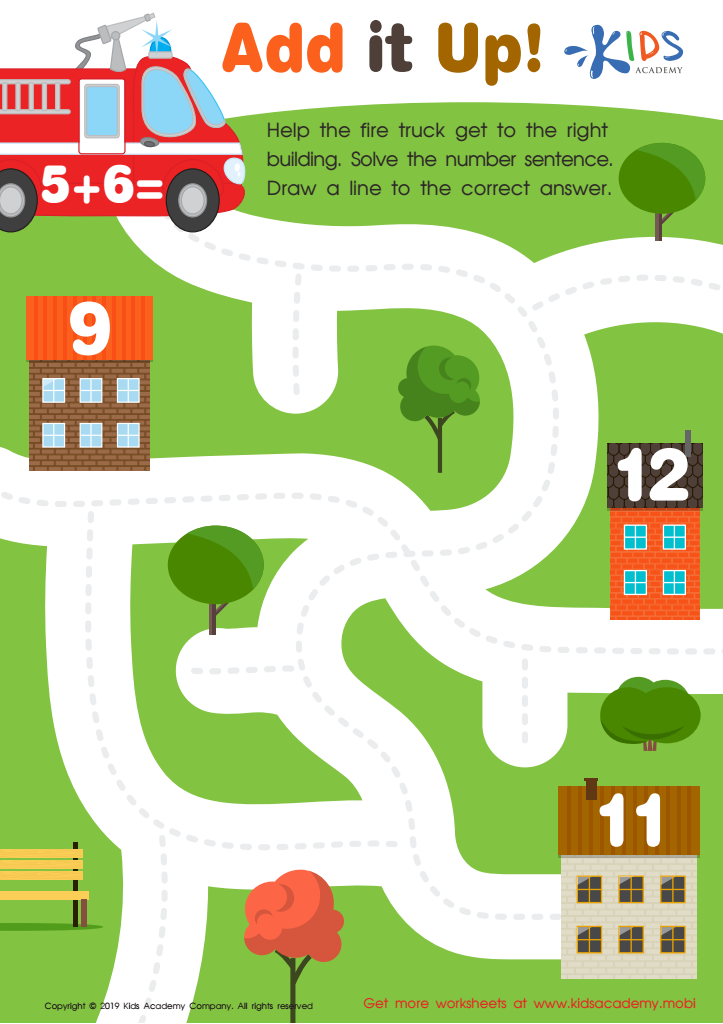
Add it Up Worksheet
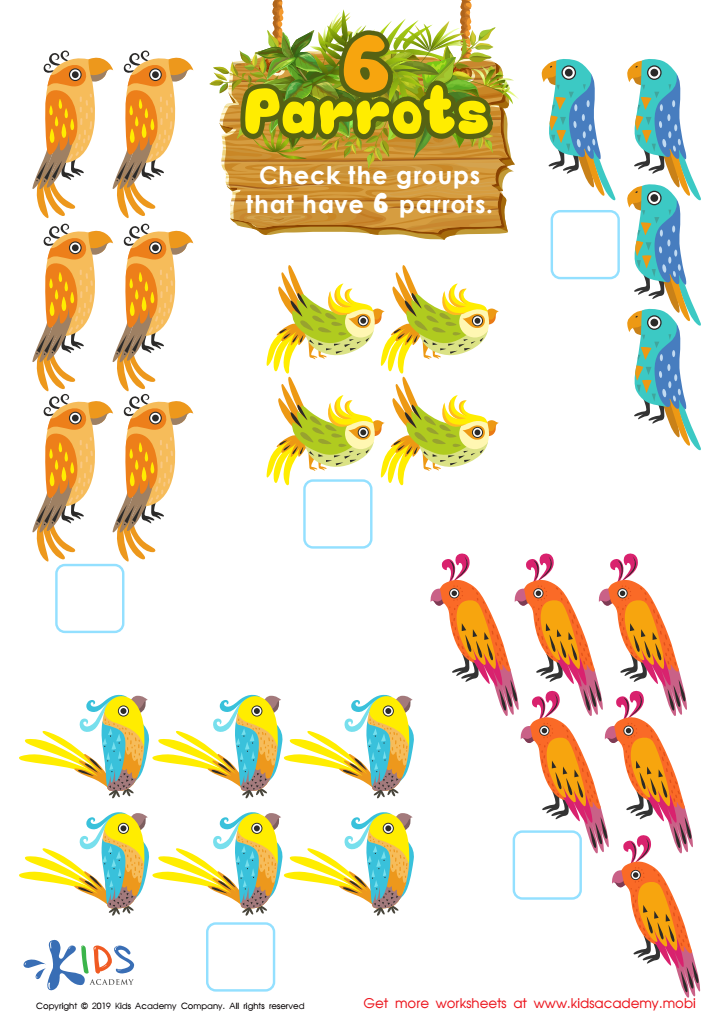
6 Parrots Worksheet
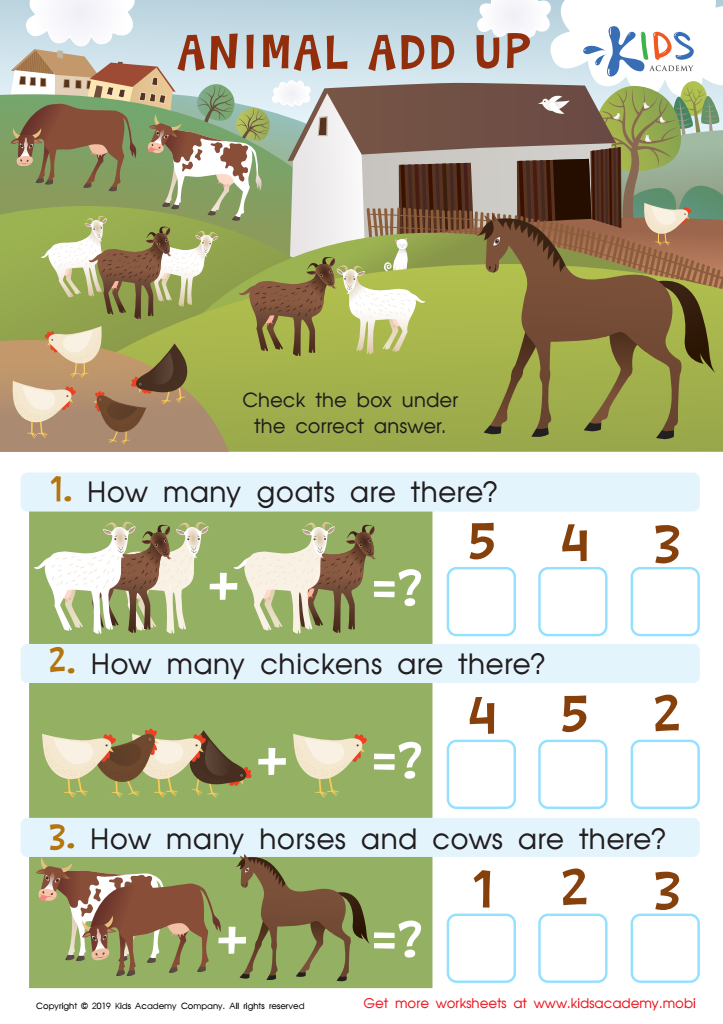
Animal Add Up Worksheet
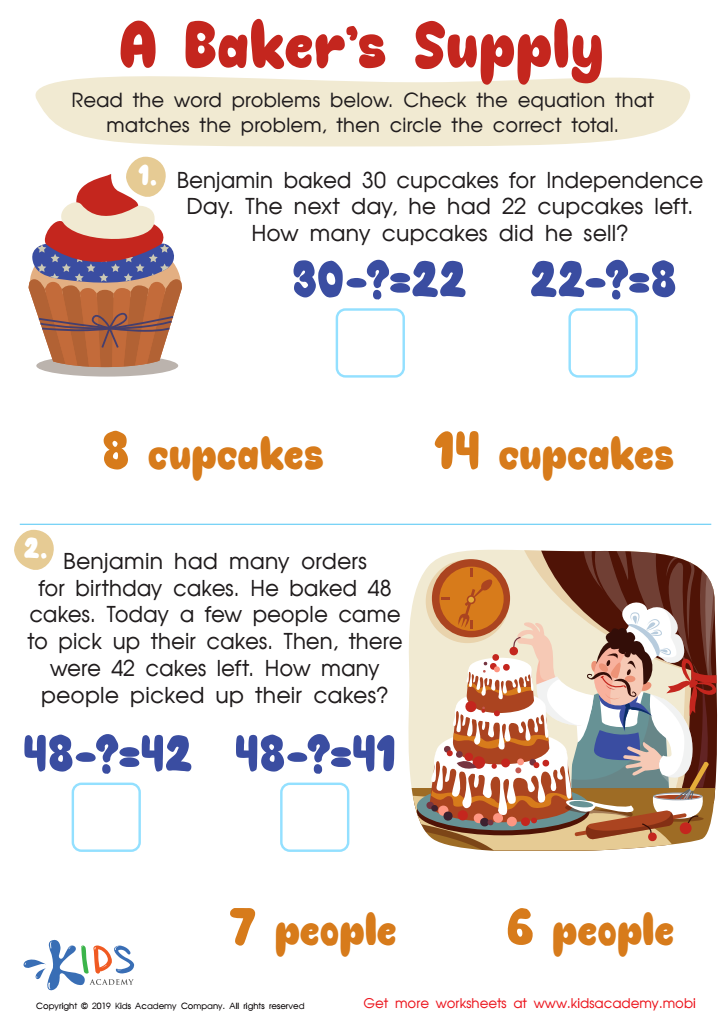
A Baker's Supply Worksheet
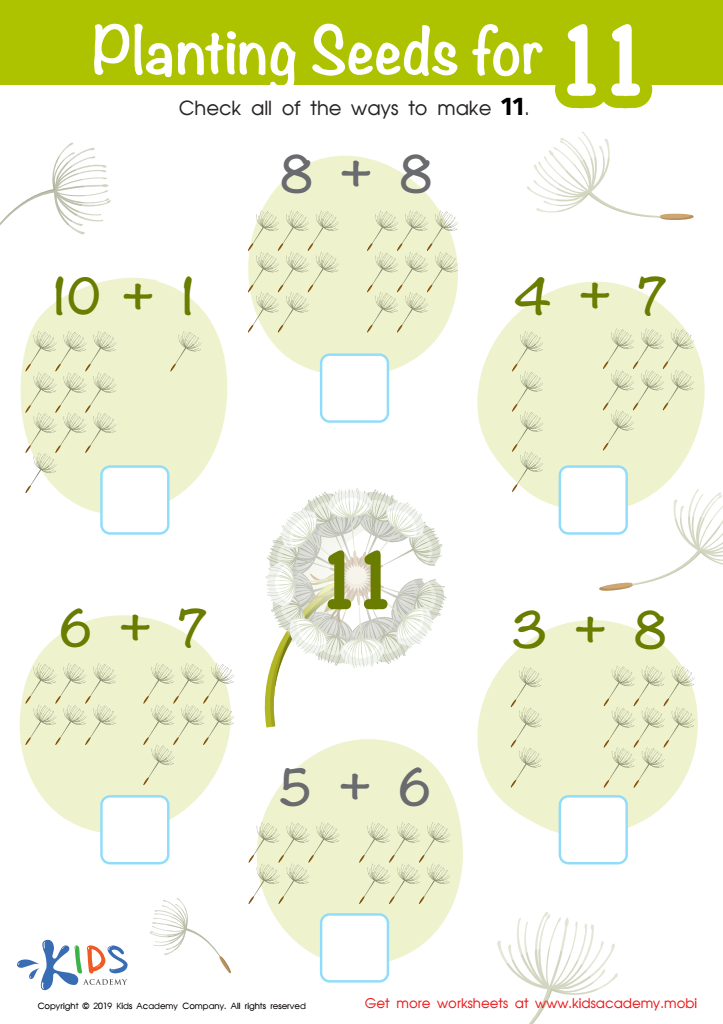
Planting Seeds for 11 Worksheet








Counting practice, alongside easy addition and subtraction, is essential for children aged 3-4 as it lays the groundwork for their future mathematical understanding. At this age, children develop critical cognitive skills, and engaging them in basic counting helps refine their number recognition and understanding of quantities.
Parents and teachers should recognize that early mathematical skills contribute significantly to a child’s overall cognitive development, promoting logical thinking and problem-solving abilities. When children practice counting and simple arithmetic, they not only learn numbers but also enhance their fine motor skills through hands-on activities such as using counting blocks or engaging in interactive games.
Furthermore, these foundational skills encourage a positive attitude toward learning math, reducing anxiety and building confidence. Early exposure can also foster an environment of curiosity where children begin to explore patterns and relationships in numbers, an integral part of math as they progress.
Ultimately, nurturing counting and basic addition/subtraction skills is an investment in a child's educational journey. It promotes a strong desire for learning and empowers them with the essential tools needed for future success in mathematics and everyday problem-solving. Thus, prioritizing early math skills can shape happier and more competent learners.








