
Subtraction practice Easy Numbers Worksheets for Ages 3-4
5 filtered results
Difficulty Level
Grade
Age
-
From - To
Subject
Activity
Standards
Introducing our "Subtraction Practice Easy Numbers Worksheets for Ages 3-4," designed to make early math fun and engaging for preschoolers. Our colorful, kid-friendly worksheets help young learners grasp the basics of subtraction through simple, visually appealing exercises. Each worksheet includes a variety of activities that introduce numbers and subtraction concepts in an enjoyable and interactive way. Perfect for teachers and parents, these worksheets foster essential math skills, guiding children through learning with confidence and joy. Set the foundation for a lifelong love of math with our expertly crafted subtraction practice worksheets!
Favorites
With answer key
Interactive
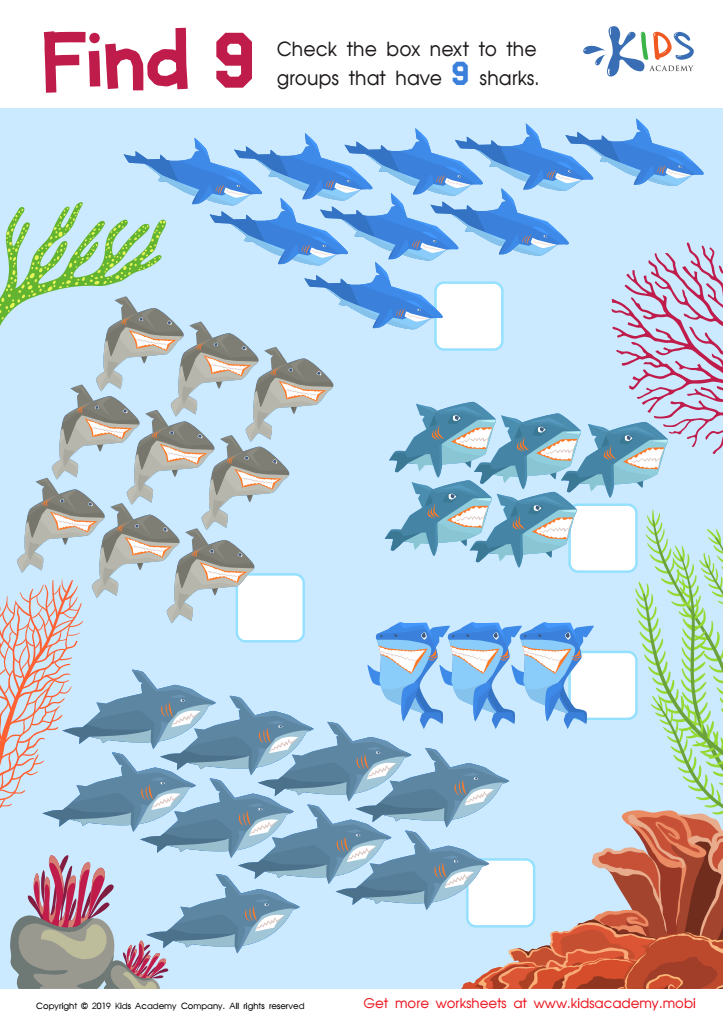
Find 9 Worksheet
Teach your kids to count proficiently with fun exercises and everyday objects. In this worksheet, assist your kid in counting sharks in the ocean and checking the box next to the group that has 9. This activity will help build a strong foundation for addition and subtraction later on.
 Assign to My Students
Find 9 Worksheet
Worksheet
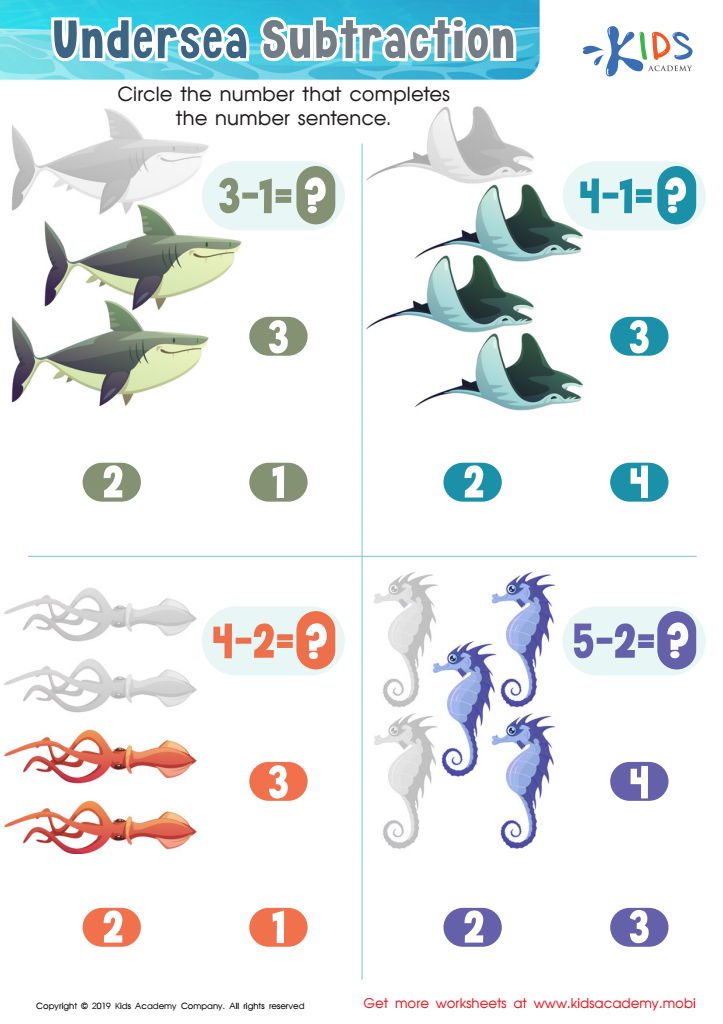
Undersea Subtraction Worksheet
To give your kids an advantage in math, use this worksheet! Begin by having them identify the fish in the picture. Then, have them circle the number that completes the number sentences. This will help them get some extra practice with subtraction!
Undersea Subtraction Worksheet
Worksheet
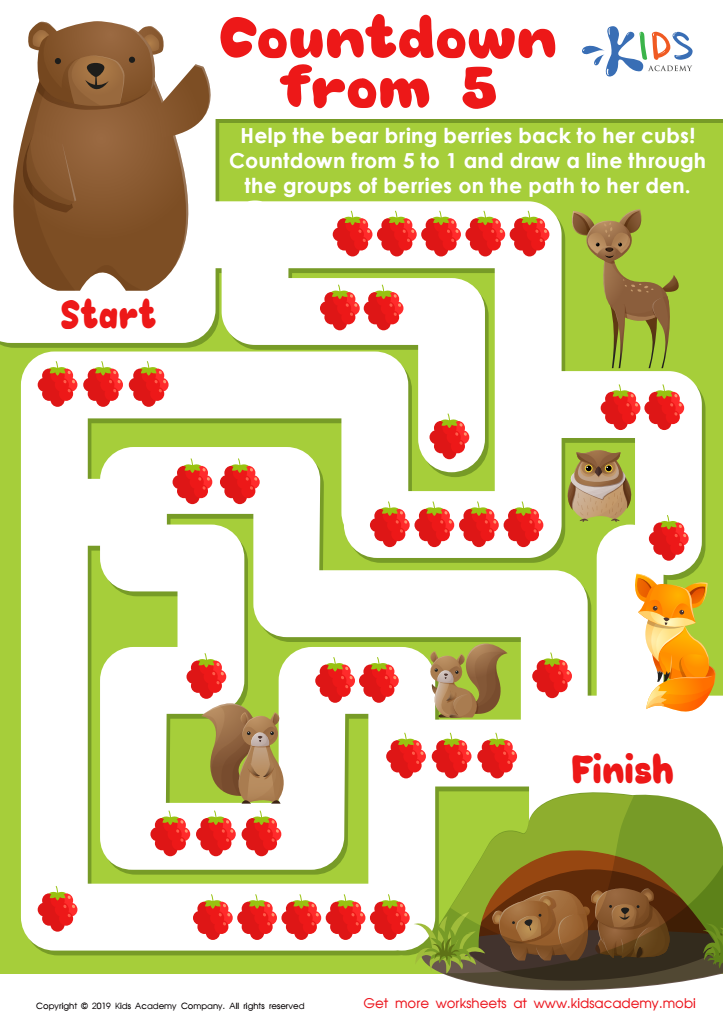
Countdown from 5 Worksheet
Encourage your kids to help Mama Bear find her way to her den! Ask them to count down from 5 to 1 and draw a line through the groups of berries on the path. Point them to the picture of the friendly bears. A fun and safe way to enjoy these cute animals!
Countdown from 5 Worksheet
Worksheet
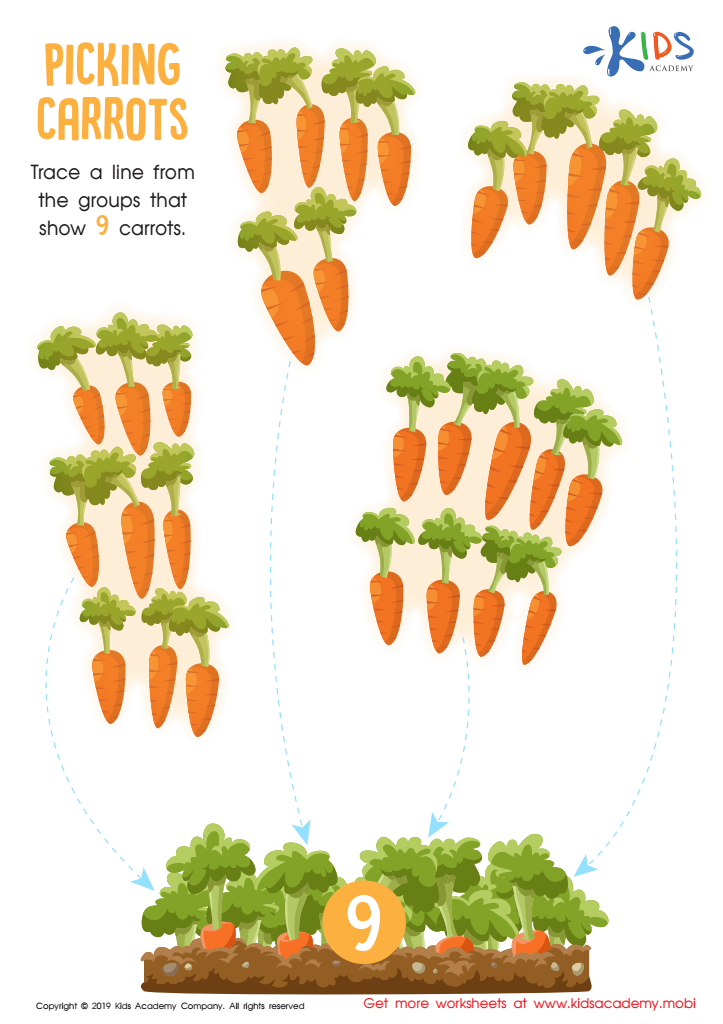
Picking Carrots Worksheet
Do your kids know what carrots are? They're nutritious veggies we should eat. Look at the worksheet with them; can they spot the carrots? It's an exercise to practice counting. Show them how to count all the carrots in the groups and trace the line to the groups with 9 carrots.
Picking Carrots Worksheet
Worksheet
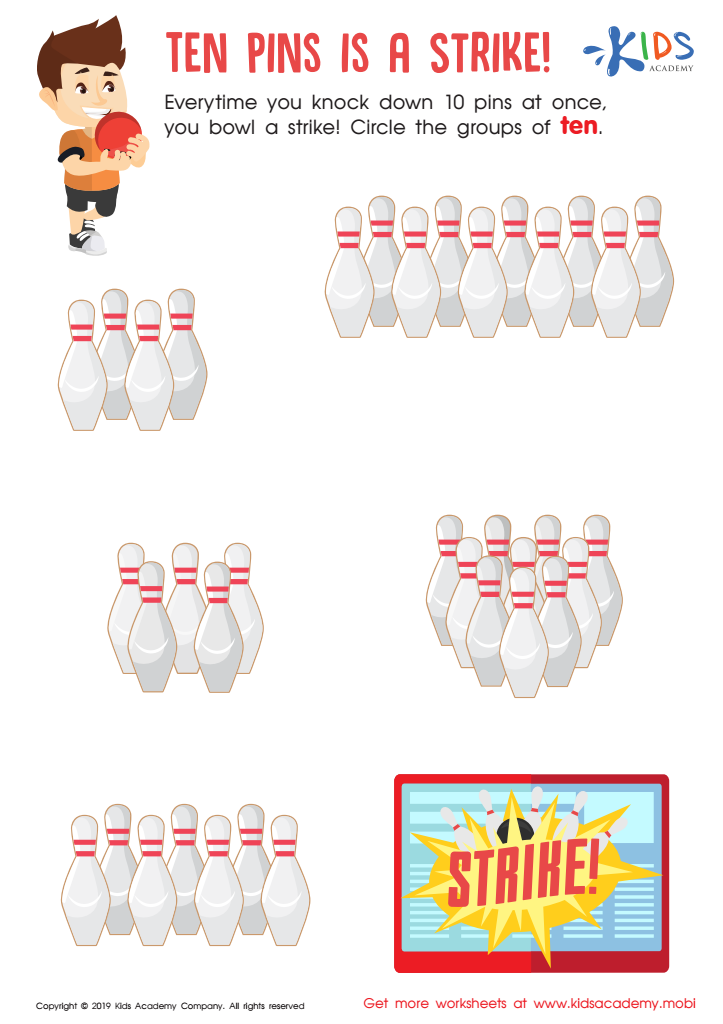
Ten Pins is a Strike Worksheet
Show your kids the picture and ask them to identify the objects. Explain that bowling is a leisure game played with a ball and pins. Count the pins and have them circle groups of ten. This worksheet will make learning fun and easy, as your children already know the objects.
Ten Pins is a Strike Worksheet
Worksheet
Join Kids Academy for Free
Who is primarily going to use this learning content?







Parents and teachers should prioritize subtraction practice using easy numbers for young children aged 3-4 because it lays the foundation for essential mathematical skills. At this formative stage, children's brains are highly receptive to new concepts and making learning enjoyable can foster a lifelong positive attitude towards math.
Introducing subtraction with simple numbers helps young learners grasp the fundamental idea of "taking away" one quantity from another. This concept is crucial, not only for advanced arithmetic but also for everyday problem-solving and logical thinking.
Moreover, early subtraction practices can enhance fine motor skills and hand-eye coordination when physical objects are used, like counting blocks. Activities such as these also improve cognitive development in areas such as pattern recognition, memory, and sequencing.
For parents and teachers, focusing on subtraction with easy numbers ensures that young children build confidence and understand basic math operations without becoming overwhelmed. This early achievement supports a smooth transition to more complex mathematical concepts when they enter formal schooling.
Incorporating fun, age-appropriate subtraction exercises into daily routines can make learning seamless and engaging, setting children on a path of academic success and an appreciation for math from an early age.








