Understanding Sequences Easy Math Worksheets for Ages 3-4
4 filtered results
-
From - To
Welcome to our "Understanding Sequences Easy Math Worksheets" designed for children ages 3-4! These engaging worksheets help young learners grasp the foundational concept of sequences in a fun and interactive way. Through colorful illustrations and age-appropriate activities, children will explore patterns, order, and relationships among objects. Our resources encourage critical thinking while making math enjoyable. Perfect for parents and educators alike, these worksheets are an excellent tool for developing early math skills. Join us in fostering a love for learning by helping your little ones navigate the world of sequences today! Explore our activities for an enriching educational experience!
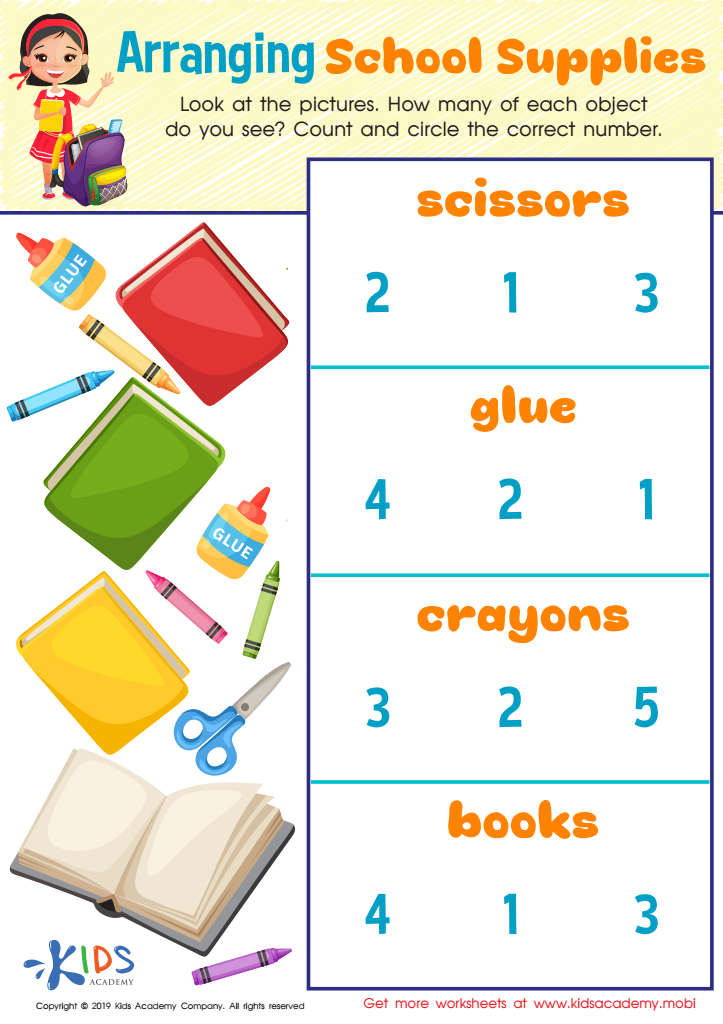
Arranging School Supplies Worksheet
 Assign to My Students
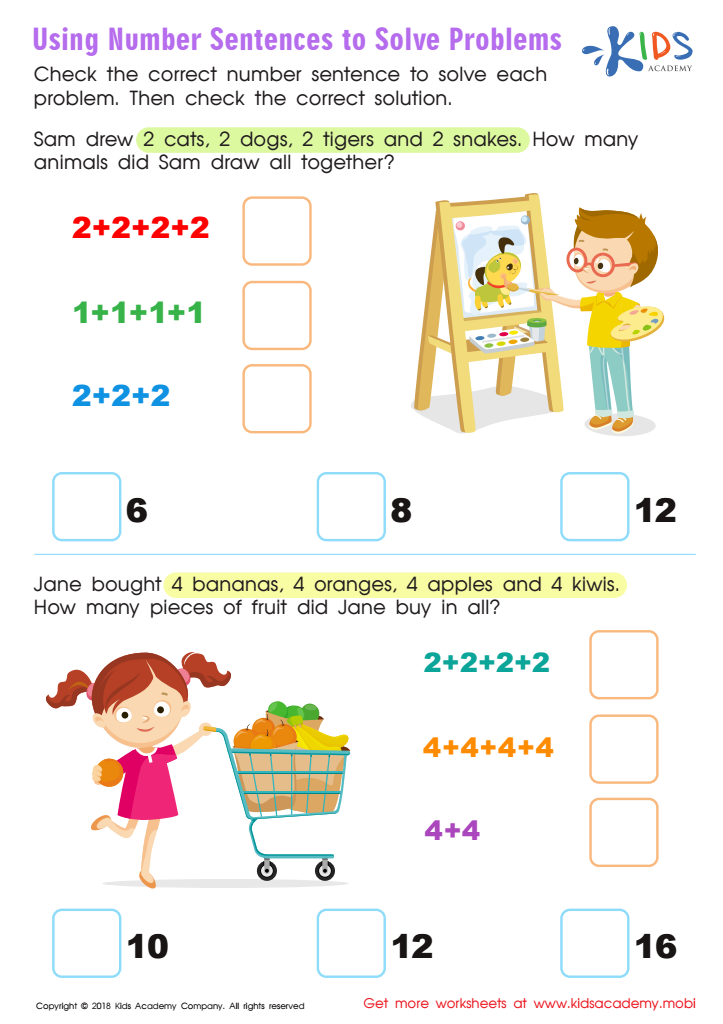
Using Number Sentences to Solve Problems Worksheet
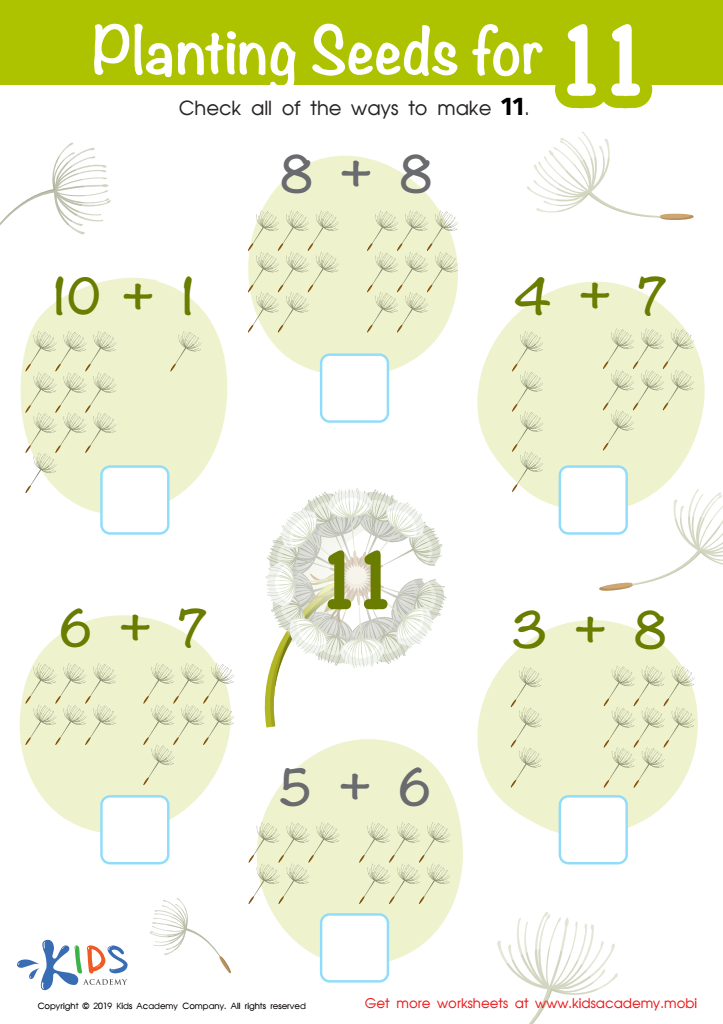
Planting Seeds for 11 Worksheet
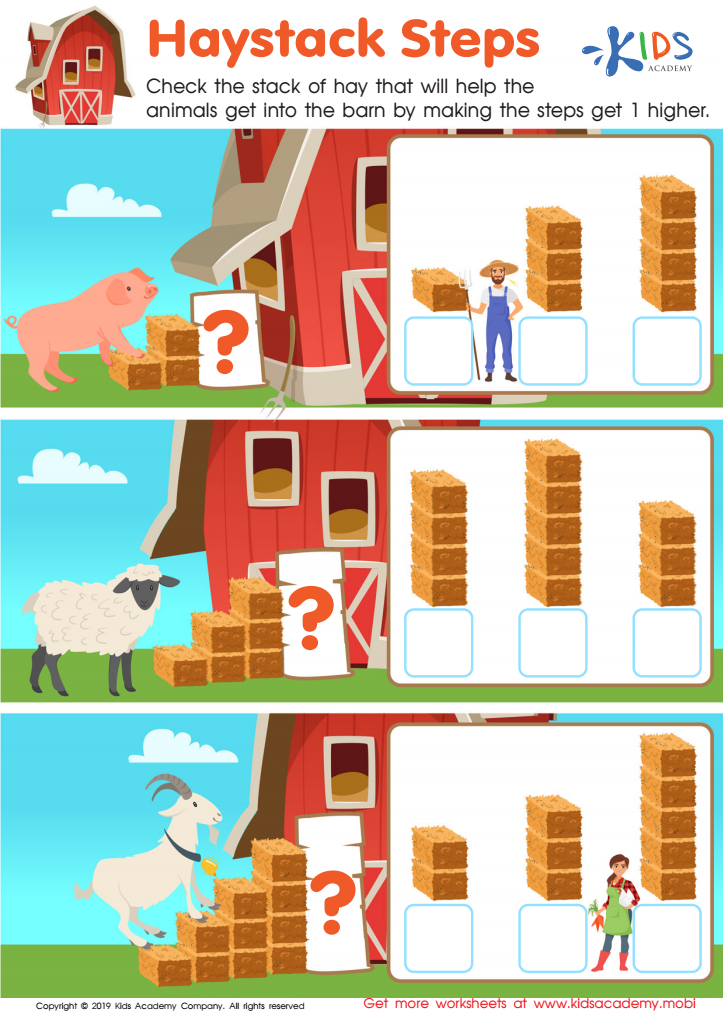
Haystack Steps Worksheet








Understanding sequences is a fundamental mathematical concept that forms the backbone of early learning in children aged 3-4. Parents and teachers should prioritize this skill for several reasons. Firstly, grasping sequences helps to develop critical thinking and problem-solving abilities. Children learn to predict what comes next, enhancing their logical reasoning while reinforcing cause-and-effect relationships.
Secondly, sequences serve as a gateway to more complex mathematical ideas. Whether it's organizing numbers, recognizing patterns, or comprehending the flow of time, sequences are integral to these concepts. Introducing them early encourages a solid foundation for later mathematical success.
Moreover, sequences boost cognitive development and language skills. As children describe sequences—like “first, next, and last”—they expand their vocabulary and improve their communication abilities. These skills also foster social interaction as kids share and explore sequences together in games and activities.
Finally, engaging with sequences can make learning more fun and enjoyable. Using playful methods, such as songs, games, and hands-on activities, captivates young learners and nurtures a positive attitude toward mathematics. Overall, cultivating an understanding of sequences early on provides a multifaceted advantage, preparing children for a brighter academic future.








