Understanding sequencing Easy Math Worksheets for Ages 3-4
3 filtered results
-
From - To
Boost your child’s foundational math skills with our "Understanding Sequencing" easy math worksheets tailored for ages 3-4. Designed to promote cognitive development, these engaging activities help young learners grasp the concept of order and sequences. Each printable worksheet offers fun, interactive exercises featuring colorful illustrations that capture kids' imagination while teaching essential sequencing skills. Ideal for both home and classroom settings, these resources foster early math proficiency and prepare children for more complex concepts. Let your child enjoy learning and build confidence in their abilities with our expertly crafted sequencing worksheets. Explore now and start your educational journey today!
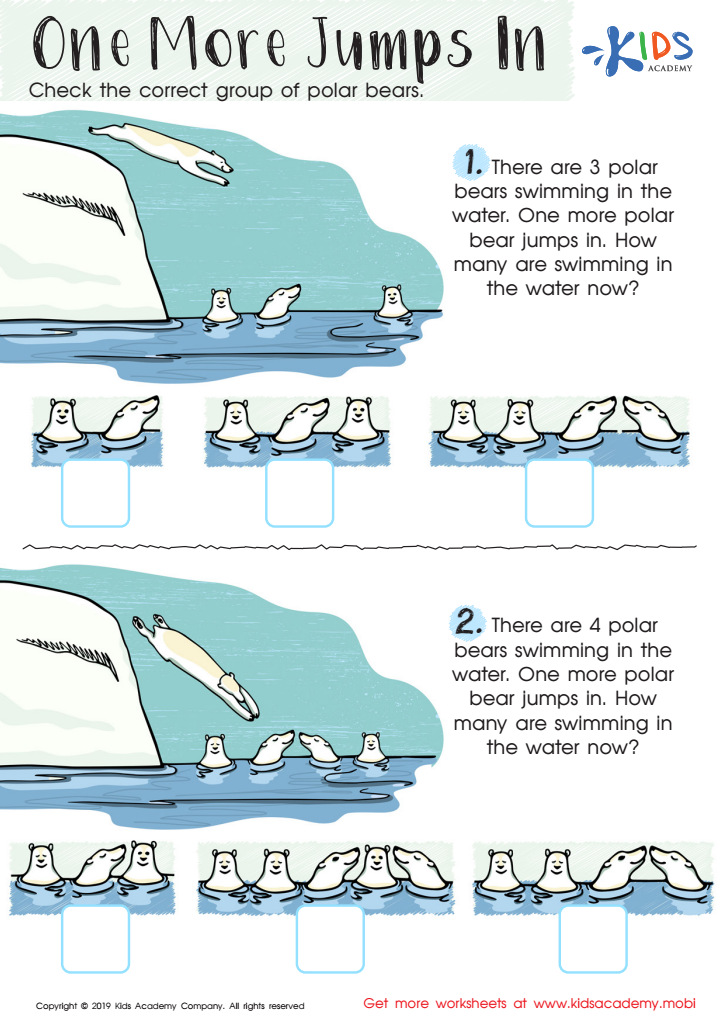
One More Jumps In Worksheet
 Assign to My Students
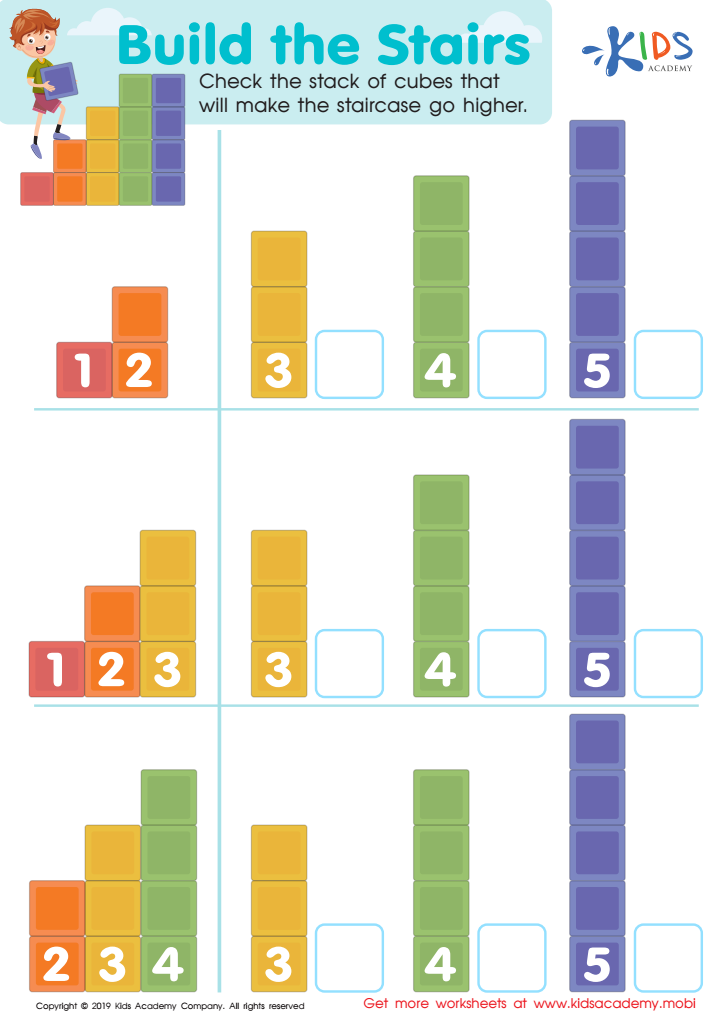
Build the Stairs Worksheet
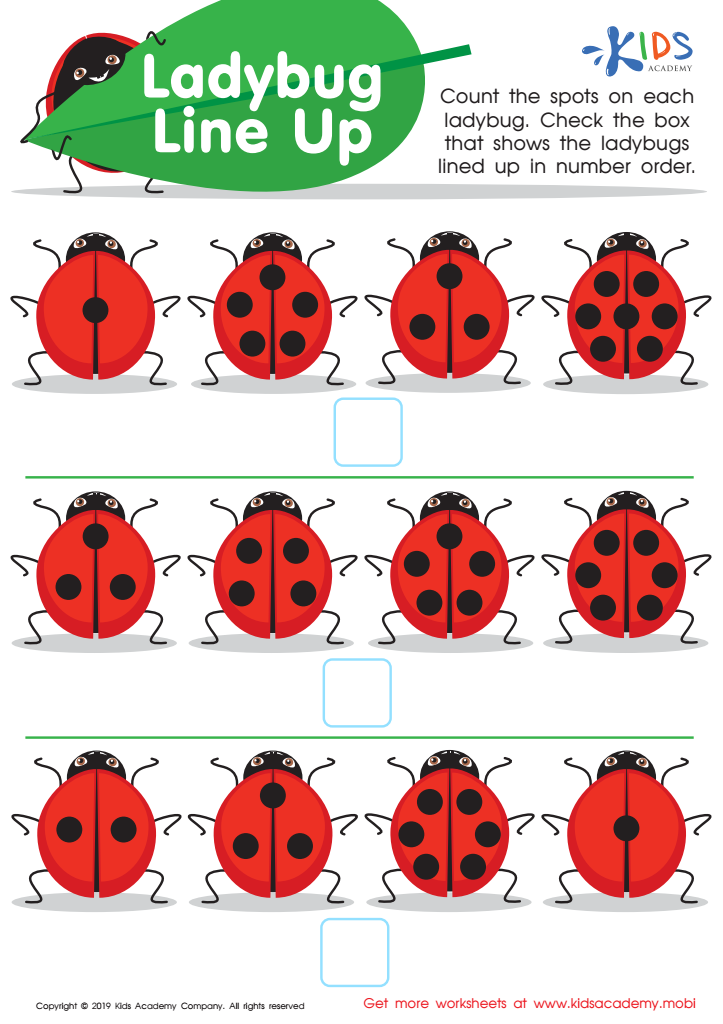
Ladybug Line Up Worksheet







Understanding sequencing in early math is crucial for ages 3-4 because it forms a foundational skill that supports cognitive development and future academic success. At this developmental stage, children are beginning to make sense of the world around them, and sequencing helps them establish order and predictability in their environment. This basic concept involves arranging numbers, objects, or events in logical order, which enhances a child's ability to recognize patterns, a critical skill in both math and reading.
For parents, supporting sequencing skills at home can be as simple as engaging in activities that involve sorting toys by size or color, or following steps in routines, like getting dressed. For teachers, incorporating sequencing into lessons through fun and interactive play aids in retaining attention and deepening understanding.
Mastering sequencing helps children improve their memory, as they remember the correct order of items, and their problem-solving abilities, as they deduce what comes next. Psychologically, it fosters self-confidence when children succeed in completing tasks independently.
Ignoring this essential skill may result in difficulties in grasping more complex concepts later on. Therefore, actively nurturing sequencing skills ensures a solid groundwork in early math education and cognitive development, positioning children for future learning challenges.








