Letter recognition Easy Phonics Worksheets for Ages 3-5
4 filtered results
Difficulty Level
Grade
Age
-
From - To
Subject
Activity
Standards
Discover our engaging "Letter Recognition Easy Phonics Worksheets" designed specifically for children ages 3-5! These worksheets foster early literacy skills by introducing young learners to the alphabet and essential phonics concepts in a fun, interactive way. Each activity encourages kids to recognize letters, associate sounds, and develop writing skills through colorful illustrations and playful themes. Perfect for at-home learning or classroom settings, our worksheets make letter recognition a breeze while keeping little ones entertained and motivated. Help your preschooler build a strong foundation for reading with our easy-to-use resources and watch their confidence grow as they explore the world of letters!
Favorites
With answer key
Interactive
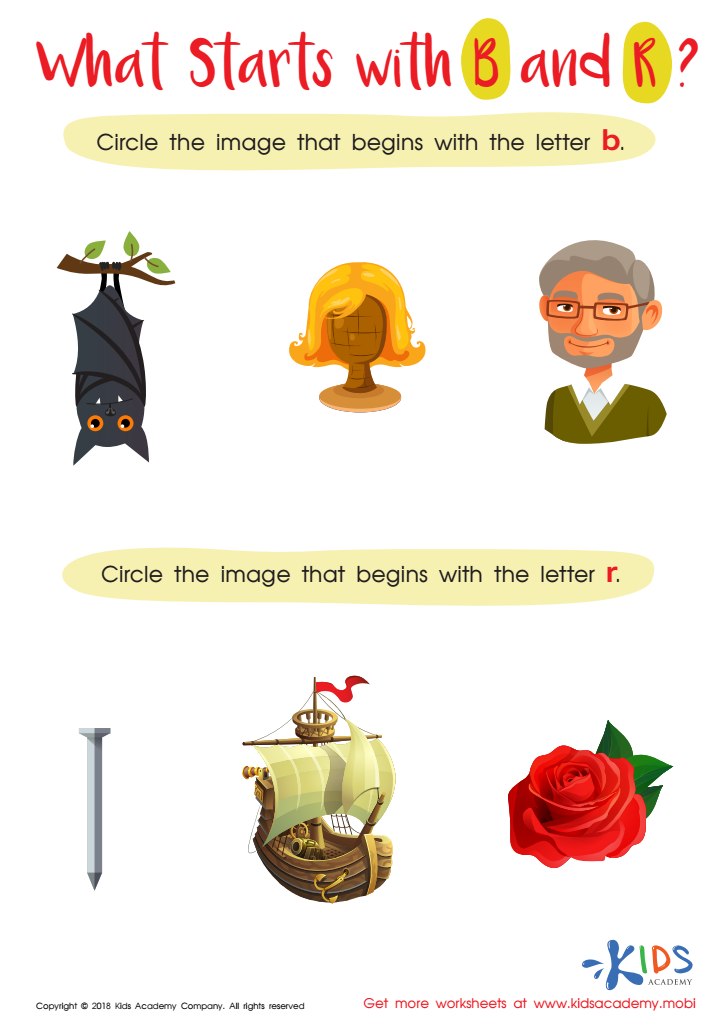
What Starts with B and R? Worksheet
Download this worksheet to help young readers practice visual and motor skills! They'll enjoy matching pictures with "B" and "R" letters while tracing the images. Bright and colorful, this engaging activity will help kids differentiate between words and have fun doing it.
 Assign to My Students
What Starts with B and R? Worksheet
Worksheet
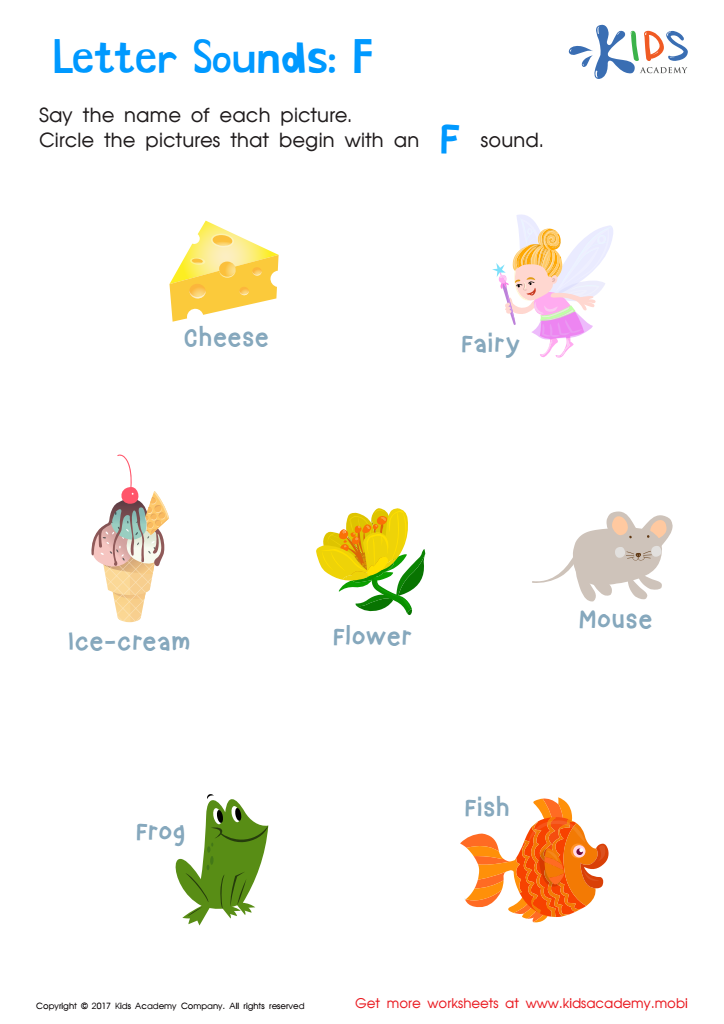
Letter F Sounds Worksheet
Kids will practice identifying 'f' words, tracing, and coloring the letter F for a great way to learn phonics.
Help your child discover the wonders of the letter 'F' with this fun worksheet! Kids will practice identifying 'F' words, tracing and coloring the letter, and building early reading skills. Stimulate their learning and let them connect letter sounds to words they know. An enjoyable way to practice phonics!
Letter F Sounds Worksheet
Worksheet
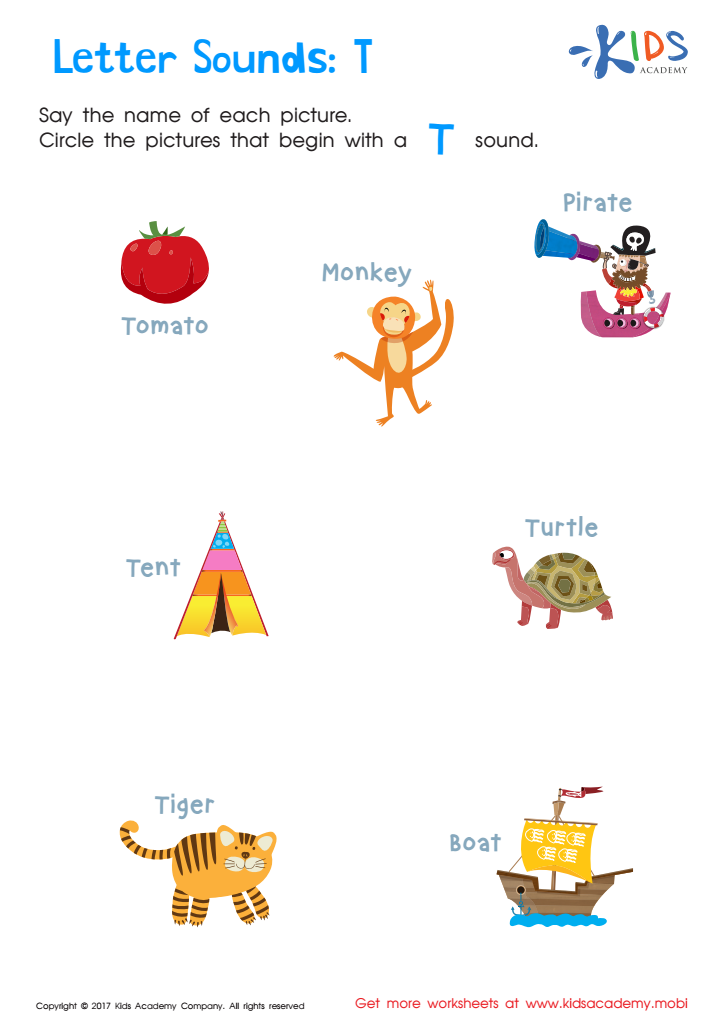
Letter T Sounds Worksheet
This worksheet is a fun way to help kids learn the t sound. It has familiar pictures and an easy-to-follow format, so kids can quickly recognize and learn the letter t.
Letter T Sounds Worksheet
Worksheet
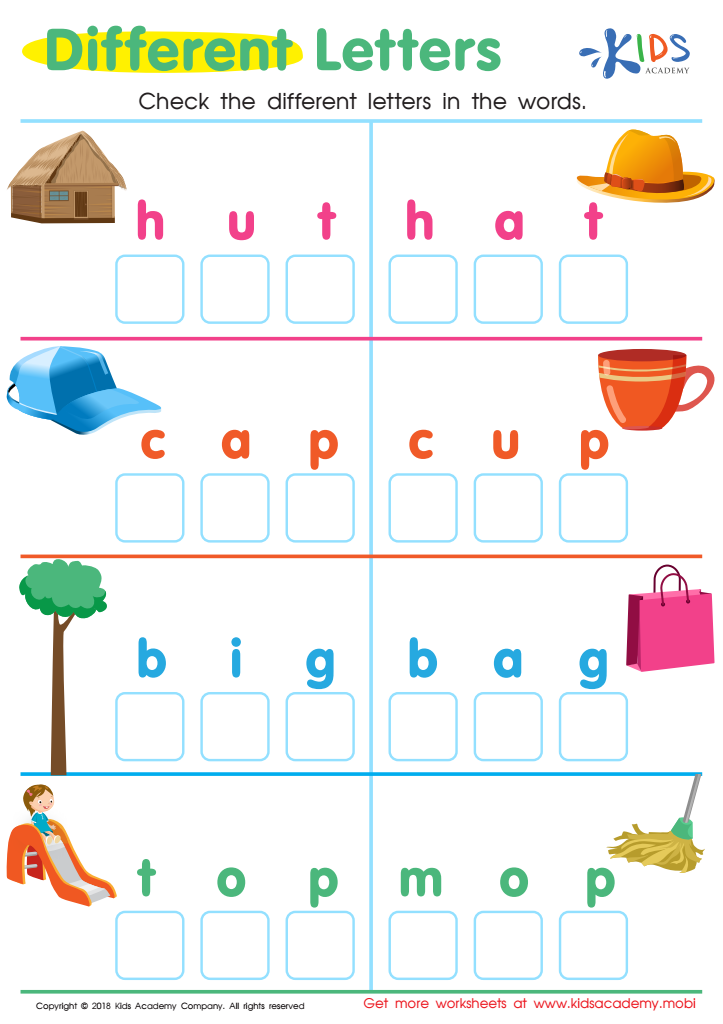
Different Letters Reading Worksheet
Download our phonics worksheet to help kids understand letter sounds. Have them sound out letters and join them to form words. Colorful pictures assist in recognition, making it perfect for kindergarteners. A great intro to phonics!
Different Letters Reading Worksheet
Worksheet
Join Kids Academy for Free
Who is primarily going to use this learning content?








Letter recognition is a crucial foundational skill for young children, particularly for those aged 3-5. It is the first step in literacy and sets the stage for successful reading and writing experiences. When parents and teachers prioritize letter recognition through engaging activities such as Easy Phonics, children develop critical auditory and visual skills that facilitate effective communication. Recognizing letters helps children understand the relationship between sounds and symbols, which is essential for phonemic awareness.
Moreover, early familiarity with letters builds children's confidence and stimulates their curiosity about written language. Teaching letter recognition at this age can forge a positive association with learning, making literacy enjoyable and less intimidating. The interactive nature of phonics activities often encourages participation, collaboration, and social skills among young learners. Parents and teachers who focus on letter recognition contribute to enhancing cognitive skills, including memory and attentiveness.
Additionally, early exposure to phonics can help close learning gaps and set a strong foundation for future academic success. Investing time and effort into developing these skills not only benefits children's literacy but also enriches their overall educational experience, preparing them for a lifetime of learning. Thus, prioritizing letter recognition is essential for fostering a love for reading and effective communication skills in young learners.