
Shape identification Easy Math Worksheets for Ages 3-5
3 filtered results
Difficulty Level
Grade
Age
-
From - To
Subject
Activity
Standards
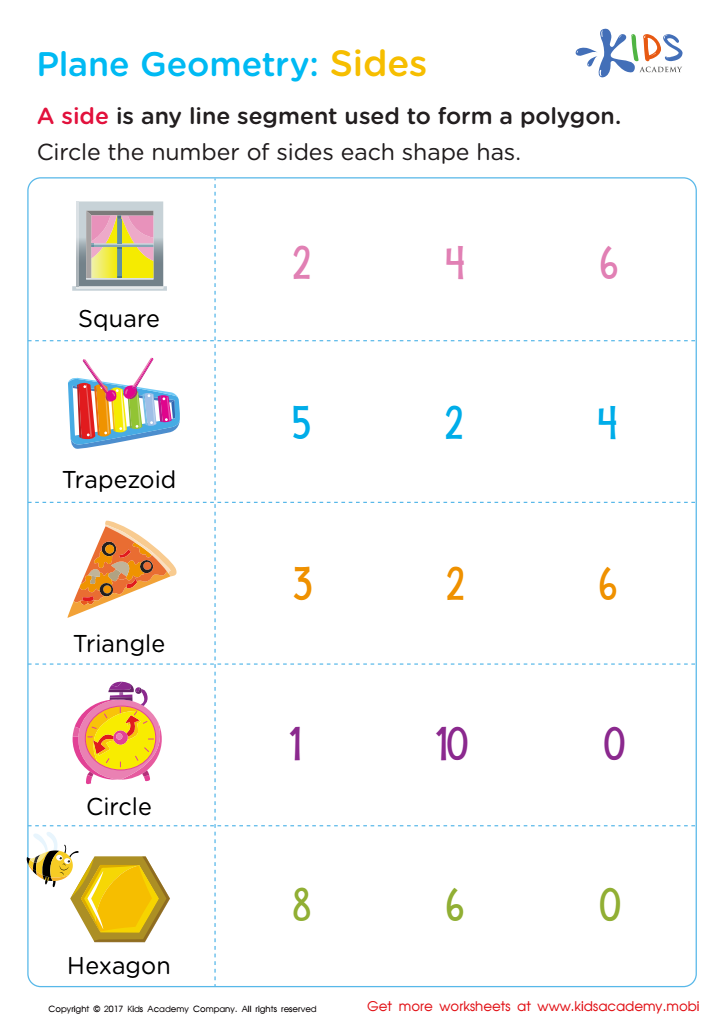
Explore our engaging "Shape Identification Easy Math Worksheets" designed specifically for children ages 3-5! These worksheets provide a fun and interactive way for young learners to recognize and name various shapes, laying a solid foundation for early math skills. Featuring vibrant illustrations and age-appropriate activities, children will enjoy identifying circles, squares, triangles, and more. Our resources are perfect for homeschooling, classroom activities, or supplemental learning. Each worksheet encourages creativity and critical thinking, making shape identification an enjoyable experience for little ones. Get started on this exciting journey of discovery and help your child build essential math skills today!
Favorites
With answer key
Interactive
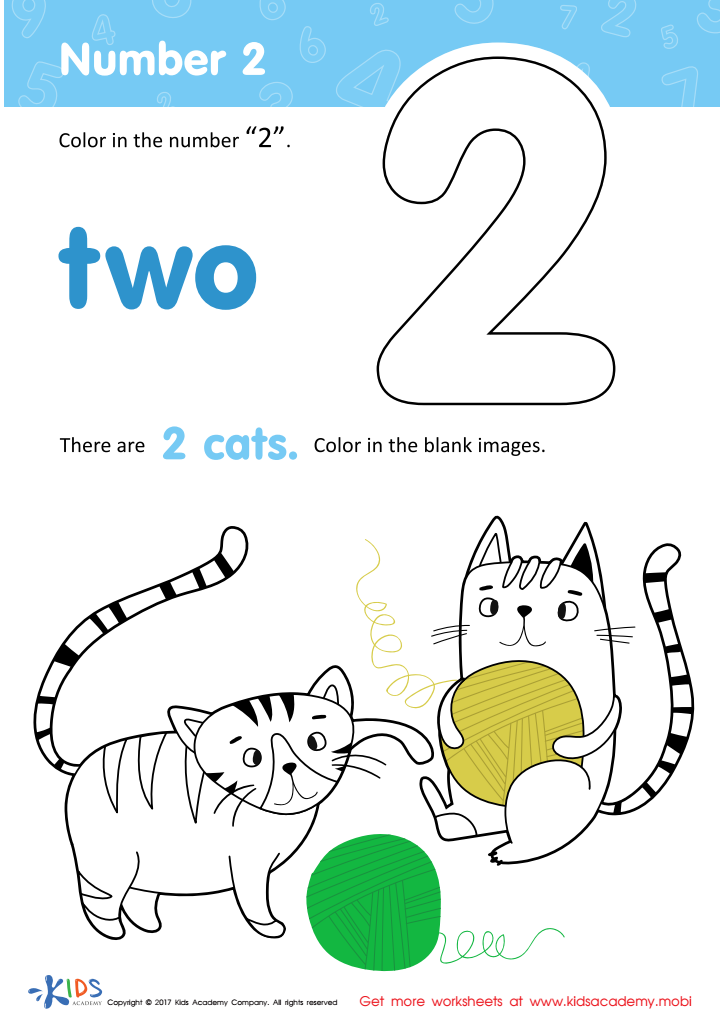
Number 2 Printable
Help your child learn to recognize the number two with these cats and their yarn balls. Print this coloring page – it's great for counting and coloring fun! Your child will develop basic numeracy skills as they visually see numbers in action.
Download (PDF)
 Assign to My Students
Assign to My Students
Number 2 Printable
Worksheet
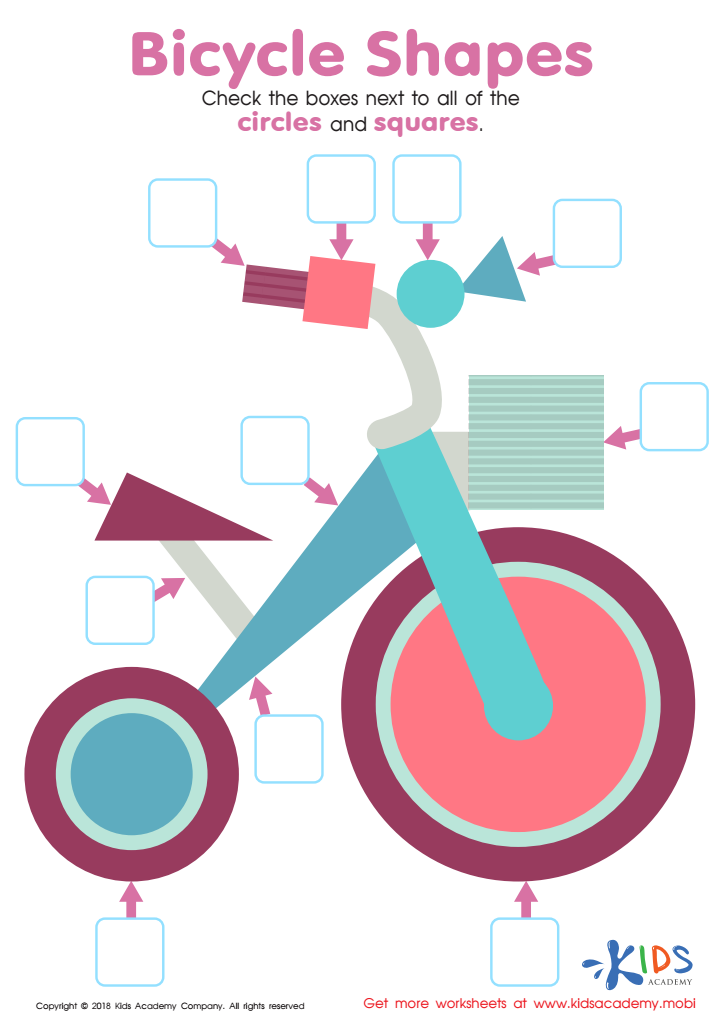
Bicycle Shapes Worksheet
This fun geometry worksheet for preschoolers asks the child to spot hidden shapes (circles, squares) in a colorful bicycle. Each shape varies in size and the child checks the box when it's found. It's a visual way to teach shapes.
Bicycle Shapes Worksheet
Worksheet
Join Kids Academy for Free
Who is primarily going to use this learning content?








Shape identification within the Easy Math curriculum for children ages 3-5 is fundamental for early cognitive development and lays the groundwork for future learning. During these formative years, children are naturally curious and eager to explore. Engaging them in shape identification activities fosters observational skills, enhances spatial awareness, and encourages critical thinking—capabilities that are vital not only for math but across all subjects.
Furthermore, recognizing shapes helps children make connections between concrete objects and abstract concepts. This understanding supports their ability to categorize information, which is an essential skill in problem-solving and logical reasoning. By incorporating shapes into daily activities or playful learning environments, parents and teachers can create rich, engaging experiences that promote interaction and discovery.
Additionally, learning shapes can be a gateway to more complex mathematical concepts. For instance, a strong foundation in shape recognition can ease the transition into learning about fractions, geometry, and measurement later on. Investing time in teaching shape identification not only benefits children’s immediate learning but also paves the way for their long-term educational success. Thus, prioritizing shape identification activities equips young learners with essential skills that ultimately foster a life-long love for mathematics and learning in general.








