Vocabulary development Easy Reading Worksheets for Ages 3-5
3 filtered results
Difficulty Level
Grade
Age
-
From - To
Subject
Activity
Standards
Explore our engaging Vocabulary Development Easy Reading Worksheets designed specifically for children ages 3-5. These fun, interactive sheets help young learners enhance their vocabulary while enjoying the learning process. Packed with colorful illustrations and age-appropriate activities, our worksheets promote language skills essential for early literacy. Activities include matching words to images, simple fill-in-the-blanks, and word searches, all tailored to fuel curiosity and support cognitive growth. These resources not only encourage independent learning but also prepare your little ones for future reading success. Perfect for parents and educators, these worksheets make vocabulary building exciting and effective. Start your child’s vocabulary journey today!
Favorites
With answer key
Interactive
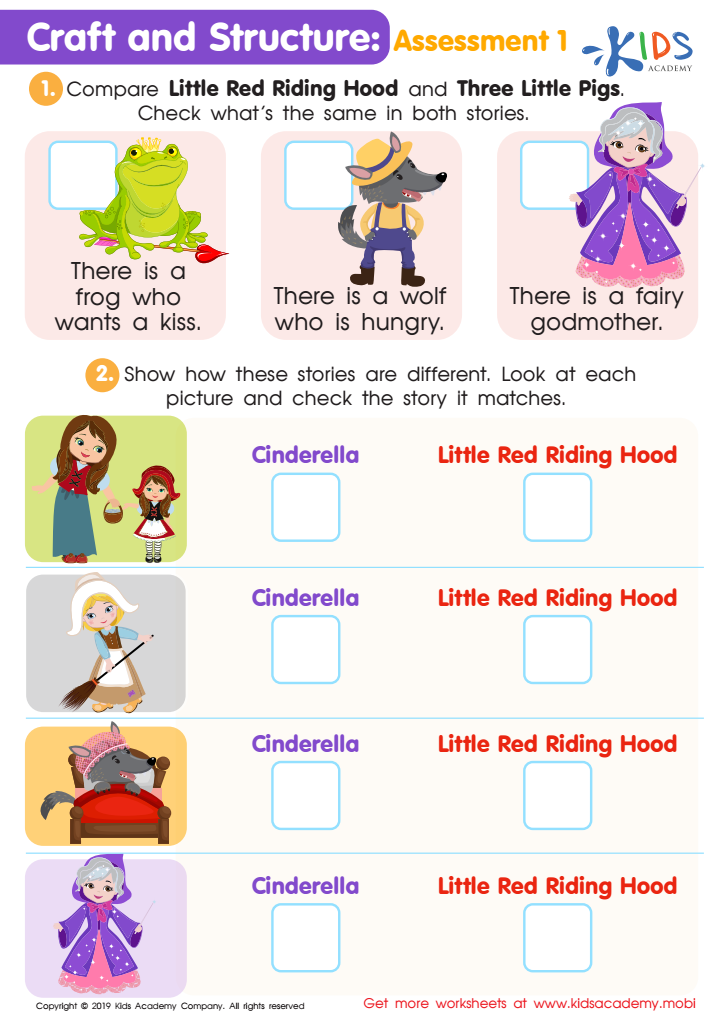
Craft and Structure: Assessment 1 Worksheet
Fairytales are a great way to bond with your kids while teaching them. Popular stories include Little Red Riding Hood and Three Little Pigs. Test how well they understood these two with this assessment worksheet. Ask them to compare the two stories and check what is the same. Doing this will help kids learn new words and sentence construction, as well as teaching them life lessons.
 Assign to My Students
Craft and Structure: Assessment 1 Worksheet
Worksheet
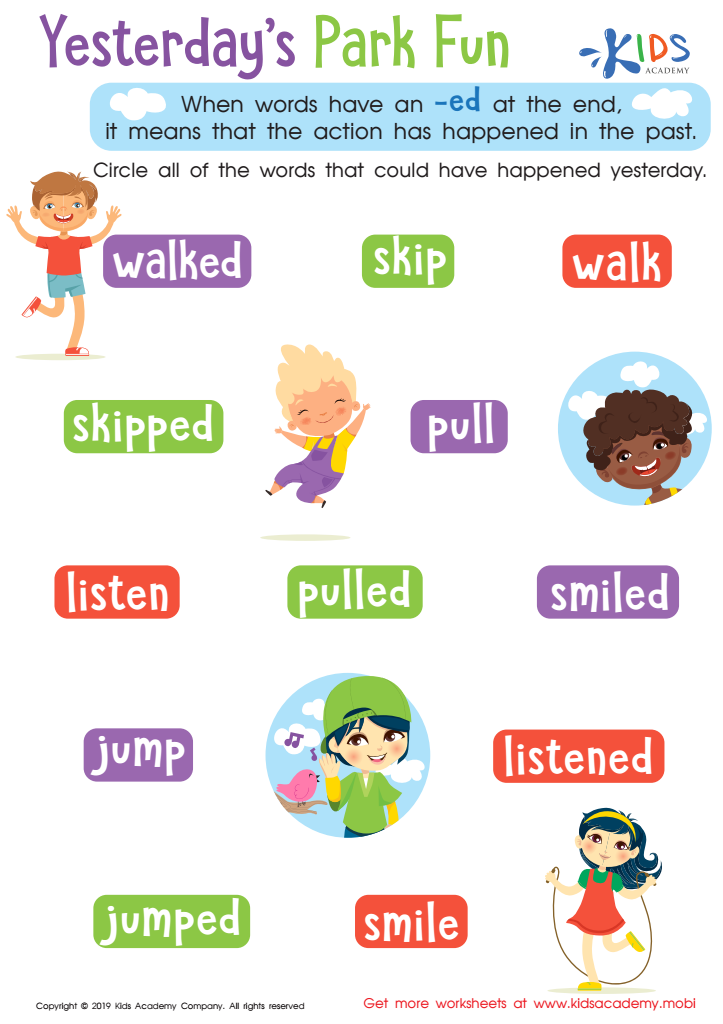
Yesterday's Park Fun Worksheet
Add -ed to the end of words and you get a word that happened in the past. This PDF helps your child understand this concept by giving practice examples: walk, pull, jump and smile can all be transformed into the past tense with a -ed suffix. They'll circle all the words that happened yesterday and learn about the past tense.
Yesterday's Park Fun Worksheet
Worksheet
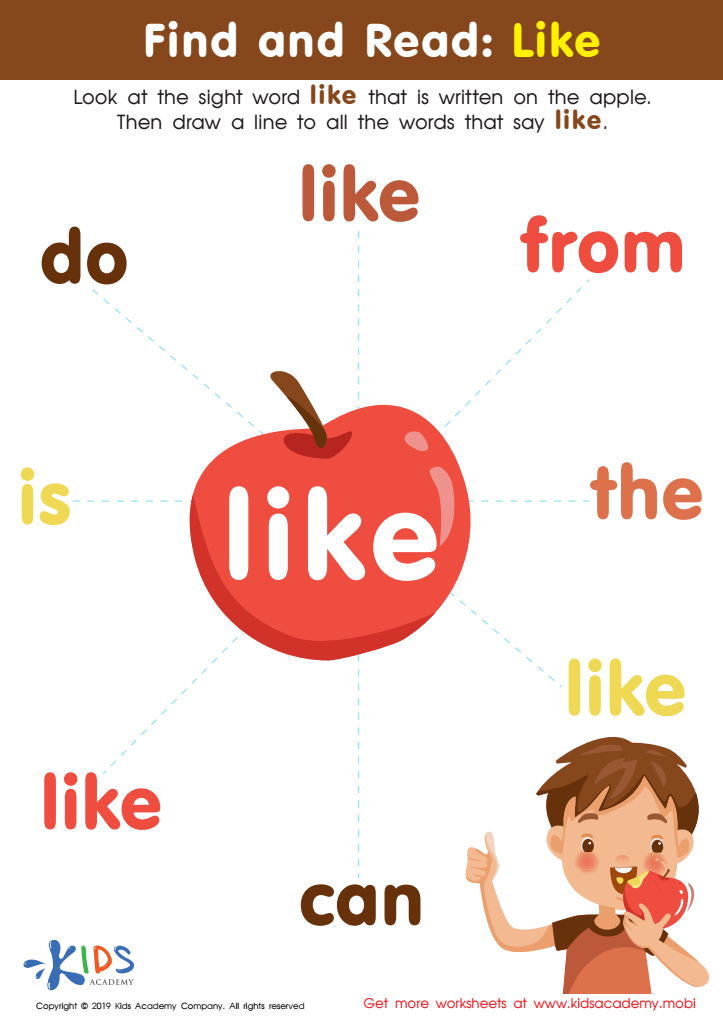
Find and Read: Like Worksheet
Reading starts with learning sight words. This free PDF worksheet helps kids learn the word "like" in various ways. It encourages their visual discrimination skills with its colorful design and traceable lines. It's a great way to help them recognize and differentiate this common sight word from other words that look similar.
Find and Read: Like Worksheet
Worksheet
Join Kids Academy for Free
Who is primarily going to use this learning content?








Vocabulary development is crucial for children aged 3 to 5, as it lays the foundation for their future reading and communication skills. During these formative years, children's brains are particularly receptive to language acquisition. A rich vocabulary not only enhances their ability to express themselves but also helps them understand the world around them.
Parents and teachers play a vital role in fostering vocabulary growth. Engaging children in conversations, reading aloud, and introducing new words in context stimulate their curiosity and interest in language. For example, discussing everyday experiences or relating books to real-life scenarios makes learning engaging and approachable.
Furthermore, strong vocabulary skills positively impact a child's academic success later on. Children with a larger vocabulary often become proficient readers, which is essential for effective learning across all subjects. Additionally, they tend to develop better social skills, as they'll be able to communicate their needs and emotions more clearly.
In summary, supporting vocabulary development in preschool-aged children is not just about learning words; it's about empowering them to explore, connect, and thrive in their future education and beyond. Parents and teachers should prioritize this critical aspect of early childhood development for the benefit of the child’s overall growth.