Chess strategy understanding Easy Worksheets for Ages 3-6
3 filtered results
-
From - To
Discover our engaging "Chess Strategy Understanding Easy Worksheets" tailored for children ages 3-6! These fun and interactive worksheets simplify fundamental chess concepts, providing young learners with a playful introduction to the game. Designed to enhance critical thinking and strategic skills, these activities will captivate your child's imagination while fostering important cognitive development. Through colorful illustrations and simple instructions, children will explore basic chess moves, piece identification, and friendly competition scenarios. Ideal for home or classroom use, these worksheets encourage parent-child interaction and group learning. Start your little one's journey into the world of chess strategy today and nurture a lifelong love of the game!
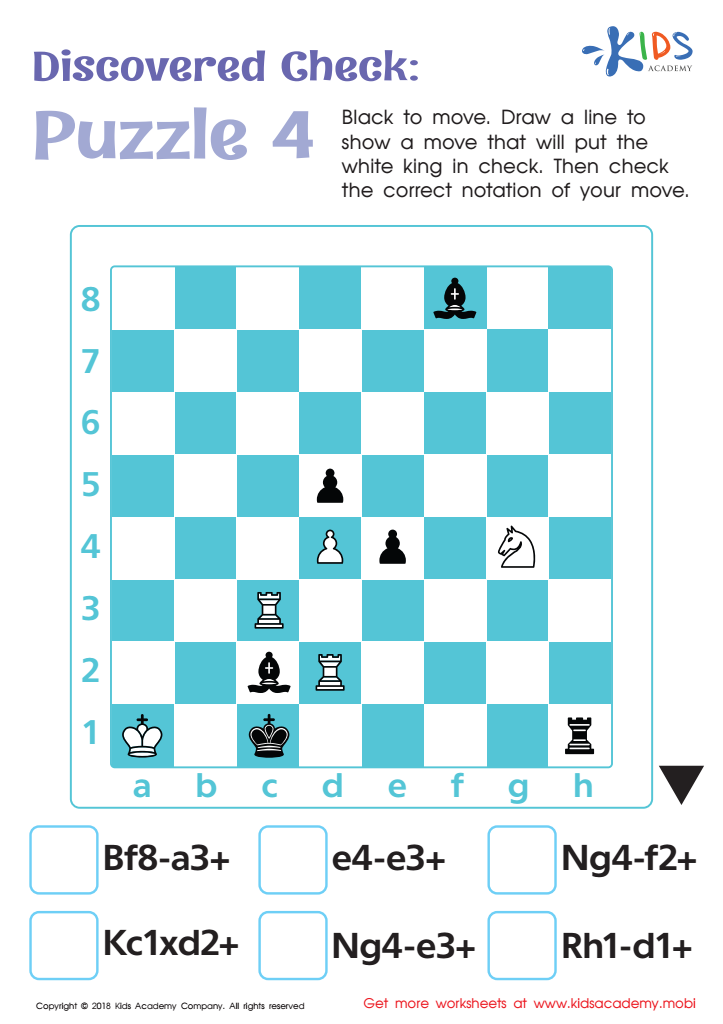
Discovered Check: Puzzle 4 Worksheet

Discovered Check: Puzzle 2 Worksheet
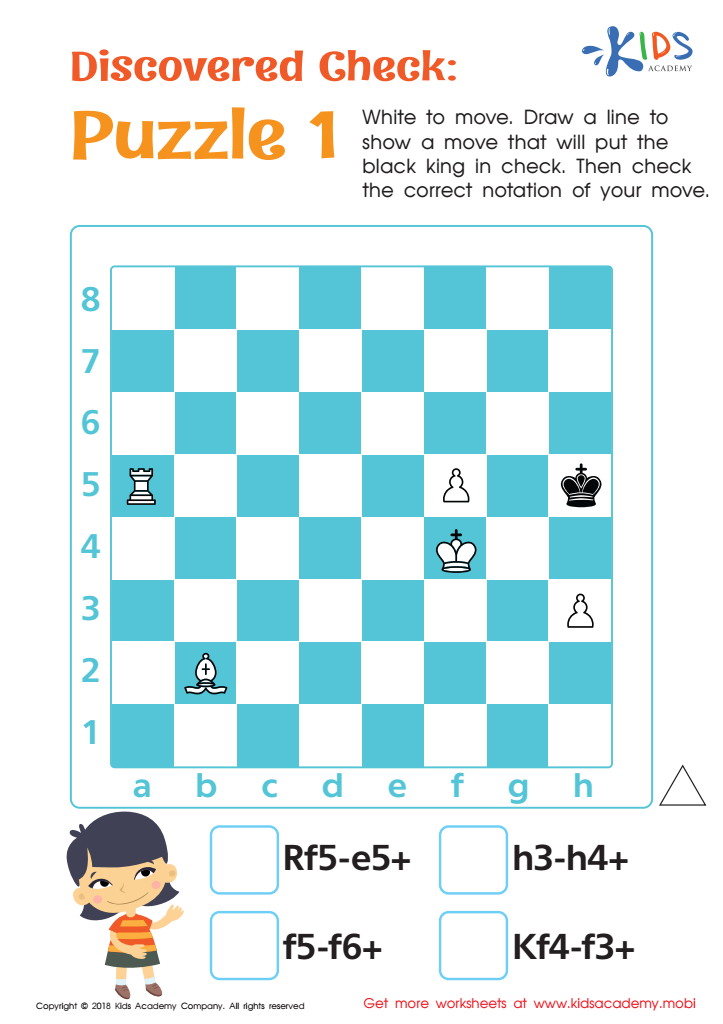
Discovered Check: Puzzle 1 Worksheet








Teaching children aged 3-6 about chess strategy can significantly benefit their cognitive development and emotional growth. At this young age, children are naturally curious and eager to learn new concepts. Introducing chess helps enhance critical thinking skills as they learn to make decisions, anticipate consequences, and think several moves ahead.
Chess encourages problem-solving abilities. Each move prompts players to assess their situation and strategize, helping young minds develop patience and focus. As they explore different strategies, children also cultivate creativity, learning that there are multiple ways to approach a single challenge.
Moreover, chess promotes social skills. As children play with peers or family members, they practice taking turns and handling both wins and losses gracefully. This interaction builds resilience, teaching them to manage emotions effectively.
Additionally, chess introduces basic math concepts and enhances memory skills through pattern recognition and sequencing. With colorful pieces and engaging rules, chess can turn into a fun and stimulating learning tool, making it appealing for both parents and teachers.
Overall, chess is not just a game but an educational resource that nurtures essential life skills, setting a foundation for a child’s future learning and personal development.








