Comparing quantities Easy Worksheets for Ages 3-6
3 filtered results
-
From - To
Comparing Quantities Easy Worksheets for Ages 3-6 by Kids Academy are designed to make learning fun and engaging for young children. These easy and colorful worksheets help kids develop essential skills such as identifying more or less, understanding size, and comparing numbers, quantities, and sets. Perfect for preschool and kindergarten students, each worksheet uses kid-friendly themes to capture attention and boost confidence. Guided by playful images and simple exercises, children will enjoy exploring the world of numbers and quantities while laying a solid foundation for future math success. Start the journey of math proficiency today with Kids Academy's expert-crafted worksheets!
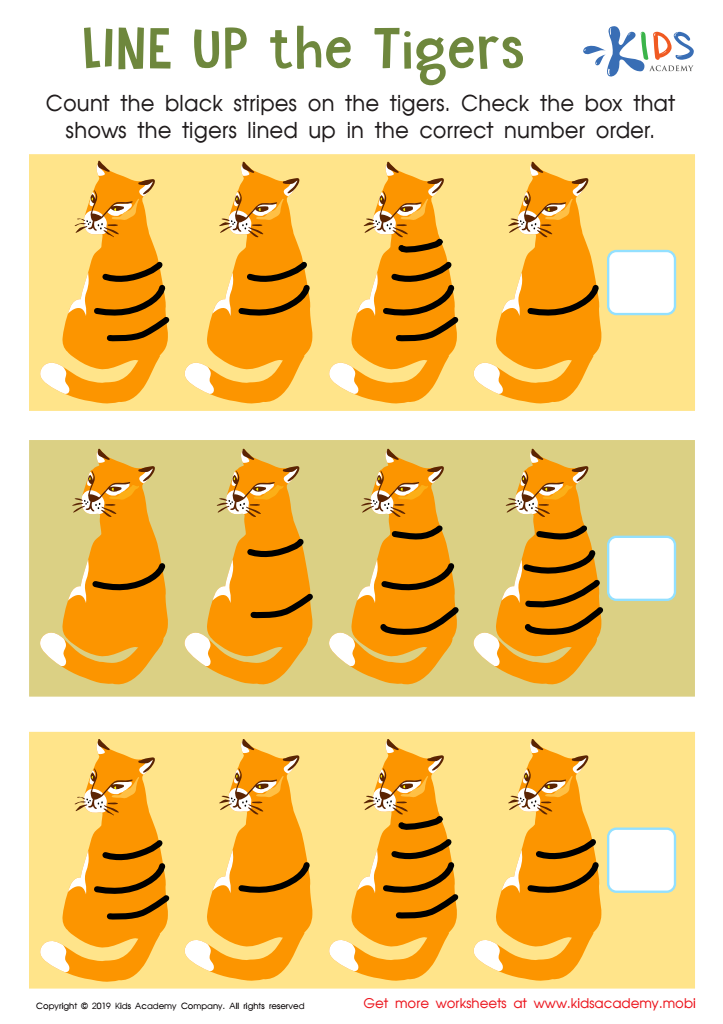
Line up the Tigers Worksheet
 Assign to My Students
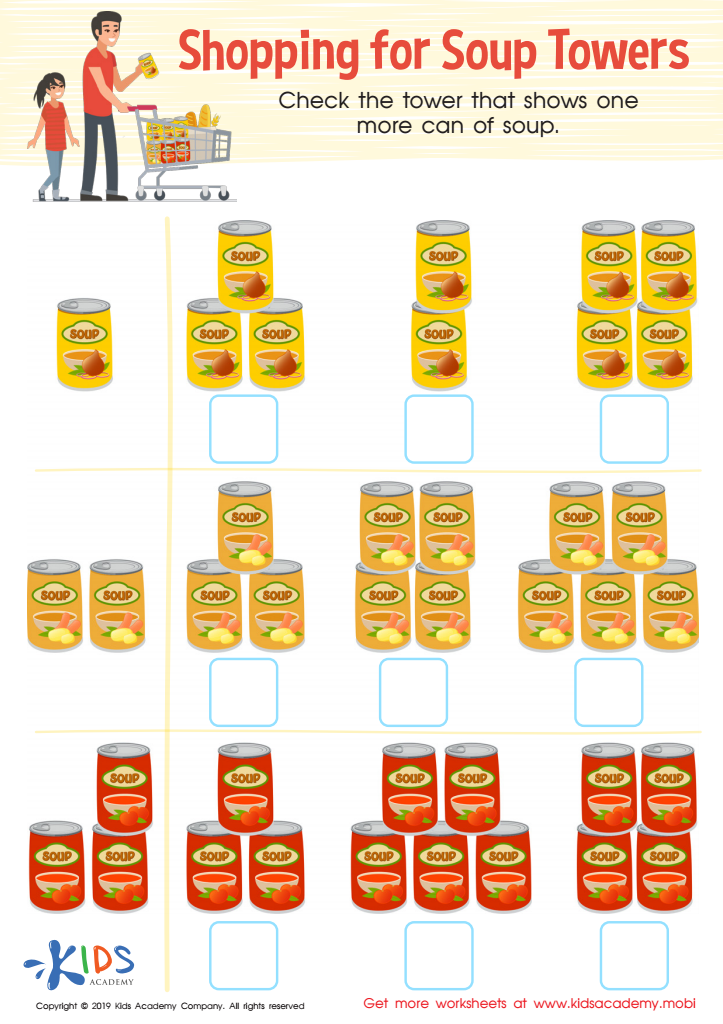
Soup Towers Worksheet
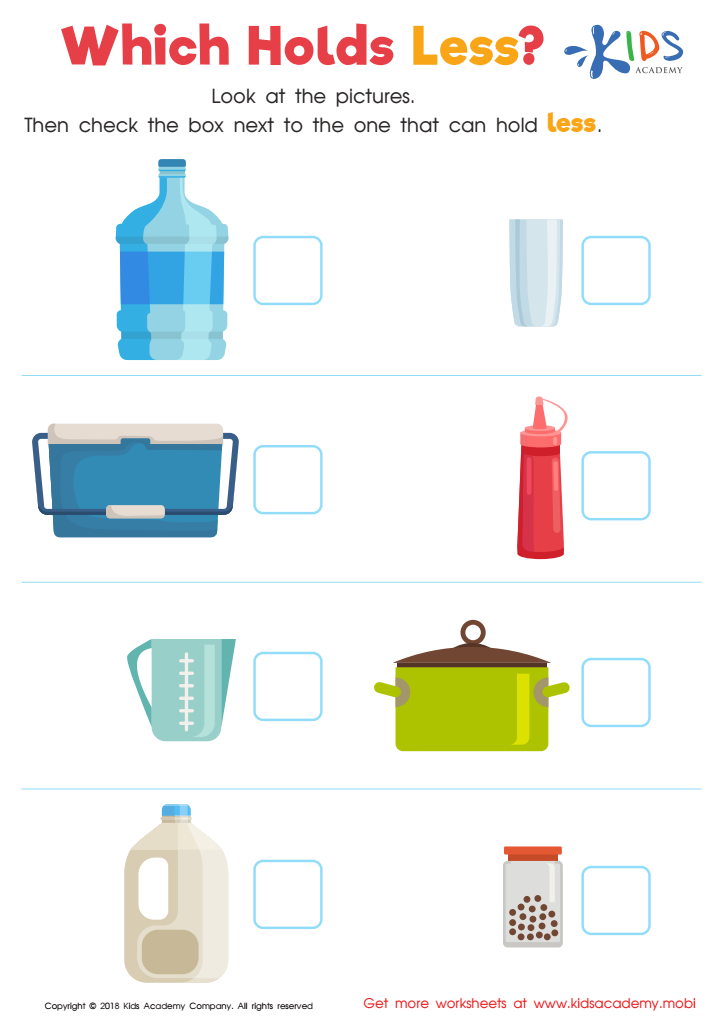
Which Holds Less? Worksheet







Comparing quantities is a cornerstone of early childhood education that significantly bolsters young children's cognitive and mathematical development. For children ages 3-6, the ability to compare quantities sets the stage for more advanced math concepts, such as addition, subtraction, and logical reasoning. Introducing these skills at an early age enables children to grasp the concepts of more, less, bigger, and smaller in a tangible, intuitive manner.
For parents and teachers, fostering this skill helps children develop critical thinking from a young age. This foundational knowledge is critical not only for their academic success but also for everyday decision-making. Simple activities such as comparing the number of apples in two baskets or the height of sandcastles can turn a routine moment into a learning experience that strengthens a child's ability to reason and solve problems.
Moreover, comparing quantities helps improve language skills. Descriptive language used in these activities—like "more than" or "equal to"—enhances vocabulary and comprehension. As young children communicate their observations and findings, they're also advancing their speaking and listening skills.
Above all, making these activities fun fosters a love of learning. By encouraging curiosity and exploration, parents and teachers help children develop a positive attitude toward math and learning in general, setting the groundwork for future success.








