
Shape identification Easy Worksheets for Ages 3-6
5 filtered results
Difficulty Level
Grade
Age
-
From - To
Subject
Activity
Standards
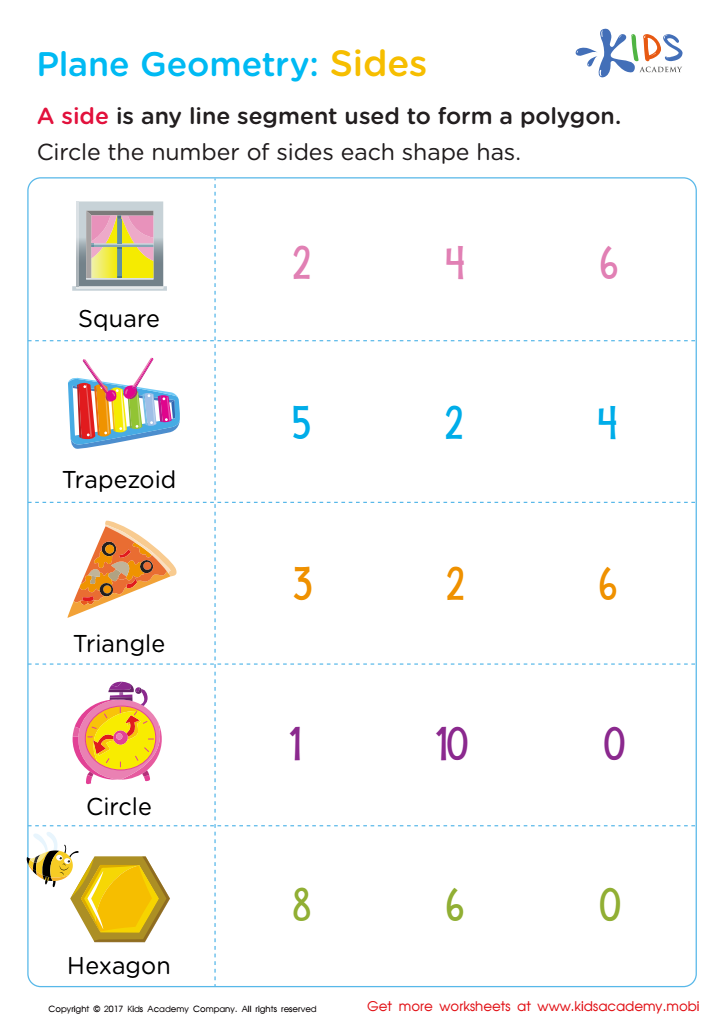
Introduce your little learners to the world of shapes with our "Shape Identification Easy Worksheets" designed specifically for ages 3-6. These engaging resources are perfect for preschool and kindergarten classrooms, helping young children recognize and name basic shapes like circles, squares, triangles, and rectangles. Each worksheet combines fun visuals and simple activities to enhance shape recognition skills while promoting fine motor development. With a variety of colorful designs and interactive tasks, your child will enjoy practicing with these worksheets at home or in school. Download now to help your child build a strong foundation in shape identification and boost their confidence in learning!
Favorites
With answer key
Interactive
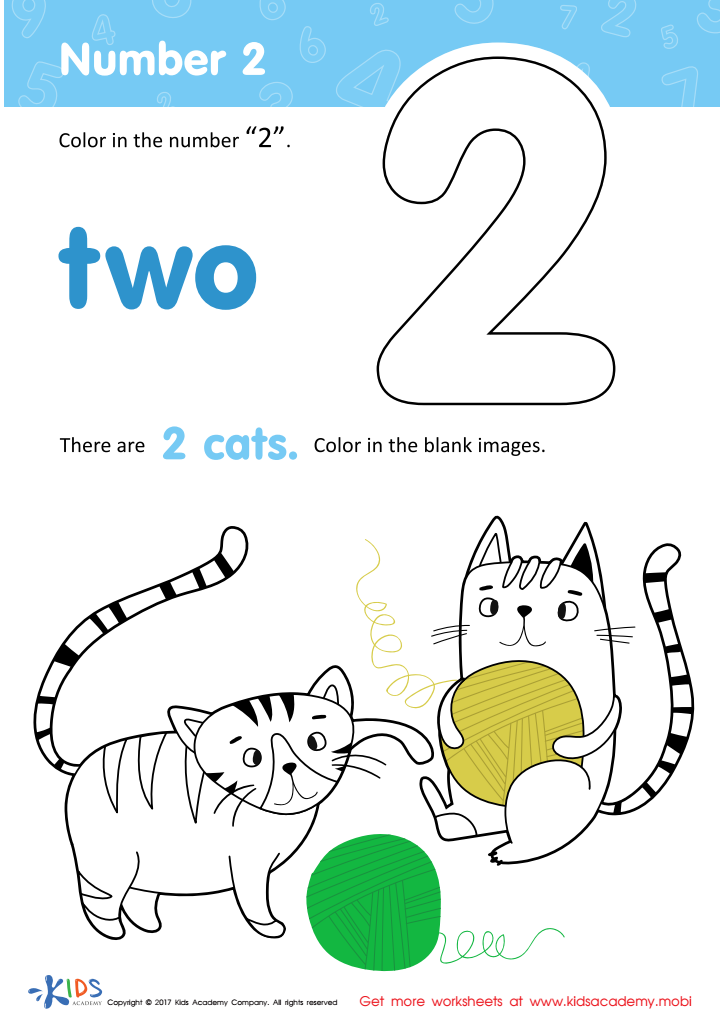
Number 2 Printable
Help your child learn to recognize the number two with these cats and their yarn balls. Print this coloring page – it's great for counting and coloring fun! Your child will develop basic numeracy skills as they visually see numbers in action.
Download (PDF)
 Assign to My Students
Assign to My Students
Number 2 Printable
Worksheet
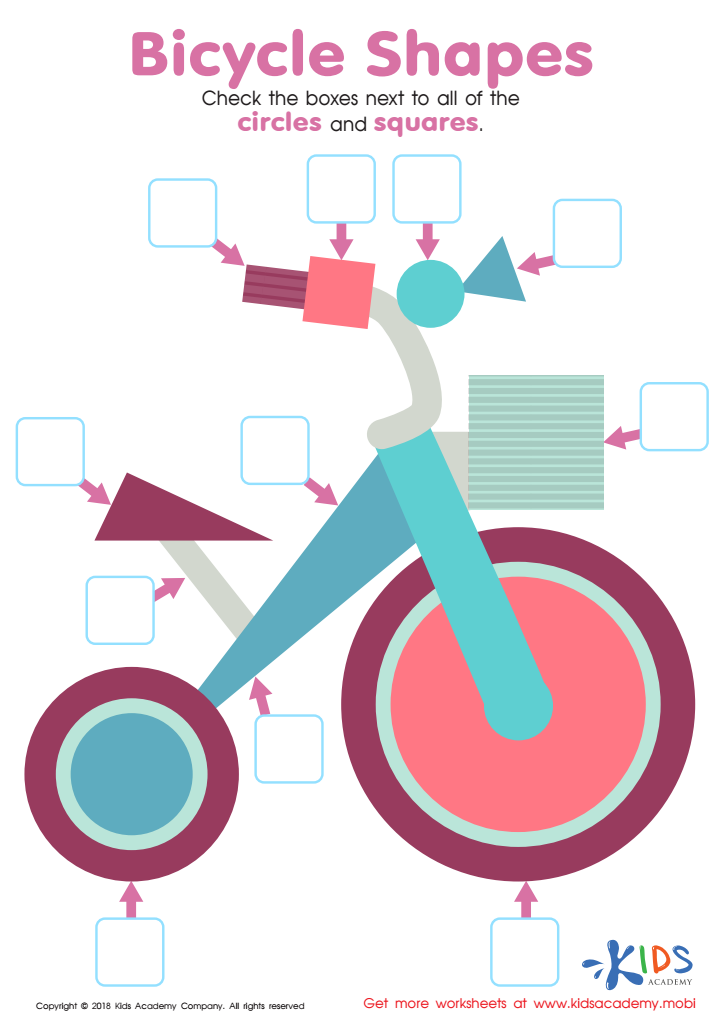
Bicycle Shapes Worksheet
This fun geometry worksheet for preschoolers asks the child to spot hidden shapes (circles, squares) in a colorful bicycle. Each shape varies in size and the child checks the box when it's found. It's a visual way to teach shapes.
Bicycle Shapes Worksheet
Worksheet
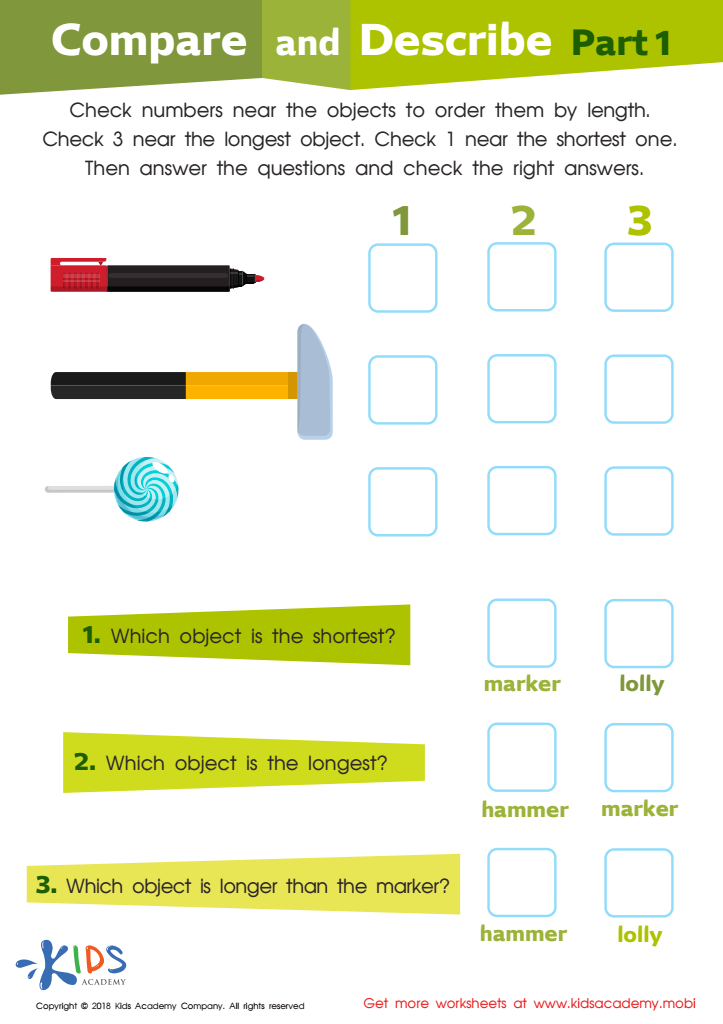
Compare and Describe: Part 1 Worksheet
In this worksheet from Kids Academy, kids can start learning measurement in stages. Observe the images, then compare their length - which one is shortest? Which one is longest? Answer the questions at the bottom to complete the sheet. It's an easy way to help kids understand measurement basics.
Compare and Describe: Part 1 Worksheet
Worksheet
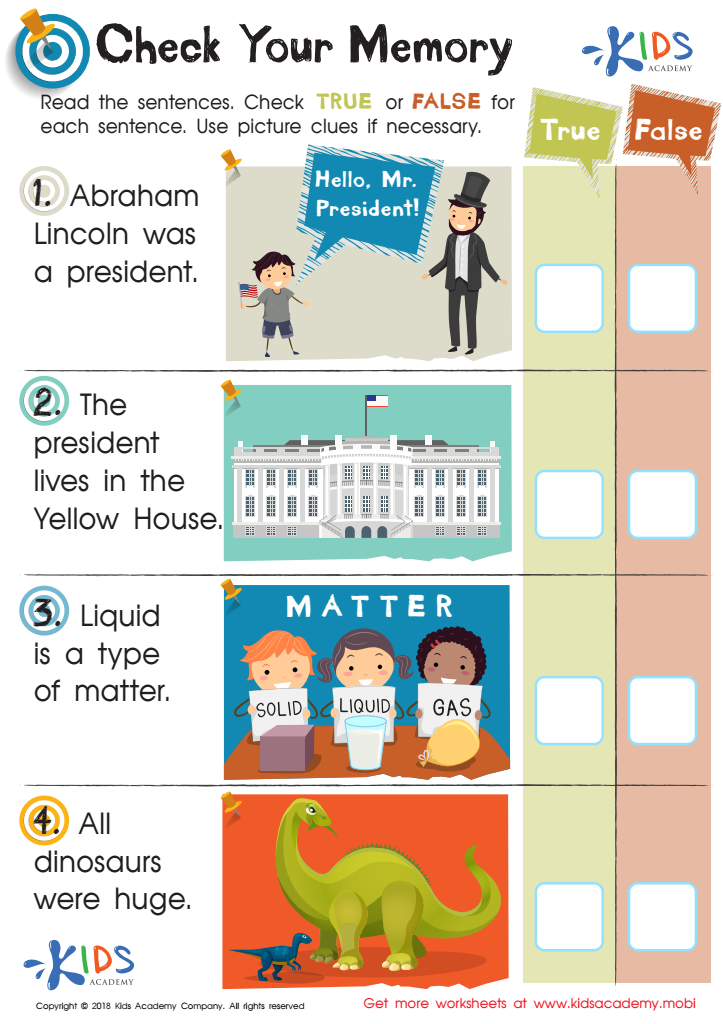
Check Memory Worksheet
Assisting your kids with their homework and using worksheets is a great way for them to learn. The vibrant visuals in this printout can help stimulate the mind and motivate your child. Have them read the sentences and then point to the associated images. Afterwards, ask them to state True or False for each sentence. If they are still uncertain, offer them the picture clues to assist further.
Check Memory Worksheet
Worksheet
Join Kids Academy for Free
Who is primarily going to use this learning content?








Shape identification is a fundamental skill for children aged 3-6, laying the foundation for various cognitive and developmental milestones. For parents and teachers, understanding its significance is crucial. Firstly, recognizing shapes enhances visual discrimination, a vital precursory skill for reading and writing. By identifying shapes, children learn to correspond symbolically, helping them grasp letters and numbers in the future.
Moreover, shape identification fosters critical thinking and problem-solving abilities. When children classify objects or shapes, they begin to understand concepts like similarity, difference, and categorization, skills that are essential in mathematics and science. Additionally, engaging in shape-related activities can promote fine motor skills as children manipulate shape sorters or trace shapes, crucial for their overall physical development.
Socially, group activities that involve shape exploration encourage collaboration and communication among peers, nurturing valuable interpersonal skills. Finally, recognizing shapes and their properties can spark children’s creativity, allowing them to engage in arts and crafts which promote self-expression. Ultimately, by cultivating shape identification, parents and teachers are equipping children with essential skills for academic success and holistic development, nurturing a sense of curiosity and love for learning that will extend well beyond early childhood.








