
Visual Learning Easy Worksheets for Ages 3-6
5 filtered results
Difficulty Level
Grade
Age
-
From - To
Subject
Activity
Standards
Discover our engaging collection of Visual Learning Easy Worksheets for ages 3-6, designed to make early education fun and effective! At Kids Academy, we offer a variety of colorful and interactive printables that help young learners develop vital visual processing skills. From pattern recognition to matching exercises, our worksheets not only support cognitive growth but also enhance fine motor skills. Perfect for preschoolers and kindergarteners, these resources facilitate independent learning while keeping kids entertained and motivated. Give your child a head start on their educational journey with our expertly crafted, easy-to-understand worksheets tailored for young minds!
Favorites
With answer key
Interactive
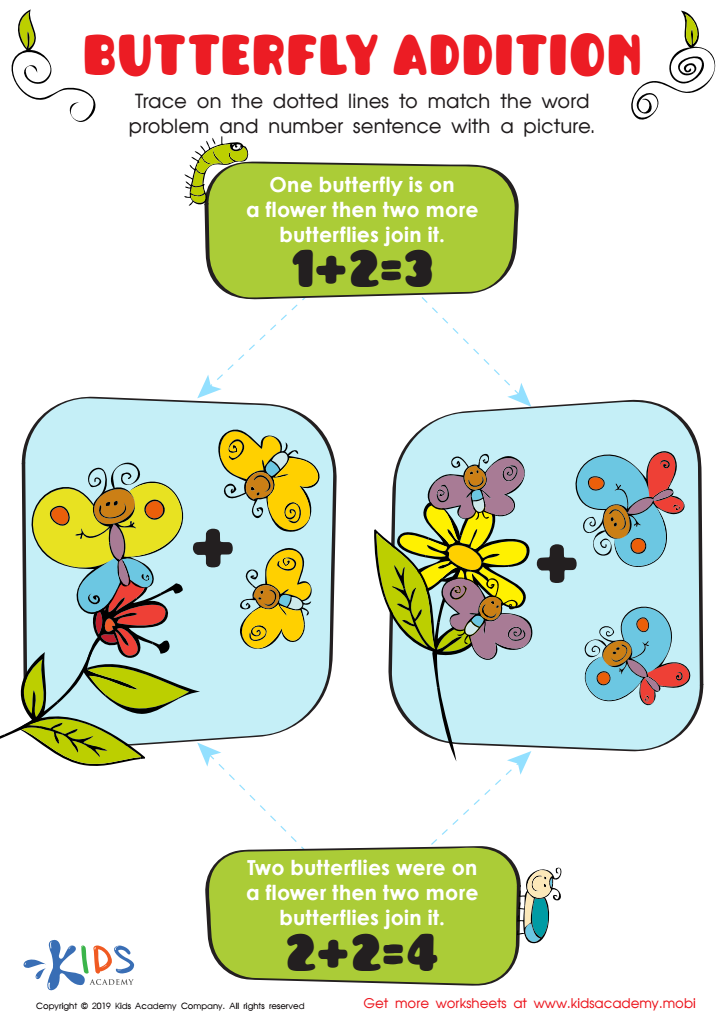
Butterfly Addition Worksheet
This tracing sheet is great for kids to work on math skills and have fun too. Read the word problems to them, then help them trace the dotted lines to match the problem and number sentence to a picture. Not only is it educational, it's beautiful too - your kids will love learning about butterflies!
 Assign to My Students
Butterfly Addition Worksheet
Worksheet
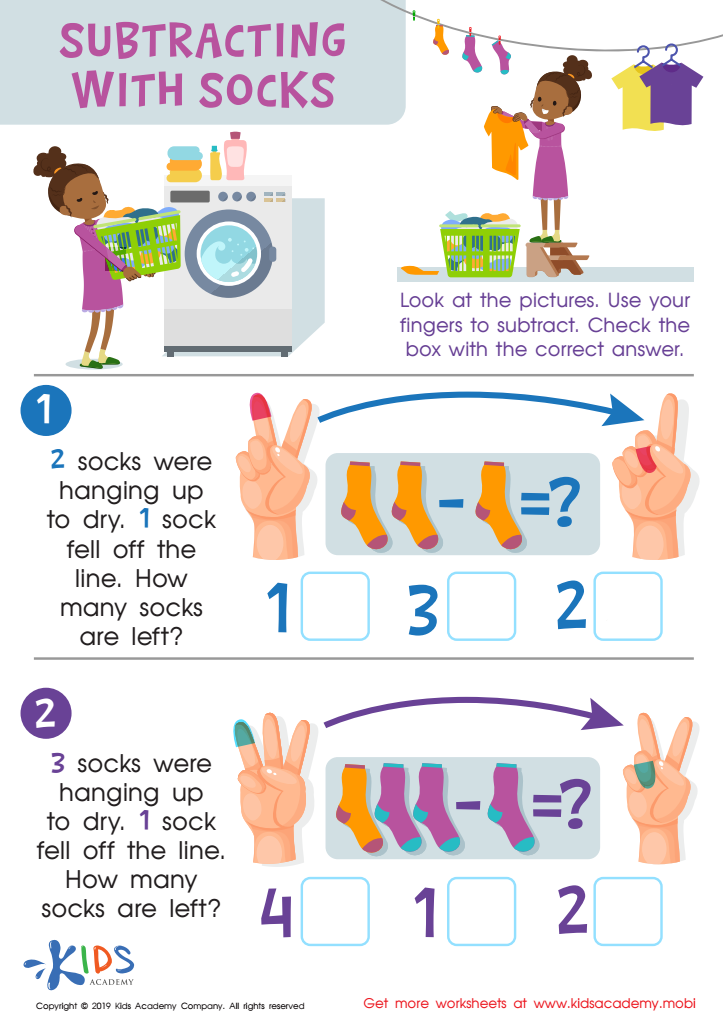
Subtracting Socks Worksheet
Before beginning this exercise with your children, warm them up with a counting game. If math is not their favorite subject, use this worksheet. Help them read the two word problems, then use their fingers to count and subtract. Ask them to select the correct answer and check the box.
Subtracting Socks Worksheet
Worksheet
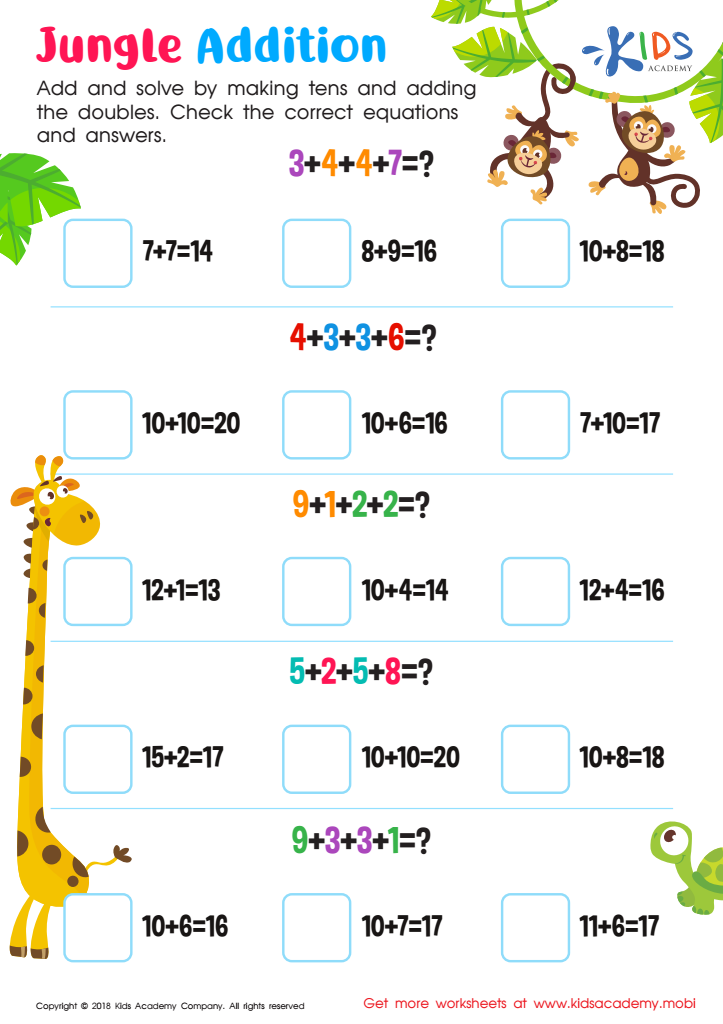
Jungle Addition Worksheet
With this worksheet, kids can use the strategies of making tens and adding doubles to add numbers with more than three addends. They'll practice choosing the right method and become more confident in their calculations, enabling quicker, more efficient computation.
Jungle Addition Worksheet
Worksheet
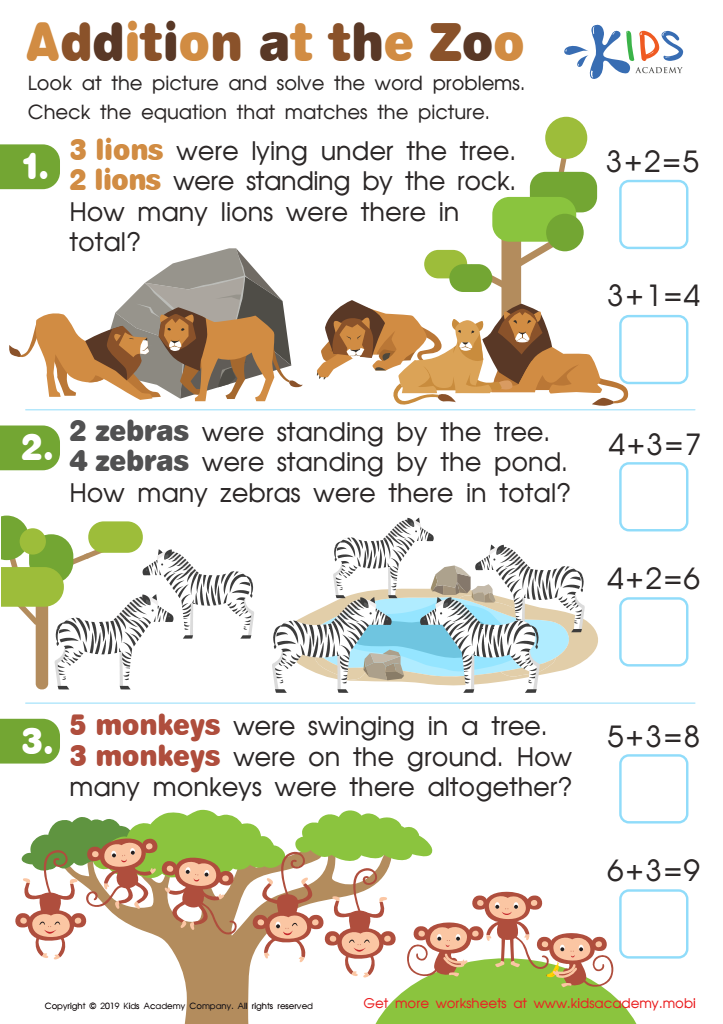
Addition at the Zoo Worksheet
Visit the zoo with your kids and point out all the different animals. Ask them to name their favorites and identify animals on a worksheet. Challenge them to solve word problems related to the pictures. Ask them for the equation that fits the picture and check the answer.
Addition at the Zoo Worksheet
Worksheet
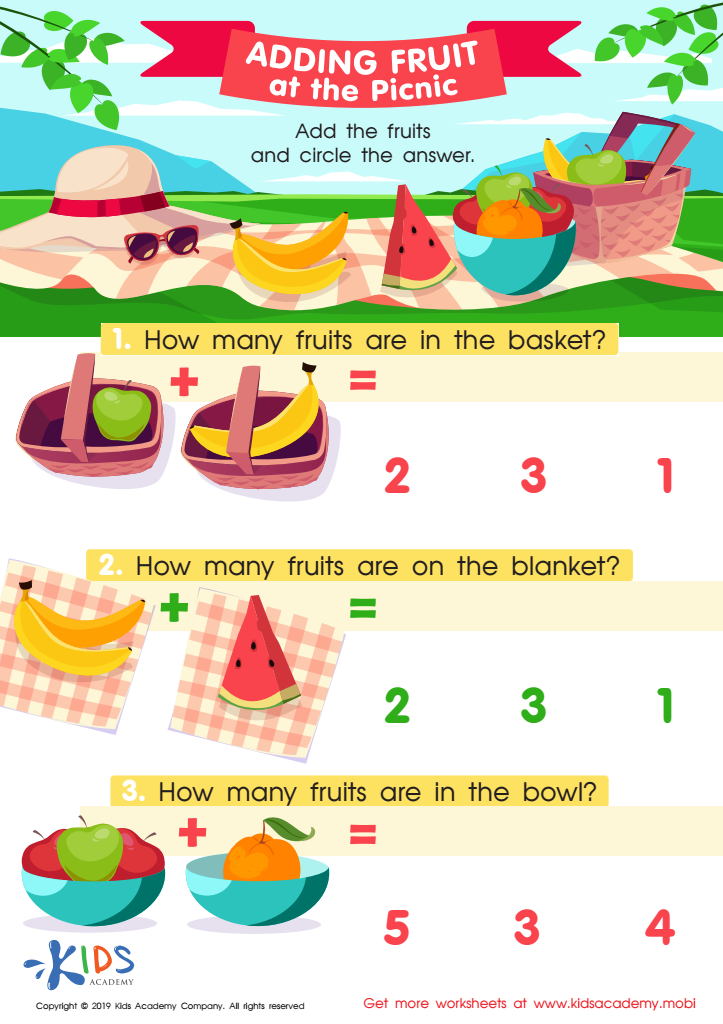
Adding Fruit at the Picnic Worksheet
Picnics are a great way for the family to enjoy a fun day in the sun! Get your kids involved by having them help load the picnic basket and do this worksheet to practice their math skills while they get ready. Identify the fruits in the picture, add them up, and circle the correct answer.
Adding Fruit at the Picnic Worksheet
Worksheet
Join Kids Academy for Free
Who is primarily going to use this learning content?








Parents and teachers should care about visual learning for children ages 3-6 because it fosters early cognitive and language development, critical foundations for academic success. At this young age, children are highly receptive to visual stimuli, which can make learning more engaging and effective. Utilizing visual elements such as pictures, diagrams, and videos caters to their natural proclivity for concrete, sensory experiences, making complex concepts easier to grasp.
Visual learning also supports diverse learning styles, ensuring that visual learners—comprising a significant portion of early learners—are adequately addressed. It can bridge communication gaps, especially for young children who may not yet have strong verbal skills but can interpret and recall visual information more readily.
Moreover, visual aids can enhance memory retention and comprehension. Tools like flashcards, storybooks rich in illustrations, and interactive resources help solidify information by creating strong mental images. This is invaluable at a stage where vocabulary and general knowledge are rapidly expanding.
Additionally, visual learning can instill a love for discovery and curiosity, encouraging children to explore and understand their environment independently. It serves as an excellent precursor to more complex learning, laying a solid groundwork that will benefit children throughout their educational journey. In summary, investing in visual learning techniques equips young learners with essential skills while making early education a joyful and fruitful experience.








