Subtraction practice Easy Addition and Subtraction Word Problems Worksheets for Ages 3-6
12 filtered results
-
From - To
Discover a fun and engaging way to help young learners master subtraction with our "Easy Addition and Subtraction Word Problems Worksheets." Designed for children ages 3-6, these worksheets offer a variety of colorful, interactive activities that simplify subtraction concepts through relatable word problems. By incorporating everyday scenarios, children will develop essential math skills while enjoying the learning process. Ideal for parents and educators, our resources foster critical thinking and problem-solving abilities in early learners. With a gentle introduction to subtraction, these worksheets create a strong foundation for future math success. Start your child’s learning journey today!
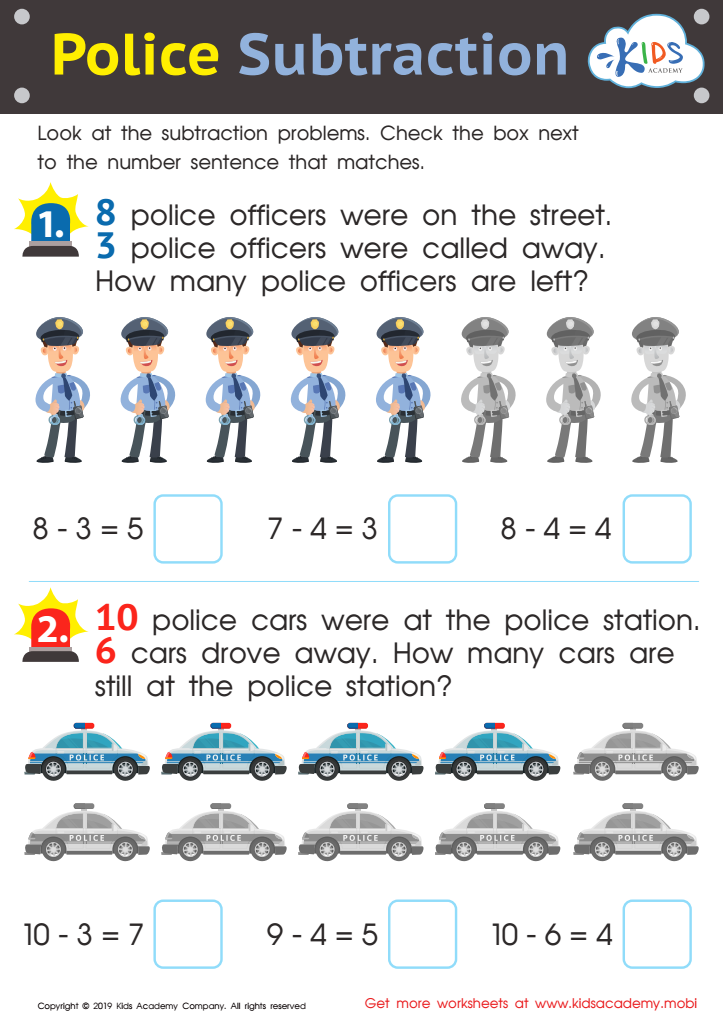
Police Subtraction Worksheet
 Assign to My Students
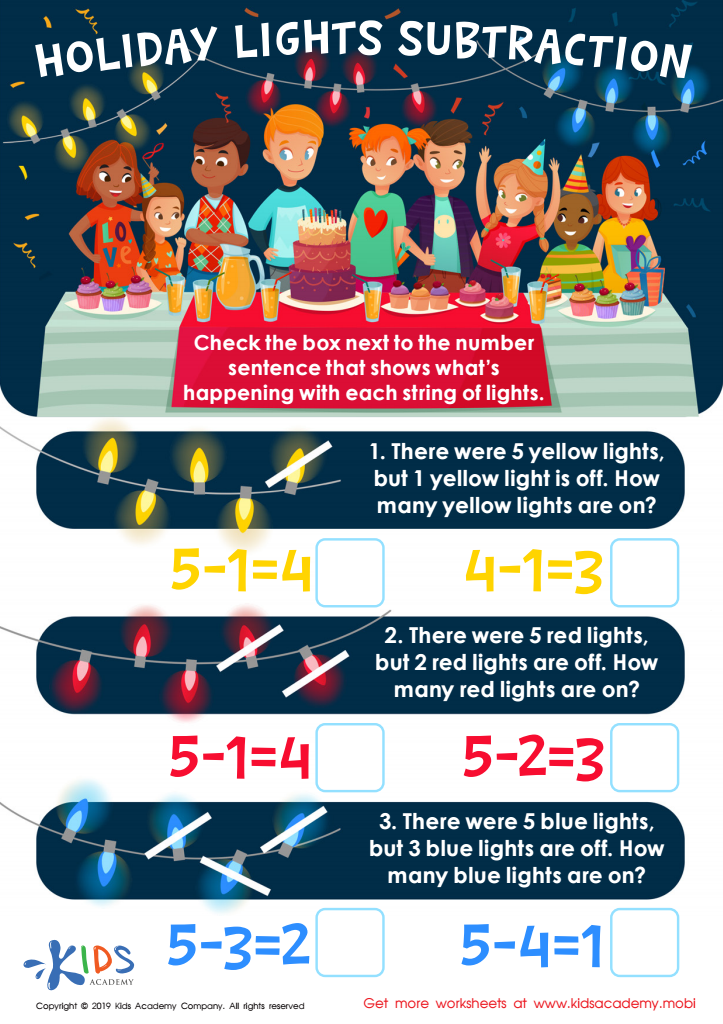
Holiday Lights Subtraction Worksheet
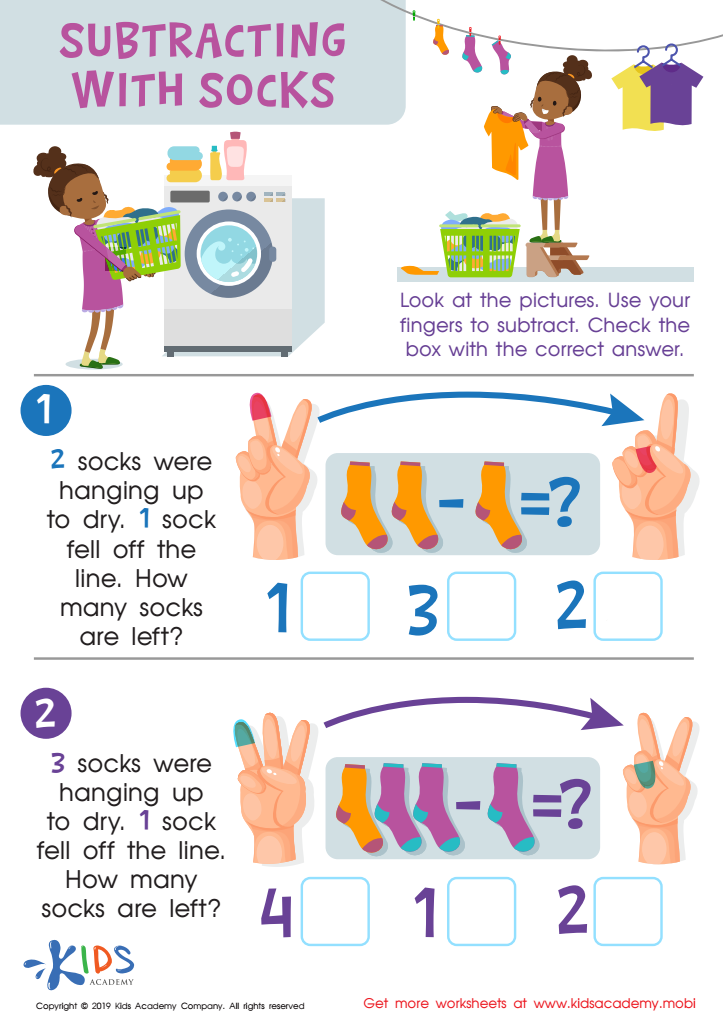
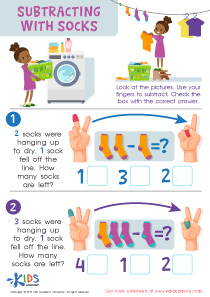
Subtracting Socks Worksheet
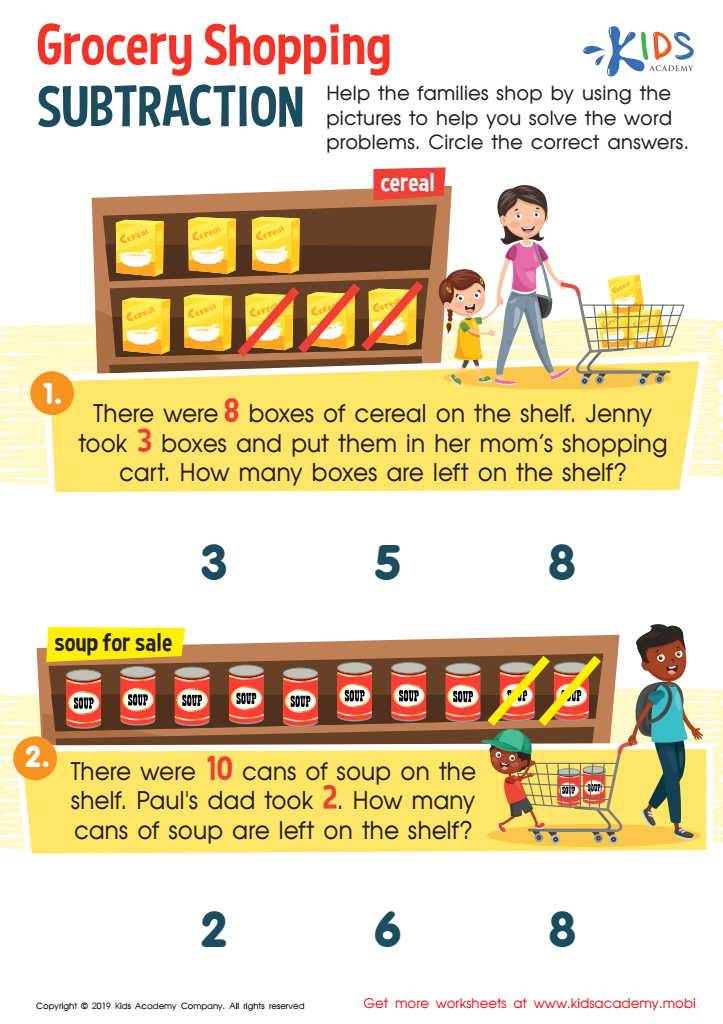
Grocery Shopping Subtraction Worksheet
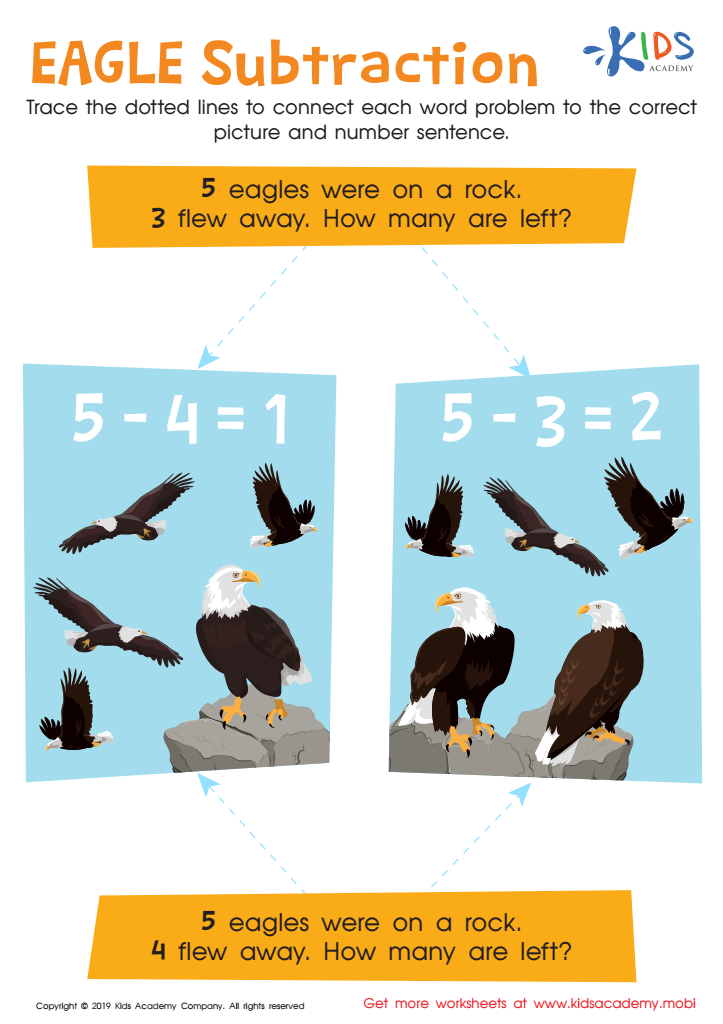
Eagle Subtraction Worksheet
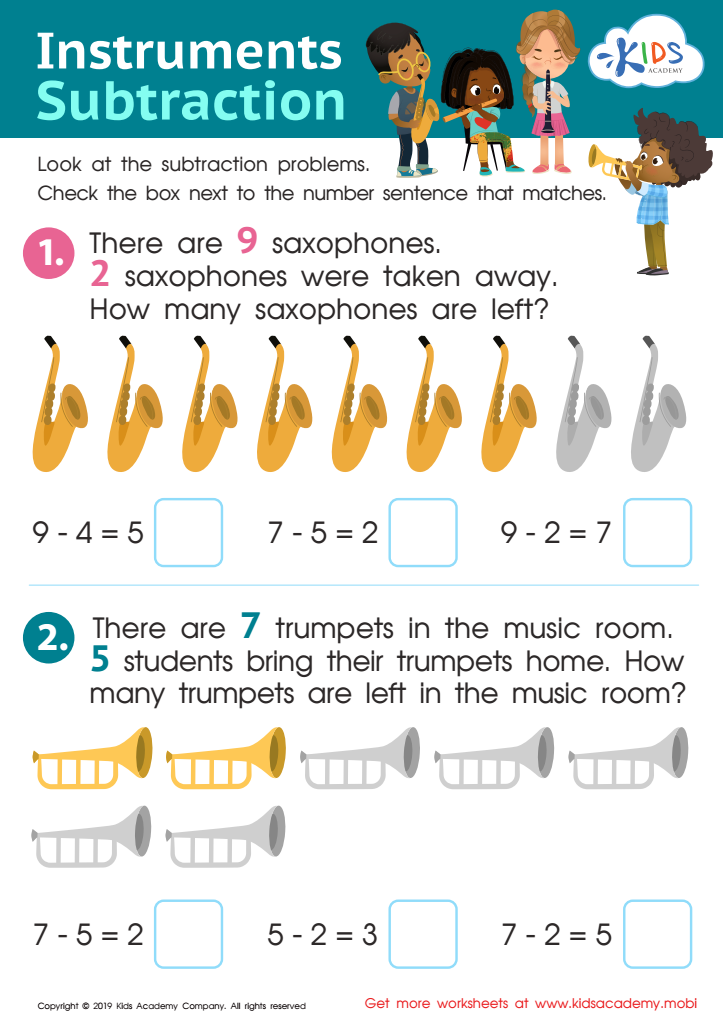
Instrument Subtraction Worksheet
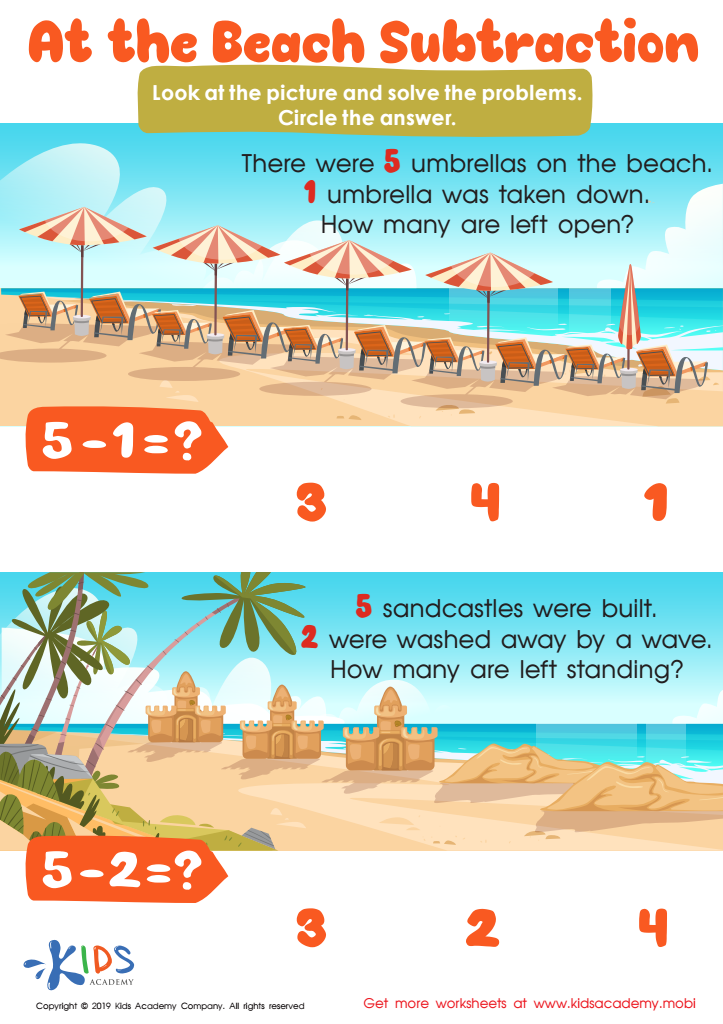
At the Beach Subtraction Worksheet
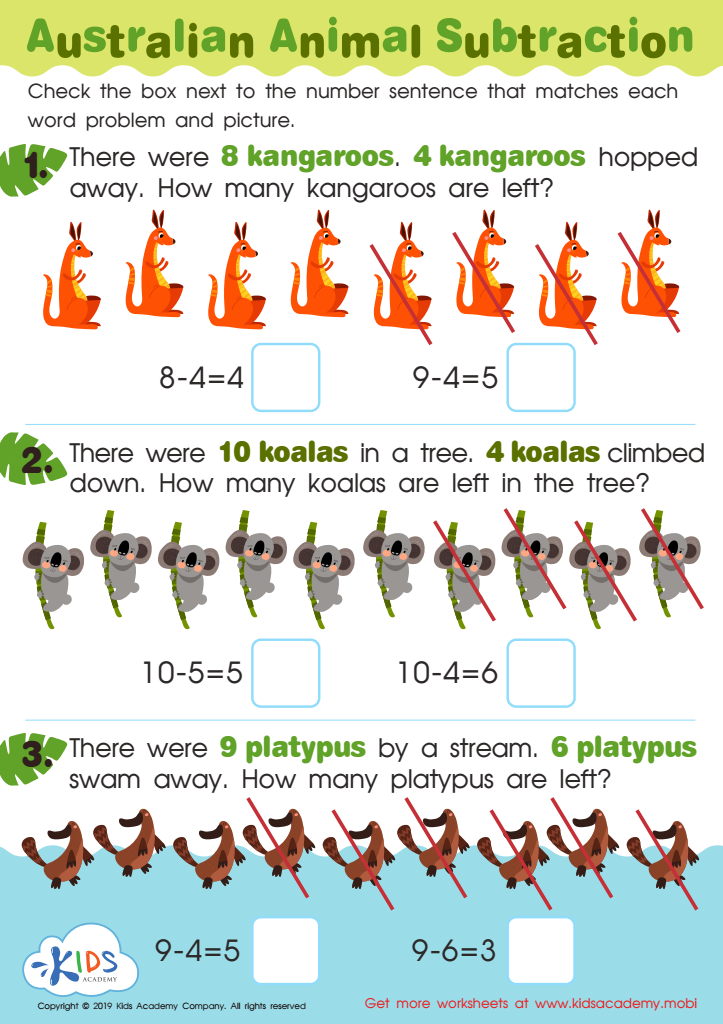
Australian Animal Subtraction Worksheet
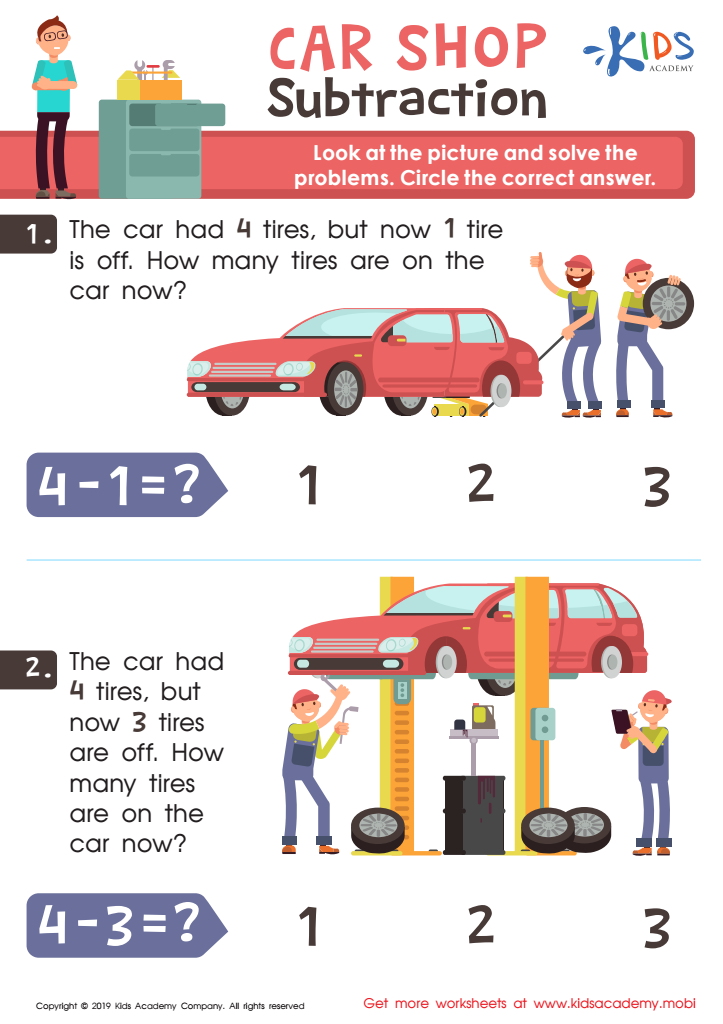
Car Shop Subtraction Worksheet
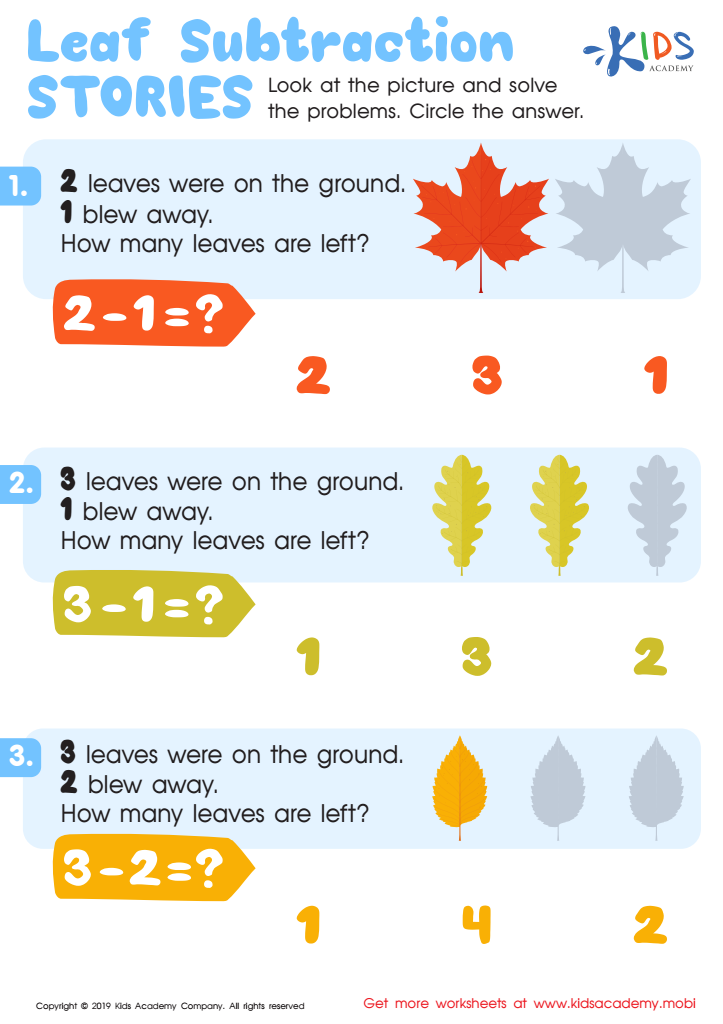
Leaf Subtraction Stories Worksheet
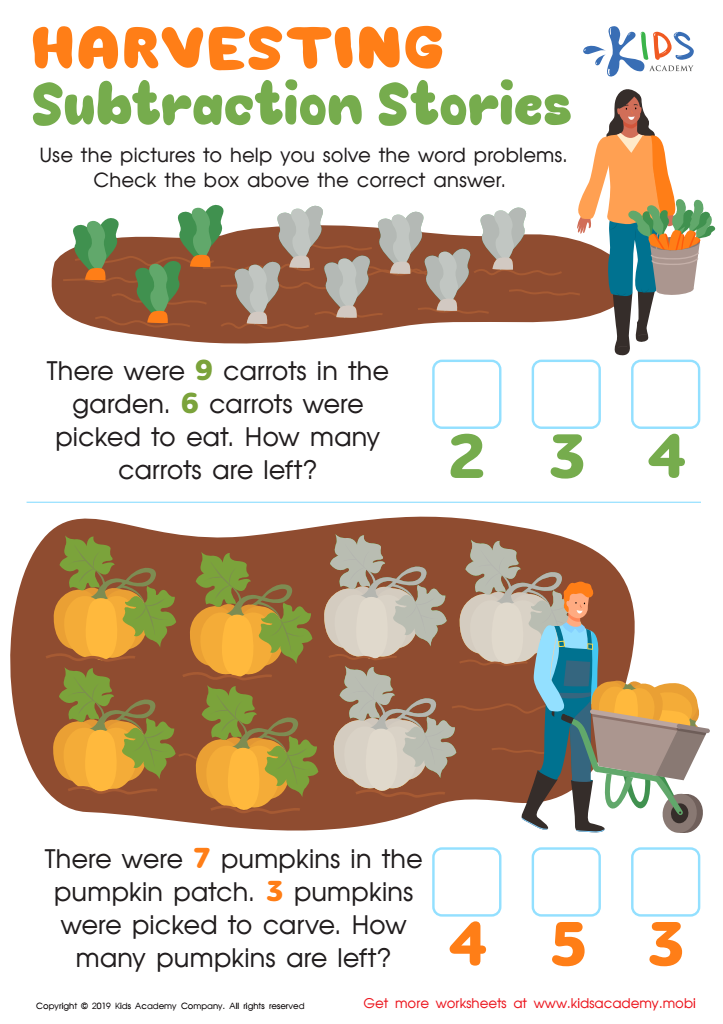
Harvesting Subtraction Stories Worksheet
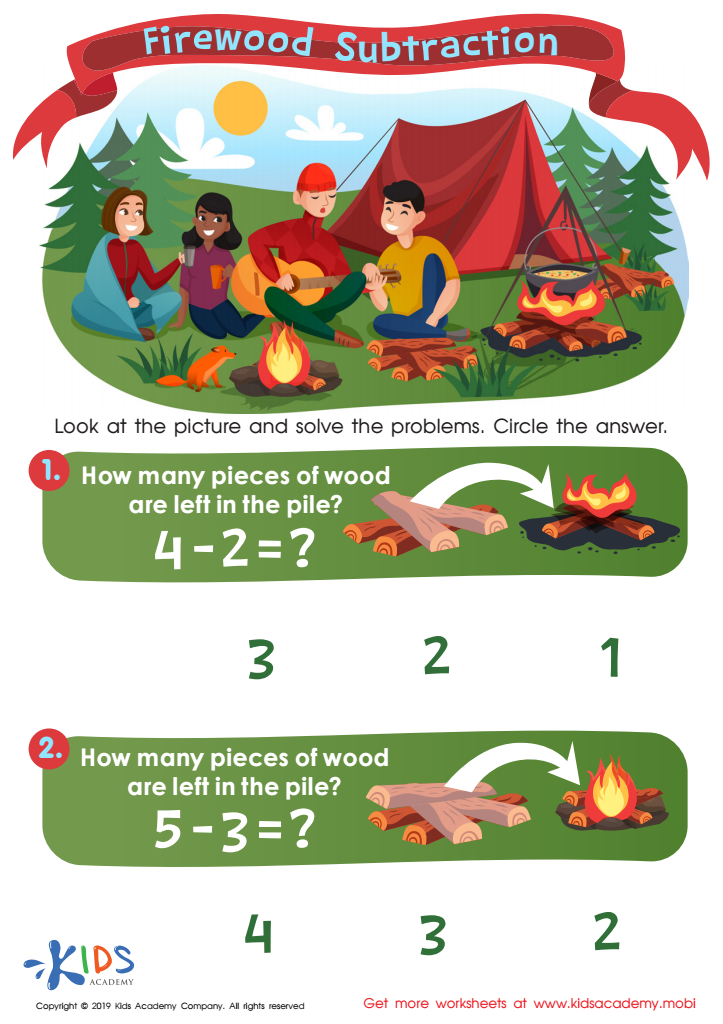
Firewood Subtraction Worksheet








Parents and teachers play a crucial role in laying a strong foundation for children's mathematical skills, particularly in early years, ages 3 to 6. Subtraction practice, alongside easy addition and subtraction word problems, is essential for several reasons.
Firstly, mastering subtraction fosters critical thinking skills. It encourages children to decode problems and think logically about quantities and relationships. Word problems introduce a narrative element, making math relatable and engaging, thereby enhancing comprehension and retention.
Secondly, practicing subtraction helps strengthen number sense, as children learn to recognize patterns and relationships between numbers. This cognitive development is fundamental as it prepares them for more complex math concepts in higher grades.
Moreover, these activities promote confidence. As children practice and master subtraction, they gain a sense of achievement, which can foster a positive attitude towards math and learning in general.
Finally, collaborative learning can occur during these sessions, as parents and teachers engage with children in solving problems, enhancing communication skills and deepening relationships. Thus, subtraction practice, paired with engaging word problems, not only enriches mathematical understanding but also supports holistic development, making it an essential focus for early education.