Number comprehension Easy Addition & Subtraction Worksheets for Ages 3-6
6 filtered results
-
From - To
Introduce your young learner to the fundamentals of math with our Number Comprehension Easy Addition & Subtraction Worksheets designed for children ages 3-6. These engaging, age-appropriate worksheets provide a variety of fun exercises that help develop number knowledge, improve counting skills, and lay a solid foundation for addition and subtraction concepts. Whether at home or in the classroom, these printable resources make learning enjoyable and accessible, encouraging a love of math from an early age. Support your child's educational journey with our expertly crafted materials, ensuring they grasp essential math skills with confidence and ease.
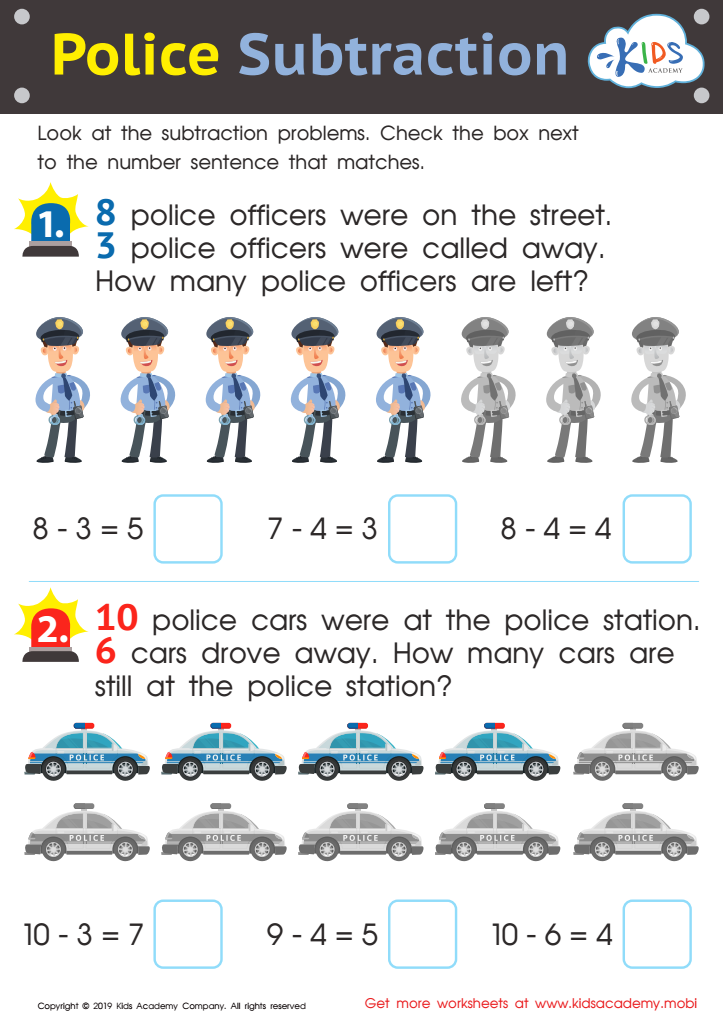
Police Subtraction Worksheet
 Assign to My Students
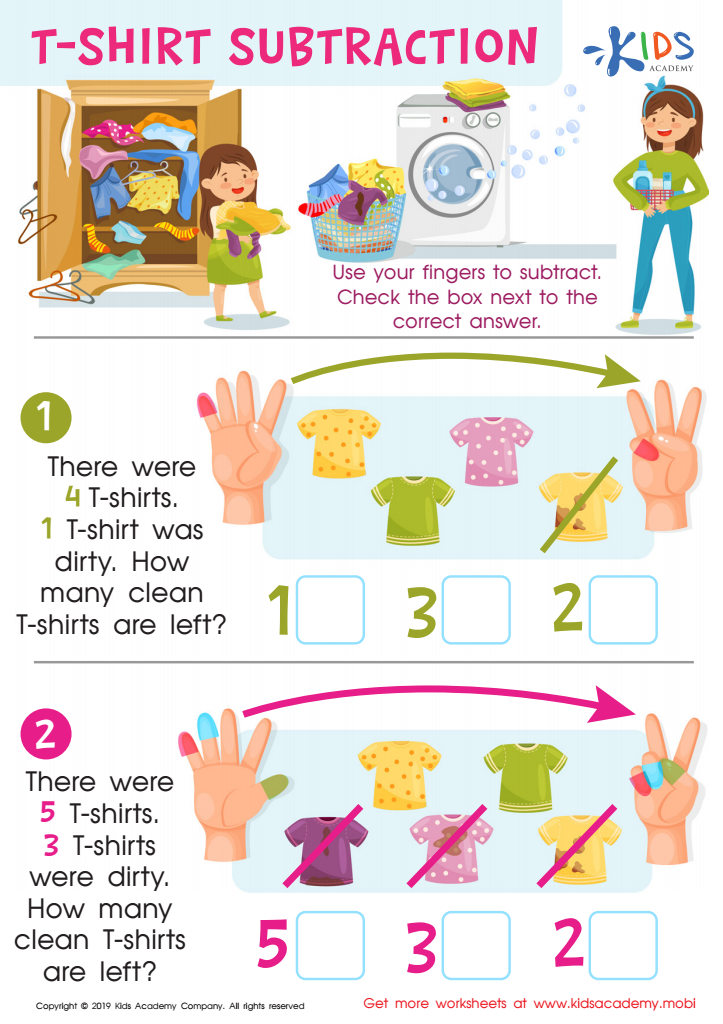
T-shirt Subtraction Worksheet
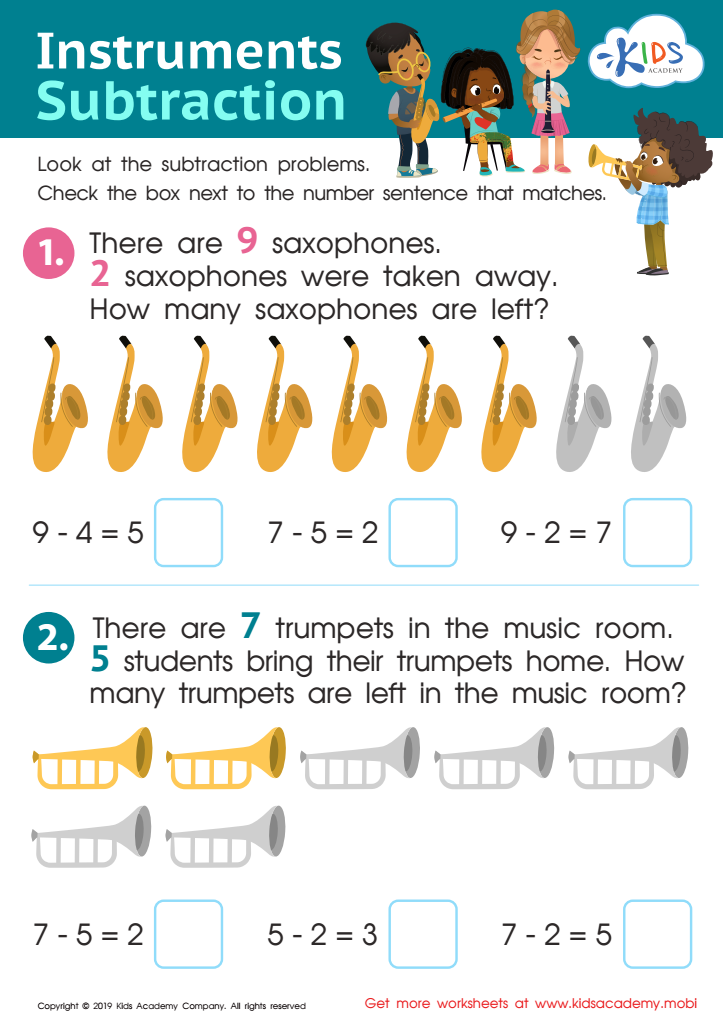
Instrument Subtraction Worksheet
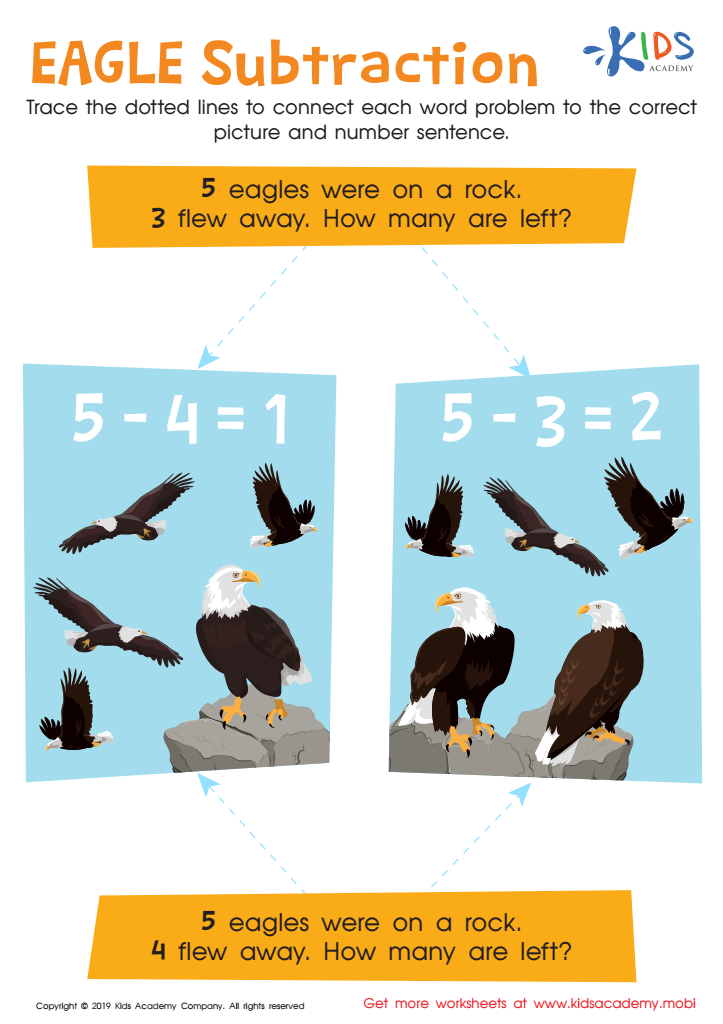
Eagle Subtraction Worksheet
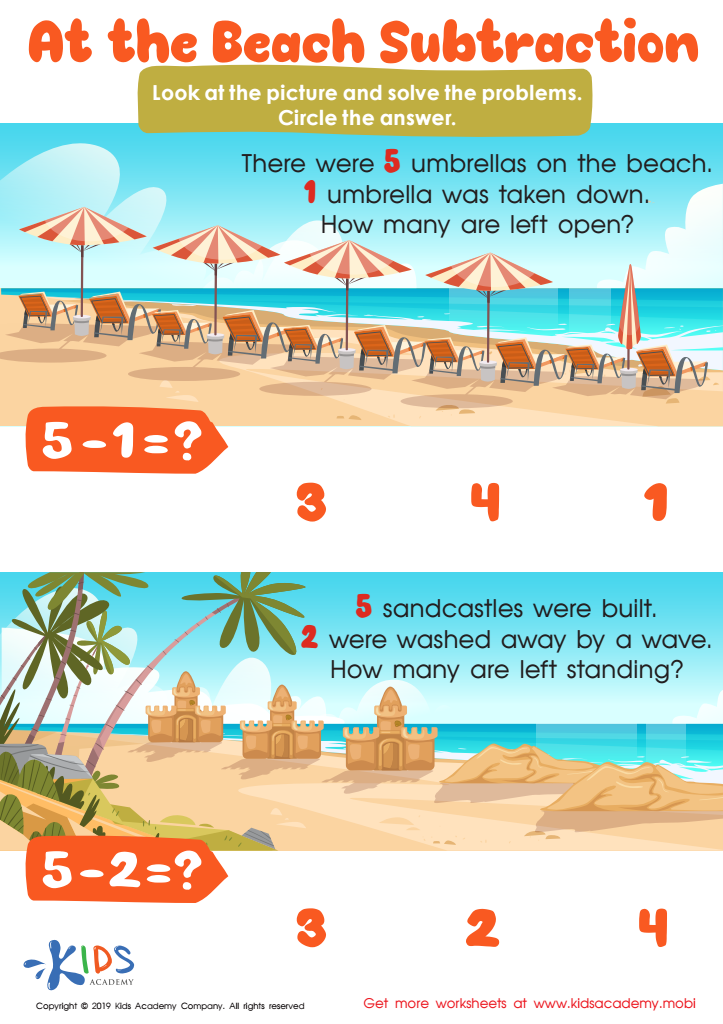
At the Beach Subtraction Worksheet
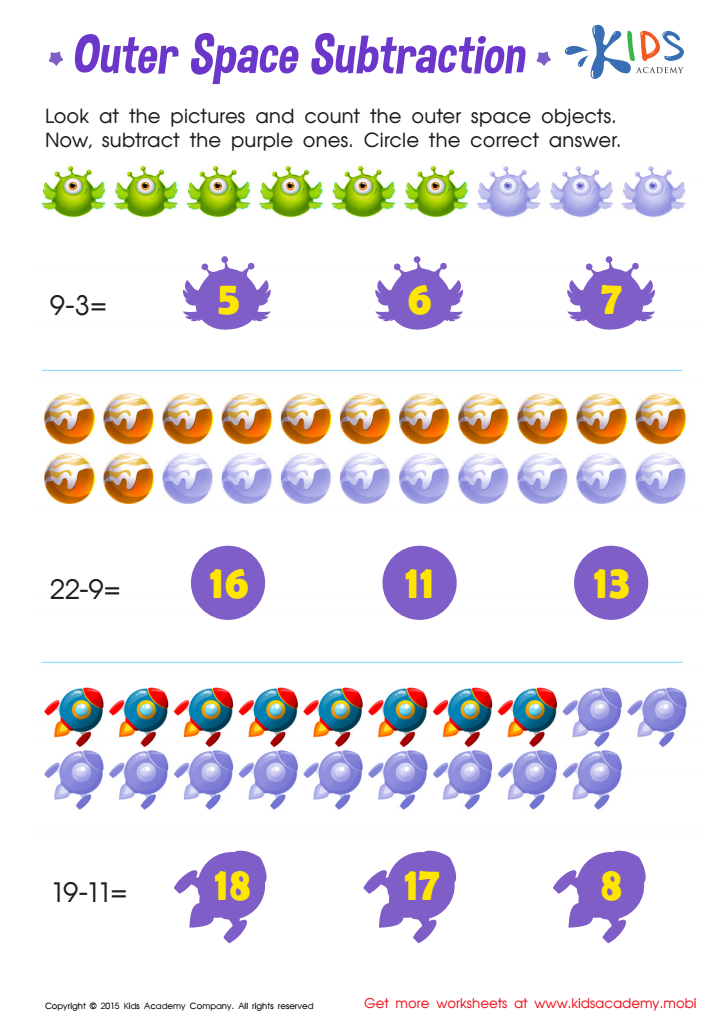
Outer Space Substraction Worksheet








Number comprehension, particularly easy addition and subtraction, is crucial for young children aged 3-6. These skills form the foundation of mathematical understanding and broader cognitive development. At this age, children are highly receptive to learning new concepts, and introducing basic arithmetic helps in several significant ways.
Firstly, grasping number comprehension prepares children for more advanced mathematical learning. It builds a solid groundwork for concepts they will encounter later, such as multiplication, division, and fractions. Early familiarity with addition and subtraction fosters confidence, reducing math anxiety and encouraging a positive attitude towards learning.
Secondly, arithmetic skills enhance problem-solving abilities. When young learners practice adding and subtracting, they also engage in logical reasoning and critical thinking, both vital for their overall intellectual development.
Additionally, these skills are integral to everyday life. From counting toys, sharing treats among friends, or understanding time concepts, children use addition and subtraction frequently in real-world scenarios. Such practical applications make math relevant and engaging.
Providing a strong start in number comprehension ensures children not only excel in math but also develop necessary life skills. Teachers and parents play a critical role in nurturing this early mathematical foundation, setting the stage for future academic success and functional proficiency in daily activities.








