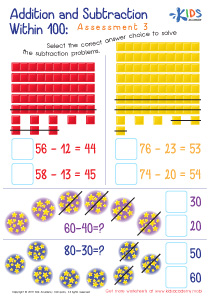
Hand-eye Coordination Easy Numbers up to 100 Worksheets for Ages 3-6
3 filtered results
Difficulty Level
Grade
Age
-
From - To
Subject
Activity
Standards
Enhance your child's learning with our "Hand-eye Coordination Easy Numbers up to 100 Worksheets for Ages 3-6". Designed specifically for little learners, these interactive worksheets make mastering numbers fun and engaging. Each activity is crafted to improve both hand-eye coordination and number recognition, ensuring a fulfilling educational experience. Vibrant illustrations and simple exercises help children practice counting, tracing, and writing numbers up to 100, laying a strong mathematical foundation. Ideal for home or classroom use, these worksheets support early childhood development and make learning an enjoyable journey for young minds. Download now and watch your child excel effortlessly!
Favorites
With answer key
Interactive
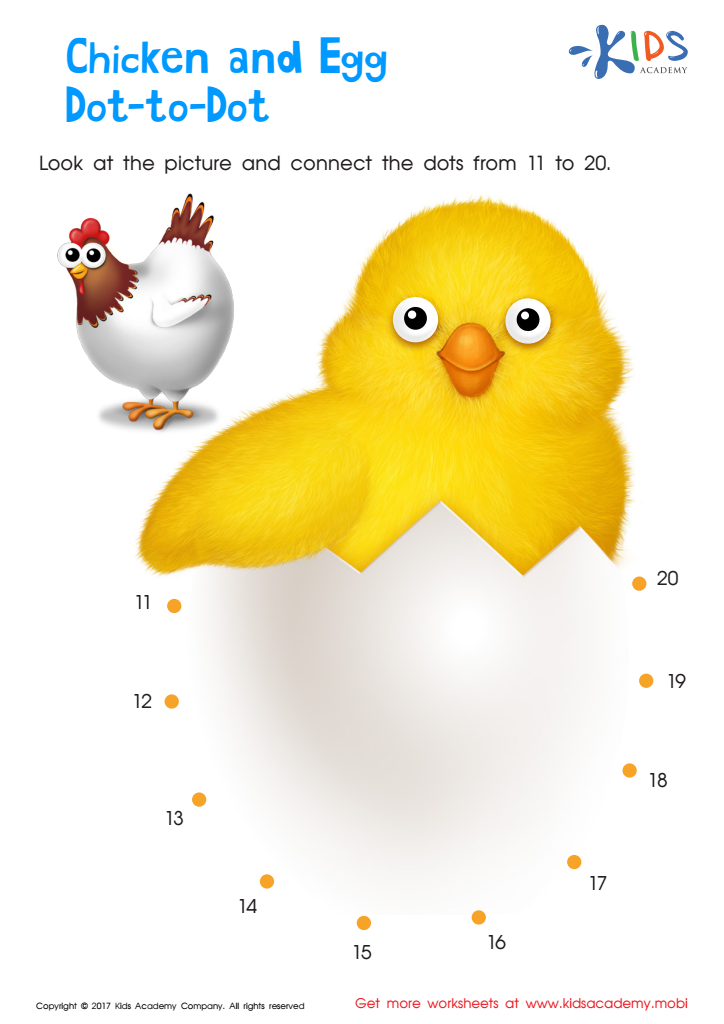
Ordering 11–20: Chicken & Egg Dot–to–dot Worksheet
Help your child hatch the chick and practice their counting skills with this dot to dot worksheet – the chicken came first! Connect the dots 11-20 to have fun and learn at the same time. Experience meaningful practice and gain confidence while drawing great pictures.
 Assign to My Students
Ordering 11–20: Chicken & Egg Dot–to–dot Worksheet
Worksheet
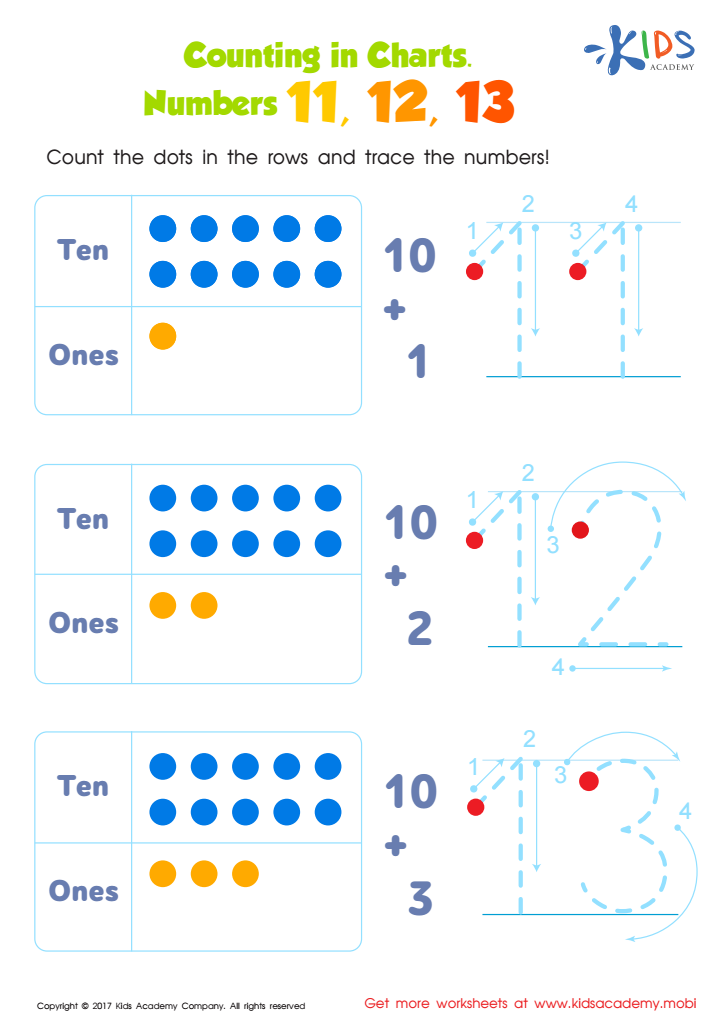
Number Tracing Worksheet For Kindergarten
Help your child develop addition skills and improve number recognition with this easy-to-use worksheet. Have them count the dots and add to solve each problem. Then, trace over the number to complete each row! It's a fun and simple way for kindergarteners to practice their math skills.
Number Tracing Worksheet For Kindergarten
Worksheet
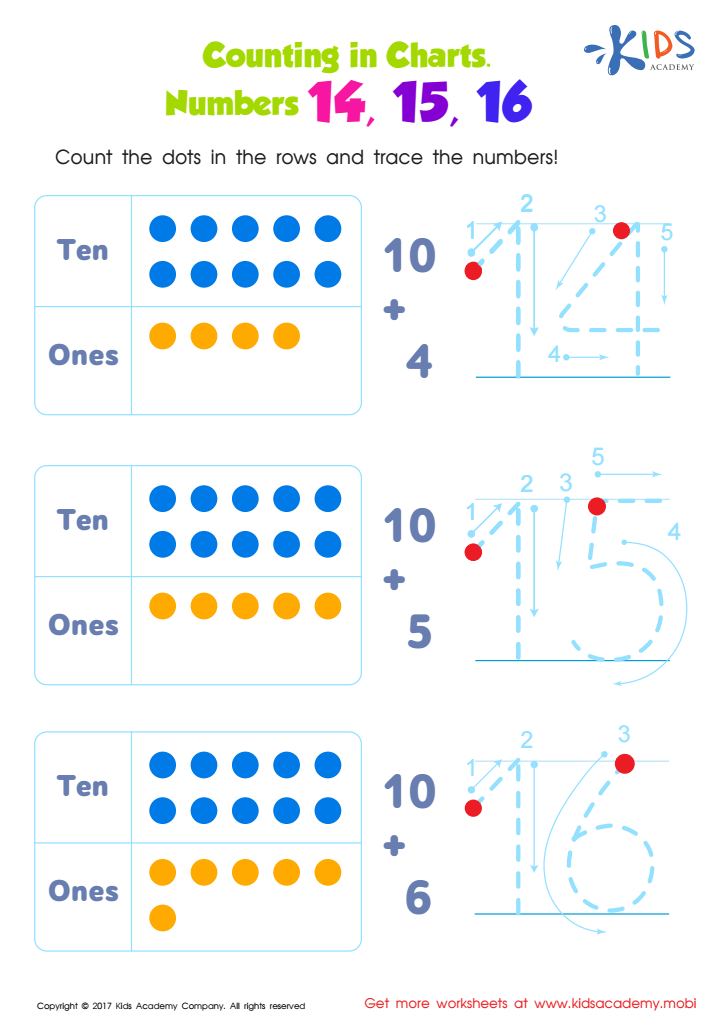
Number Tracing Worksheet
Kids learn math with counters and place value! This handy worksheet helps form a foundation for math skills and number sense! Have your child count the dots and trace the answers to the addition problems. It's a great way to support their math skills!
Number Tracing Worksheet
Worksheet
Join Kids Academy for Free
Who is primarily going to use this learning content?


%20(1).jpg)





Hand-eye coordination is a critical skill that directly impacts a child’s overall development, encompassing physical, cognitive, and academic growth. For young children aged 3-6, engaging in activities like Hand-eye Coordination Easy Numbers up to 100 plays a vital role in honing this skill. Here's why parents and teachers should prioritize it:
First, hand-eye coordination activities integrate visual input with motor output, thereby enhancing fine motor skills. As children trace, draw, or match numbers, they learn to control hand movements more precisely, which is essential for writing and other daily tasks.
Second, working with numbers up to 100 introduces early mathematical concepts in a fun and approachable way. Engaging in these numeracy activities boosts cognitive development, strengthens memory, and establishes a solid foundation for future arithmetic abilities.
Additionally, these activities often foster persistence, attention to detail, and problem-solving skills. As children identify and manipulate numbers, they also improve their ability to focus and follow instructions, which benefits their academic progression and preparation for school.
Lastly, hand-eye coordination tasks are often interactive and engaging, providing opportunities for social interaction and communication, which are key components of early childhood education. By prioritizing these activities, parents and teachers are setting children up for success in multiple areas of life.