Cognitive Development Easy Reading Comprehension Worksheets for Ages 3-6
4 filtered results
-
From - To
Discover our engaging "Cognitive Development Easy Reading Comprehension Worksheets for Ages 3-6"! Designed specifically for young learners, these worksheets promote essential cognitive skills through fun, interactive activities. Each worksheet focuses on simple text, colorful illustrations, and straightforward questions to enhance comprehension and critical thinking. Ideal for parents and educators, our resources support early literacy and cognitive growth, fostering a love for reading. By practicing with these worksheets, children will develop vital skills such as memory retention, problem-solving, and understanding cause and effect. Explore the joy of learning today and nurture your child's cognitive potential through our captivating reading comprehension worksheets!
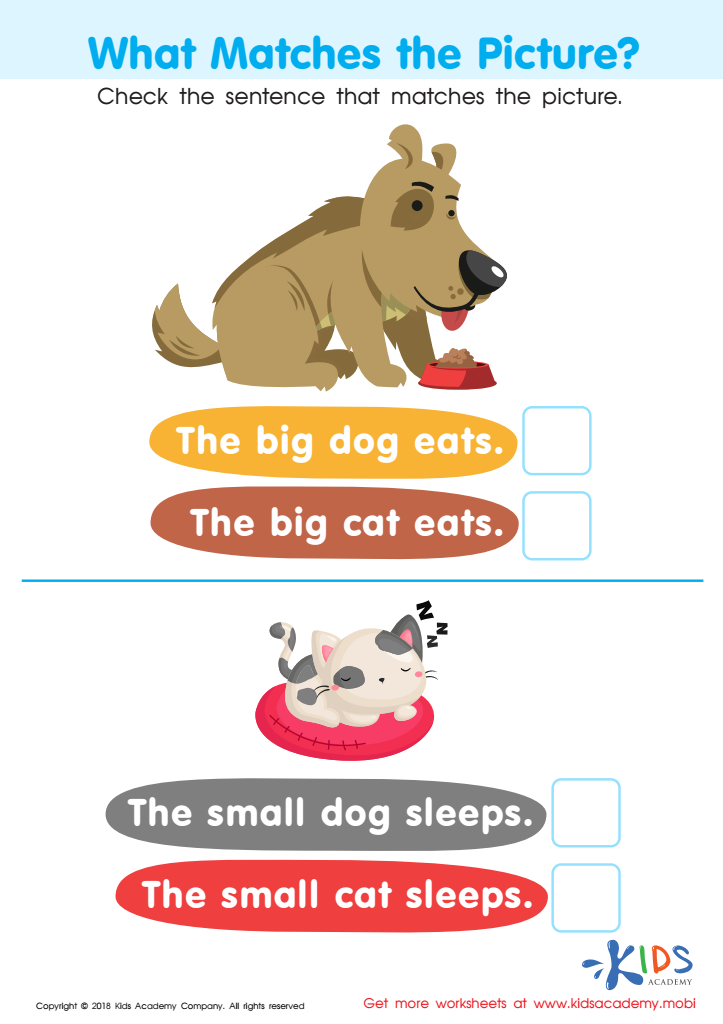
What Matches the Picture? Worksheet
 Assign to My Students
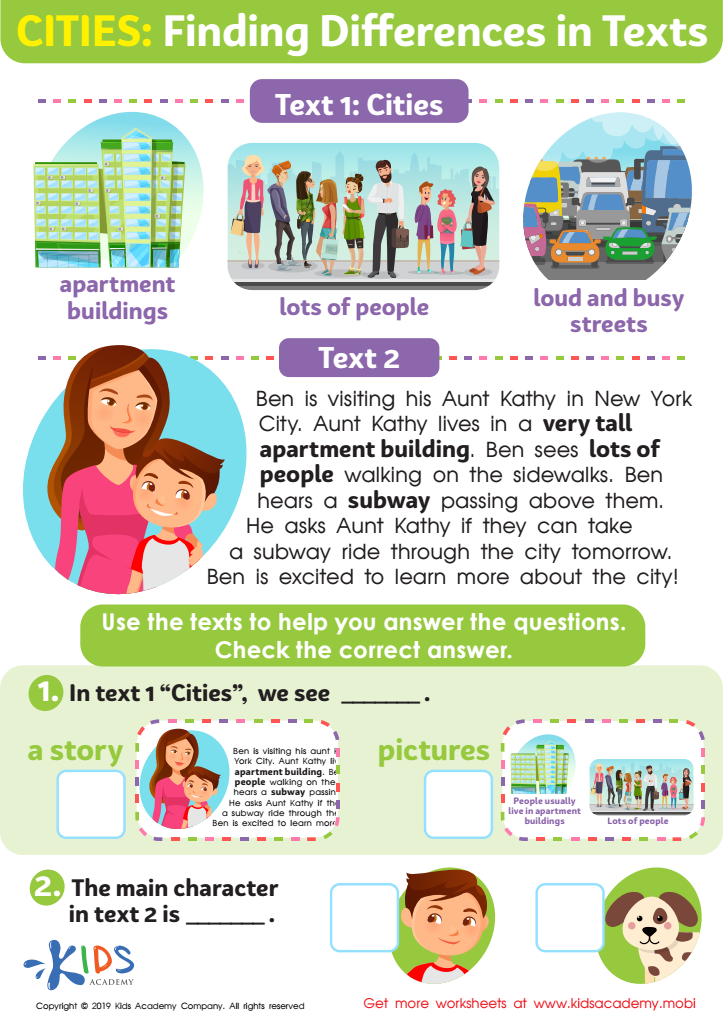
Cities: Finding Differences Worksheet
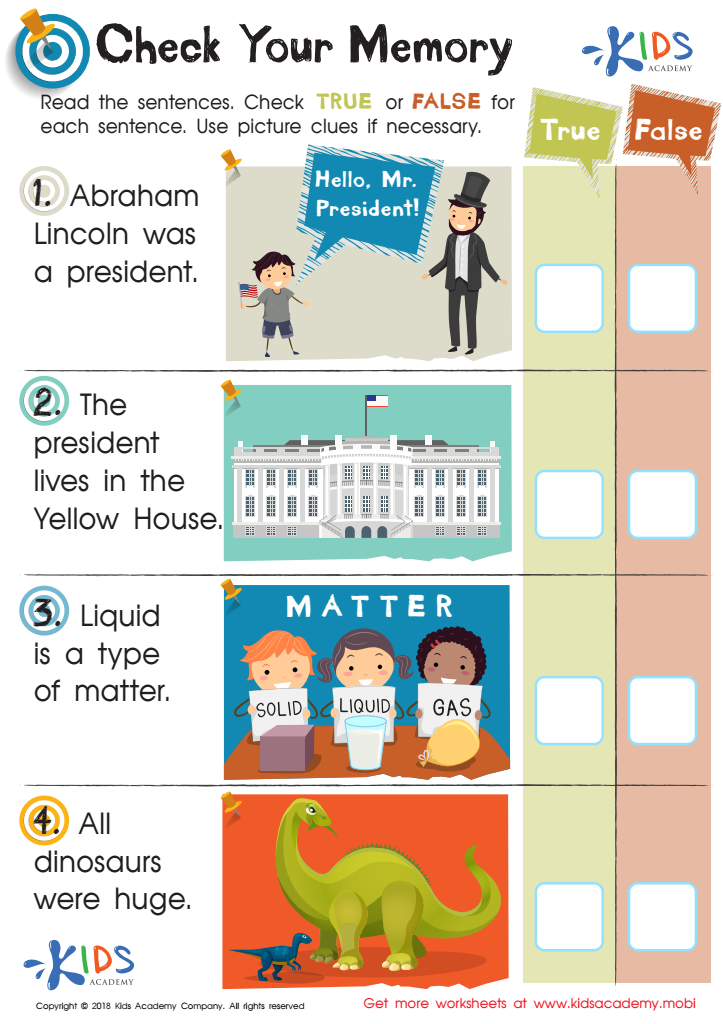
Check Memory Worksheet
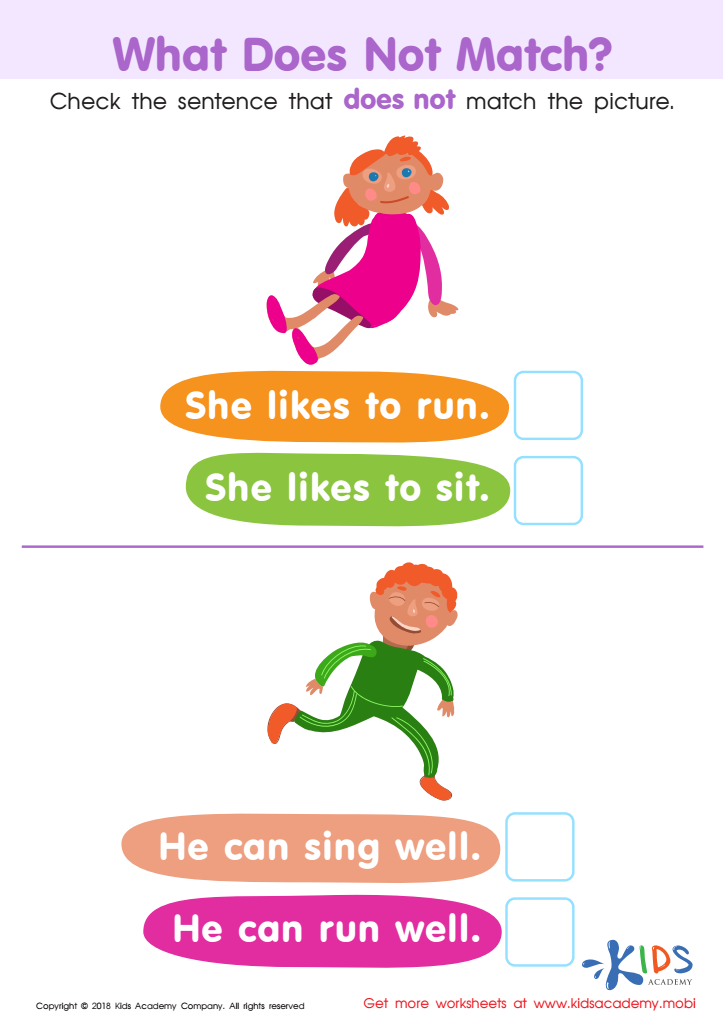
What Does Not Match? Worksheet








Cognitive development is crucial for young children, particularly those aged 3-6, as it lays the foundation for future learning and problem-solving skills. Parents and teachers should care about cognitive development in this age group because it greatly influences how children understand the world around them and interact with it.
Easy reading comprehension is a significant part of cognitive development. When children engage with simple texts and stories, they practice essential skills like recognizing letters, understanding language, and making connections between ideas. These activities promote critical thinking and comprehension, which are vital for later academic success.
Additionally, fostering cognitive skills through reading and comprehension helps children develop their imagination and creativity. As they interpret stories and characters, they learn empathy and gain insights into different perspectives.
Moreover, strong cognitive development is linked to better social skills. Children who can understand and share thoughts are more likely to form friendships and communicate effectively.
By prioritizing activities that encourage easy reading comprehension, parents and teachers encourage a love of learning and support a child’s overall development. Investing in these formative years can help shape confident learners who are ready to tackle challenges in school and beyond.