Filters

6 filtered results

Clear all filters
Favorites
With answer key
Interactive

6 filtered results

Difficulty Level

Grade


Boost your child’s vocabulary with our engaging Vocabulary Enhancement Easy Writing Worksheets, specially designed for ages 3-6! These worksheets feature fun activities that introduce new words, aiding language development and comprehension. Perfect for early learners, they encourage creativity and expression through simple writing tasks and colorful illustrations. Each worksheet supports various skills, from word recognition to sentence formation, making learning enjoyable and effective. As children explore vocabulary in a playful context, they build confidence and curiosity about language. Ignite your little one's journey to becoming a proficient communicator with our easy-to-use resources! Unlock their potential today!

Check out this FREE Trial Lesson on Writing for age 3-6!

Form Regular Plural Nouns

Favorites
With answer key
Interactive
  • 3-6
  • Vocabulary enhancement
  • Writing
  • Easy
Forming Sentences: Assessment 3 Worksheet

Forming Sentences: Assessment 3 Worksheet

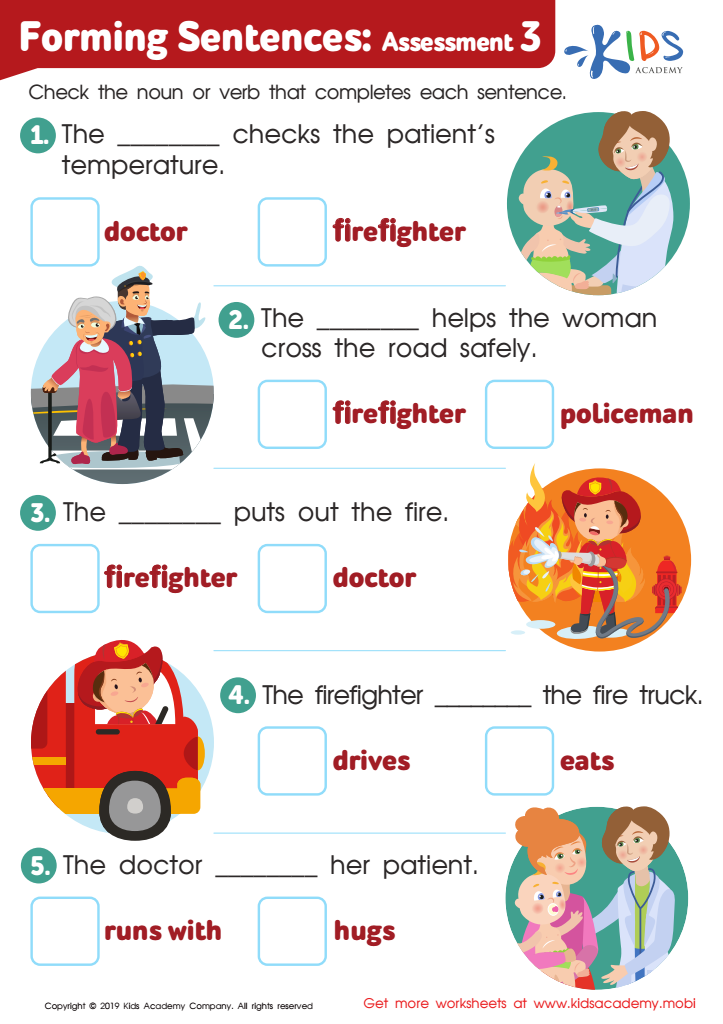
Students must master sentence formation to be successful English learners. After grasping the ABCs and basic words, the next step is to construct sentences using those words. Worksheets like this one can help teach kids how to make sentences; they need to look at the pictures and select the correct noun or verb to complete each sentence.
Forming Sentences: Assessment 3 Worksheet
Worksheet
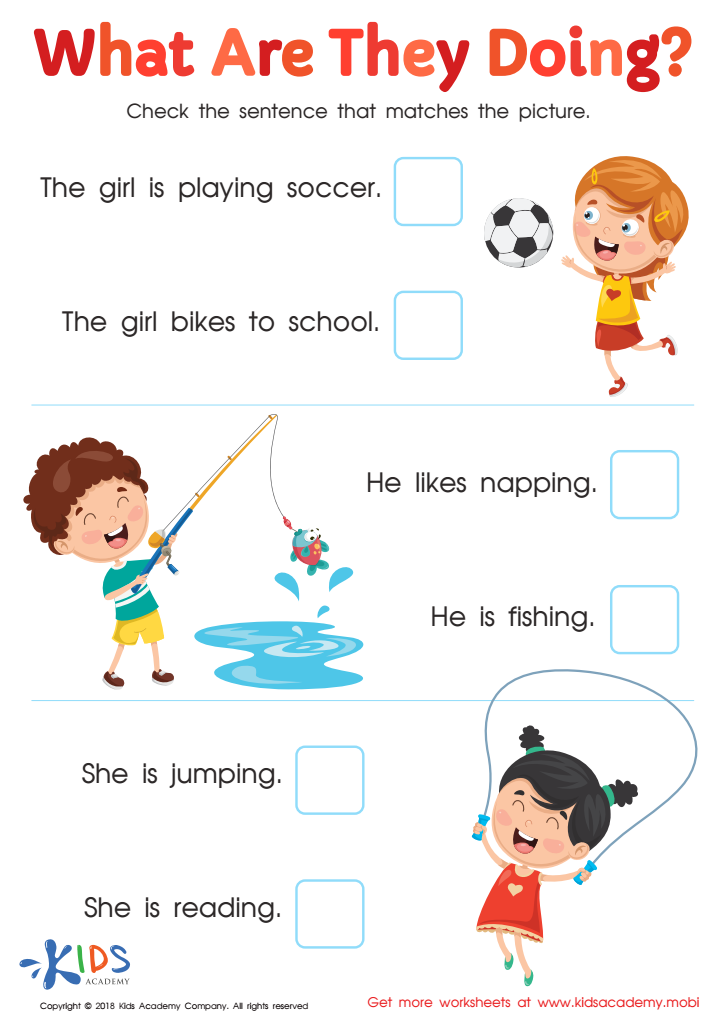
What Are They Doing? Worksheet

What Are They Doing? Worksheet

Look at the pdf with your child and ask which activities they like. Ask them to match the pictures with the sentences. Read the sentences aloud and help them check the right answers. Encourage them to talk about what they see in the pictures. It's a great way to help them learn.
What Are They Doing? Worksheet
Worksheet
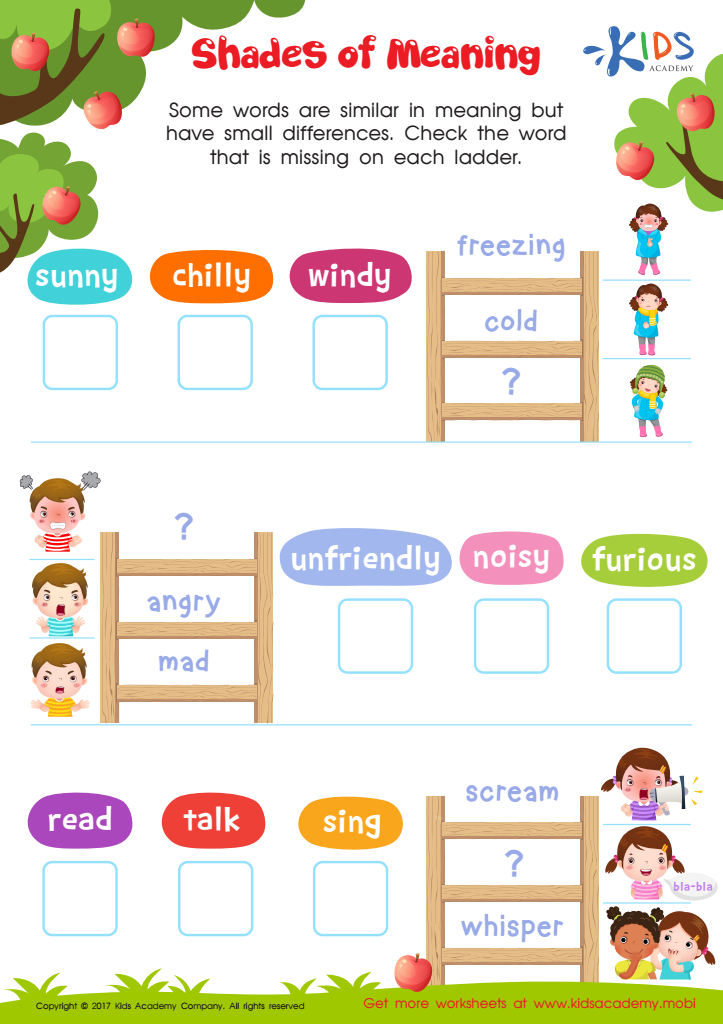
Shades of Meaning Worksheet

Shades of Meaning Worksheet

Your child can practice understanding similar words with this worksheet. They'll need to pick the word from the options that best fits the gap on each ladder, and learn to differentiate between words with similar meanings. For example, there are various terms for 'cold' that your child can learn. Try it out!
Shades of Meaning Worksheet
Worksheet
Make it Plural Worksheet

Make it Plural Worksheet

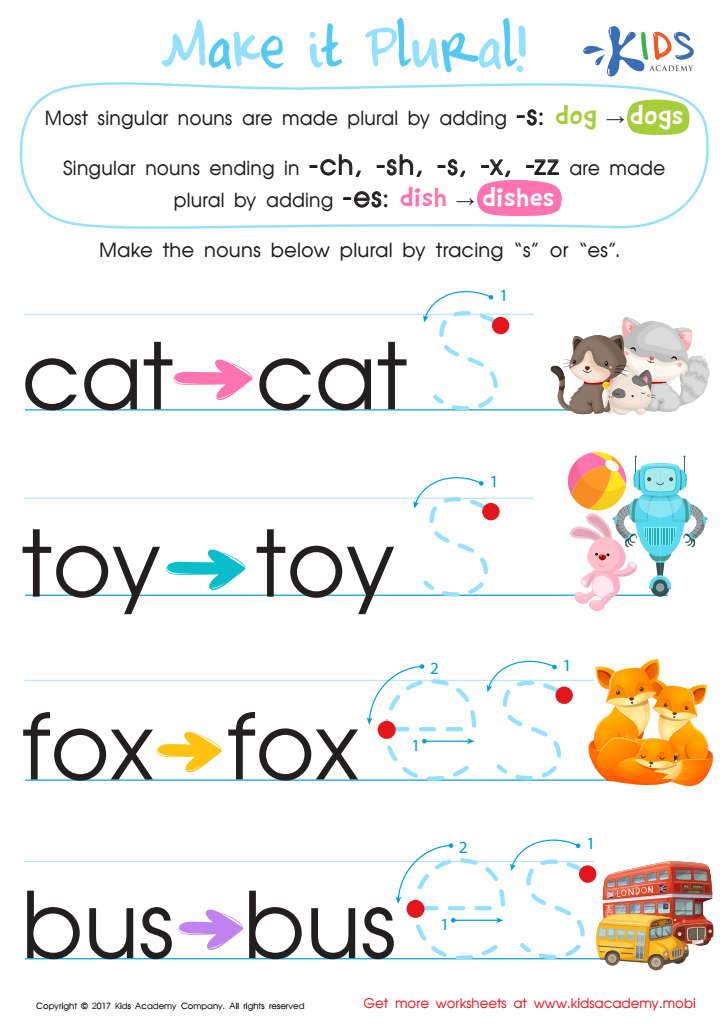
Changing words from singular to plural can be tricky as there are many word endings with special rules. Most words just need an -s, while endings like -ch, -sh, -s, -x or -zz need -es. This worksheet helps kids read words and trace the correct ending for each, making it easier to master these rules!
Make it Plural Worksheet
Worksheet
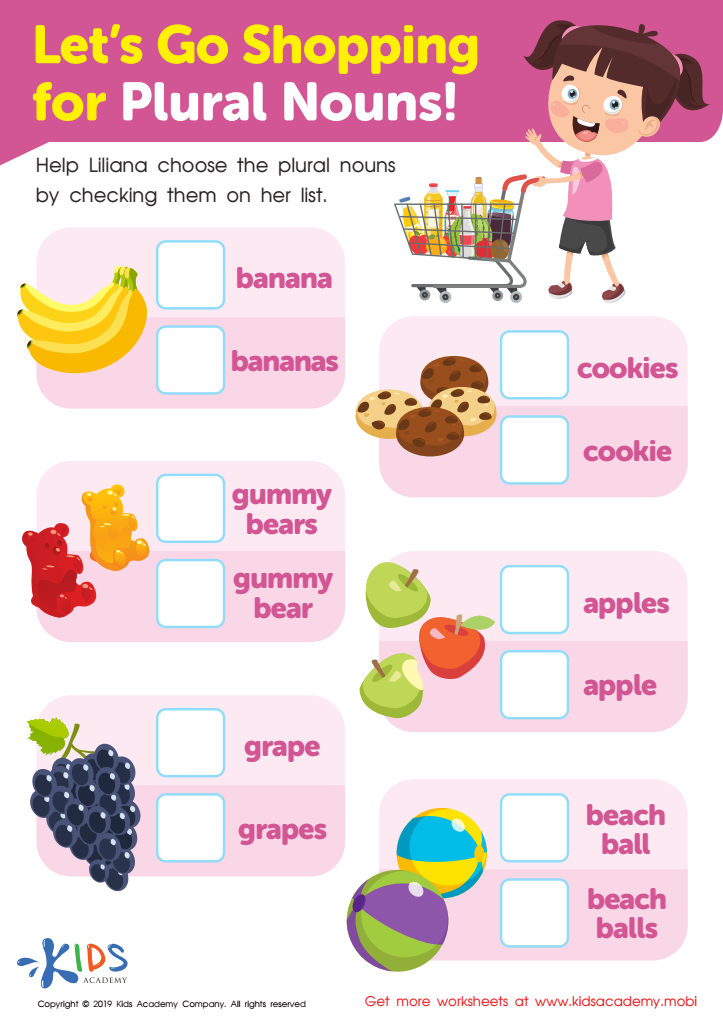
Let's Go Shopping for Plural Nouns! Worksheet

Let's Go Shopping for Plural Nouns! Worksheet

Help your students figure out the plural nouns in Lilliana's checklist. Look at the six objects in this PDF and add 's' to the nouns to make them plural. Show students how words can be tricky and explain how adding an 's' often changes the noun to its plural form.
Let's Go Shopping for Plural Nouns! Worksheet
Worksheet
Finish the Word Worksheet


Finish the Word Worksheet

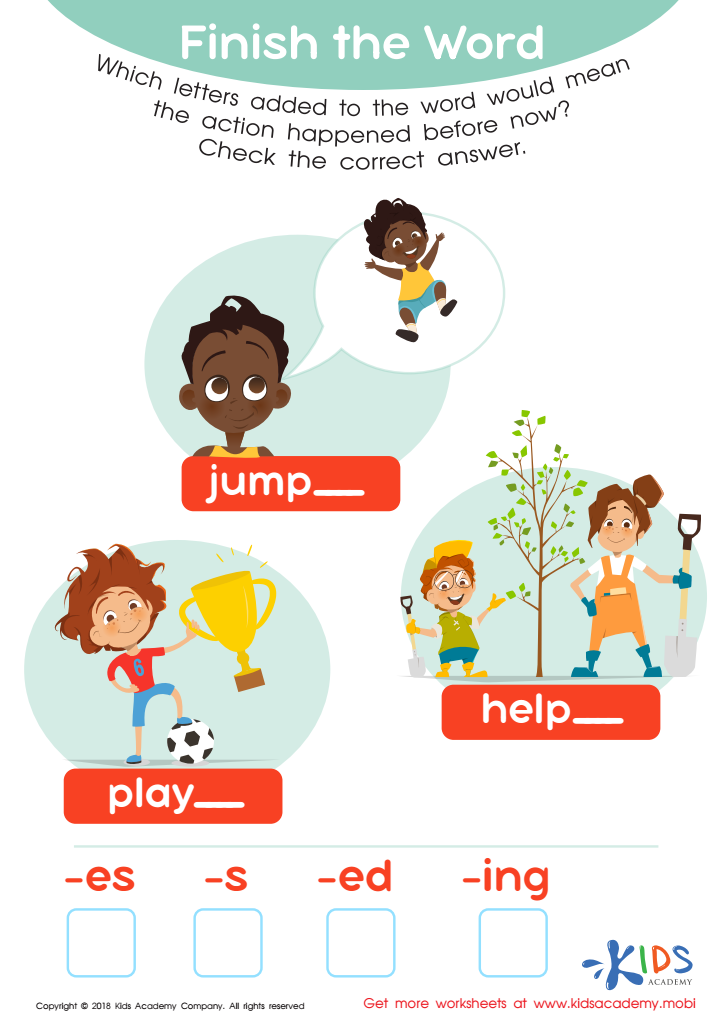
Does your kid know tenses? Listen to see if they are using words correctly. With this worksheet, your kids will learn to use the appropriate past tense forms. Ask them which letters added to words make the action past. Help them check the answers.
Finish the Word Worksheet
Worksheet


Vocabulary enhancement for children ages 3-6 is crucial for their development and future success in both academic and social settings. During these formative years, children are rapidly acquiring language skills, and a strong vocabulary lays the groundwork for effective communication.

Parents and teachers should care about vocabulary enhancement because it boosts children's confidence in expressing themselves. When children understand and use a variety of words, they can articulate their thoughts, feelings, and ideas more clearly, which fosters better interactions with peers and adults.

Additionally, a rich vocabulary is linked to improved reading skills. Children with expansive vocabularies are more likely to comprehend texts and enjoy reading, which can ignite a lifelong love for learning. Engaging children in vocabulary-building activities through games, storytelling, and conversations makes learning fun and memorable.

Moreover, strengthening vocabulary at a young age can lead to better academic performance later on. Research shows that children who develop strong language skills early on tend to perform better in school.

In summary, vocabulary enhancement is not just about teaching words; it is about preparing children for a world where effective communication is key to social and academic success. Parents and teachers play a vital role in nurturing this essential skill.