Vocabulary expansion Easy Writing Worksheets for Ages 3-6
7 filtered results
Difficulty Level
Grade
Age
-
From - To
Subject
Activity
Standards
Boost your child's vocabulary with our engaging Easy Writing Worksheets, specially designed for children ages 3-6. These fun, interactive worksheets encourage young learners to explore new words, expand their language skills, and express themselves creatively. Each activity is crafted to cater to different learning styles, ensuring every child can participate and thrive. From fill-in-the-blank exercises to guided writing prompts, our worksheets make vocabulary expansion enjoyable and uncomplicated. Ideal for parents and educators alike, these resources help build a solid foundation for future literacy. Discover the joy of learning with our vibrant, easy-to-use worksheets that inspire a love for language from an early age!
Favorites
With answer key
Interactive
 Assign to My Students
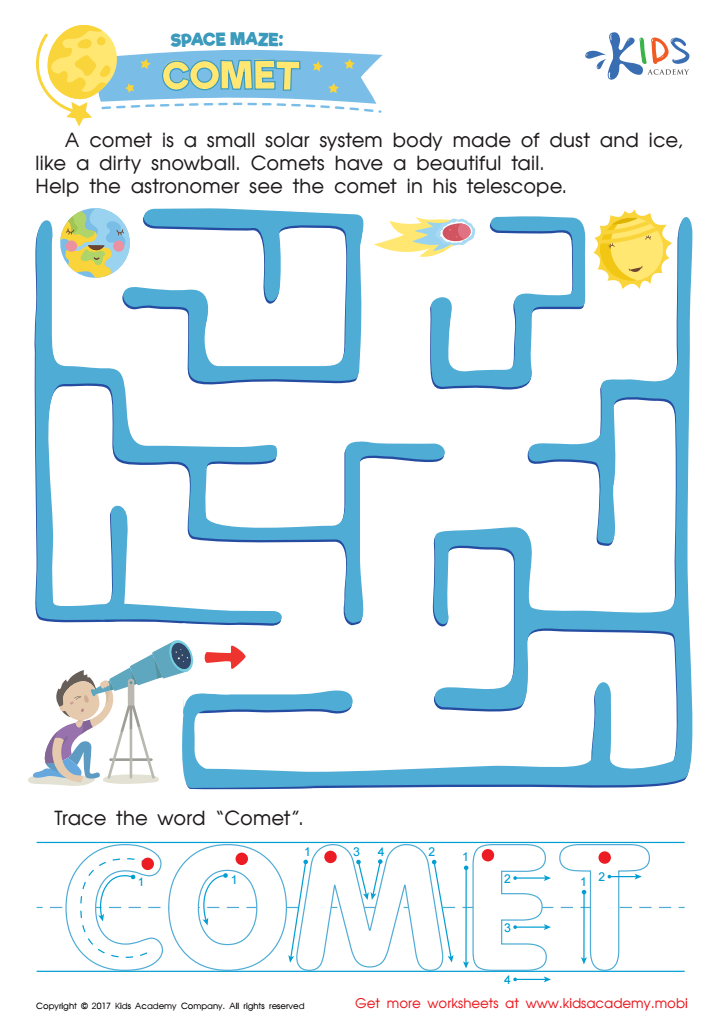
Space Maze: Comet Worksheet
Worksheet
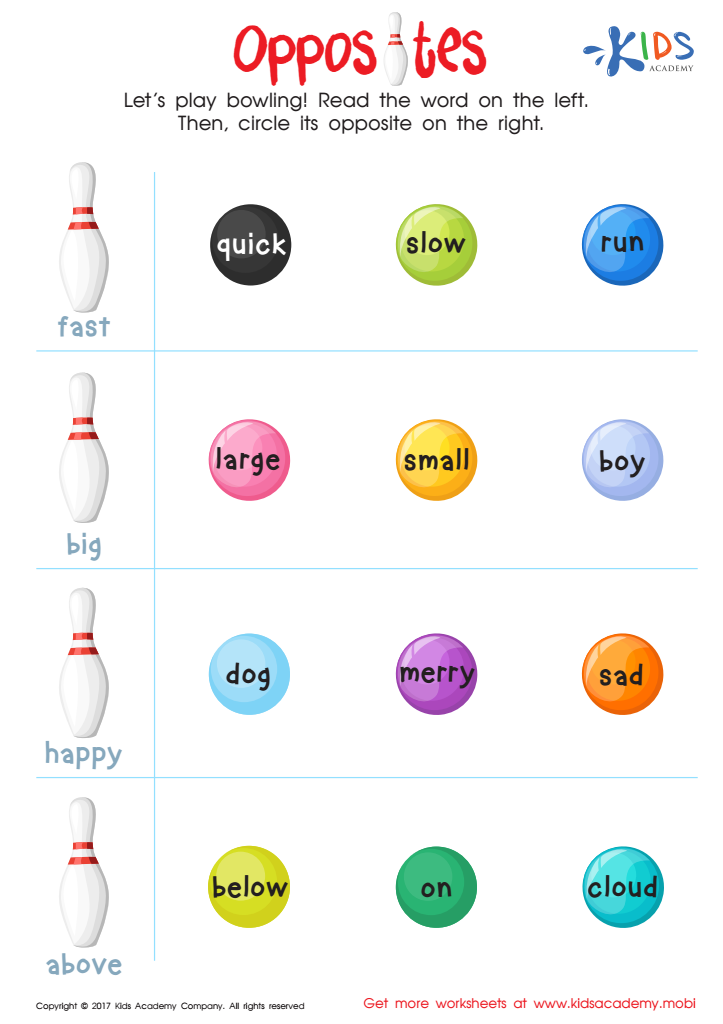
Opposites Worksheet
Have your students identify and circle the opposites of the words on the left. As a fun bowling-themed exercise, read the words and ask your kids if they know the opposites. Look through the options on the right and see if the answer is there; then, circle the correct answers.
Opposites Worksheet
Worksheet
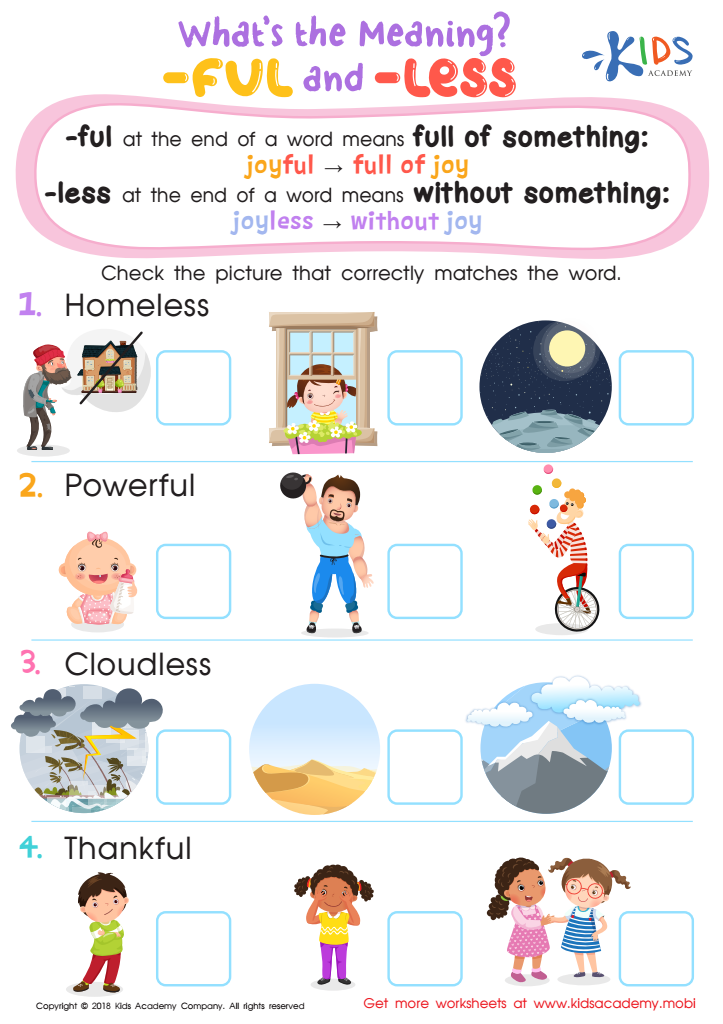
What's the Meaning? Worksheet
Look with your youngster through this colorful worksheet and match the pictures to the words at the top. These words have different meanings due to either a prefix or suffix being added, such as "ful" or "less".
What's the Meaning? Worksheet
Worksheet
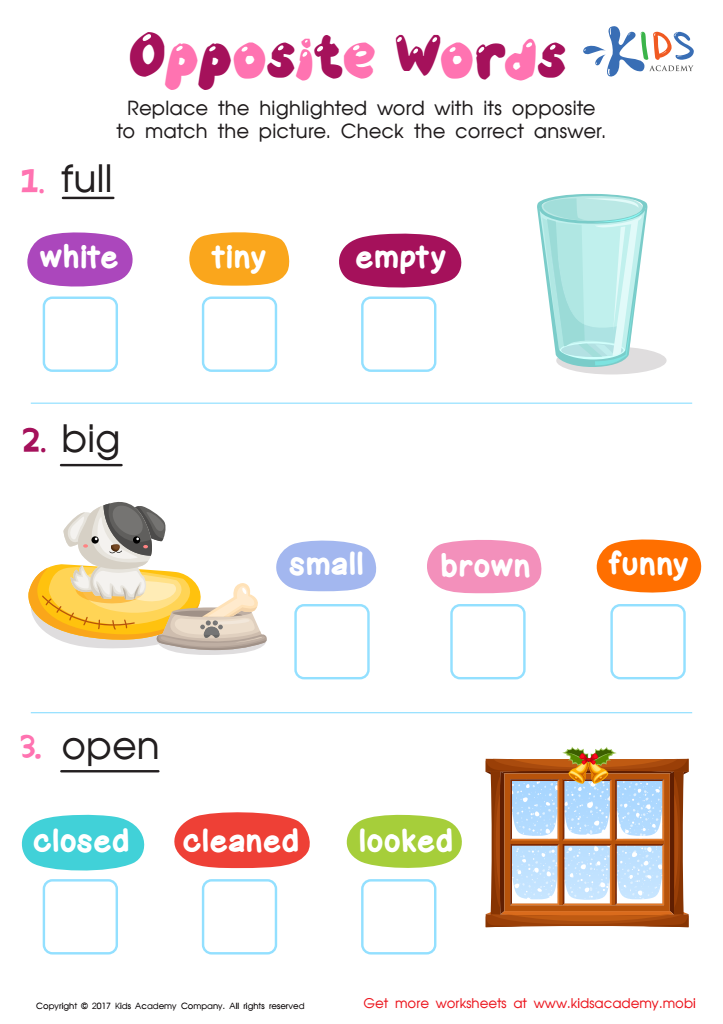
Opposite Words Worksheet
Help your child learn words and opposites. Look through a worksheet with them. Ask if they can read the underlined words. Then, ask which highlighted word is the opposite of the underlined word. The answer should match the picture.
Opposite Words Worksheet
Worksheet
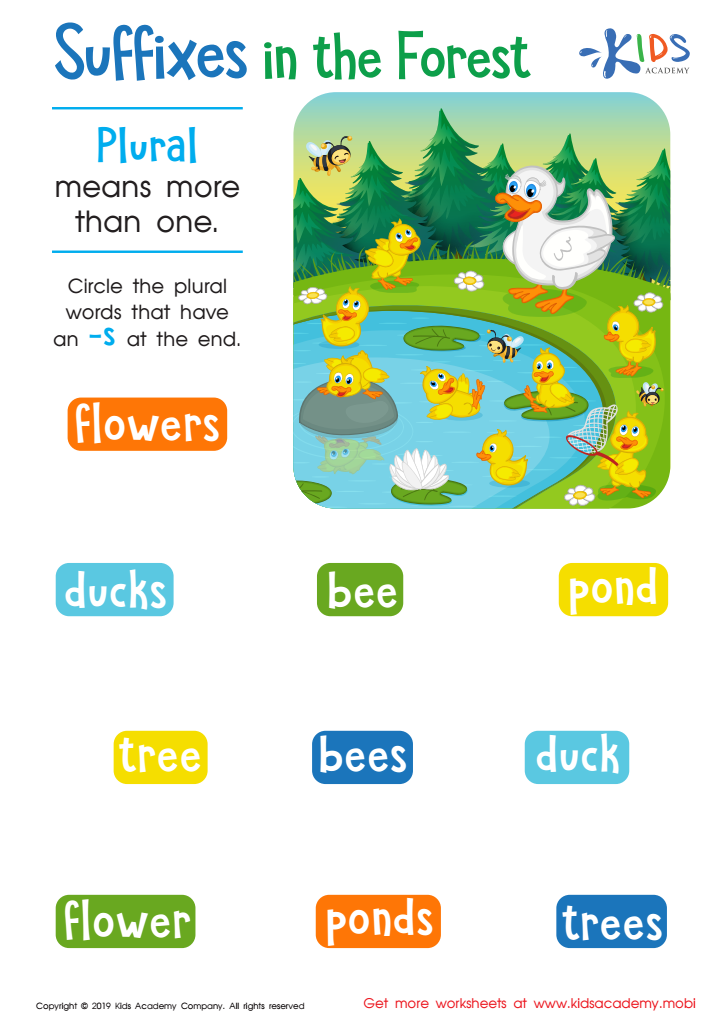
Suffixes in the Forest Worksheet
Suffixes are letters added to the end of words to form new words. These can be used to denote one who does something (e.g. reader) or more than one (e.g. adding -s). This worksheet helps kids practice pluralizing words they know by circling the plural words ending with -s.
Suffixes in the Forest Worksheet
Worksheet
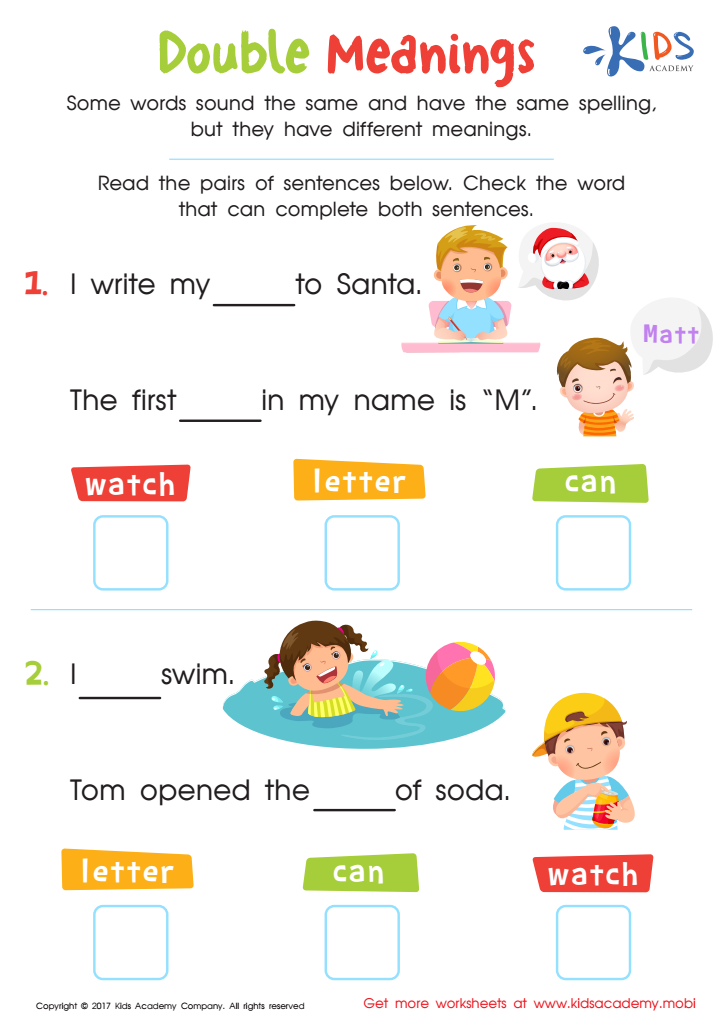
Double Meanings Worksheet
Homographs are words that look and sound the same, but have different meanings. This worksheet uses pictures to help young authors learn to use them correctly. Context and exposure to the words' meanings help them understand the difference.
Total: 80 words
Double Meanings Worksheet
Worksheet
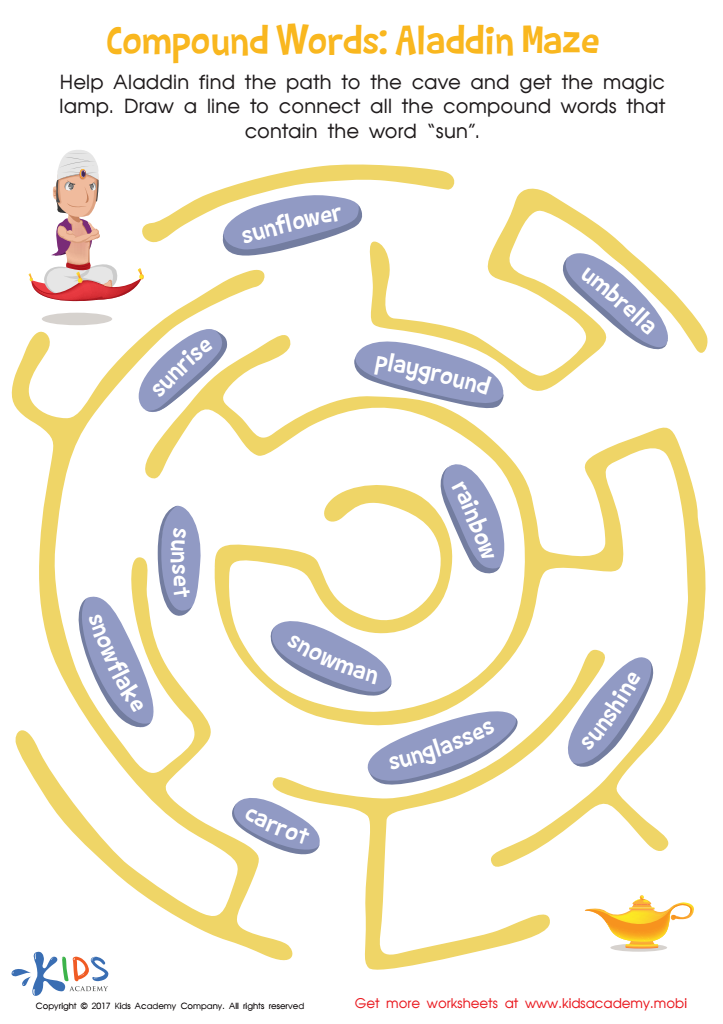
Compound Aladdin Maze Word Structure Worksheet
It's hard to keep track of all compound words! Help your child find sun-words with this fun worksheet featuring Aladdin! Your child will enjoy helping Aladdin find his way by finding the right words. It's a great way to learn compound words.
Compound Aladdin Maze Word Structure Worksheet
Worksheet
Join Kids Academy for Free
Who is primarily going to use this learning content?







Parents and teachers should prioritize vocabulary expansion for children aged 3-6 because it lays the foundation for successful communication and literacy skills. At this critical stage of development, children are like sponges, absorbing language and concepts from their surroundings. A rich vocabulary helps them express their thoughts, feelings, and needs more effectively, fostering confidence and social interaction.
Early vocabulary development is closely linked to future academic success. Studies indicate that children who enter school with a strong vocabulary are more likely to perform well in reading and writing tasks. By engaging in activities that promote word learning—such as reading books, playing word games, and having conversations—educators and caregivers can spark children's curiosity and interest in language.
Moreover, vocabulary expansion enhances cognitive skills. When children encounter new words, they learn to categorize and associate them with concepts, which aids in memory and comprehension. This process not only supports academic achievement but also develops critical thinking skills.
In essence, fostering vocabulary growth during these formative years enriches children’s understanding of the world, prepares them for a successful educational journey, and ultimately helps them become articulate, confident individuals. Early investment in language skills pays significant long-term dividends.