Fine Motor Skills Easy Letter Recognition Worksheets for Ages 3-7
6 filtered results
Difficulty Level
Grade
Age
-
From - To
Subject
Activity
Standards
Discover our "Fine Motor Skills Easy Letter Recognition Worksheets" designed for children aged 3-7! These engaging worksheets are perfect for helping young learners develop essential fine motor skills while recognizing letters of the alphabet. Each activity combines fun and learning, encouraging kids to practice tracing, coloring, and writing letters, enhancing their hand-eye coordination and dexterity. Tailored to suit diverse learning styles, these resources offer an enjoyable way for children to gain confidence in their literacy skills. Explore our collection today and empower your little ones on their educational journey while fostering creativity and fine motor development. Perfect for home or classroom use!
Favorites
With answer key
Interactive
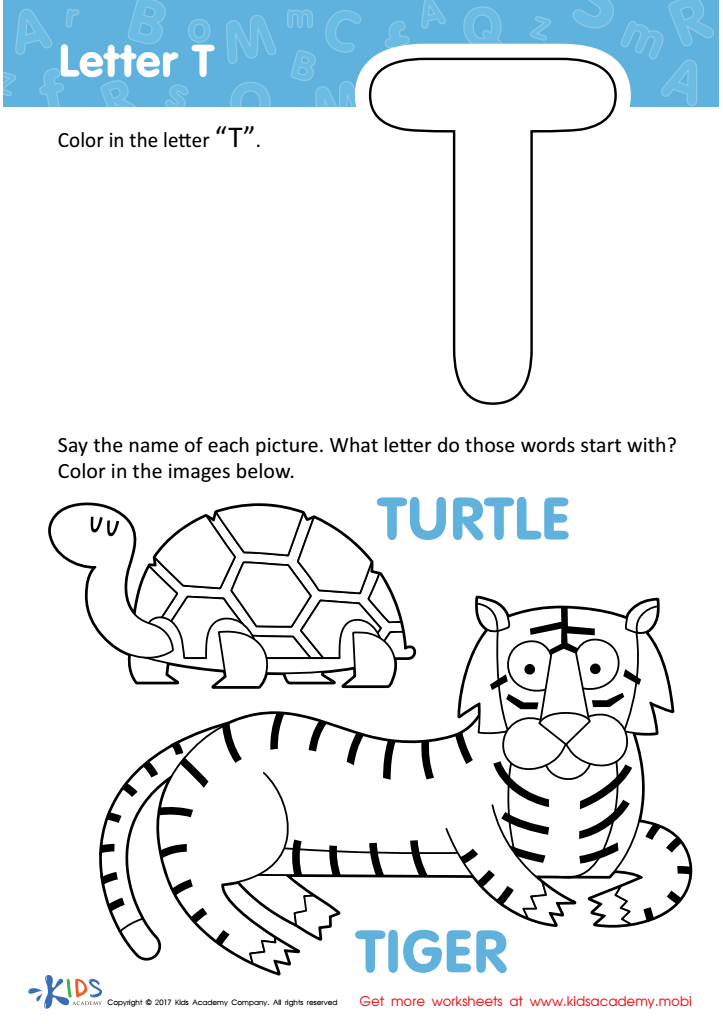
Letter T Coloring Sheet
Introduce your child to the letter "T" and its animals – turtles and tigers! With this coloring page, you can stimulate your child's imagination and creativity, while helping them recognize the letter "T". Have fun with your child and get coloring!
Download (PDF)
 Assign to My Students
Assign to My Students
Letter T Coloring Sheet
Worksheet
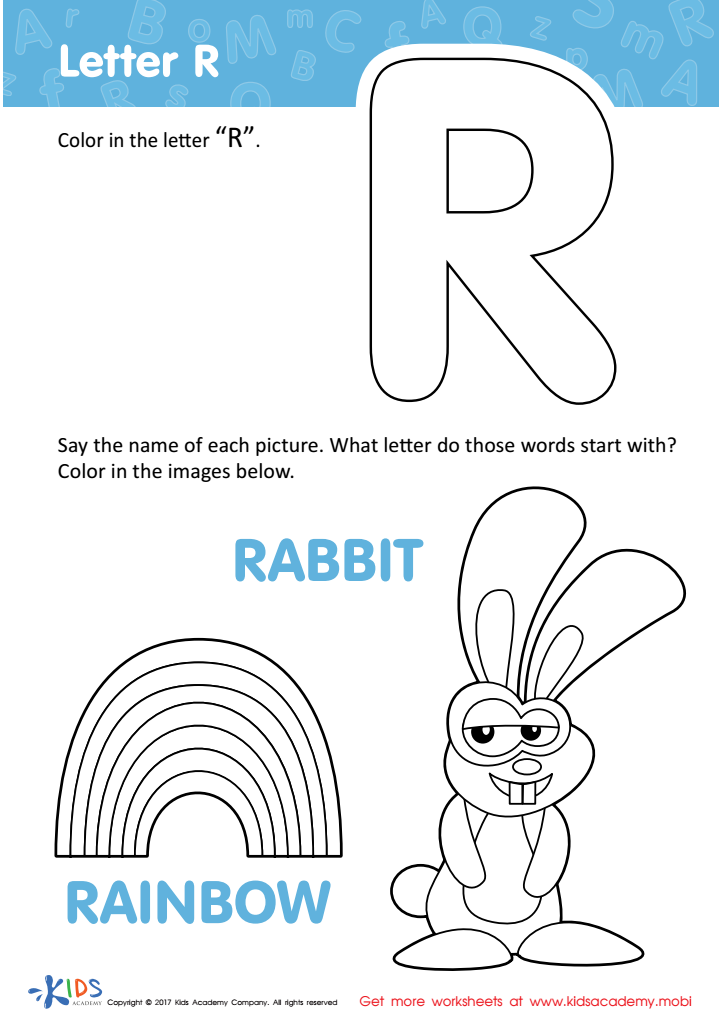
Letter R Coloring Sheet
Let your child explore the rainbow with this fun letter "R" coloring page! They can learn to recognize the letter and make connections to words, all while having fun! Make alphabet learning enjoyable with joyful coloring pages.
Download (PDF)
Assign to My Students
Assign to My Students
Letter R Coloring Sheet
Worksheet
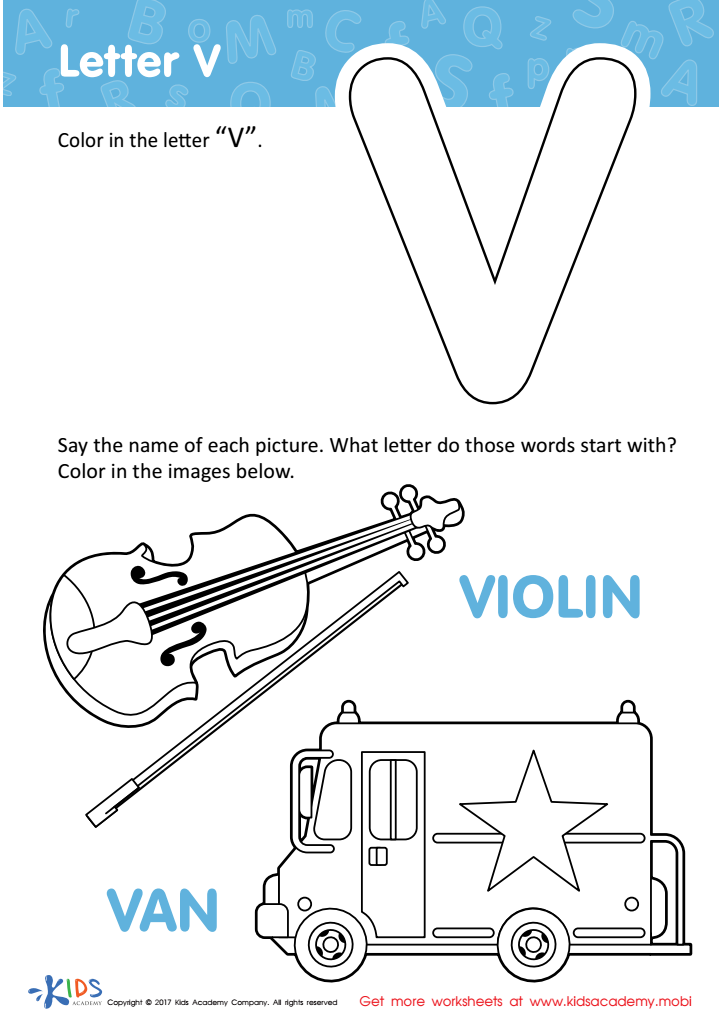
Letter V Coloring Sheet
This fun letter V coloring page can boost your child's knowledge of the letter "V" and its sound. Help them pronounce it correctly, too!
Download (PDF)
Assign to My Students
Assign to My Students
Letter V Coloring Sheet
Worksheet
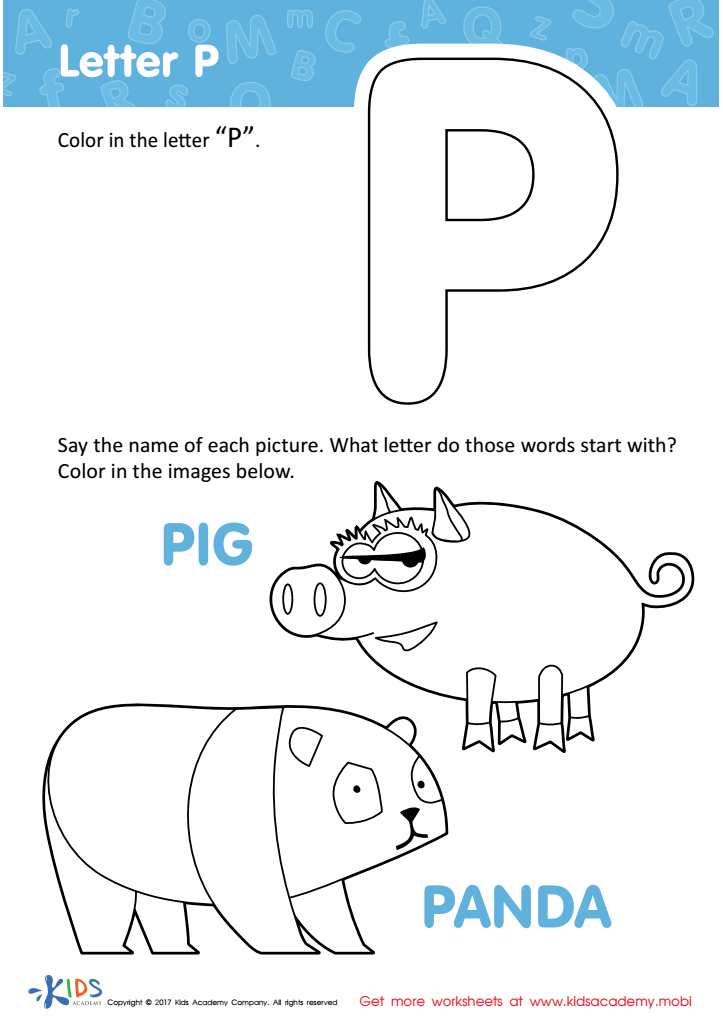
Letter P Coloring Sheet
Encourage your child's creativity and letter recognition with this "P" coloring page! Through coloring animals such as pigs and pandas, your little one will get to know the sound of the letter "P" and have fun too!
Download (PDF)
Assign to My Students
Assign to My Students
Letter P Coloring Sheet
Worksheet
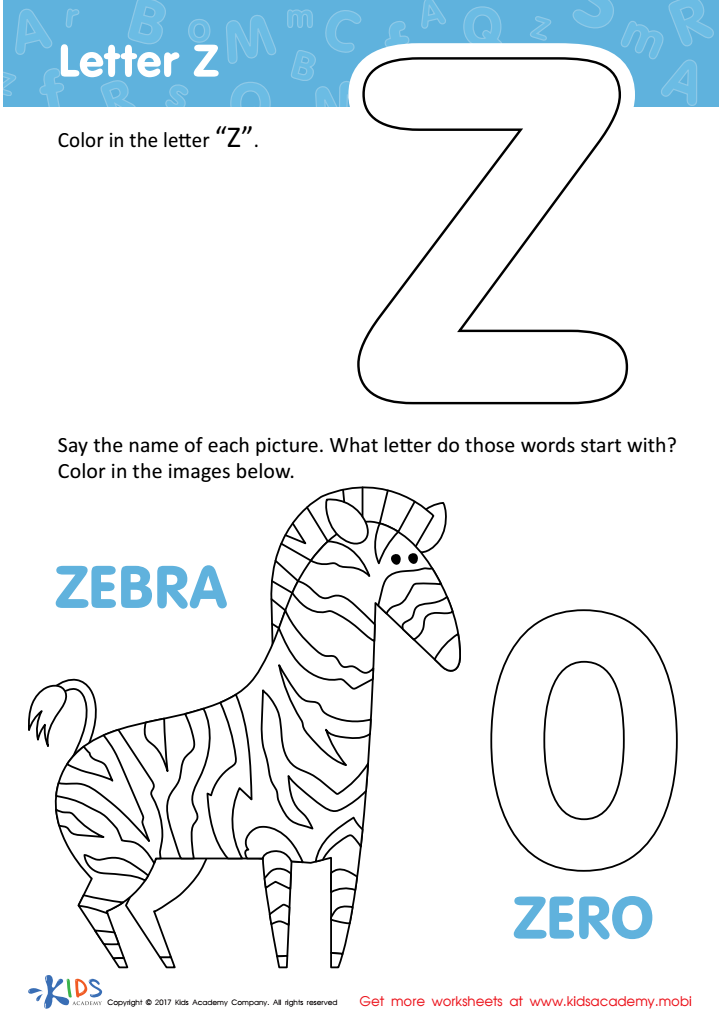
Letter Z Coloring Sheet
This coloring page featuring the letter "Z" is perfect for your child to practice letter recognition! Help them learn the unique sound it makes as they color. It'll be a fun and easy activity they won't have trouble with!
Download (PDF)
Assign to My Students
Assign to My Students
Letter Z Coloring Sheet
Worksheet
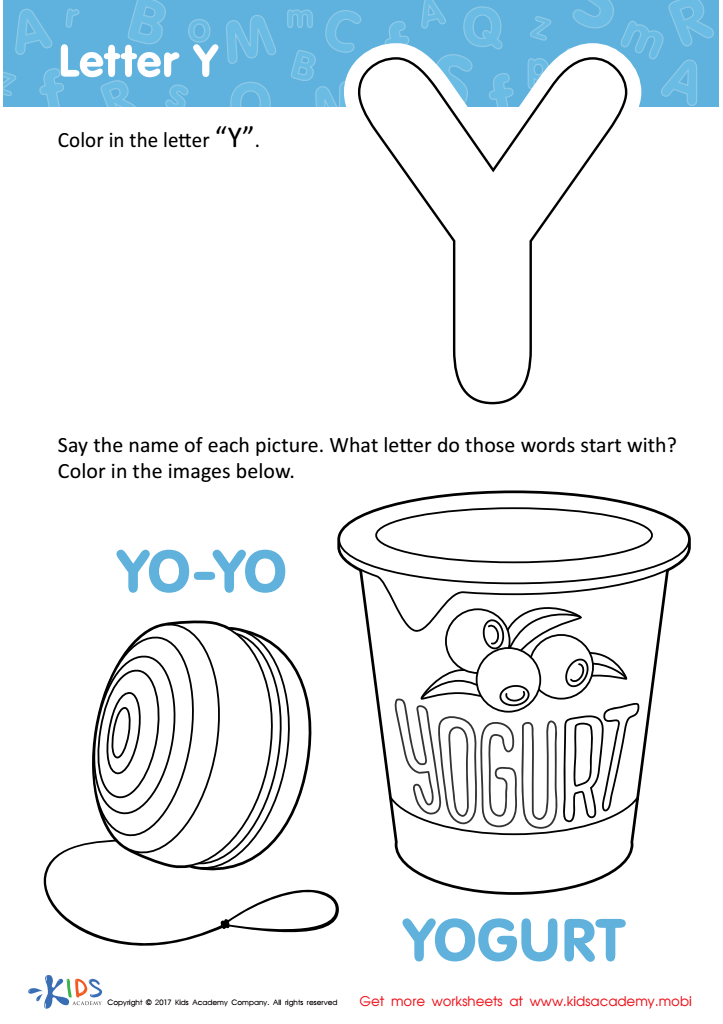
Letter Y Coloring Sheet
Let's celebrate letter "Y"! Here's a fun coloring page that'll help your child learn this end-of-the alphabet letter. It's packed with familiar objects that'll help build their art and literacy skills. So let's say "Yay"!
Download (PDF)
Assign to My Students
Assign to My Students
Letter Y Coloring Sheet
Worksheet
Join Kids Academy for Free
Who is primarily going to use this learning content?








Fine motor skills and letter recognition play a crucial role in early childhood development, especially for children aged 3-7. These foundational skills are pivotal for a child's literacy and overall learning. Fine motor skills involve the small muscles in the hands and fingers, which are essential for writing, drawing, and manipulating small objects. As children master these skills, they enhance their hand-eye coordination, dexterity, and ability to perform tasks independently—all of which build confidence and support classroom readiness.
Easy letter recognition is equally significant as it forms the basis for reading and writing. When children learn to recognize letters easily, they can associate them with sounds, leading to improved phonemic awareness. This skill set aids in developing vocabulary and comprehension, crucial components for effective communication.
Parents and teachers should prioritize these skills because they impact not only academic success but also social interactions and problem-solving abilities. Engaging activities like tracing letters, using playdough, or basic crafts can facilitate this growth in an enjoyable way. Moreover, fostering these skills can significantly reduce frustration in learning environments and promote a love for learning, laying a solid foundation for the child’s educational journey. Supporting fine motor skills and letter recognition ultimately sets children on a path to success.