Color recognition Easy Vocabulary Coloring Pages Worksheets for Ages 3-7
6 filtered results
Difficulty Level
Grade
Age
-
From - To
Subject
Activity
Standards
Discover our "Color Recognition Easy Vocabulary Coloring Pages Worksheets," specially designed for children aged 3-7. These engaging worksheets combine coloring fun with vocabulary building, helping young learners to recognize colors while expanding their language skills. Perfect for early childhood education, our worksheets use vibrant images and color-coded instructions to make learning intuitive and enjoyable. This interactive approach not only boosts color recognition but also enhances motor skills and develops early literacy. Ideal for at-home activities or classroom use, our coloring pages provide a creative and effective way to teach foundational skills to young learners.
Favorites
With answer key
Interactive
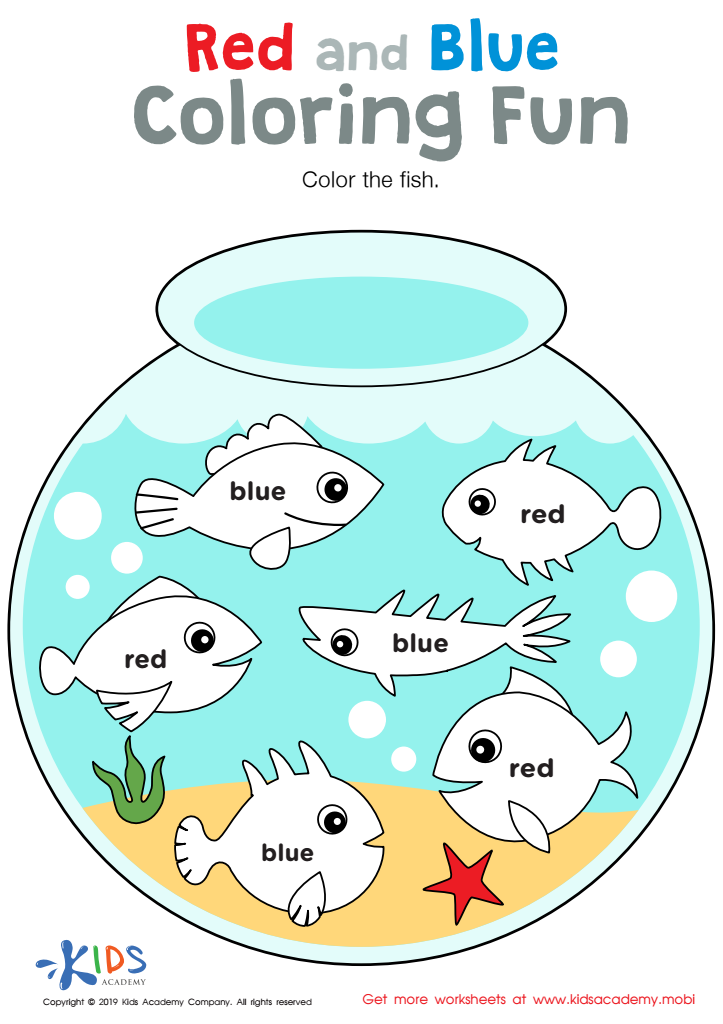
Red and Blue Coloring Fun Worksheet
Kids know colors like red and blue. But can they read these words? Give them practice with this fun fish bowl coloring sheet. They'll look at the fish, then color them the corresponding hue. Home or classroom, they'll be sure to get a kick out of learning colors in this creative way!
Download (PDF)
 Assign to My Students
Assign to My Students
Red and Blue Coloring Fun Worksheet
Worksheet
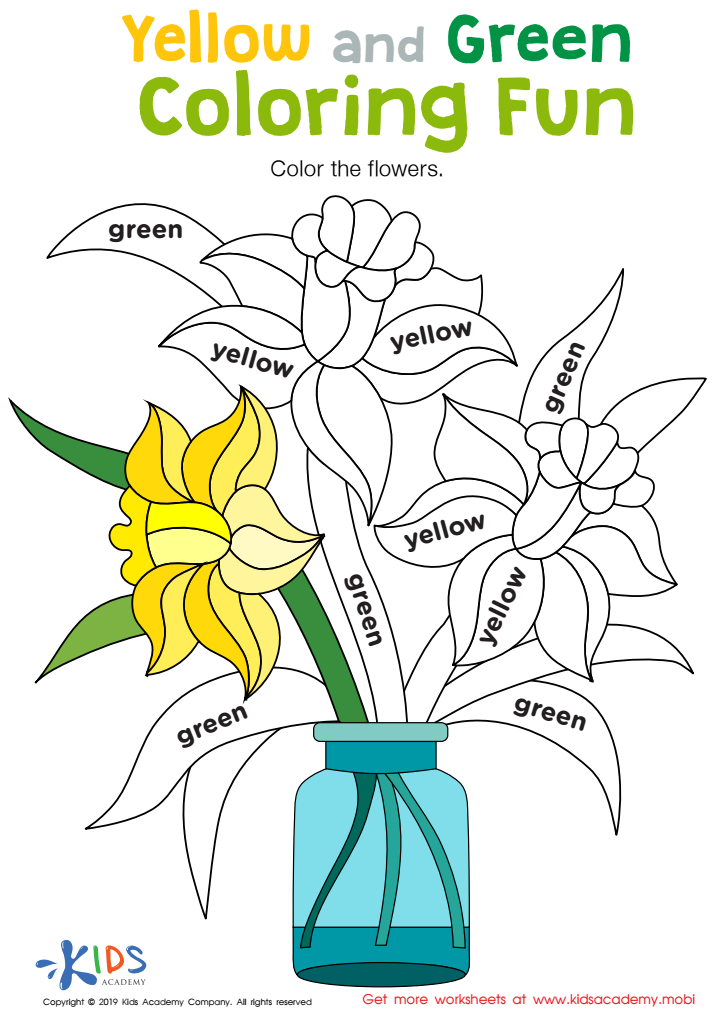
Yellow and Green Coloring Fun Worksheet
Sight words like "yellow" and "green" are easy to teach and fun for kids to learn. This free downloadable worksheet has kids read the color words and color the flower with yellow and green. A great activity for learning to read color words!
Download (PDF)
Assign to My Students
Assign to My Students
Yellow and Green Coloring Fun Worksheet
Worksheet
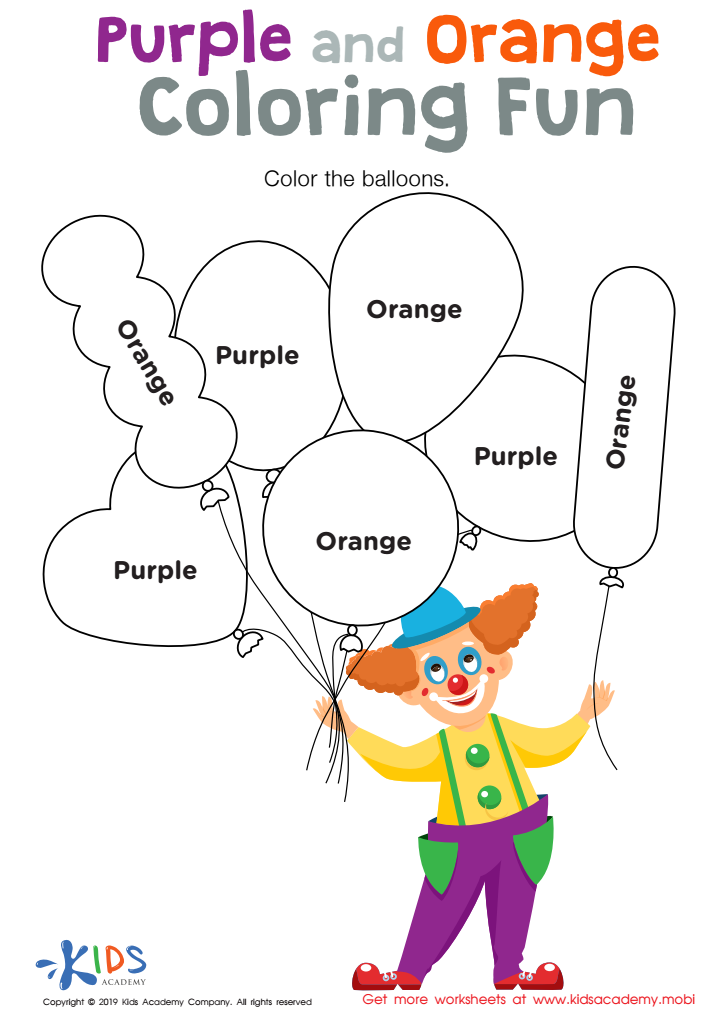
Purple and Orange Coloring Fun Worksheet
Children should learn to read color words early on. This coloring worksheet helps with that! Kids read the words "purple" and "orange" on each balloon and color them accordingly. It's a great activity for boosting literacy and having fun at the same time! Watch your child gain more reading confidence with this cute clown printable.
Download (PDF)
Assign to My Students
Assign to My Students
Purple and Orange Coloring Fun Worksheet
Worksheet
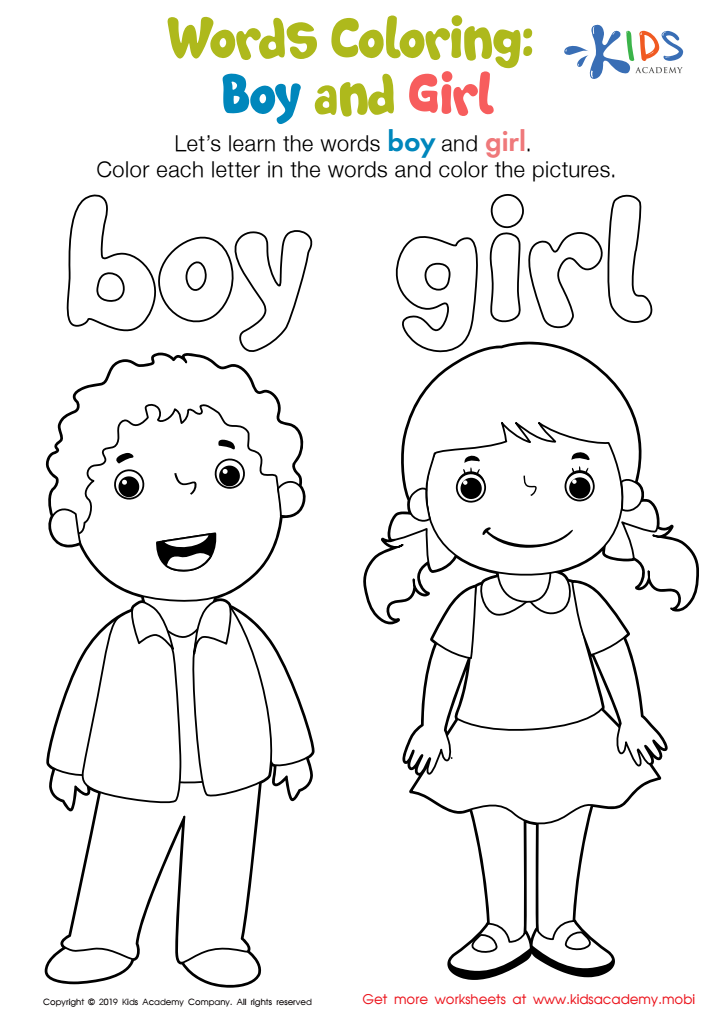
Boy and Girl Words Coloring Worksheet
Help your students build their sight word vocabulary! Early readers may not be able to sound out all words, so this worksheet teaches them to read two important sight words: boy and girl. They will color the letters and a picture of each, making it a fun and educational way to learn. Download the PDF now.
Download (PDF)
Assign to My Students
Assign to My Students
Boy and Girl Words Coloring Worksheet
Worksheet
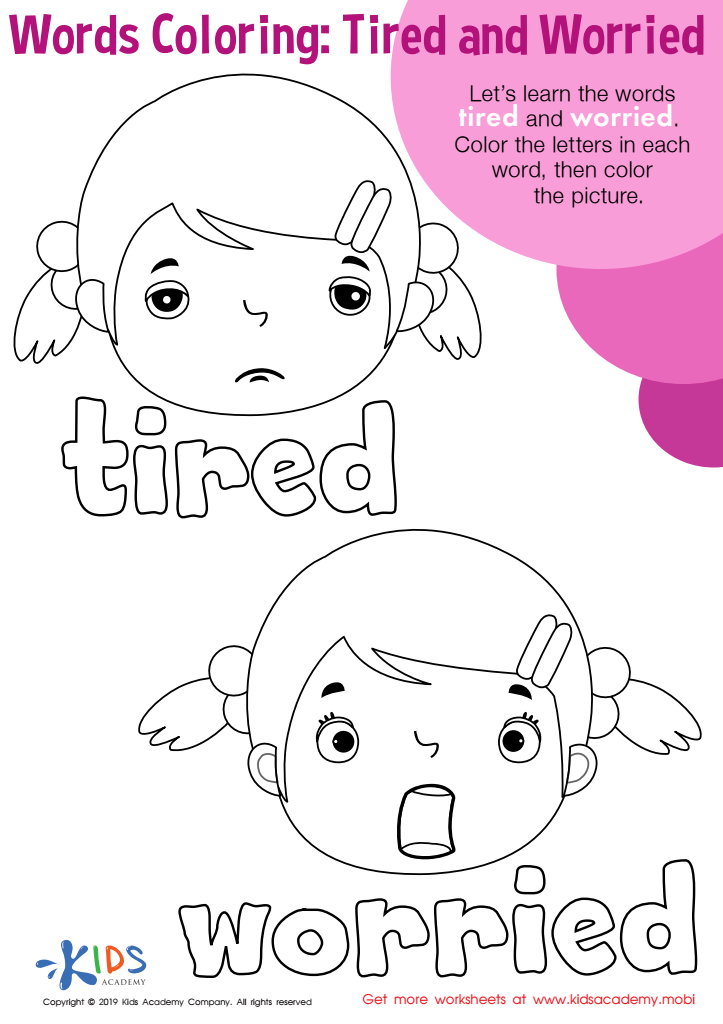
Tired and Worried Words Coloring Worksheet
Teach your students about "tired" and "worried" with this worksheet. Have them read and color the emotion words, then color the pictures of a tired girl and a worried girl. Discuss what makes them tired and worried. Expand their vocabulary with this fun coloring activity!
Download (PDF)
Assign to My Students
Assign to My Students
Tired and Worried Words Coloring Worksheet
Worksheet
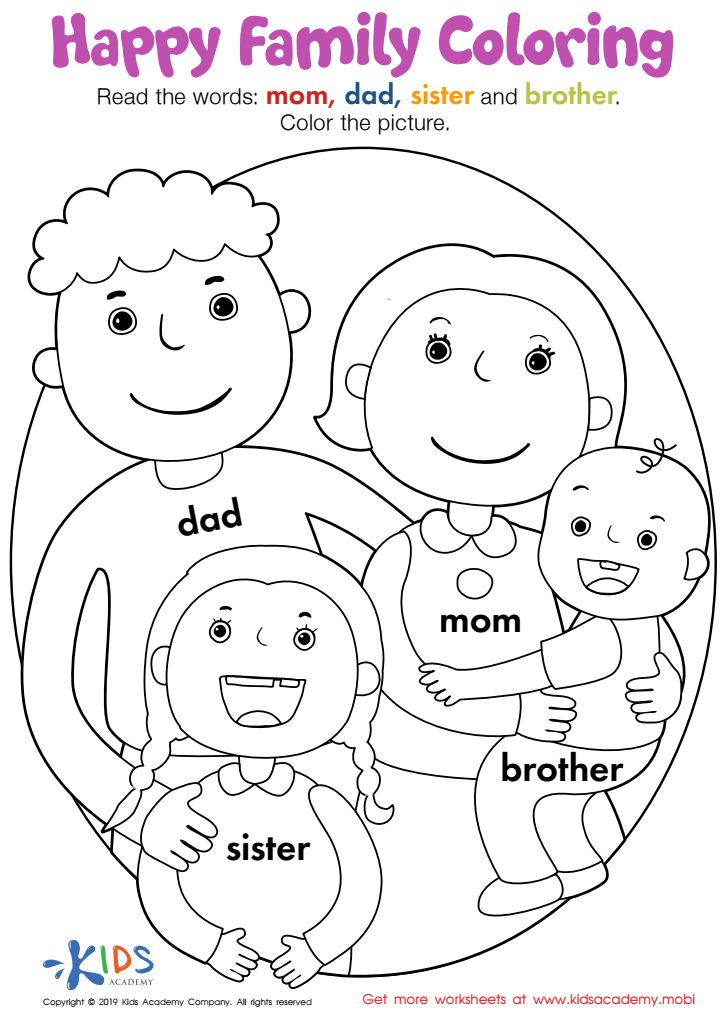
Happy Family Coloring Worksheet
Help your students gain confidence in family vocabulary with this worksheet. Labelled images of a family (dad, mom, sister, brother) are featured, along with an accompanying activity to colour in the picture. Your students will feel a sense of accomplishment after reading and completing the printable.
Download (PDF)
Assign to My Students
Assign to My Students
Happy Family Coloring Worksheet
Worksheet
Join Kids Academy for Free
Who is primarily going to use this learning content?


Color recognition easy vocabulary coloring pages are an invaluable educational tool for children ages 3-7. Parents and teachers should care about these resources because they integrate several key aspects of early childhood development.
First, color recognition coloring pages help children differentiate and name colors, which is a fundamental cognitive skill. When young learners can identify and articulate colors, they are better prepared for more complex tasks like sorting, problem-solving, and pattern recognition.
Furthermore, vocabulary coloring pages introduce young minds to new words in a fun and engaging way. Linking vocabulary with visuals not only enhances memory retention but also expands a child's language skills. These combined skills help build a solid foundation for reading and verbal communication.
Another benefit is the enhancement of fine motor skills. As children maneuver crayons or markers, they develop hand-eye coordination and muscle control, which are critical for writing and other daily tasks. Coloring also fosters creativity, allowing children to express themselves artistically and emotionally.
Finally, vocabulary coloring pages offer structured bite-sized segments of focused learning, making it easier for kids to grasp new concepts at their own pace. They provide an enjoyable educational experience and foster a positive attitude toward learning that can last a lifetime.
Incorporating these tools into a child's routine can make a significant difference in their developmental journey.