Understanding citizenship Easy Worksheets for Ages 3-7
3 filtered results
-
From - To
Explore our "Understanding Citizenship Easy Worksheets for Ages 3-7" to introduce young learners to the fundamental concepts of good citizenship. Designed by educational experts, these engaging and interactive worksheets help children grasp the importance of community, responsibility, and respect. Perfect for preschool and early elementary grades, our printables make learning enjoyable with fun activities that nurture a sense of belonging and social awareness. From identifying community helpers to understanding responsibilities at home and school, these worksheets are an ideal resource for fostering the values of good citizenship from a young age. Download, print, and watch your child grow into a responsible future citizen!
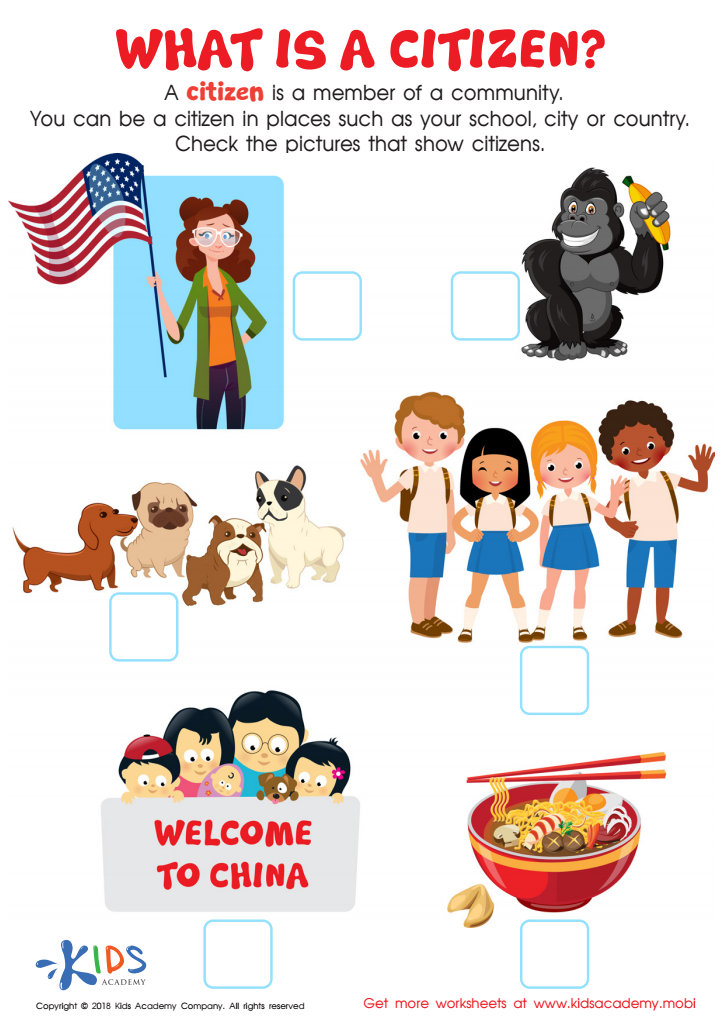
What is a Citizen? Worksheet
 Assign to My Students
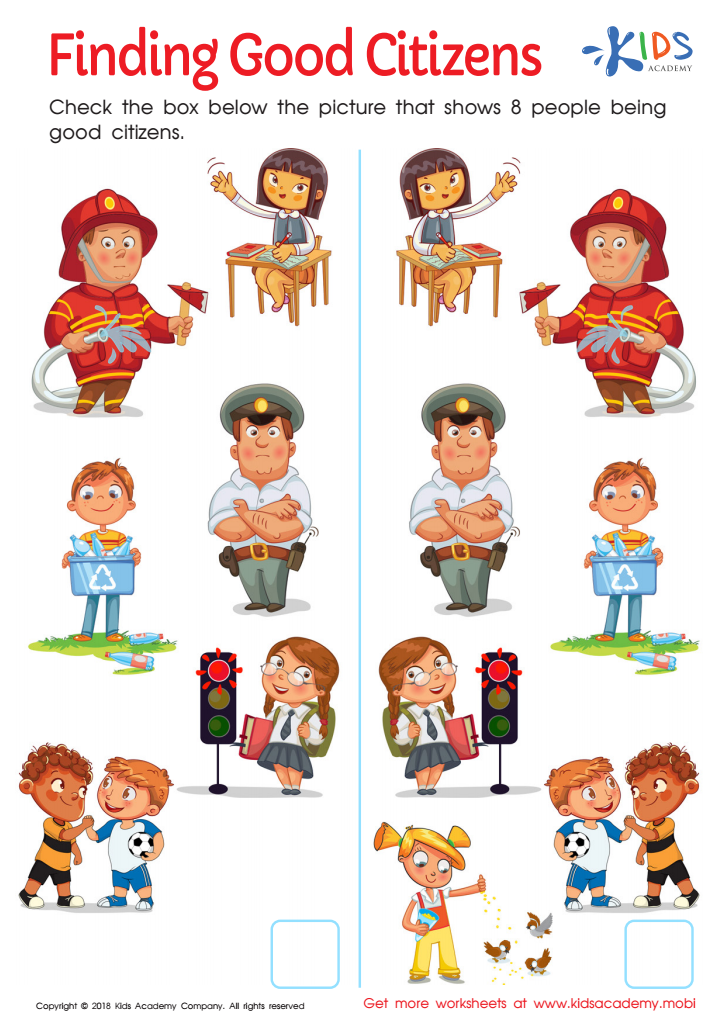
Finding Good Citizens Worksheet
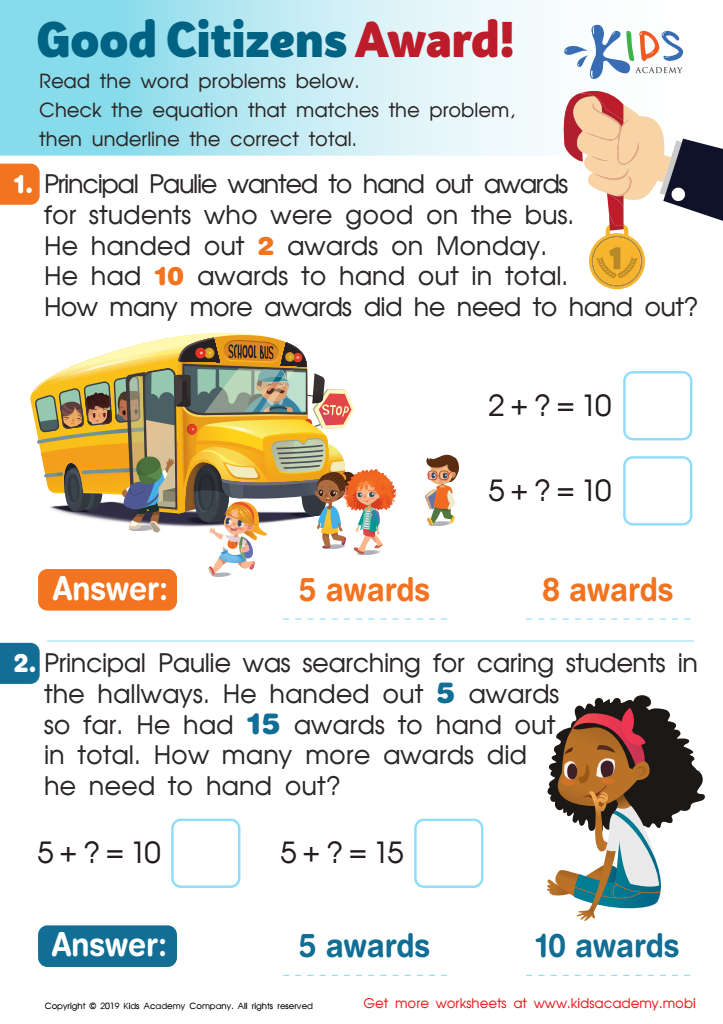
Good Citizens Award! Worksheet






Understanding citizenship at an early age is fundamental for nurturing socially responsible and engaged individuals. For children ages 3-7, grasping basic citizenship concepts—such as fairness, respect, and responsibility—lays the groundwork for their development into considerate members of society.
Instilling these values early helps children understand social norms and the importance of community. They begin to recognize their roles and responsibilities within their families, schools, and neighborhoods. This understanding promotes positive behaviors such as sharing, helping others, and participating in group activities.
Moreover, early lessons in citizenship foster a sense of belonging and self-worth. When children learn about their rights and responsibilities, they gain confidence and feel valued in their communities. This sense of belonging can enhance their emotional wellbeing and cooperation with peers.
Educators and parents play a crucial role in this developmental stage. Through stories, games, and everyday interactions, they can model good citizenship and provide children with real-life examples of actions like recycling or following rules. Such practical experiences make the abstract concept of citizenship tangible for young minds.
Ultimately, prioritizing citizenship education fosters a community-oriented mindset from a young age. This foundational understanding can shape more empathetic, responsible, and active citizens in the future.








