Visual discrimination Easy Worksheets for Ages 3-7
5 filtered results
-
From - To
Discover engaging visual discrimination worksheets designed for children ages 3-7! Our easy-to-use resources help young learners develop crucial visual skills, improving their ability to identify similarities and differences in images. Each worksheet is thoughtfully crafted to enhance focus and attention to detail while keeping activities fun and interactive. Perfect for early childhood education settings or home learning, these worksheets will sharpen your child's observational skills and support their overall cognitive development. Explore our diverse collection and watch your little ones thrive as they complete exciting exercises that encourage creativity and critical thinking. Download now and make learning enjoyable!
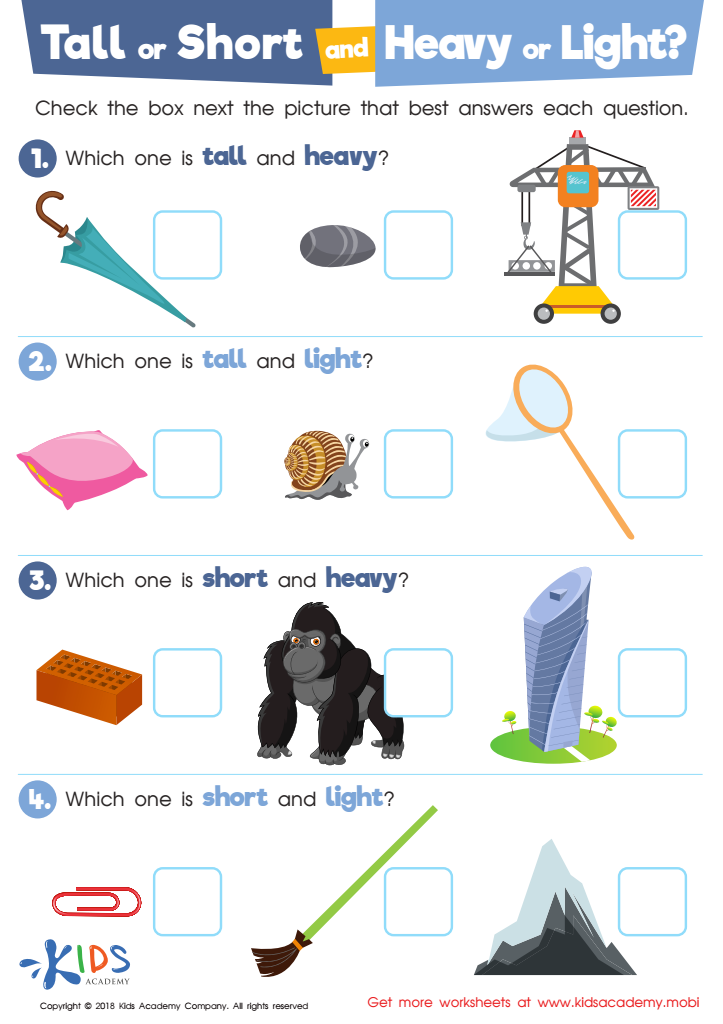
Tall or Short and Heavy or Light? Worksheet
 Assign to My Students
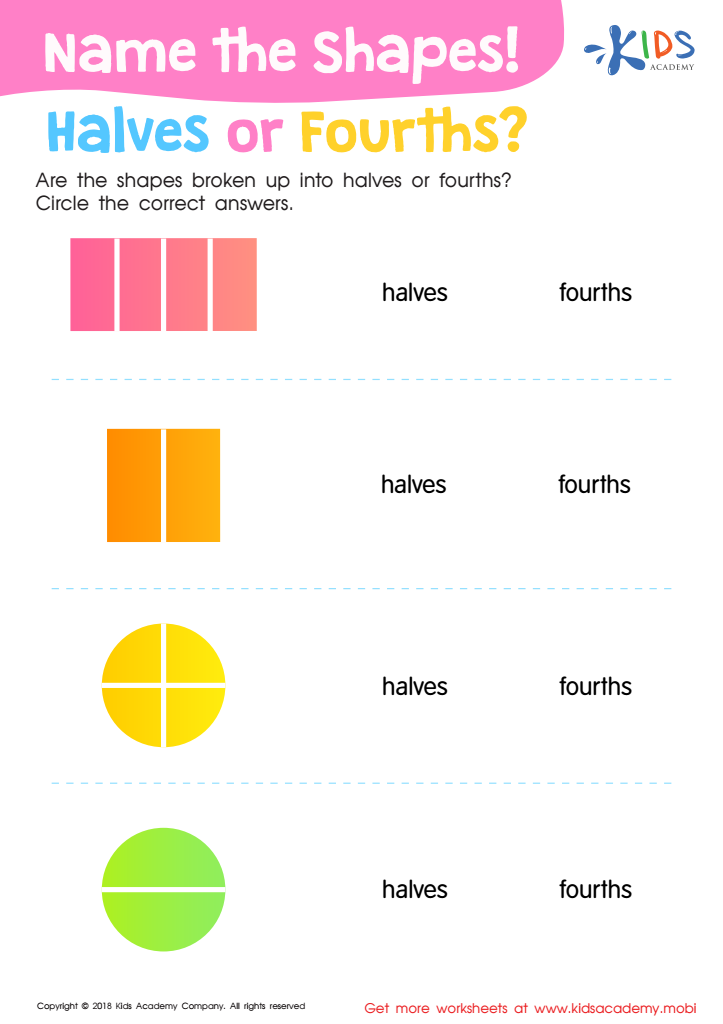
Name the Shapes Halves or Fourths? Worksheet
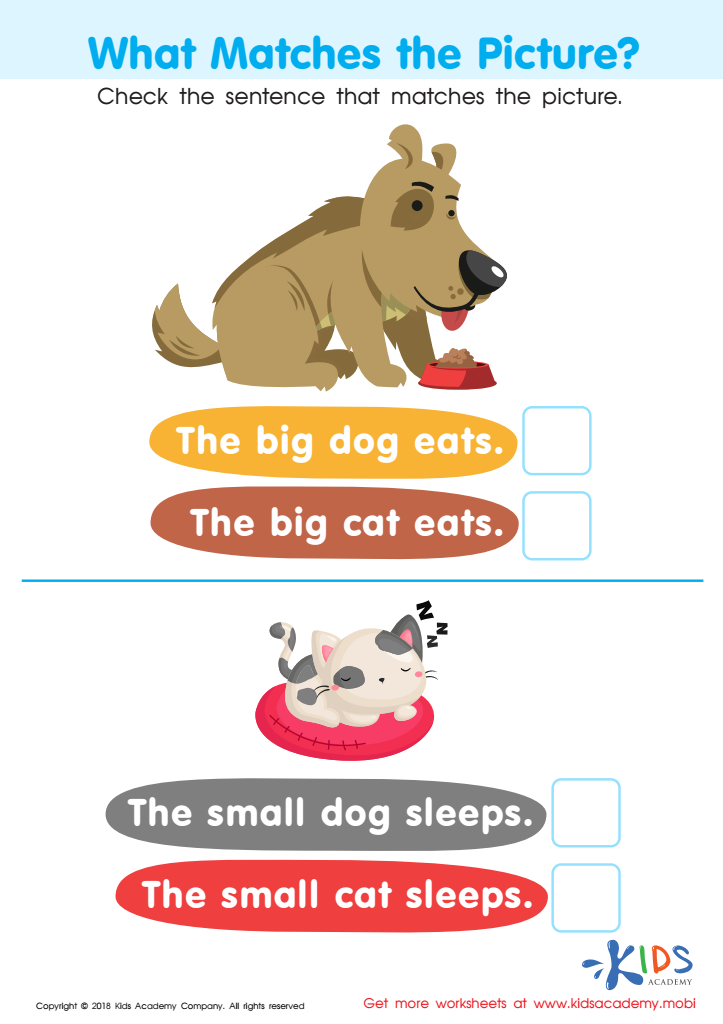
What Matches the Picture? Worksheet
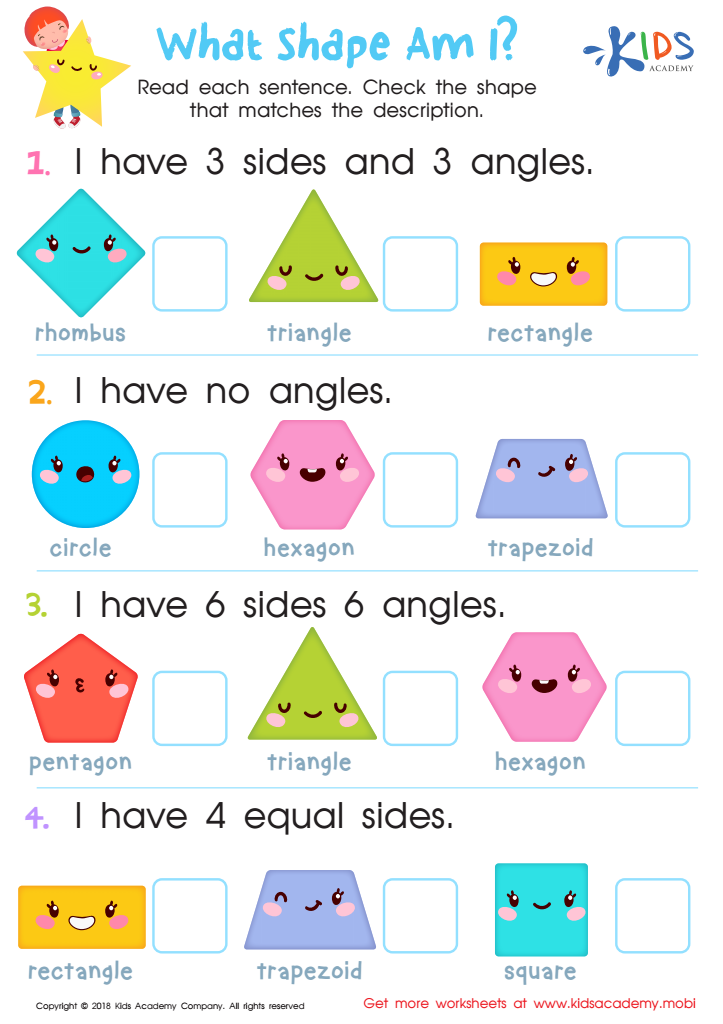
What Shape Am I? Worksheet
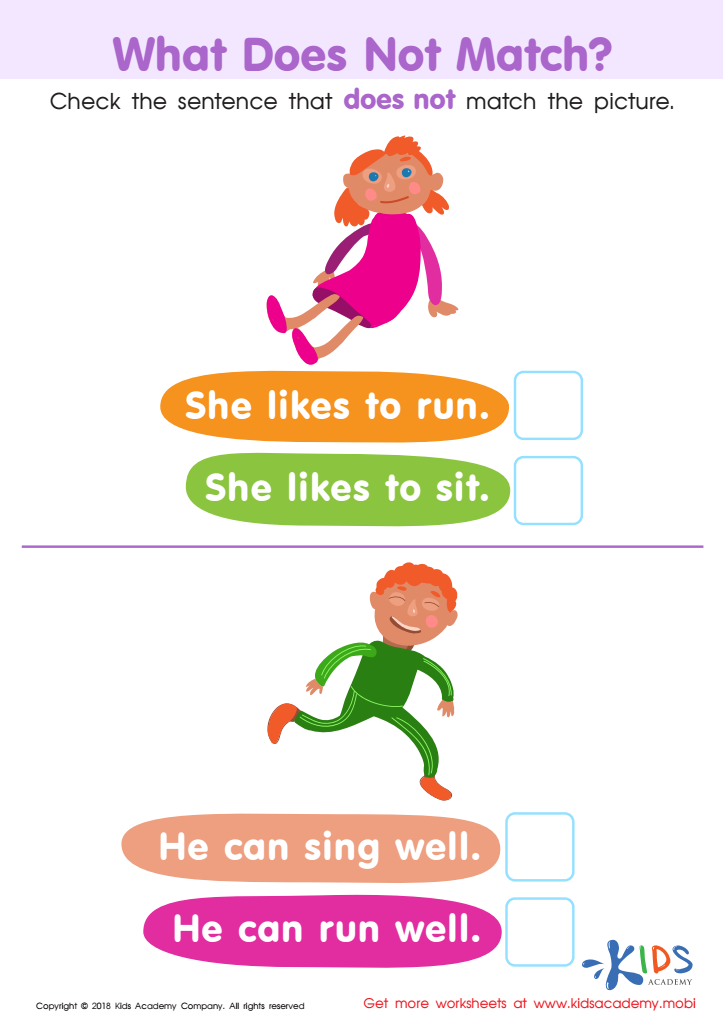
What Does Not Match? Worksheet






Visual discrimination is a crucial skill for children aged 3-7, encompassing the ability to notice differences and similarities in shapes, sizes, colors, and patterns. Parents and teachers should prioritize this skill because it lays the foundation for critical early learning experiences, notably in reading, writing, and math. For example, recognizing letters and numbers requires discerning subtle differences between similar characters.
Developing visual discrimination also enhances a child's ability to observe their environment closely, fostering curiosity and analytical thinking. This skill aids in problem-solving, as children learn to make distinctions that inform their decisions. In addition, strong visual discrimination skills can boost confidence, as children find success in tasks such as matching and sorting activities, crafts, and puzzles.
Moreover, early exposure to activities requiring visual discrimination, such as drawing, memory games, and interactive games, promotes fine motor skills and hand-eye coordination. The ability to differentiate objects also translates to improved spatial awareness, paving the way for future learning.
Ultimately, nurturing visual discrimination in young children equips them with the tools to successfully navigate their academic journeys. Parents and teachers play a crucial role in supporting and amplifying these skills through engaging activities in a structured yet fun environment.








