Number Recognition Easy Addition & Subtraction Worksheets for Ages 3-7 - Page 2
29 filtered results
-
From - To
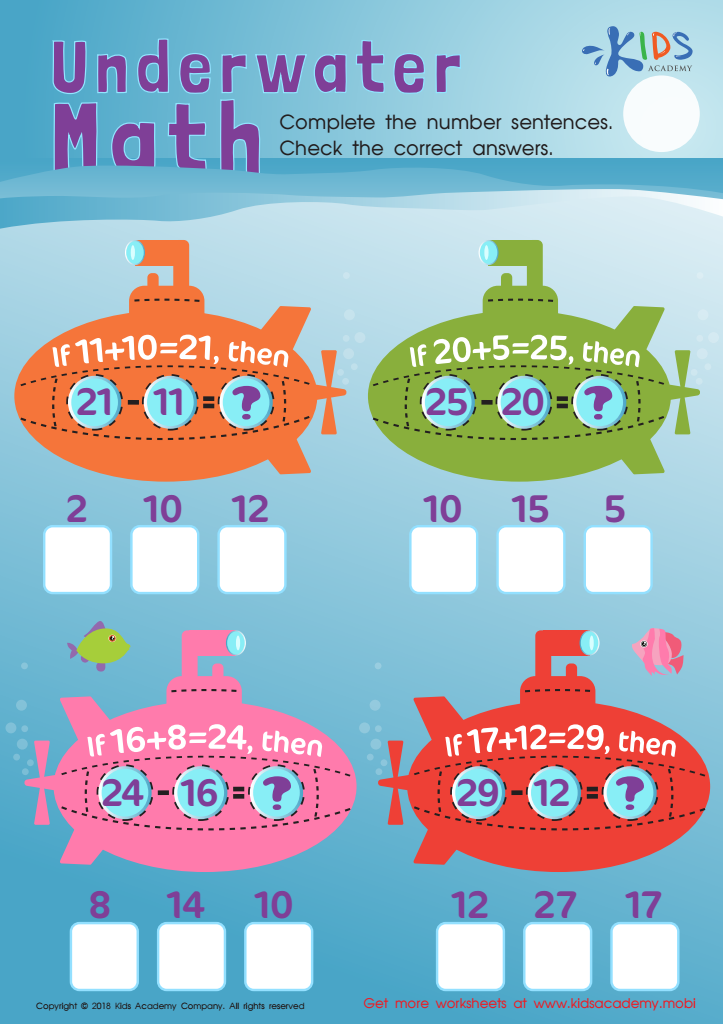
Addition and Subtraction: Underwater Math Worksheet
 Assign to My Students
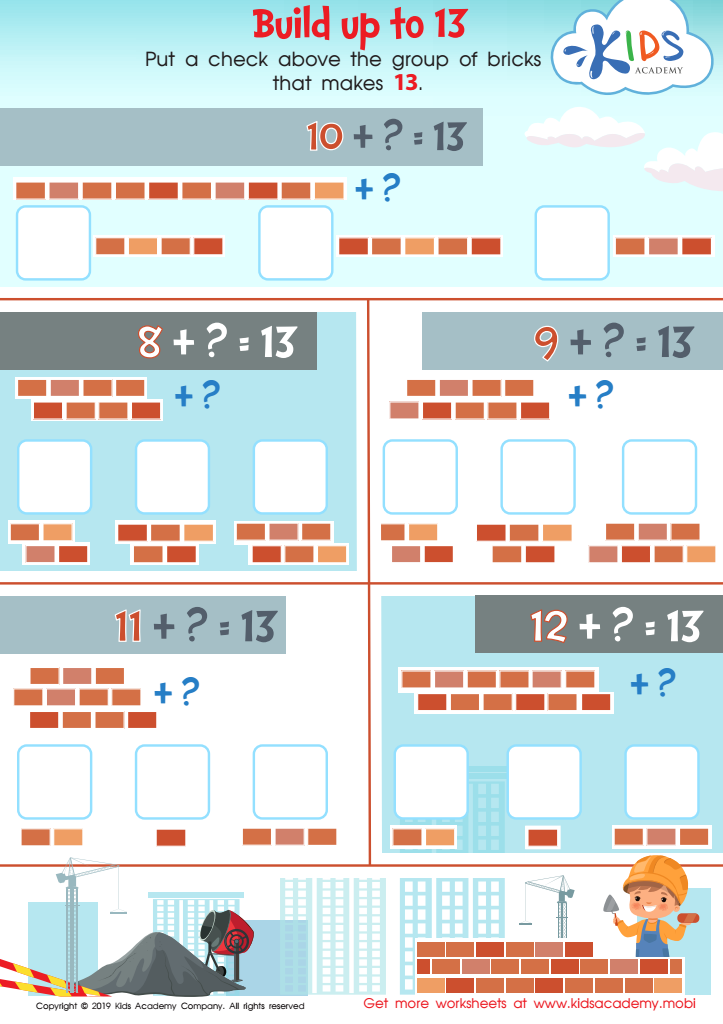
Build up to 13 Worksheet
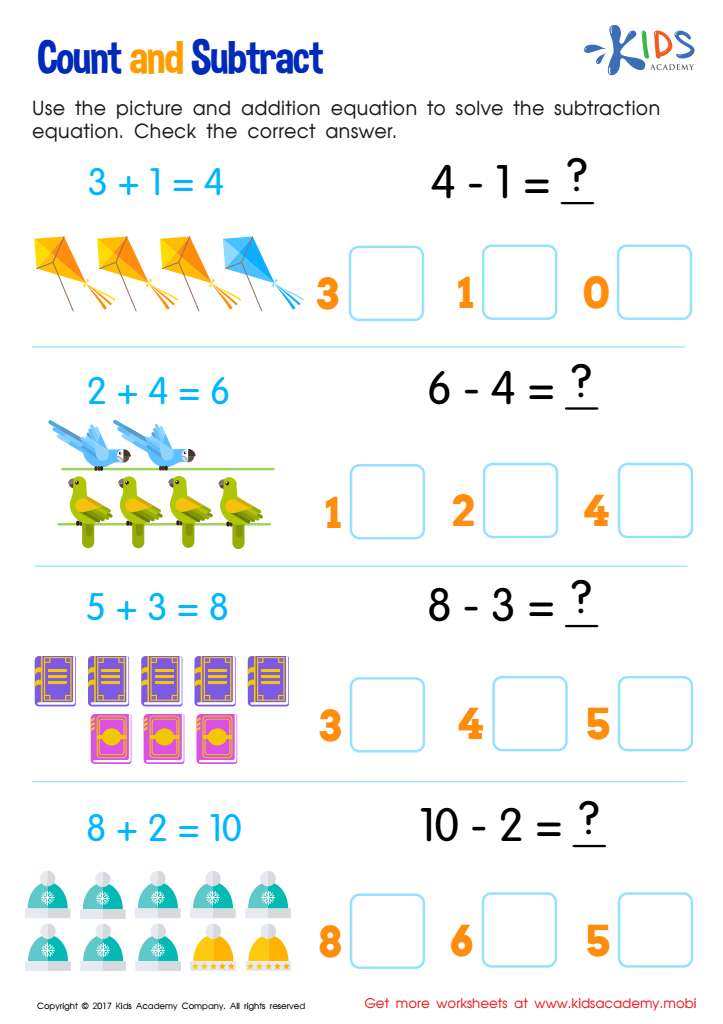
Count and Subtract Worksheet
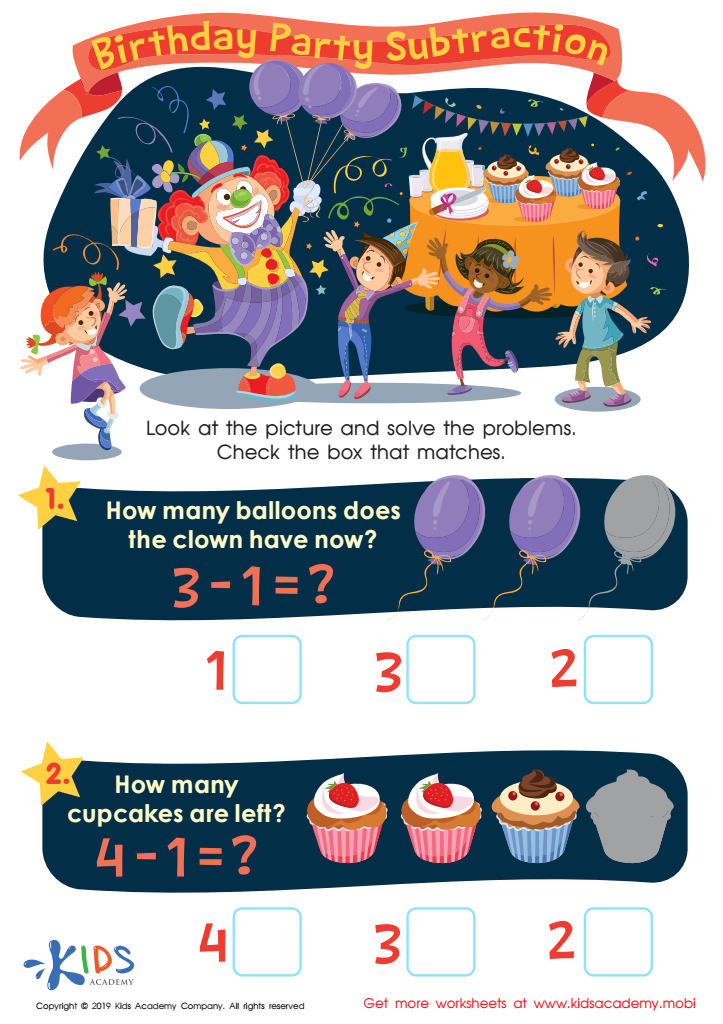
Birthday Party Subtraction Worksheet
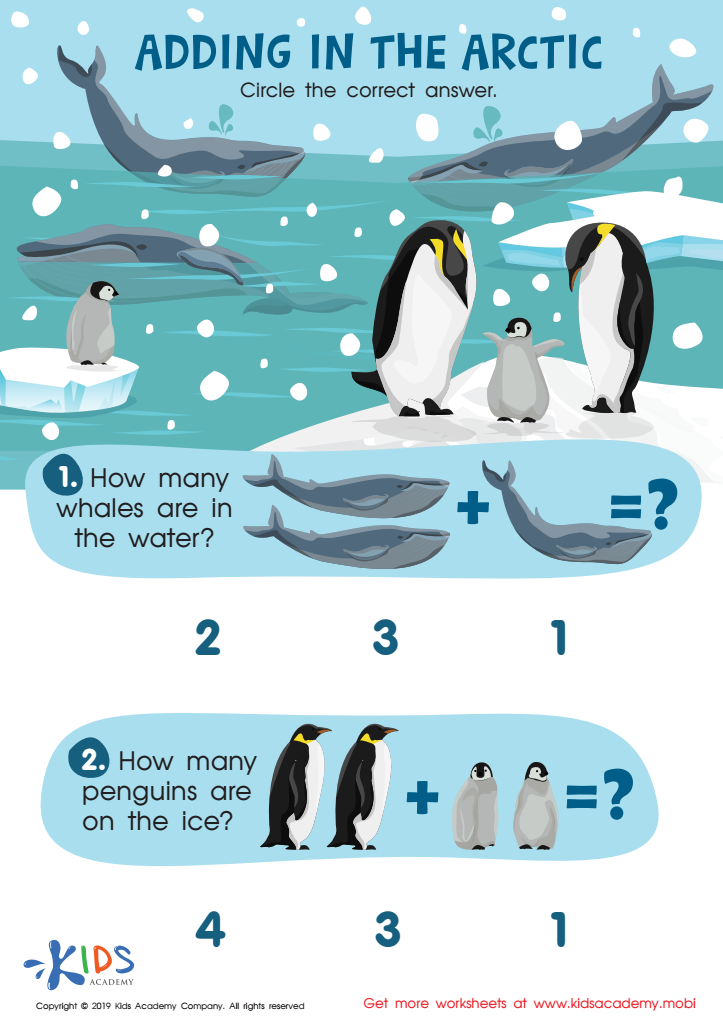
Adding in the Arctic Worksheet








Number recognition and basic addition and subtraction are critical components of early childhood education, serving as foundational building blocks for future mathematical understanding. For children aged 3-7, developing these skills is more than just about learning numbers; it enhances cognitive development, logical reasoning, and problem-solving abilities. Parents and teachers play a pivotal role in fostering these skills, as early exposure to numerical concepts sets the stage for academic success in later years.
Number recognition involves identifying and understanding numbers, which is essential for counting, sequencing, and comparing quantities. It also helps children grasp the concept of quantity and order, making everyday activities—like counting toys or snacks—learning opportunities. This intuitive understanding forms the groundwork for more complex arithmetic operations.
Introducing easy addition and subtraction at a young age builds confidence and promotes a positive attitude toward math. These skills teach children to make connections between numbers and real-life situations, fostering their ability to think critically and make decisions based on numerical information.
Furthermore, early success in math can boost self-esteem and encourage a lifelong interest in the subject. Therefore, it is crucial for parents and teachers to actively engage children in games, activities, and exercises that promote number recognition and basic arithmetic, ensuring they have the tools needed for future educational achievements.








