Visual Learning Easy Addition & Subtraction Worksheets for Ages 3-7
5 filtered results
-
From - To
Boost early math skills with our engaging Visual Learning Easy Addition & Subtraction Worksheets, perfect for children aged 3-7. Designed to simplify learning, these colorful worksheets use appealing visuals to introduce basic addition and subtraction concepts. The fun exercises make arithmetic an enjoyable adventure for young learners, fostering confidence and a love for math. Ideal for parents and teachers, these worksheets support skill-building and problem-solving, nurturing a strong mathematical foundation. Start your child's educational journey with our easy-to-use resources and watch them thrive in their early math development. Download now to make learning math both effective and fun!
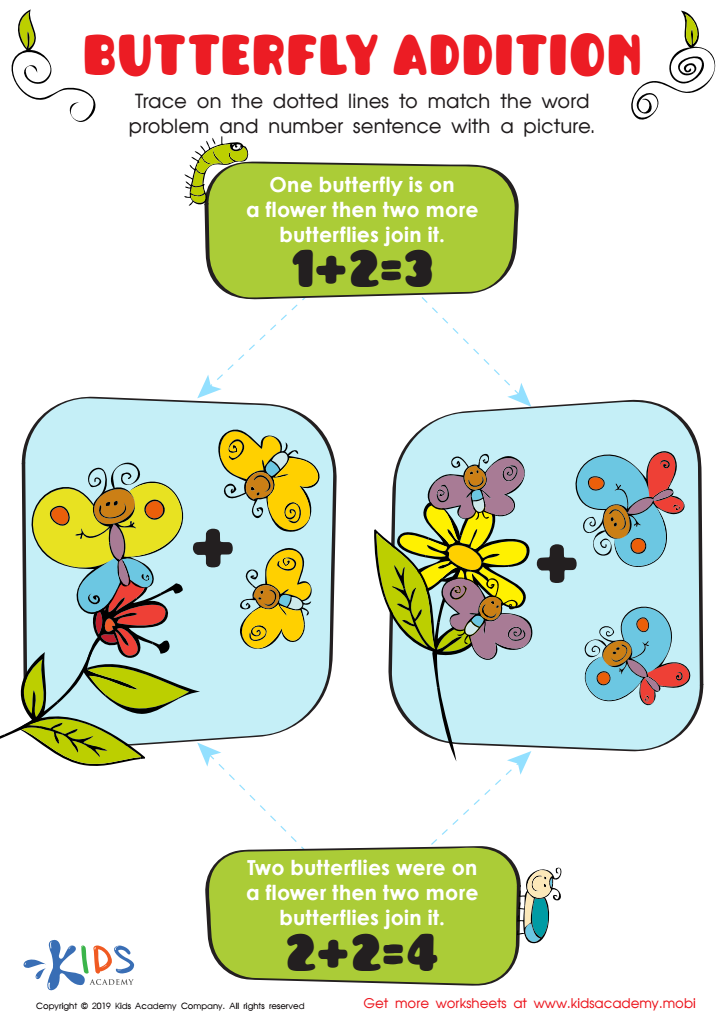
Butterfly Addition Worksheet
 Assign to My Students
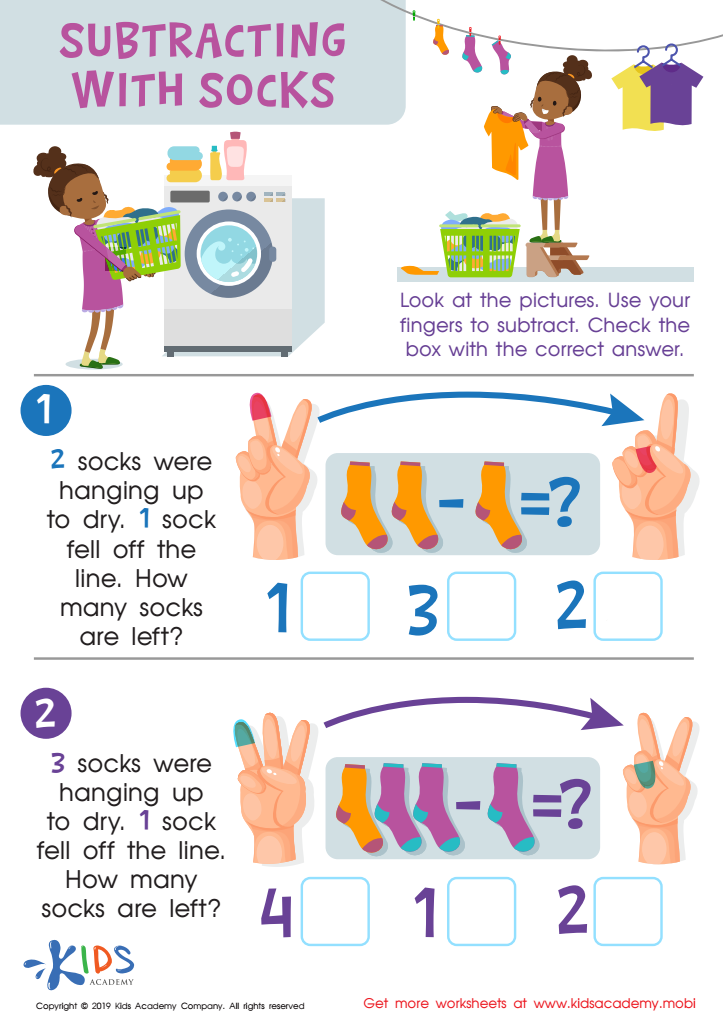
Subtracting Socks Worksheet
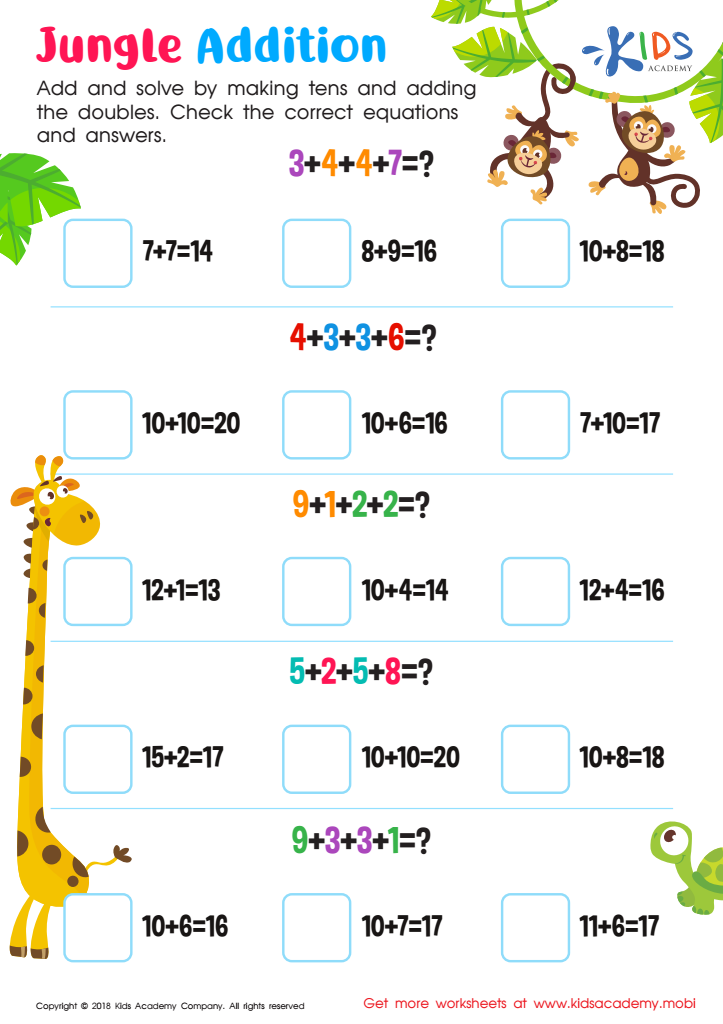
Jungle Addition Worksheet
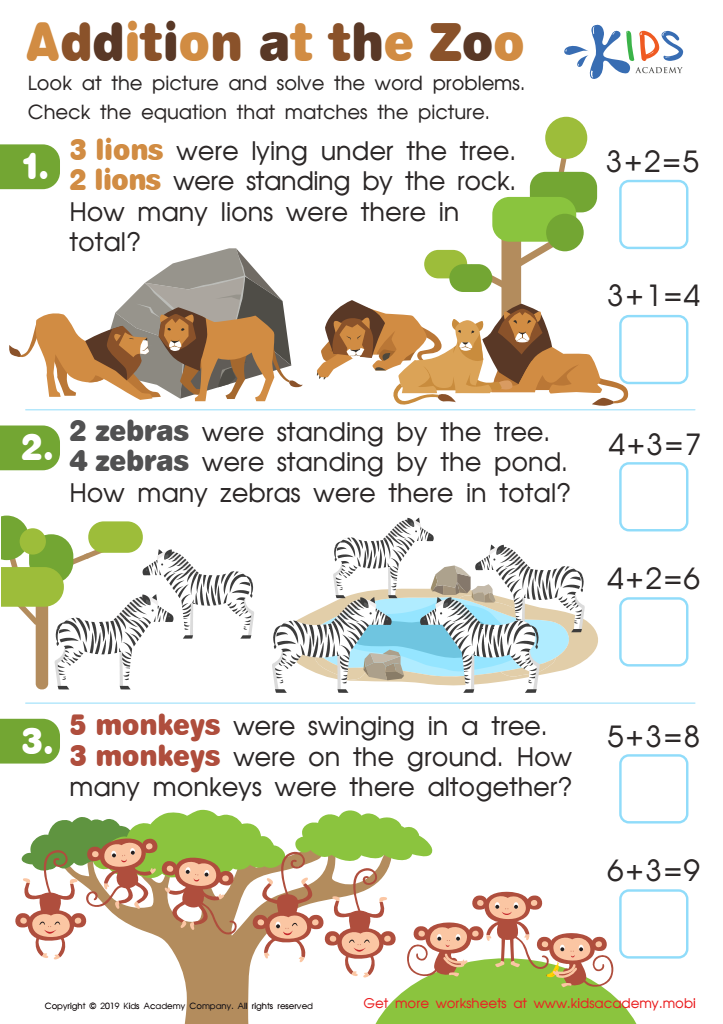
Addition at the Zoo Worksheet
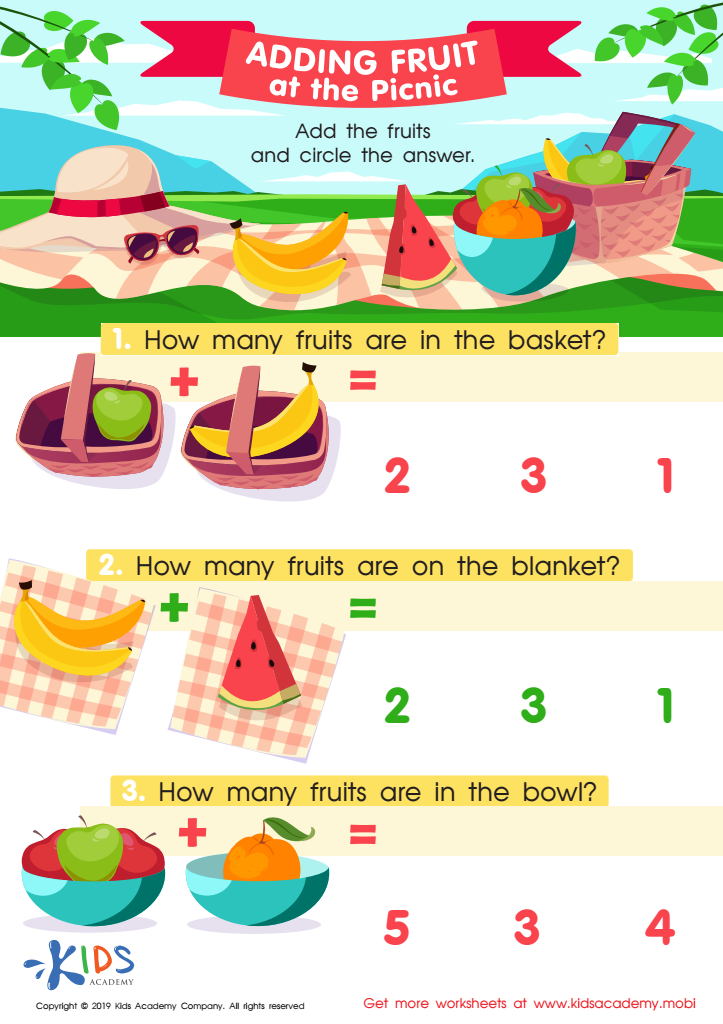
Adding Fruit at the Picnic Worksheet








Visual learning for addition and subtraction is crucial for young children ages 3-7 because it lays a strong foundation for mathematical understanding and problem-solving skills. Children in this age group are highly visual and tend to learn more effectively when they can see and manipulate objects. By utilizing visual aids such as pictures, number lines, and manipulatives like counting blocks or fingers, children can grasp the concepts of addition and subtraction more concretely.
Visual learning aids help demystify abstract concepts by presenting them in a tangible form. For example, seeing a group of five apples being added to a group of two apples makes it easier for children to understand that the total becomes seven apples. This hands-on experience translates to a better grasp of numerical relationships and arithmetic rules. It also enhances memory retention, as children are more likely to remember concepts they have interacted with visually and physically.
Moreover, visual learning keeps young children engaged and motivated, transforming math from a potentially daunting subject into a fun and interactive activity. This positive early exposure fosters confidence and encourages a lifelong interest in mathematics. Teachers and parents play a critical role in guiding this learning process, helping to create a supportive and stimulating environment for developing essential math skills.








