Problem-Solving Skills Easy Geometry Worksheets for Ages 3-7
3 filtered results
-
From - To
Enhance your child's problem-solving skills with our easy geometry worksheets designed specifically for ages 3-7. These engaging and interactive worksheets introduce young learners to fundamental geometric concepts while fostering critical thinking and creativity. Through colorful illustrations and fun activities, children will explore shapes, patterns, and spatial awareness. Our user-friendly format allows for independent practice or guided learning, making it perfect for both teachers and parents. Unlock your child's potential and set the foundation for future math success with these captivating worksheets. Explore our collection today and watch your little ones thrive as they solve problems and build confidence in their math abilities!
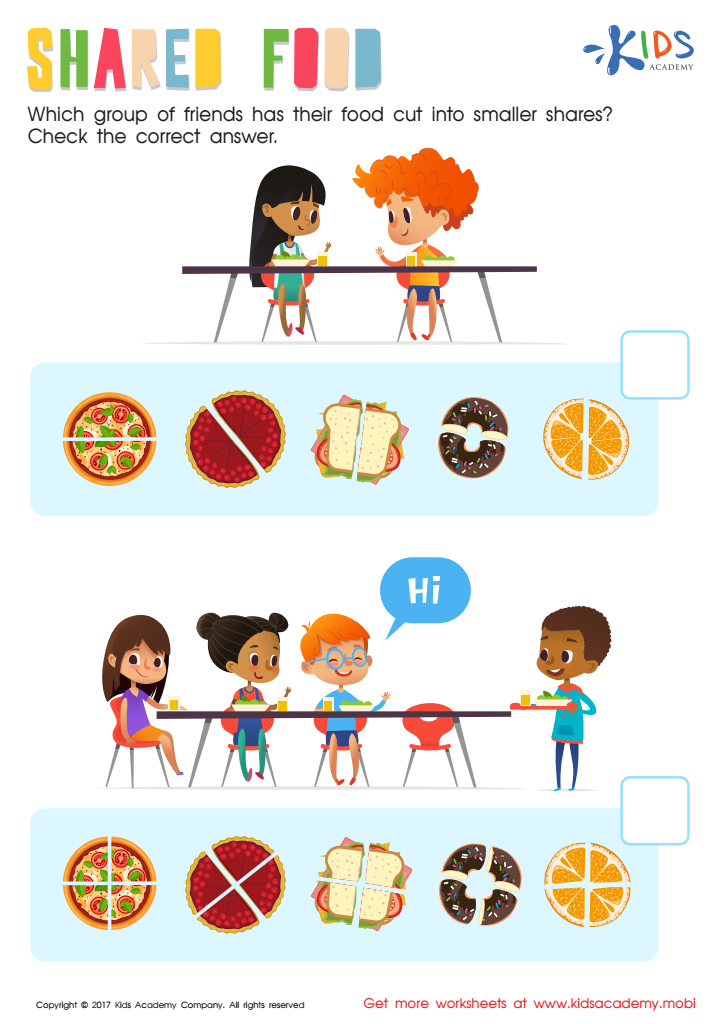
Shared Food Worksheet
 Assign to My Students











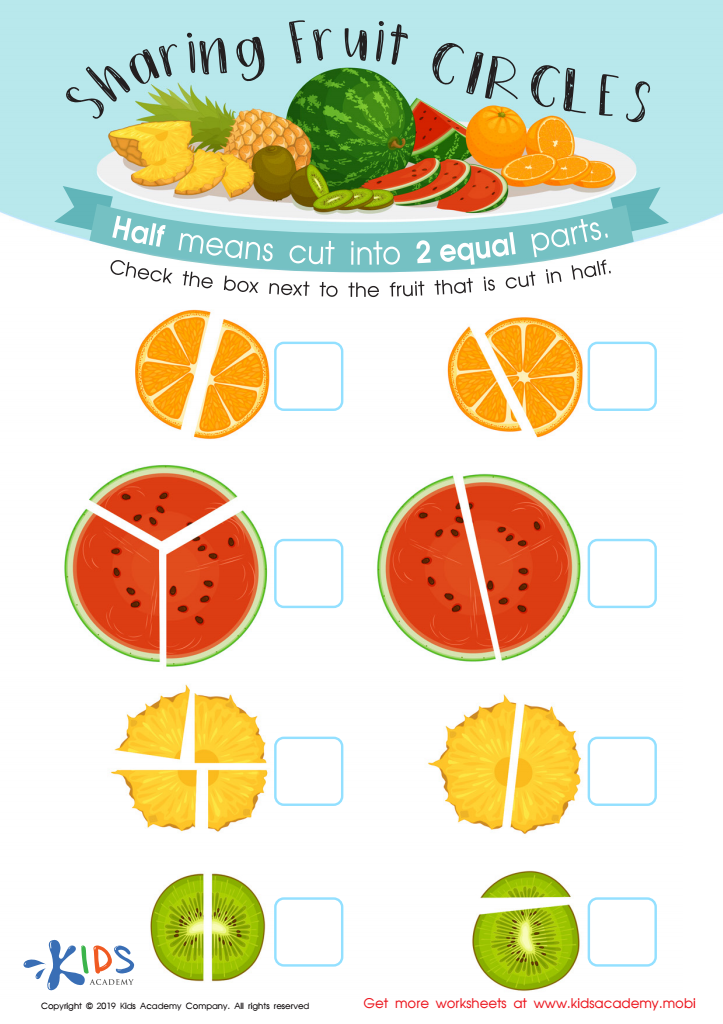
Sharing Fruit Circles Worksheet
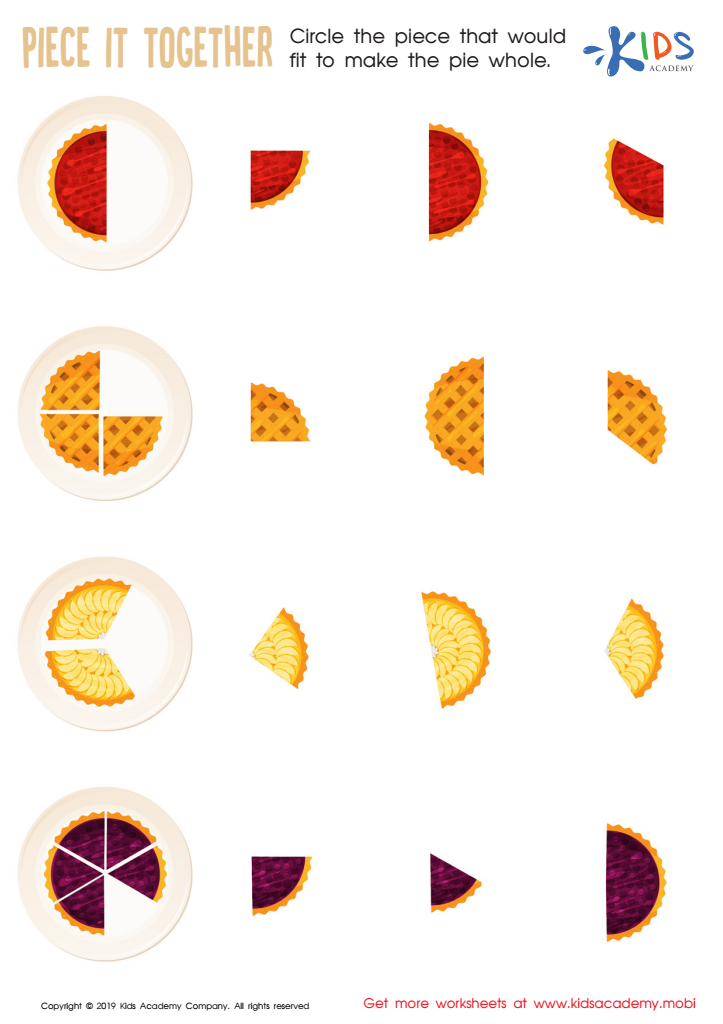
Piece it together Worksheet








Parents and teachers should prioritize problem-solving skills in easy geometry for children ages 3-7 because these foundational skills set the stage for overall cognitive development and future academic success. At this age, children are naturally curious and eager to explore their surroundings. Engaging them in geometry helps to enhance critical thinking, logical reasoning, and spatial awareness—key components of effective problem-solving.
Geometric activities, such as sorting shapes, identifying patterns, and creating simple constructions, make learning enjoyable and interactive. These skills are not only crucial for mathematics in later years but also for everyday tasks, encouraging children to approach challenges systematically and creatively.
Introducing geometry early fosters a sense of curiosity and a love for mathematics, diminishing potential math anxiety in later grades. Furthermore, the hands-on nature of geometric play stimulates fine motor skills and encourages perseverance. Thus, when parents and teachers focus on developing problem-solving abilities through easy geometry, they empower young learners to tackle not only math-related problems but also various life situations with confidence and adaptability.
Overall, nurturing these skills can lead to greater opportunities for exploration, creativity, and success as children progress through their educational journeys.








