Enhancing Counting Skills Easy Math Worksheets for Ages 3-7
5 filtered results
-
From - To
Enhancing Counting Skills Easy Math Worksheets for Ages 3-7 by Kids Academy are designed to make learning numbers engaging and fun. These meticulously crafted worksheets cater to young learners, introducing them to fundamental counting concepts in a simplified manner. Through colorful visuals and interactive activities, children improve number recognition, sequencing, and basic math operations. Ideal for preschoolers and early elementary students, Kids Academy's resources aim to build a strong mathematical foundation, boosting confidence and school readiness. Spark your child's passion for math with these easily downloadable, printable, and age-appropriate worksheets, ensuring a step-by-step approach to mastering counting skills.
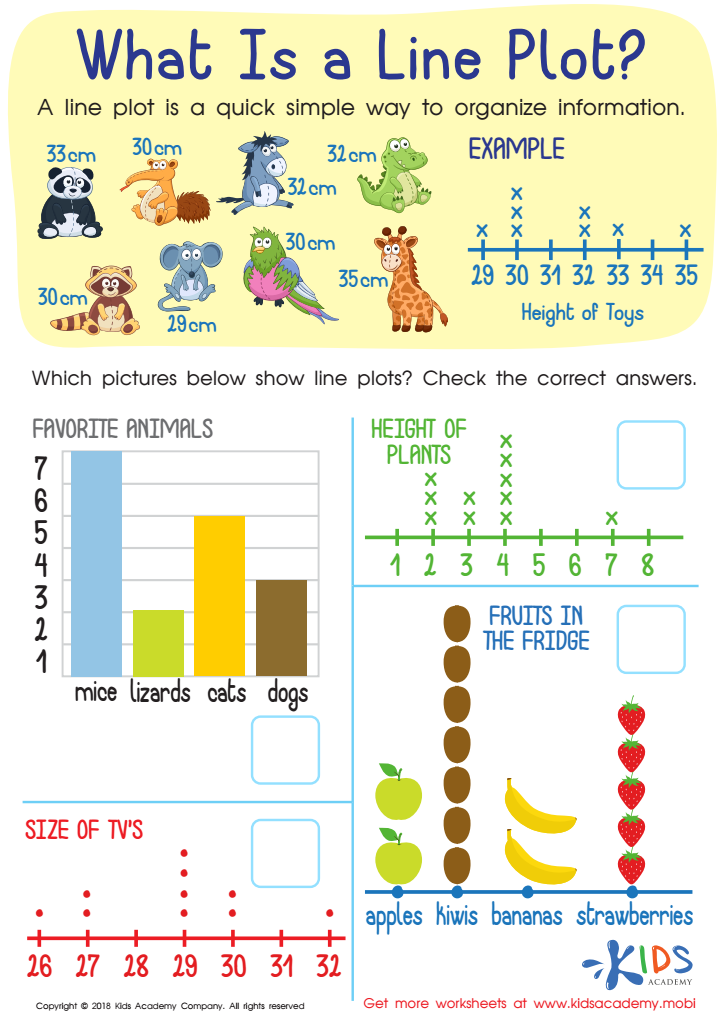
What Is a Line Plot? Worksheet
 Assign to My Students
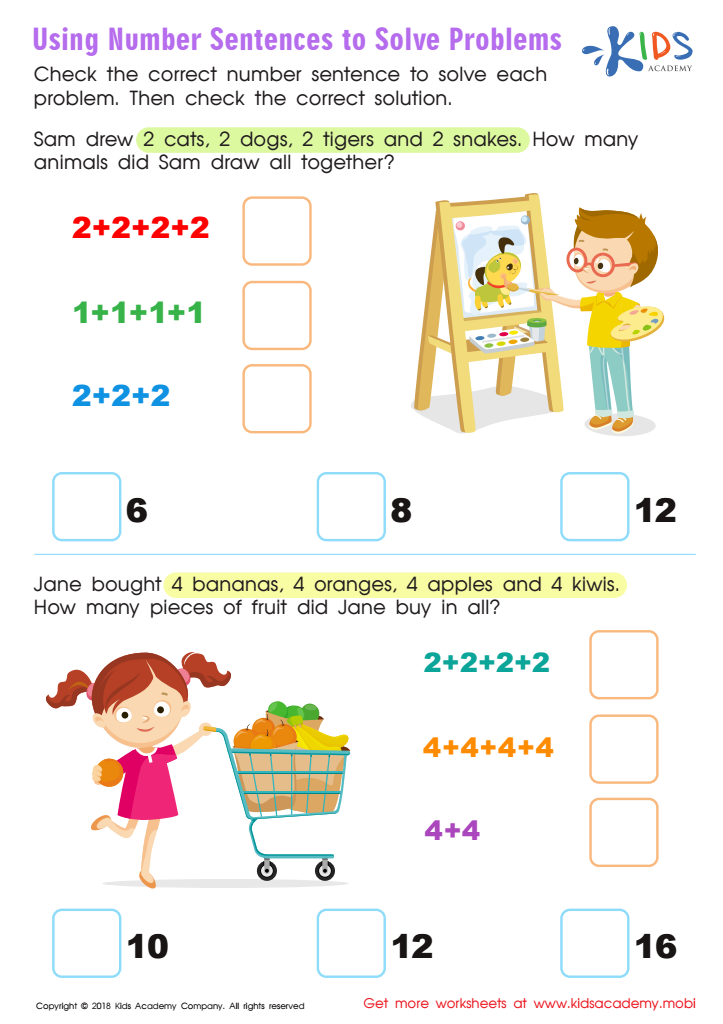
Using Number Sentences to Solve Problems Worksheet
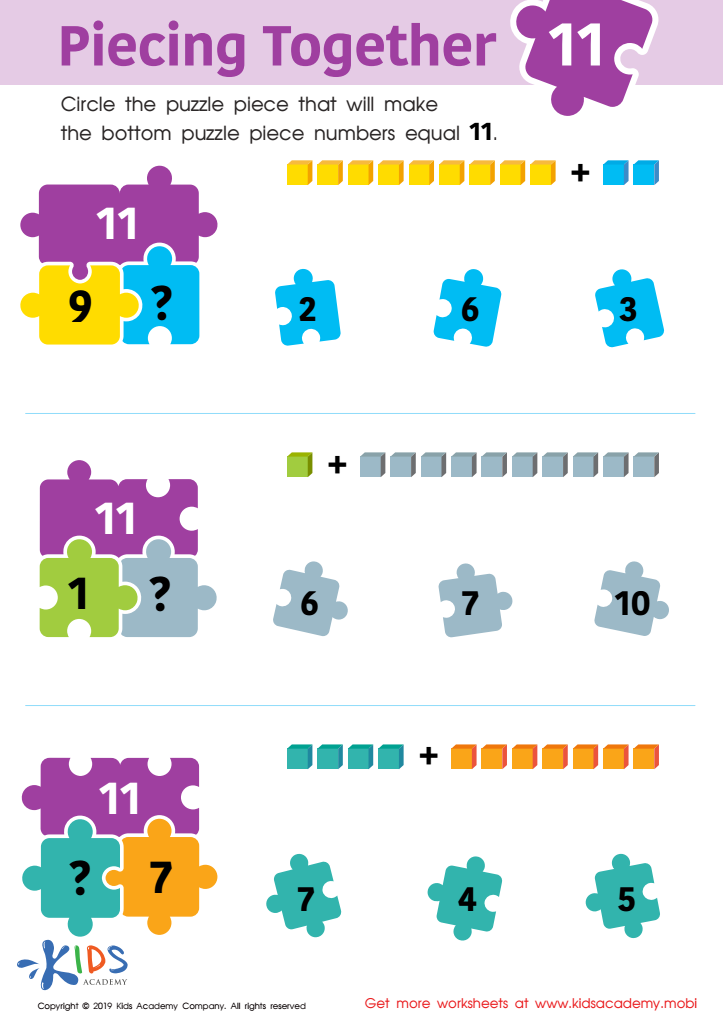
Piecing Together 11 Worksheet
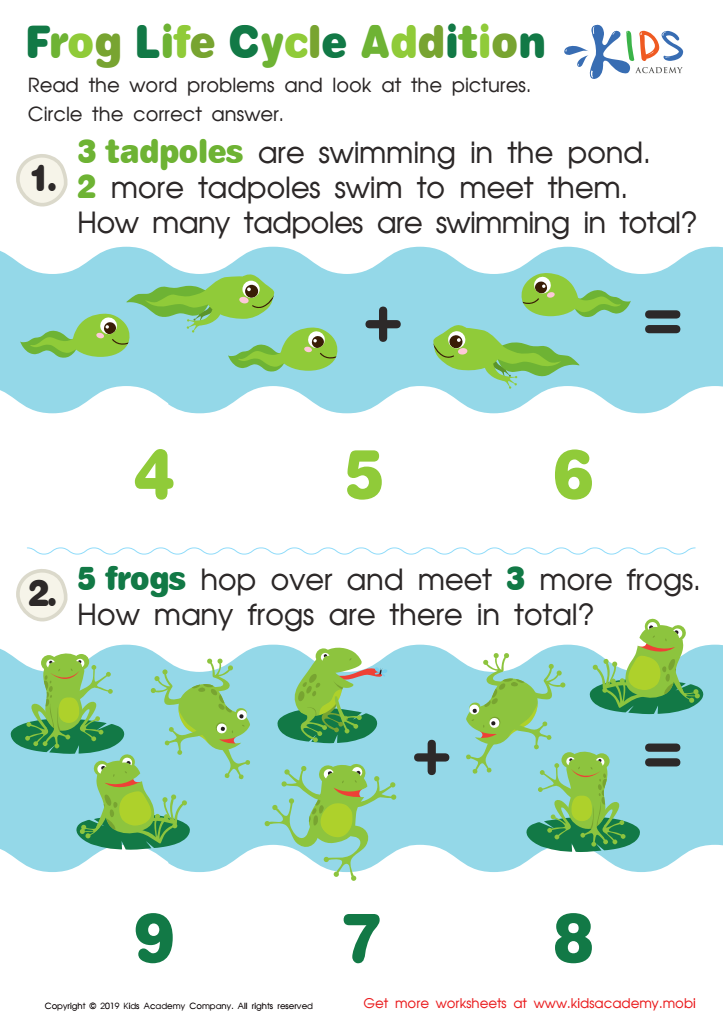
Frog Life Cycle Addition Worksheet
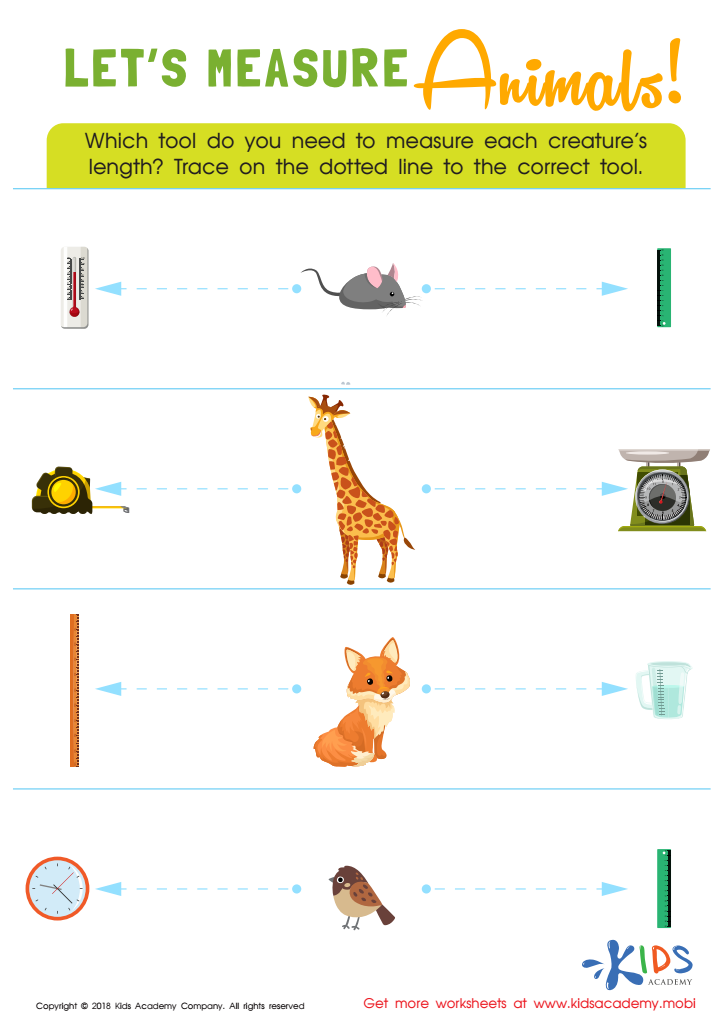
Let's Measure Animals! Worksheet





.jpg)
Enhancing counting skills in children aged 3-7 lays a crucial foundation for future mathematical understanding and overall cognitive development. Counting is one of the earliest math skills young learners grasp, and it bridges the gap to more complex concepts such as addition, subtraction, and problem-solving. At this formative age, children are naturally curious and continuously absorbing information; thus, fostering strong counting abilities supports their intellectual growth and prepares them for academic success.
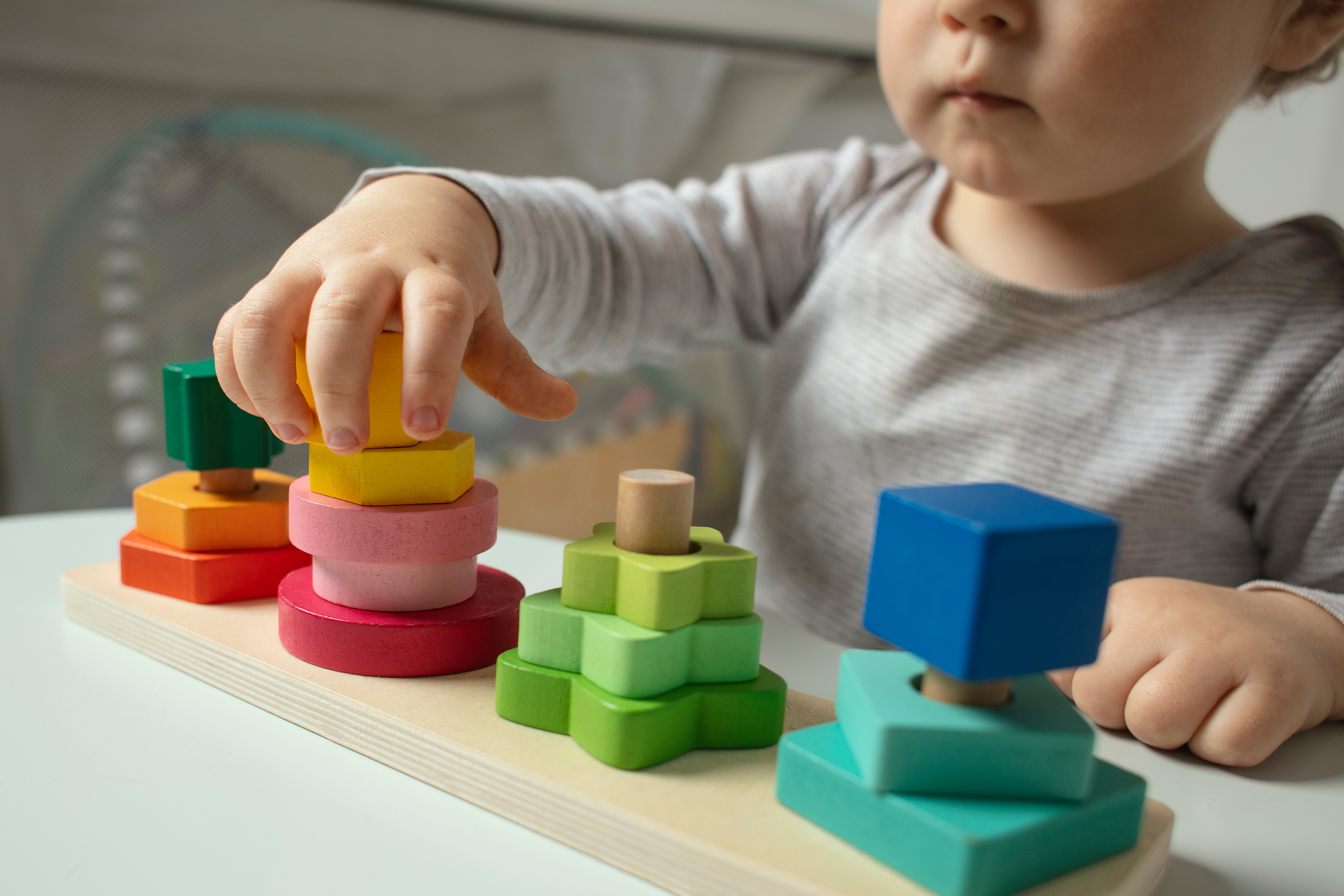
Parents and teachers who prioritize developmentally appropriate counting skills help children to develop number sense, which is essential for understanding the value of numbers, counting sequences, and the ability to make comparisons. Strong counting proficiency also encourages better memory, attention to detail, and logical thinking. Moreover, engaging children in playful, hands-on counting activities captures their interest and makes learning enjoyable, thereby cultivating a positive attitude towards math from an early age.
Incorporating counting skills into daily routines—such as counting toys, steps, or snack items—not only reinforces learning but also highlights the practical importance of math in everyday life. Thus, by investing time and effort into enhancing counting skills, parents and teachers set their children on a path to becoming confident, competent, and enthusiastic learners, ready to tackle future academic challenges with ease.








