Interpreting data Easy Math Worksheets for Ages 3-7
3 filtered results
-
From - To
Explore our "Interpreting Data Easy Math Worksheets for Ages 3-7" to give your child the confidence and skills to understand data from an early age. Our fun and engaging worksheets are designed specifically for young learners, offering a variety of activities like counting, comparing, and analyzing simple graphs and charts. As kids become familiar with basic data concepts, they build essential problem-solving and critical-thinking skills effortlessly. Perfect for ages 3-7, these worksheets suit preschool through early elementary grade levels and are ideal for both classroom and at-home use. Give your child a head start in math with our easy and enjoyable data interpretation worksheets!
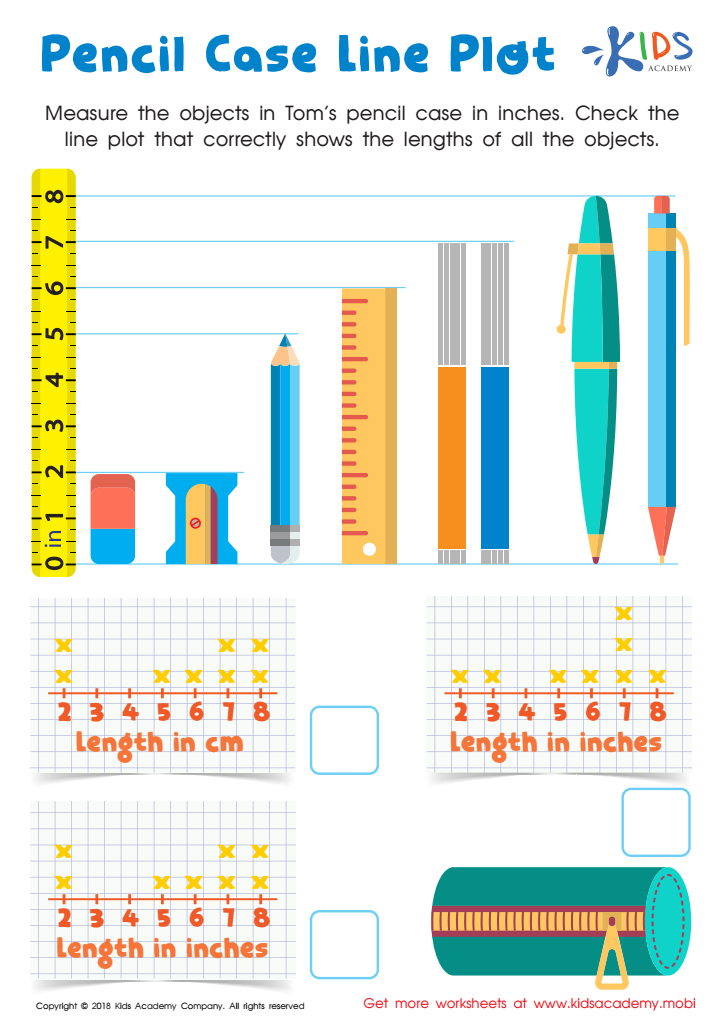
Pencil Case Line Plot Worksheet
 Assign to My Students
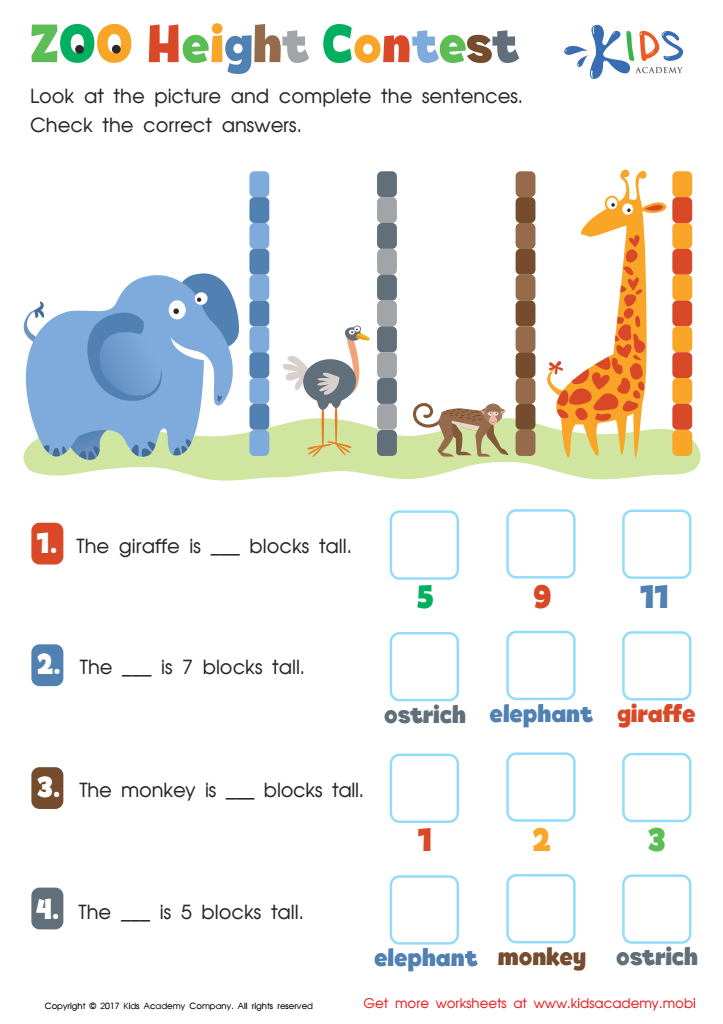
Zoo Height Contest Worksheet
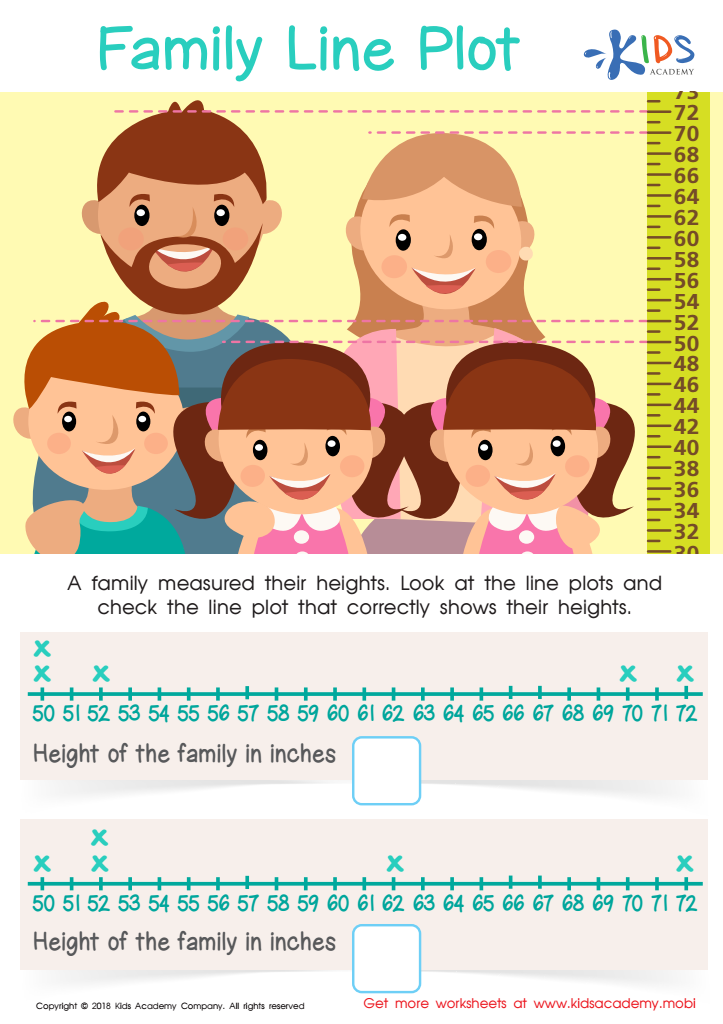
Family Line Plot Worksheet


.jpg)





Parents and teachers should care about interpreting data for children ages 3-7 because it lays the foundation for critical thinking, problem-solving, and decision-making skills. At this early stage, children are naturally curious and eager to understand the world around them. Introducing basic data concepts, such as counting, sorting, and simple graphs, helps them make sense of everyday information in a structured way.
For instance, using colorful charts to track classroom attendance or simple bar graphs to compare favorite fruits can make abstract concepts tangible and fun for young learners. When kids learn to interpret data, they develop both mathematical and analytical skills early on, which are essential for their academic success in later years. Furthermore, these activities foster a growth mindset, encouraging children to ask questions and explore various ways to find answers.
Equipping children with the ability to understand and interpret data boosts their confidence and competence in math, enhancing their overall cognitive development. Engaging methods that include playful, visual elements and hands-on activities make learning enjoyable, and lay a strong foundation for more complex math concepts in the future. Ultimately, early exposure to data interpretation fosters lifelong skills that are invaluable in both educational and real-world settings.








