
Observational skills Easy Math Worksheets for Ages 3-7
4 filtered results
Difficulty Level
Grade
Age
-
From - To
Subject
Activity
Standards
Unlock the world of numbers with our "Observational Skills Easy Math Worksheets" designed specifically for children ages 3-7! These fun and engaging worksheets foster essential observational skills through colorful activities that improve counting and number recognition while stimulating critical thinking. Kids will explore shapes, patterns, and visual comparisons, all while enhancing their ability to notice details in their environment. Perfect for homeschooling or supplementary practice, our thoughtfully crafted materials cater to early learners’ needs. Let your child embark on a joyful mathematical adventure that promotes both learning and playful exploration! Start nurturing their observational skills today for a bright mathematical future!
Favorites
With answer key
Interactive
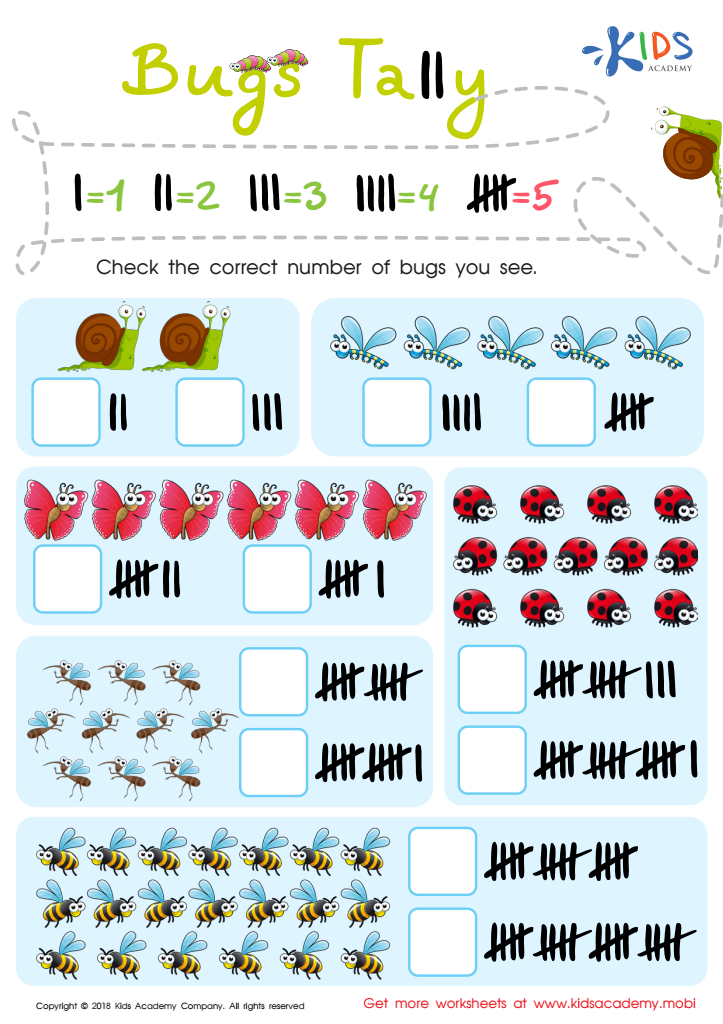
Bugs Tally Worksheet
This fun worksheet uses friendly bugs to help young mathematicians learn numbers and tally marks. They'll gain real-world skills to help with adding, subtracting and counting. Representations will solidify number reasoning, aiding with game playing and more.
 Assign to My Students
Bugs Tally Worksheet
Worksheet
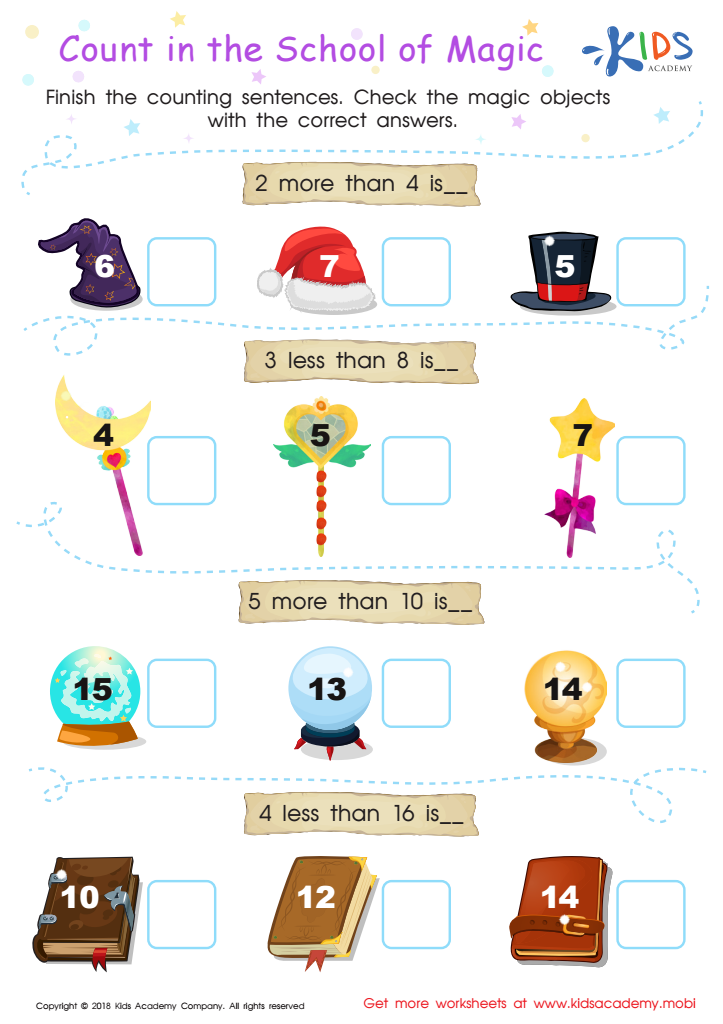
Count in the School of Magic Worksheet
Your math learners can explore the School of Magic with this worksheet. They'll read equations with addition and subtraction numbers under 20, count back and forth to find the answer, then complete the counting sentences. Fun pictures and easy accuracy make it an enjoyable and successful learning experience.
Count in the School of Magic Worksheet
Worksheet
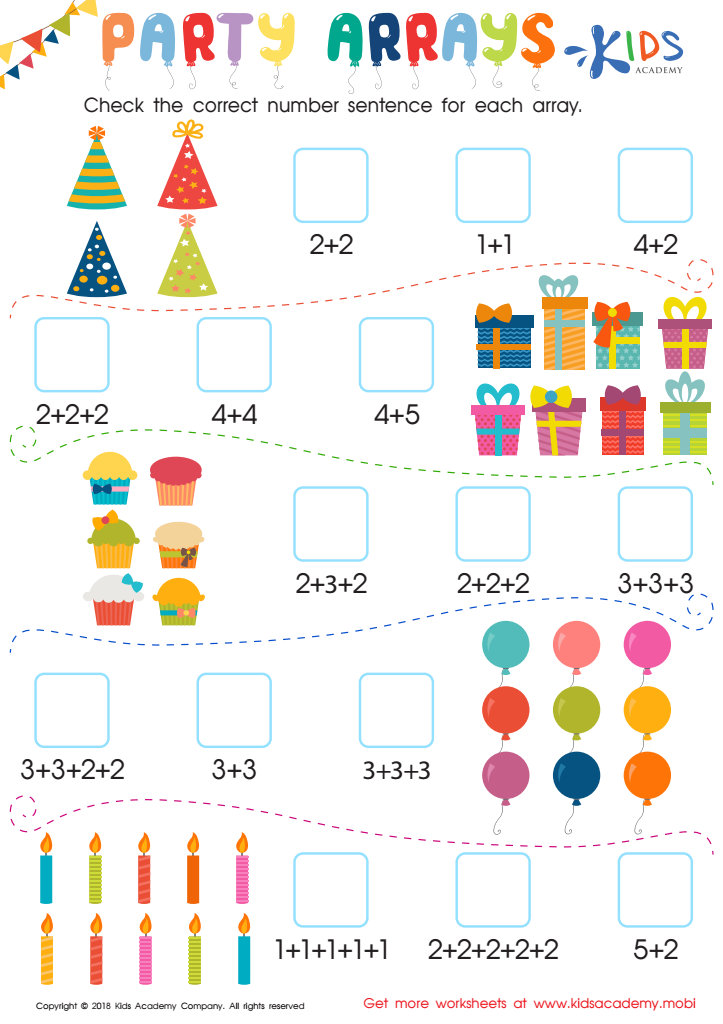
Party Arrays Worksheet
Help your child count the objects in each of the five arrays, then check the correct number sentence for each. This exercise will test their math skills and understanding of number sentences. Guide them to select the appropriate boxes.
Party Arrays Worksheet
Worksheet
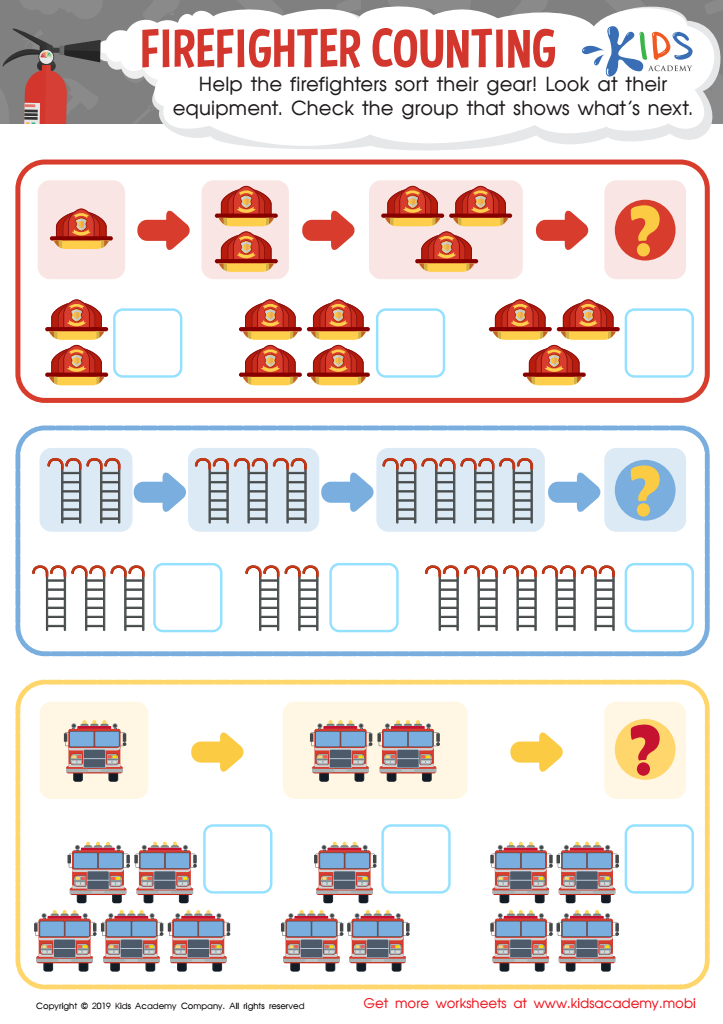
Firefighter Counting Worksheet
Firefighters are a vital part of any community. When a fire breaks out, they respond promptly to protect citizens and extinguish the blaze. Wearing specialized gear, they not only make the job easier, but safer too. Get your kids involved and help the firefighters sort their gear. Count the equipment, and check the group for the next steps.
Firefighter Counting Worksheet
Worksheet
Join Kids Academy for Free
Who is primarily going to use this learning content?







Observational skills play a crucial role in developing mathematical understanding for children aged 3-7. Parents and teachers should prioritize these skills as they form the foundation for critical thinking, problem-solving, and data interpretation. By enhancing observational skills, children learn to notice patterns, shapes, and relationships in the world around them, which has direct implications for early math concepts like counting, comparing, and sorting.
Engaging children in activities that foster observational skills sparks their curiosity and encourages exploration. Activities such as identifying shapes in nature, comparing sizes of objects, or sorting various items promote active learning and make math concepts tangible. This hands-on experience not only builds confidence but also nurtures a positive attitude towards mathematics.
Moreover, strong observational skills help children develop comprehensive reasoning abilities. They learn to gather and assess information, make predictions, and verify their conclusions—skills that extend beyond math and are essential throughout their educational journey. As early educators and caregivers, cultivating these skills can support children's overall cognitive growth and lay the groundwork for more advanced mathematical learning, ensuring they become effective learners in both mathematics and everyday life. Investing time in developing observational skills ultimately enhances children’s academic experiences and supports lifelong learning.








