Understanding Quantities Easy Math Worksheets for Ages 3-7
6 filtered results
-
From - To
Unlock your young learner's potential with our "Understanding Quantities Easy Math Worksheets for Ages 3-7." Specially designed for little mathematicians, these engaging worksheets introduce foundational concepts through fun activities. Children will learn to count, compare quantities, and understand basic math skills in an enjoyable and interactive way. Tailored for ages 3-7, each worksheet captivates attention with colorful illustrations, making math approachable and exciting. Perfect for homeschooling or supplemental practice, these worksheets support early learning and foster a strong mathematical foundation, preparing your child for future success. Explore and download today for endless educational fun!
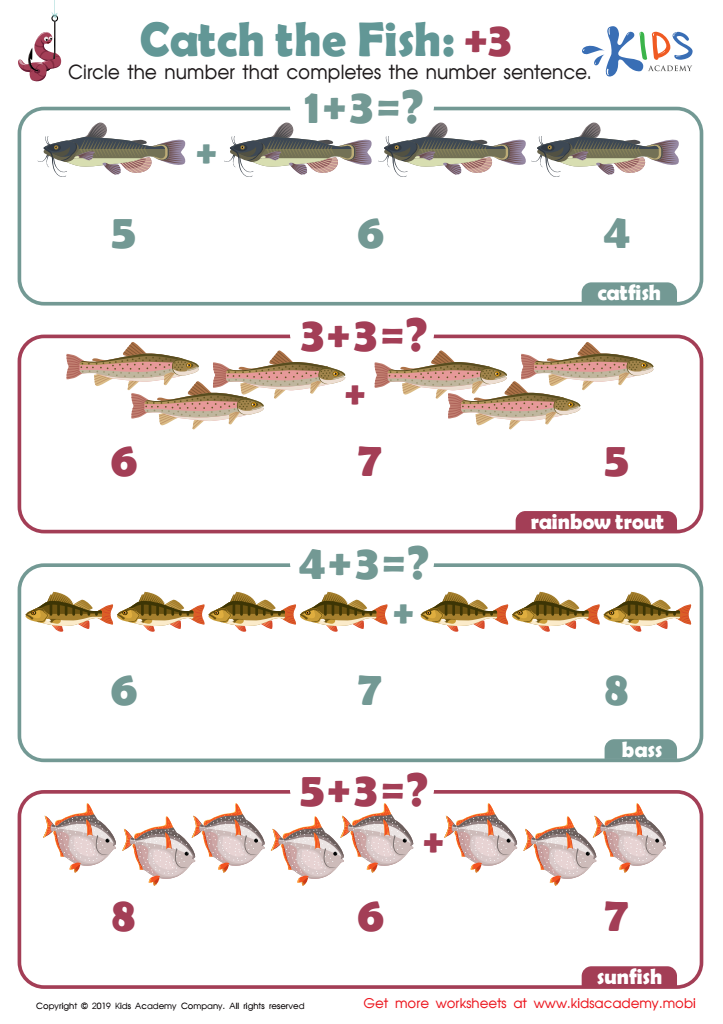
Catch the Fish: +3 Worksheet
 Assign to My Students
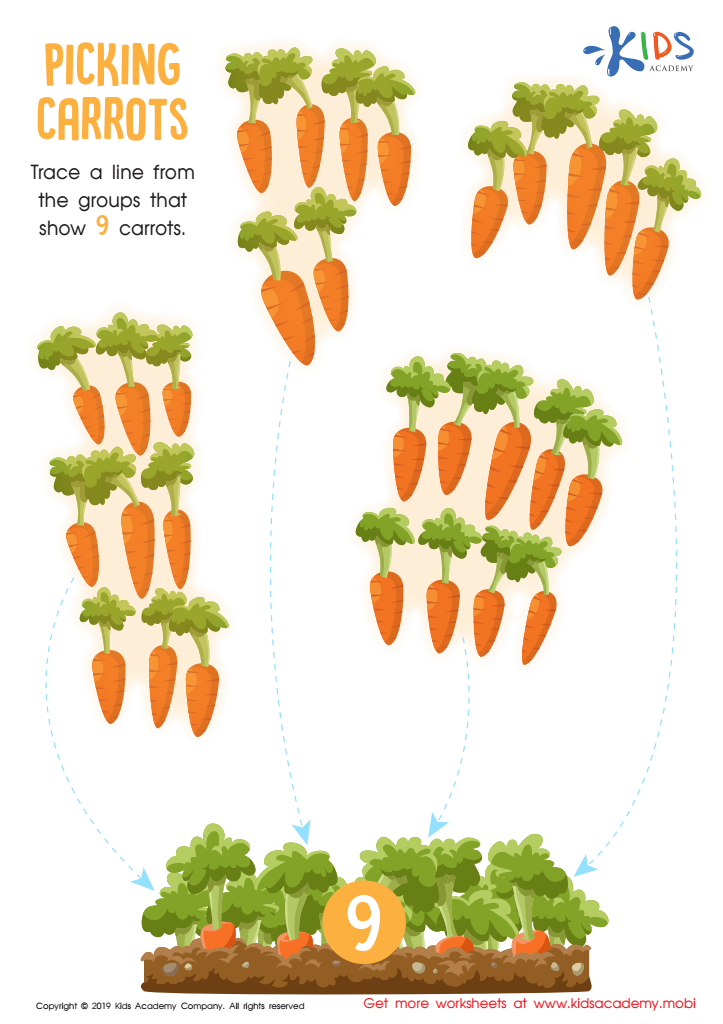
Picking Carrots Worksheet
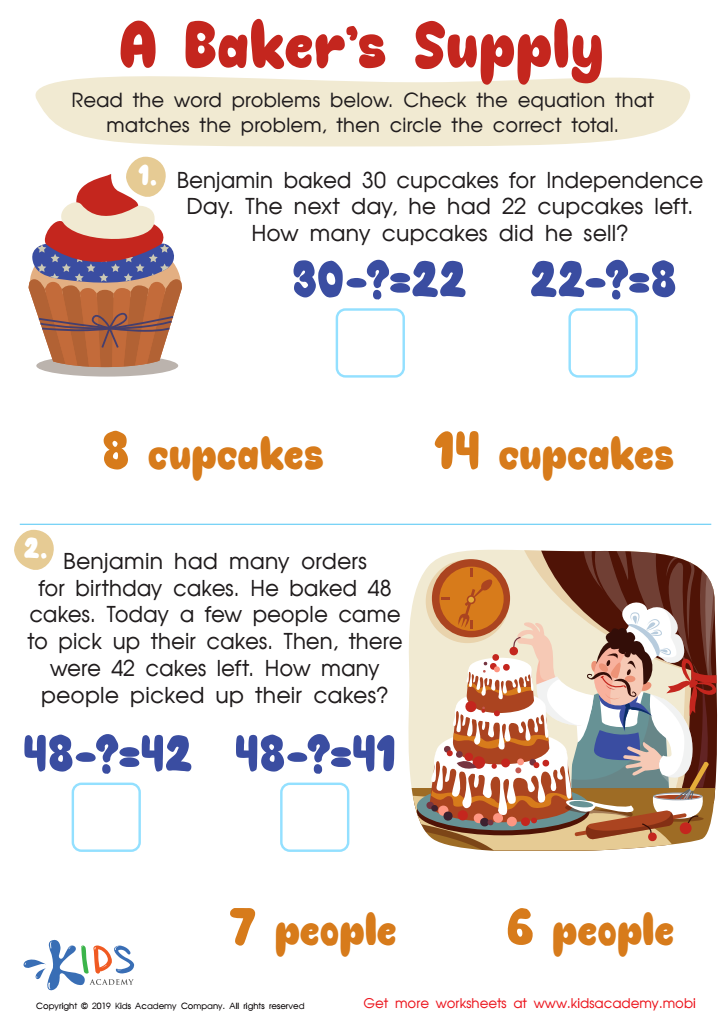
A Baker's Supply Worksheet
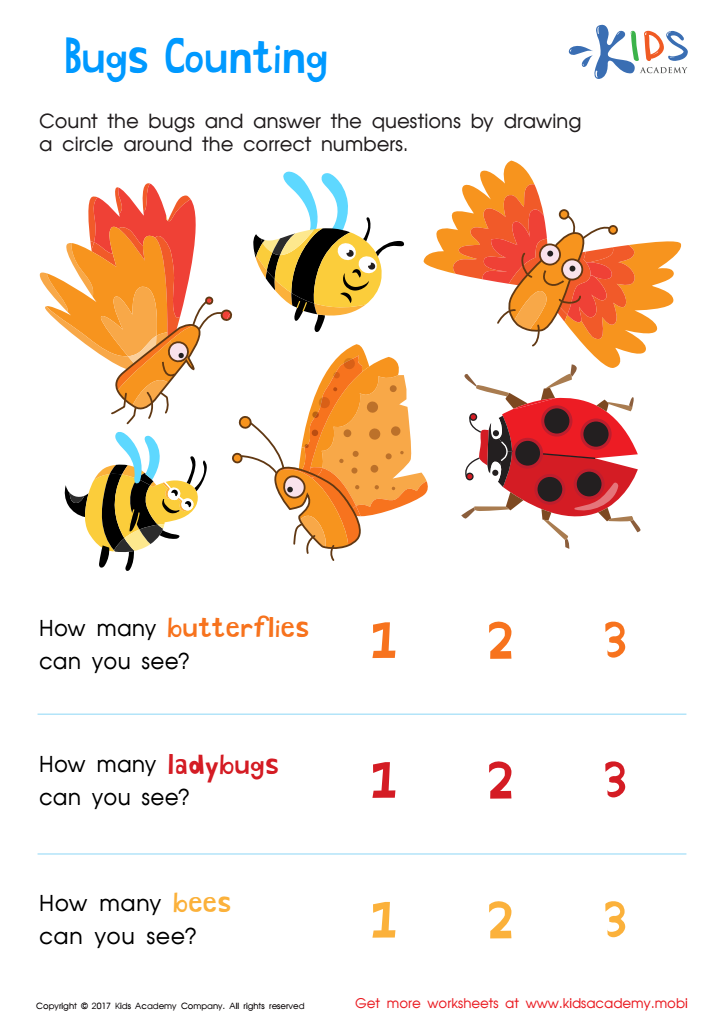
Bugs Counting Worksheet
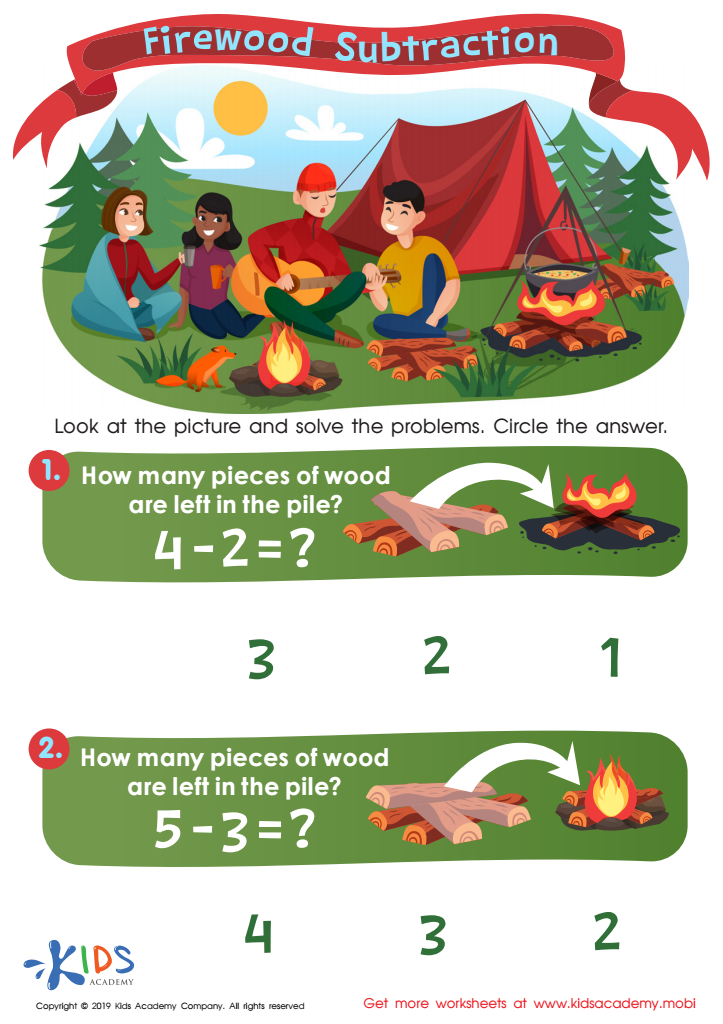
Firewood Subtraction Worksheet
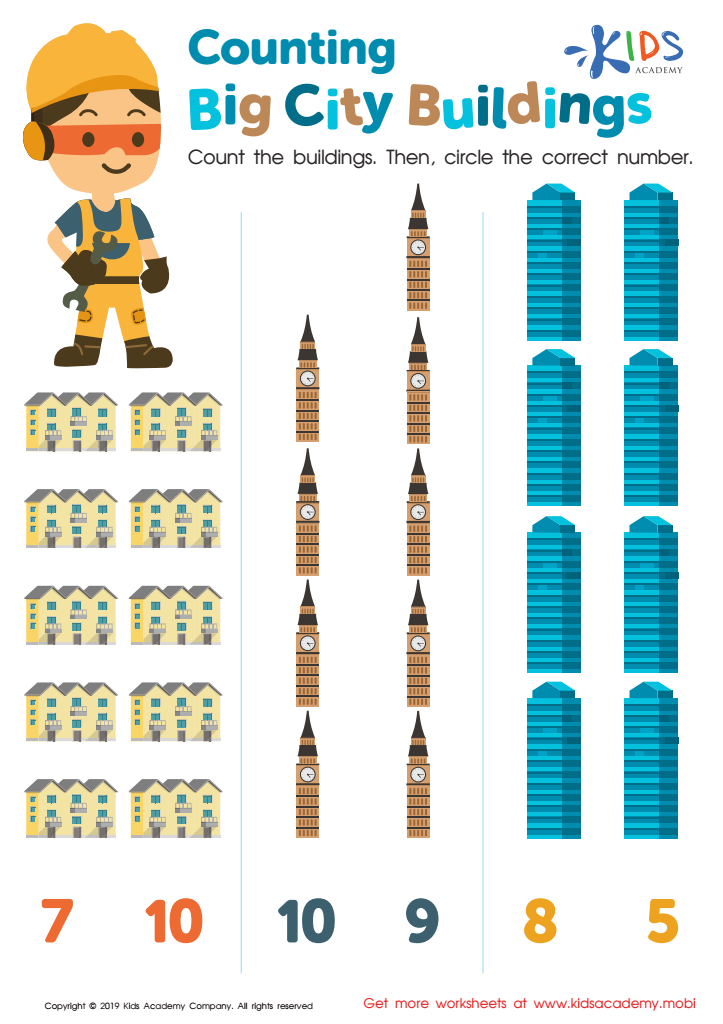
Counting Big City Buildings Worksheet







Understanding quantities is a crucial foundational skill for children aged 3-7 and should be a priority for both parents and teachers. Early mathematical skills are integral for cognitive development and future academic success. When children grasp quantities, they start to build number sense, which is the ability to recognize, relate, and manipulate numbers. This skill is not just foundational for math but applies to everyday activities like sorting objects, understanding time, and managing resources.
At this age, children's brains are particularly flexible, making it an ideal period for introducing mathematical concepts. As they learn to count, compare, and quantify objects, children develop critical thinking and problem-solving skills. These abilities are essential for learning more complex math concepts later in life, such as addition, subtraction, and even algebra. Additionally, mastering basic math skills can boost a child's confidence, giving them a sense of accomplishment that can motivate them in other areas of learning.
For parents and teachers, incorporating fun and engaging ways to teach these concepts, like counting games, puzzles, and interactive activities, can make math enjoyable. Investing time and energy into early math education sets the groundwork for lifetime learning and achievement. Through consistent support and creative teaching methods, adults can help children develop a solid understanding of quantities, paving the way for future success.








