
Visual discrimination skills Easy Math Worksheets for Ages 3-7
3 filtered results
Difficulty Level
Grade
Age
-
From - To
Subject
Activity
Standards
Enhance your child's visual discrimination skills with our engaging Easy Math Worksheets, specifically designed for ages 3-7. These thoughtfully crafted worksheets focus on helping young learners identify similarities and differences in patterns, shapes, and objects, essential for early math development. By incorporating fun and interactive activities, kids can build their critical thinking and observational skills in a playful way. Perfect for both home and classroom use, these worksheets provide an excellent resource for parents and teachers alike to support early childhood education. Start fostering a love for learning and set the foundation for math success with our visual discrimination worksheets today!
Favorites
With answer key
Interactive
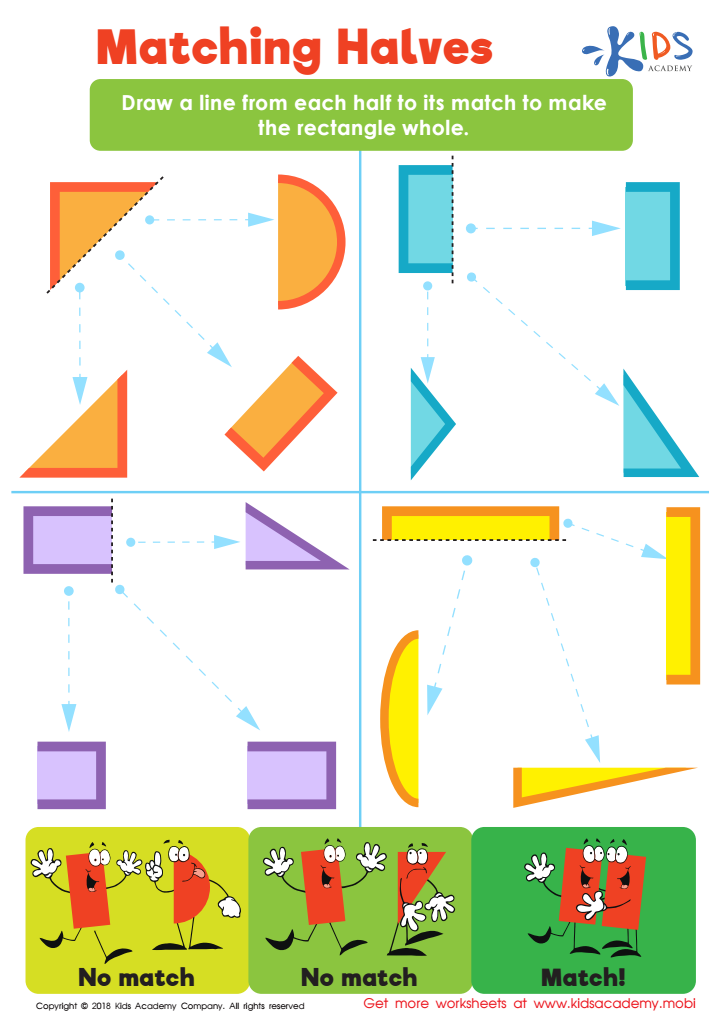
Matching Halves Worksheet
See how your child fares in matching two halves to form a complete rectangle. Provide them with four options, and ask them to draw a line connecting the two correct halves. Put their shape knowledge to the test with this simple worksheet!
 Assign to My Students
Matching Halves Worksheet
Worksheet
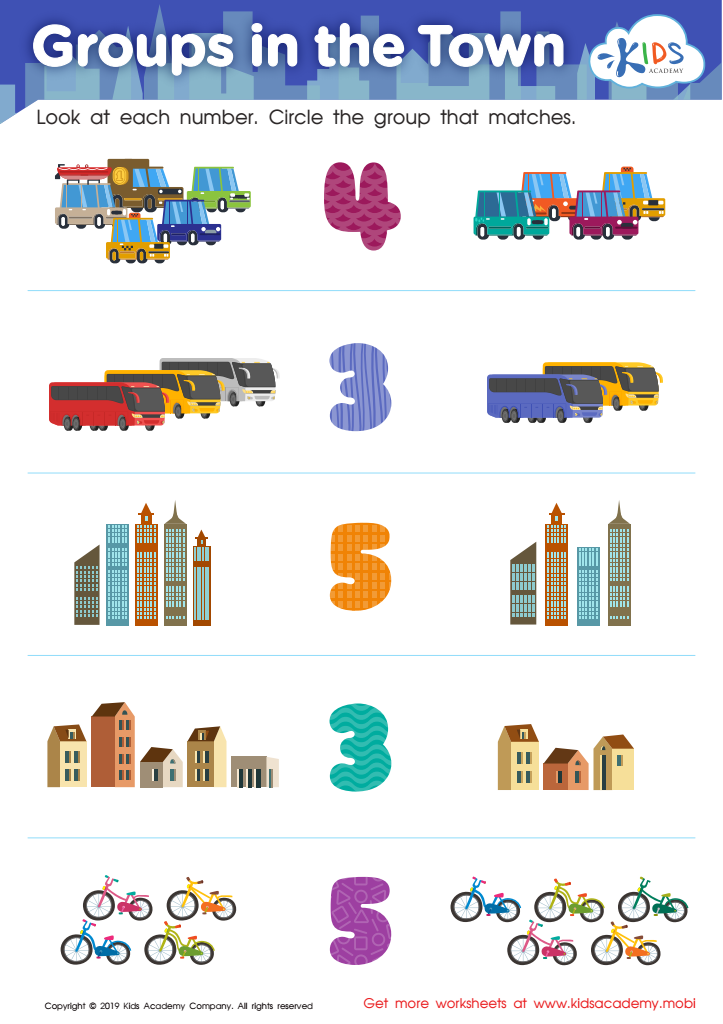
Groups in the Town Worksheet
Help your kids learn to count with this worksheet! Look at each number of objects and circle the group that matches. This simple activity can give them extra practice to support what they learn in school. Learning doesn't have to be a struggle; make it fun and interactive with this worksheet.
Groups in the Town Worksheet
Worksheet
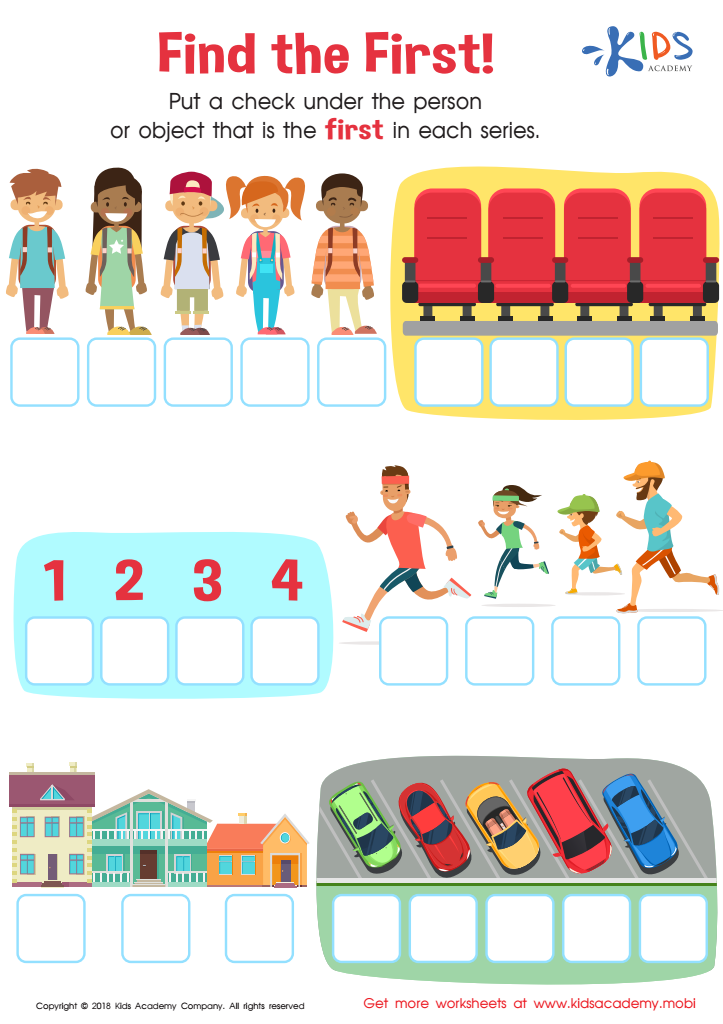
Find the First! Worksheet
Have your young students discuss what it means to be first in line, row, or a race. This free worksheet helps clarify their understanding of "first". View each group of people/objects and choose the first one. Follow up with hands-on activities like lining up students/toys or acting out a sequence of movements. Students can tell what happened first. Enjoy this printout for a fun math lesson!
Find the First! Worksheet
Worksheet
Join Kids Academy for Free
Who is primarily going to use this learning content?







Visual discrimination skills are essential for children aged 3-7 as they form the foundation for vital academic abilities, particularly in subjects like math. For parents and teachers, cultivating these skills can significantly enhance a child’s learning experience. Visual discrimination involves the ability to notice and identify the differences and similarities between shapes, patterns, letters, and numbers. Mastering these abilities helps children recognize numerals and comprehend basic math concepts, essential for later academic success.
Investing time in developing visual discrimination not only boosts a child's confidence but also nurtures critical thinking and problem-solving skills. By easily recognizing patterns and distinctions, children can swiftly navigate through math tasks, leading to a deeper understanding of relationships between numbers and quantities.
Moreover, early mathematical competencies are linked to future achievement in mathematics, making it crucial for foundational skills to be established during these formative years. Engaging with tools and activities that promote visual discrimination, such as puzzles, sorting games, and interactive math exercises, can yield lasting benefits. Consequently, active involvement in fostering these skills enables parents and teachers to provide children with effective strategies to thrive academically and socially.








