Comparing lengths Easy Measurement Worksheets for Ages 3-7
5 filtered results
-
From - To
Introduce your young learners to the world of measurement with our Comparing Lengths Easy Measurement Worksheets tailored for ages 3-7. These engaging and educational printable activities help children understand concepts of length by comparing various objects, fostering critical thinking and early math skills. Designed to be fun and interactive, each worksheet encourages young minds to observe, compare, and draw conclusions about the size and length of different items. Ideal for use at home or in the classroom, our worksheets turn learning into an enjoyable adventure, laying the foundation for future success in math. Download now and watch your child thrive!
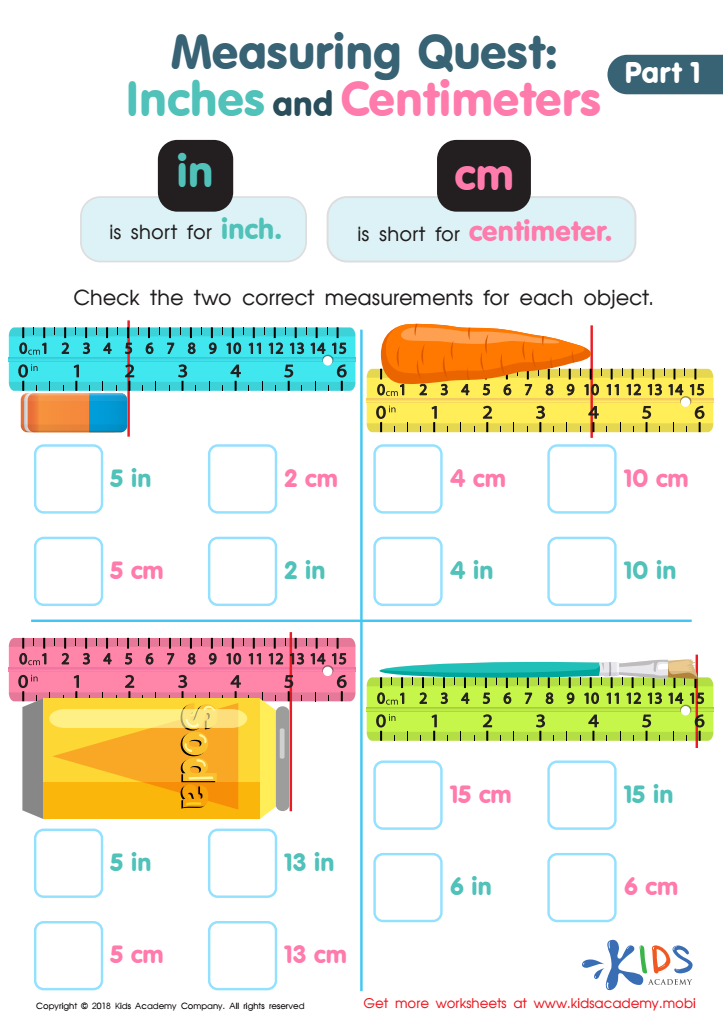
Measuring Quest: Inches and Centimeters Worksheet
 Assign to My Students
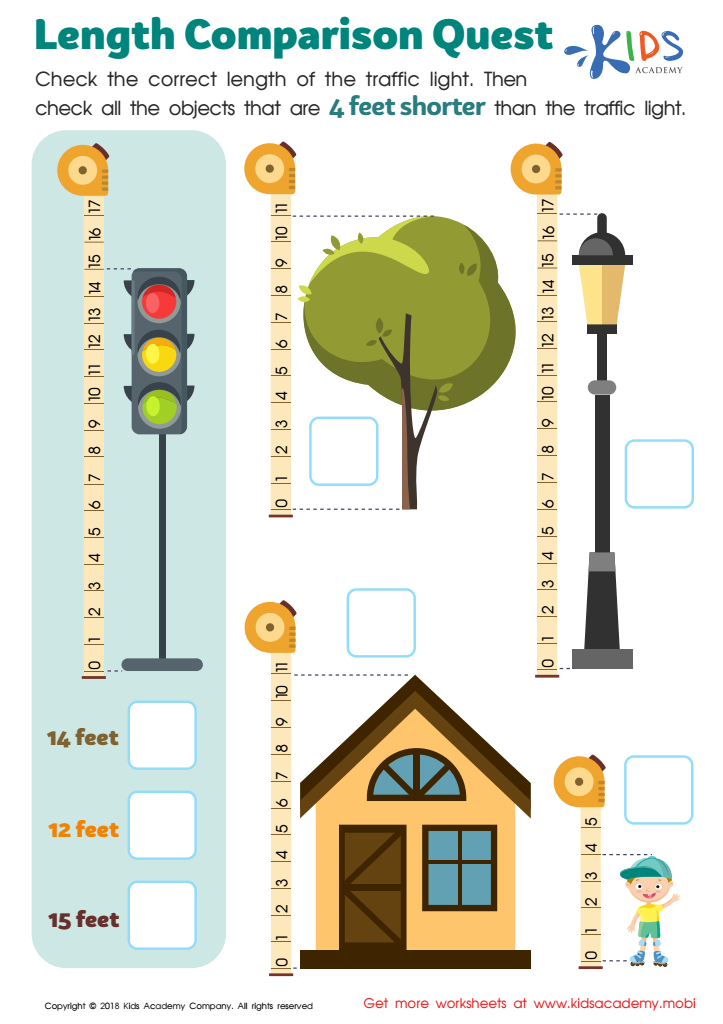
Length Comparison Quest Worksheet
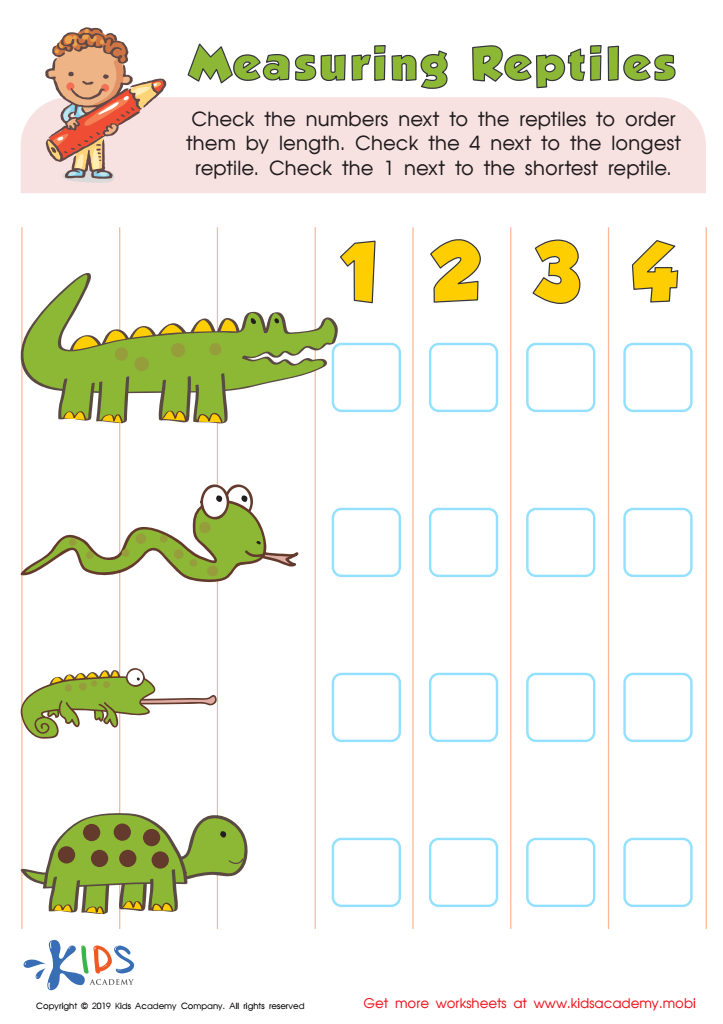
Measuring Reptiles Worksheet
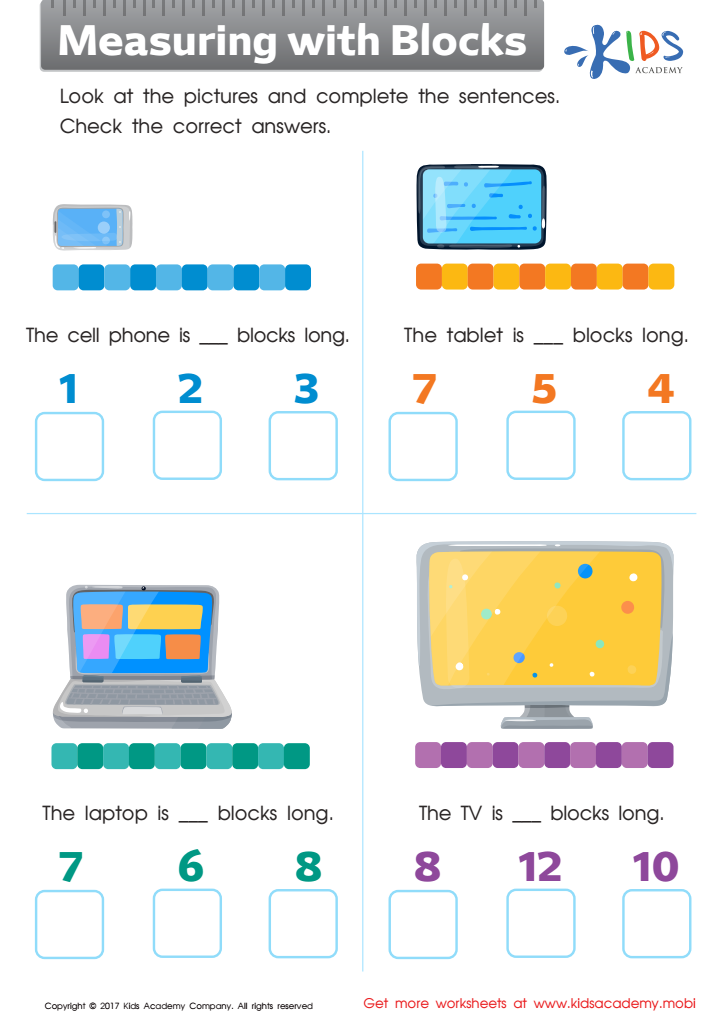
Measuring with Blocks Worksheet
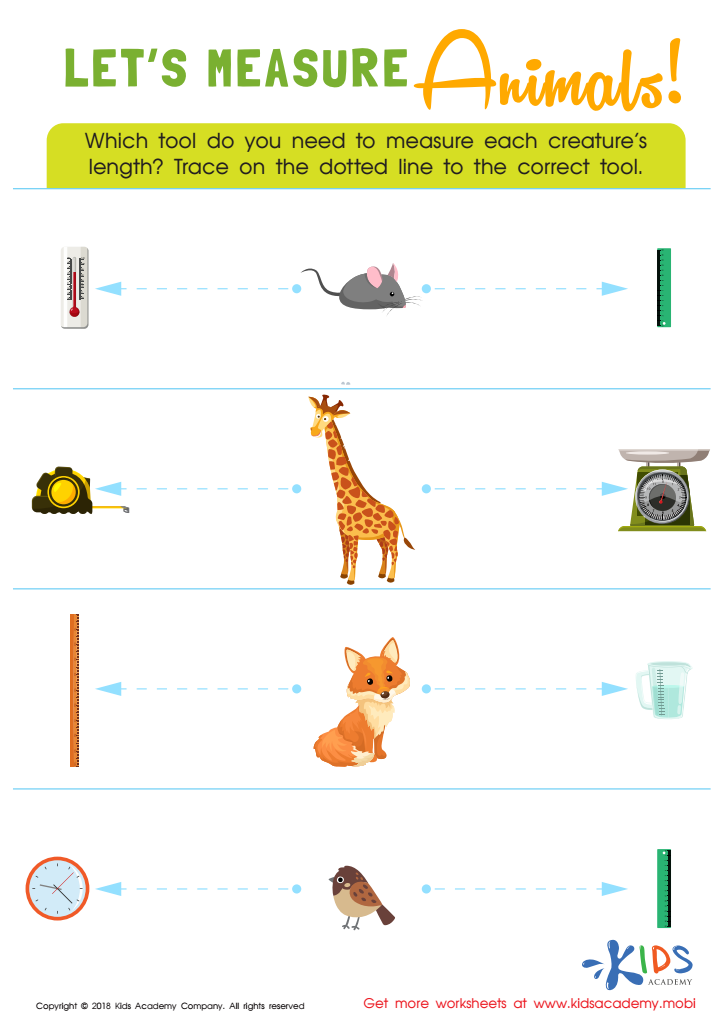
Let's Measure Animals! Worksheet








Caring about learning to compare lengths is essential in early childhood education for several compelling reasons. Firstly, early measurement activities help children develop foundational math skills critical for future academic success. By comparing lengths, children understand concepts such as longer, shorter, taller, and smaller, building a basis for more complex math topics like addition, subtraction, and geometry.
Secondly, measuring activities enhance cognitive development by promoting critical thinking and problem-solving skills. Children learn to make observations, predictions, and decisions, all of which are crucial components of logical reasoning. Engaging in hands-on measuring strengthens their ability to analyze relationships and patterns.
Furthermore, early exposure to measurement concepts helps improve language and communication skills. As children compare lengths, they learn new vocabulary, express their thoughts, and follow multi-step instructions. This educational dialogue fosters more robust language development and effective communication.
Additionally, measurement activities can be seamlessly integrated into everyday routines, making learning contextually relevant and fun. Whether they're comparing toy sizes or helping bake with measuring cups, children develop practical life skills and an understanding of the world around them.
Ultimately, caring about early measurement education equips children with a strong foundation in math, cognitive abilities, language proficiency, and practical skills, fostering well-rounded and confident young learners.








