Comparing numbers Easy Measurement Worksheets for Ages 3-7
3 filtered results
-
From - To
Introduce young learners to the exciting world of numbers with our "Comparing Numbers Easy Measurement Worksheets" tailored for ages 3-7. These engaging and educational worksheets help children develop essential early math skills by comparing measurements in a fun and interactive way. Each worksheet uses colorful visuals and simple, relatable examples, making math enjoyable and accessible for little ones. Perfect for both classroom and at-home learning, these worksheets steadily build kids' confidence in understanding measurement concepts while supporting their curiosity and love for numbers. Jumpstart your child's journey into math today with our delightfully designed worksheets!
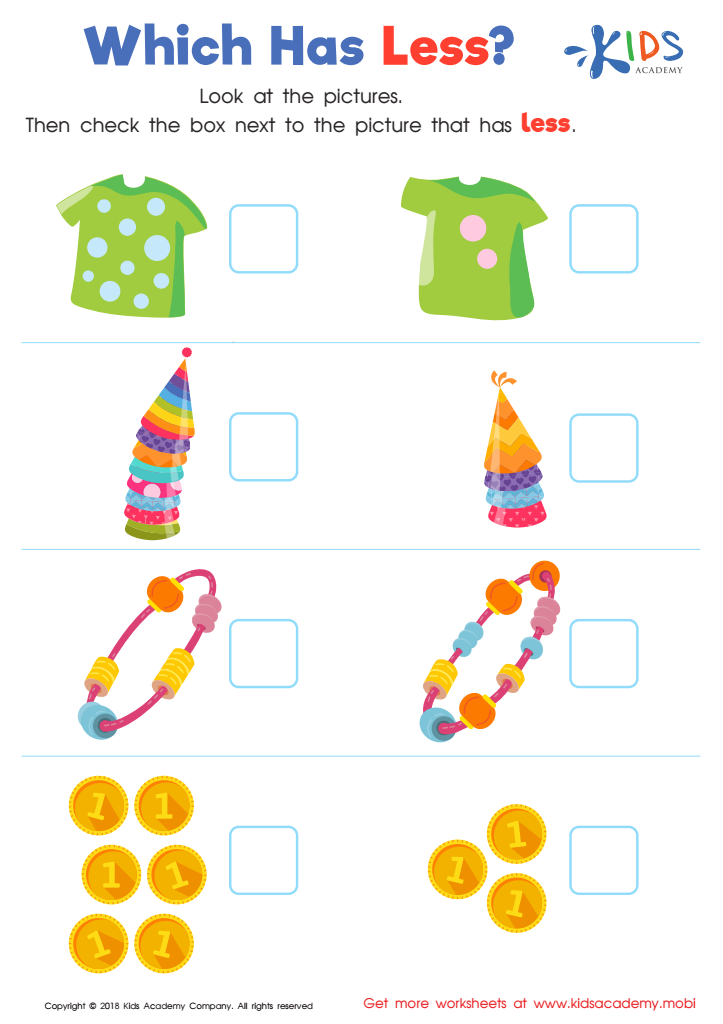
Which Has Less? Worksheet
 Assign to My Students
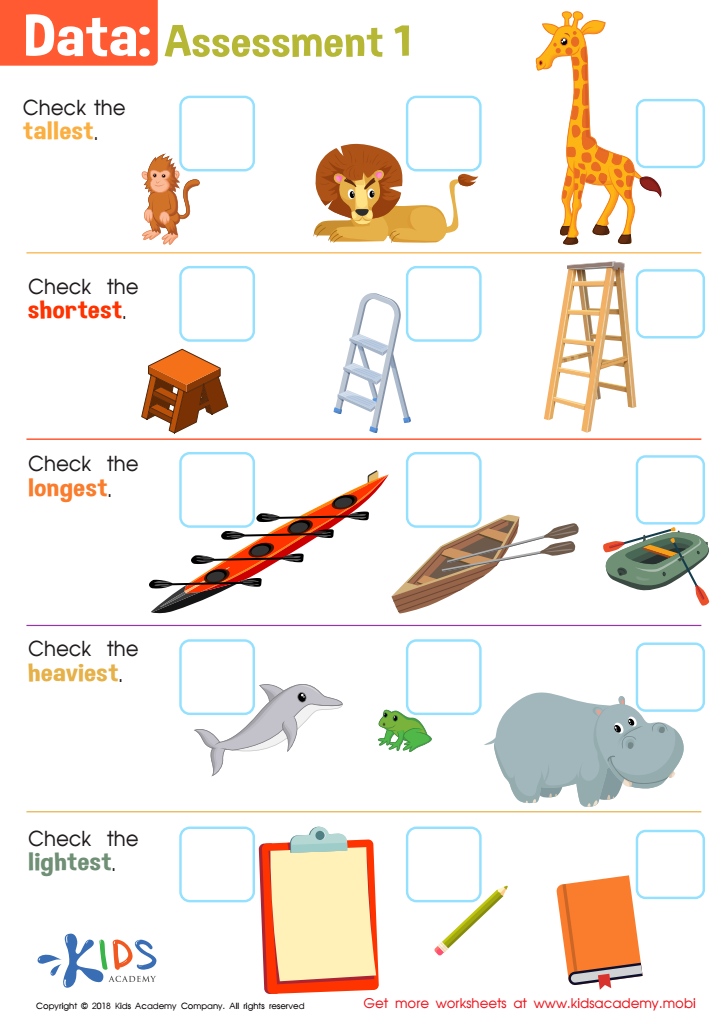
Data: Assessment 1 Worksheet
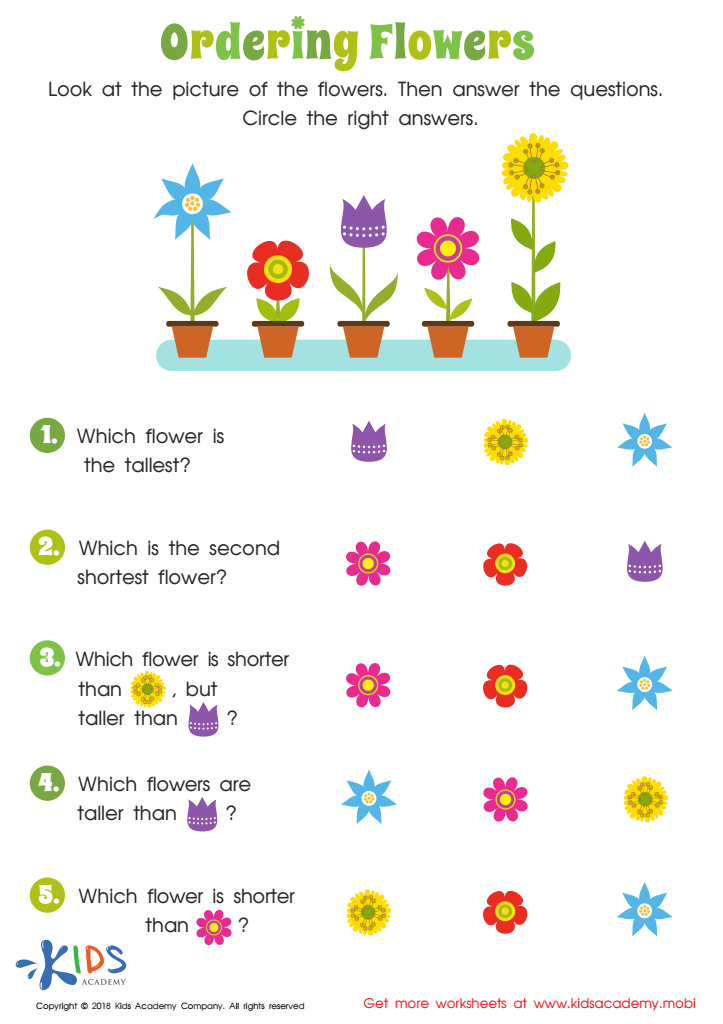
Ordering Flowers Worksheet








Parents and teachers should prioritize teaching young children how to compare numbers and understand basic measurement concepts for several compelling reasons. Firstly, these foundational mathematical skills are crucial for cognitive development. Comparing numbers helps children grasp the concept of quantity and order, which are essential for problem-solving and logical thinking. These skills are the building blocks for more complex math subjects encountered in later school years.
Secondly, understanding measurement and being able to compare items, such as which is longer or heavier, is vital for everyday tasks. Whether it's comparing the height of two objects or measuring ingredients while cooking, these practical applications make young learners more confident and competent in handling daily activities.
Additionally, early mastery of these concepts fosters a positive attitude towards math. Children who grasp numerical and measurement skills early are more likely to enjoy and succeed in math-related subjects as they progress in their education.
Furthermore, engaging with comparing numbers and measurements stimulates curiosity and encourages interactive learning through games and hands-on activities. This interaction enhances social skills and promotes an engaging learning environment both at home and in the classroom.
In summary, teaching children how to compare numbers and understand measurement from an early age sets a strong foundation for their cognitive, practical, and emotional development in a math-positive environment.








