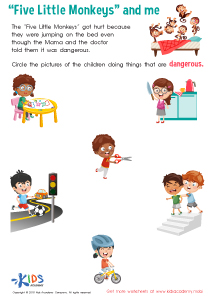
Critical Thinking Easy Building Vocabulary Worksheets for Ages 3-7
3 filtered results
Difficulty Level
Grade
Age
-
From - To
Subject
Activity
Standards
Welcome to our "Critical Thinking Easy Building Vocabulary Worksheets for Ages 3-7"! Designed to foster young minds, these engaging worksheets blend critical thinking with vocabulary development in a fun and interactive manner. Tailored for preschool and early elementary students, they encourage creativity, problem-solving, and comprehension skills through captivating activities. Each worksheet features colorful illustrations and age-appropriate tasks that inspire curiosity while expanding vocabulary. Perfect for classrooms or home learning, our resources promote a love for language and critical reasoning skills essential for lifelong learning. Explore our collection today to empower your child's educational journey and nurture their natural curiosity!
Favorites
With answer key
Interactive
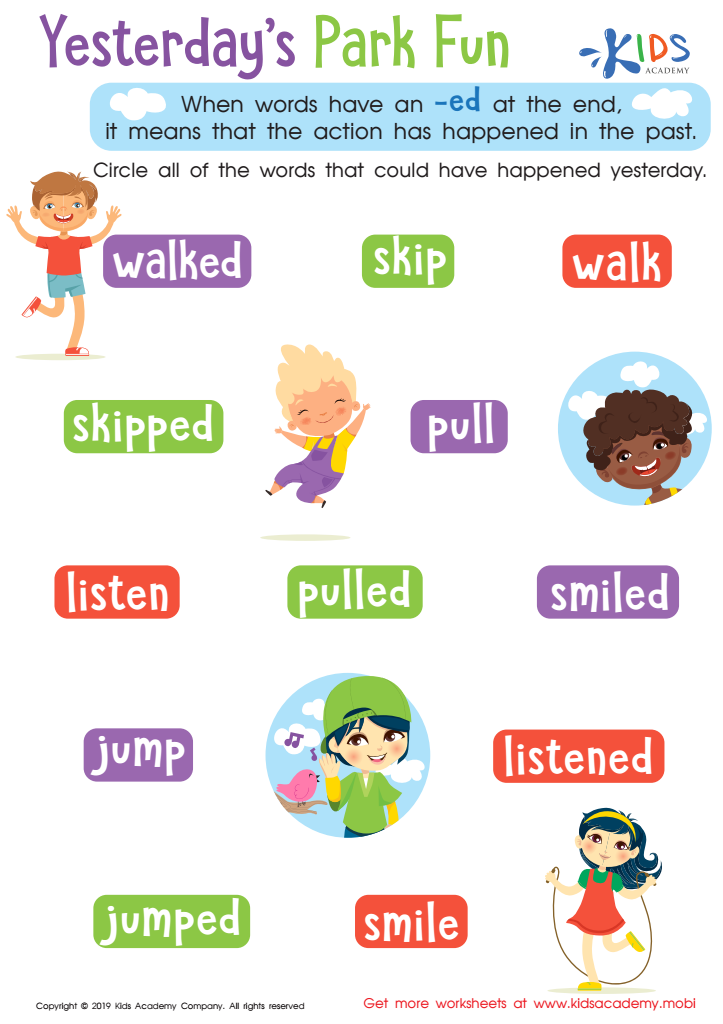
Yesterday's Park Fun Worksheet
Add -ed to the end of words and you get a word that happened in the past. This PDF helps your child understand this concept by giving practice examples: walk, pull, jump and smile can all be transformed into the past tense with a -ed suffix. They'll circle all the words that happened yesterday and learn about the past tense.
 Assign to My Students
Yesterday's Park Fun Worksheet
Worksheet











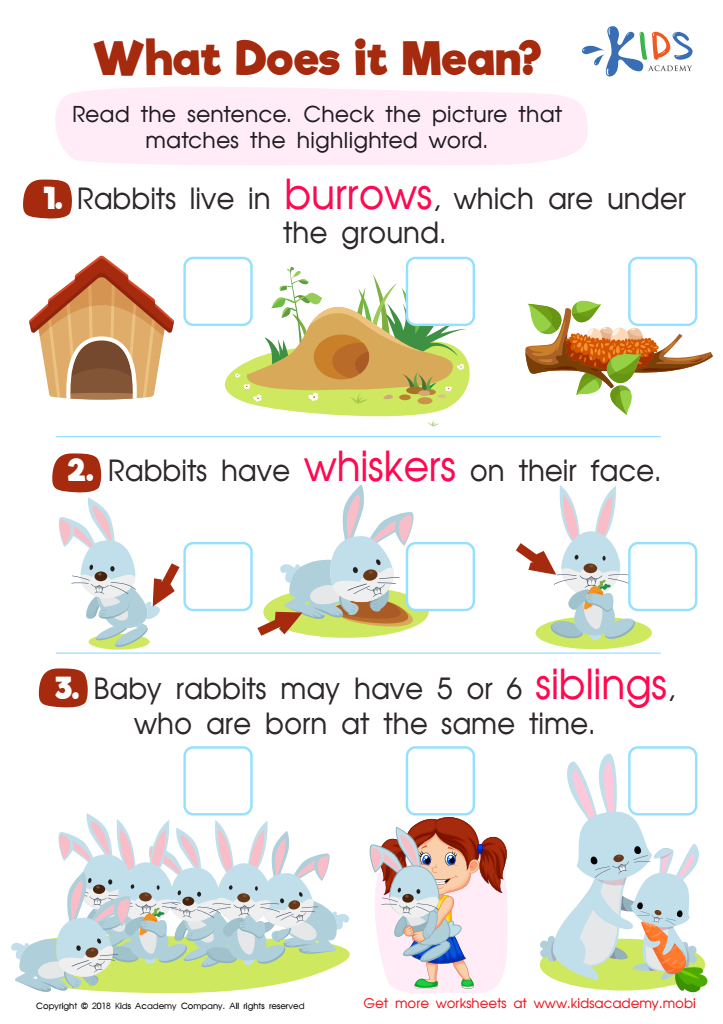
What Does It Mean? Worksheet
Teach your child to use context clues with this engaging Kids Academy worksheet. Read the sentences and find the pink-highlighted word. Use the other words in the sentence to figure out the meaning, then check the box next to the picture that represents it.
What Does It Mean? Worksheet
Worksheet
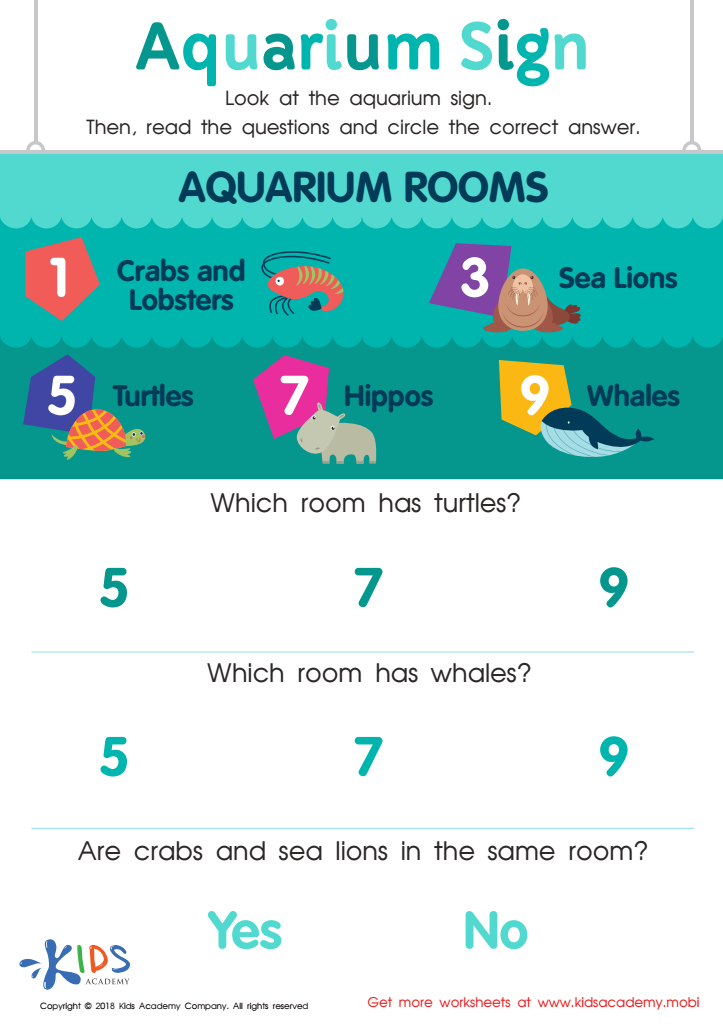
Assessment: Aquarium Sign Worksheet
Take your kids to an aquarium and marvel at the sea creatures! Help them identify the animals they see, and ask them which one is their favorite. Look at the aquarium sign and point to each creature. Ask your kids the questions and help them circle the right answer.
Assessment: Aquarium Sign Worksheet
Worksheet
Join Kids Academy for Free
Who is primarily going to use this learning content?








Critical thinking and vocabulary building are essential components of a child's early education, particularly for ages 3-7. At this formative stage, children develop foundational cognitive skills and language that are crucial for their overall growth and academic success.
Parents and teachers should prioritize critical thinking because it encourages children to analyze, evaluate, and create, fostering independent problem-solving skills. Engaging children in activities that promote inquiry and reflection helps them become more curious and confident learners. When children learn to think critically, they are better equipped to navigate challenges, make decisions, and understand diverse perspectives.
Building vocabulary is equally vital, as it lays the groundwork for effective communication and comprehension skills. A rich vocabulary enables children to express their thoughts clearly, understand complex ideas, and engage in meaningful discussions. Furthermore, strong language skills are linked to literacy development, which is crucial for success in later education.
Together, critical thinking and vocabulary development cultivate a child’s confidence, creativity, and academic preparedness. By nurturing these skills early on, parents and educators are investing in a child’s lifelong learning journey, helping them become not just successful students, but also thoughtful, informed, and articulate individuals.