Understanding life cycles Easy Reading Worksheets for Ages 3-7
3 filtered results
-
From - To
Welcome to our "Understanding Life Cycles Easy Reading Worksheets" designed specifically for children ages 3 to 7! These engaging worksheets are a fun way for young learners to explore the fascinating world of life cycles, from animals to plants. Each activity encourages creativity while improving reading and comprehension skills. Featuring colorful illustrations and simple text, these worksheets help children understand concepts like growth, change, and reproduction. Perfect for at-home learning or classroom activities, our resources will inspire curiosity and deepen knowledge of the natural world. Start your adventure in discovery today and watch your child's understanding of life cycles flourish!
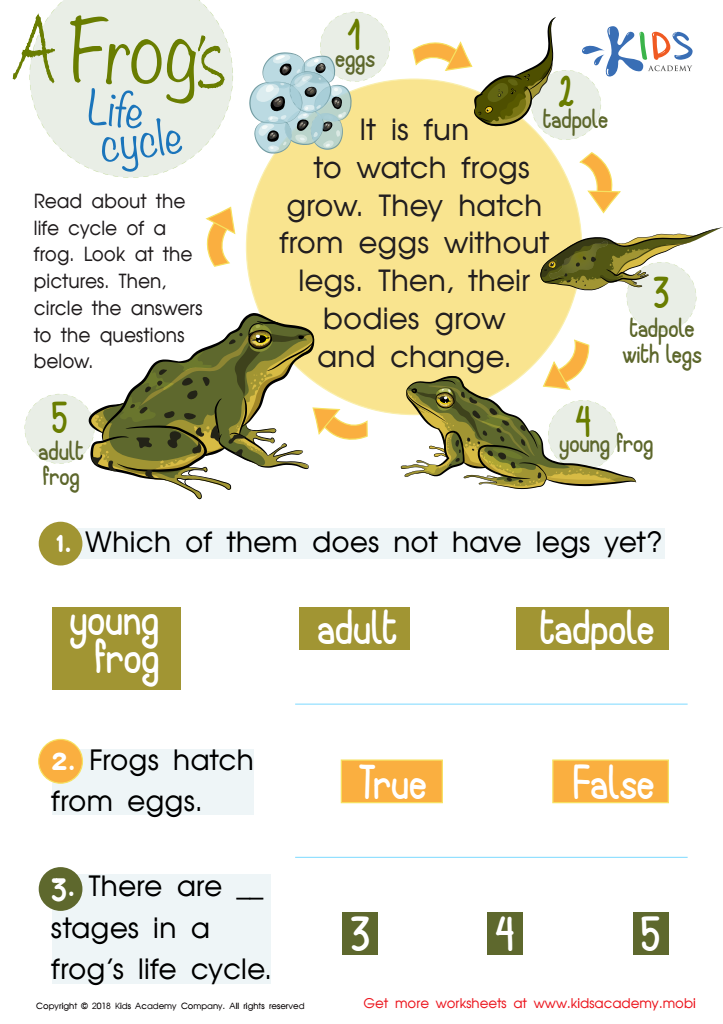
A Frog’s Life Cycle Worksheet
 Assign to My Students
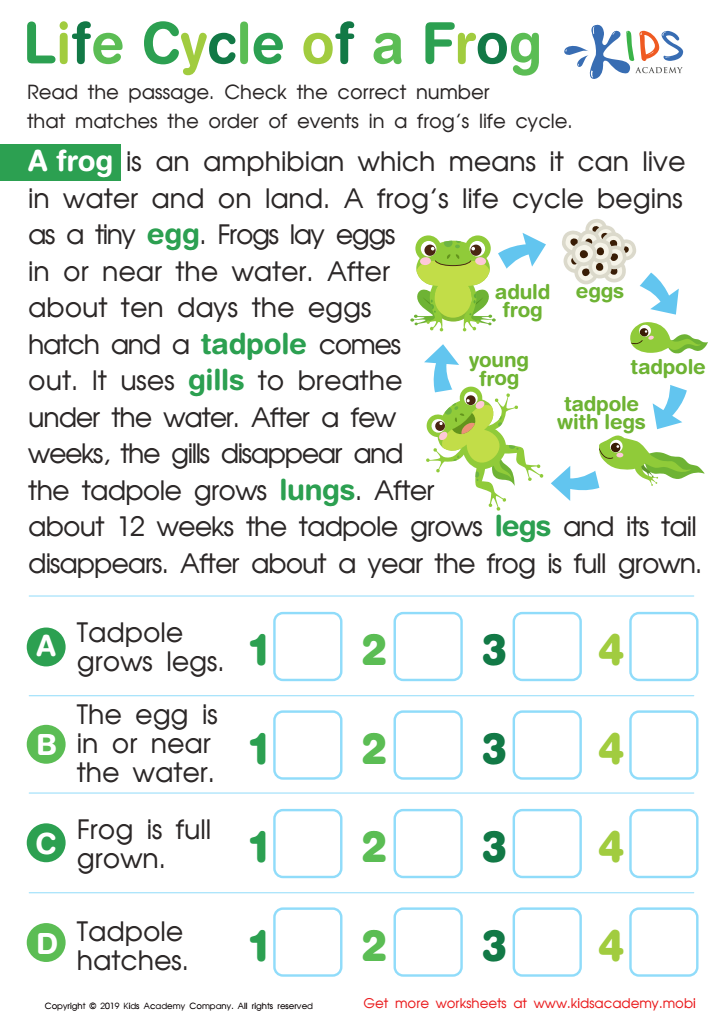
Life Cycle of a Frog Worksheet
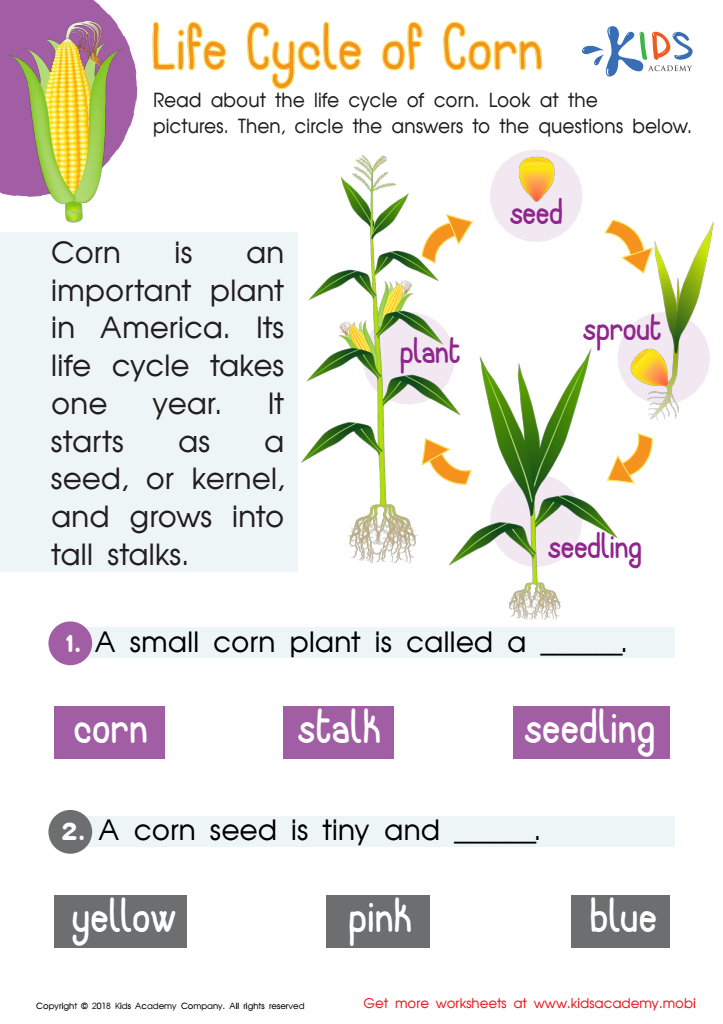
Life Cycle of Corn Worksheet







Understanding life cycles is essential for young children as it nurtures their curiosity and helps them connect with the world around them. For parents and teachers, promoting awareness of life cycles in ages 3-7 can cultivate critical thinking and observational skills. When children learn about the stages of life—such as the journey of a butterfly from caterpillar to chrysalis to butterfly—they are not just absorbing facts; they are engaging with concepts of change and growth.
This foundational knowledge encourages respect for living things and fosters empathy as children witness the beauty and fragility of life. Furthermore, learning about life cycles can be a gateway for discussions about the environment, encouraging stewardship and responsible behavior towards nature.
Incorporating life cycles into everyday learning can be enjoyable and interactive, enhancing communication skills through storytelling, art projects, and nature walks. These activities reinforce the lessons while keeping children engaged. Ultimately, understanding life cycles lays the groundwork for science education, sowing the seeds of future exploration and learning in biology and ecology. By caring about this topic, parents and teachers equip young minds with knowledge and appreciation for the processes that govern all living creatures.