Understanding life cycles Easy Reading Non-Fiction Worksheets for Ages 3-7
3 filtered results
-
From - To
Discover our "Understanding Life Cycles" Easy Reading Non-Fiction Worksheets, specially designed for children aged 3 to 7! These engaging worksheets introduce young learners to the remarkable journey of life from birth to growth, reproduction, and eventually death. Through colorful illustrations and simple, accessible language, kids will explore various life cycles of plants and animals, fostering curiosity about the natural world. Each worksheet includes fun activities that promote reading comprehension and critical thinking. Perfect for home learning or classroom settings, these resources make understanding life cycles enjoyable and educational. Start your child’s exploration of nature today!
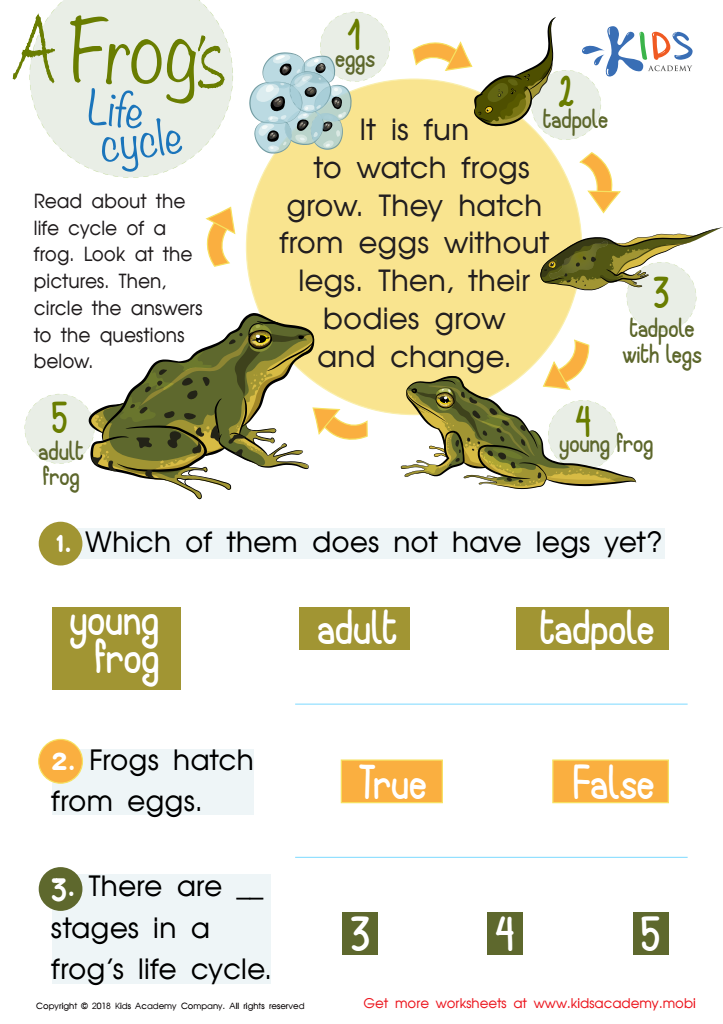
A Frog’s Life Cycle Worksheet
 Assign to My Students
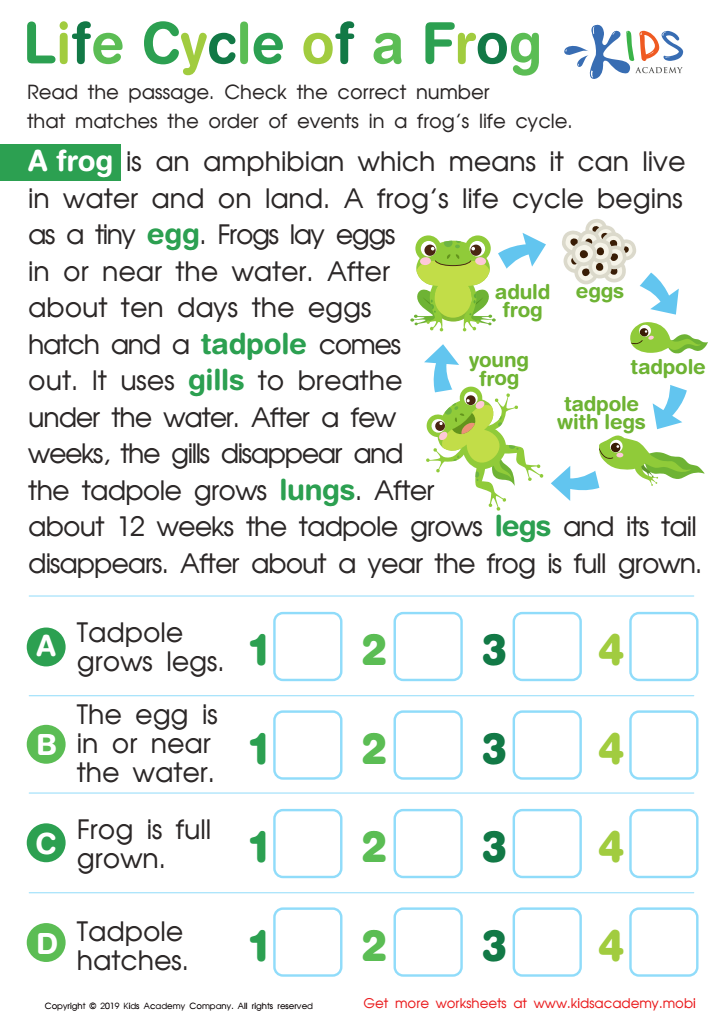
Life Cycle of a Frog Worksheet
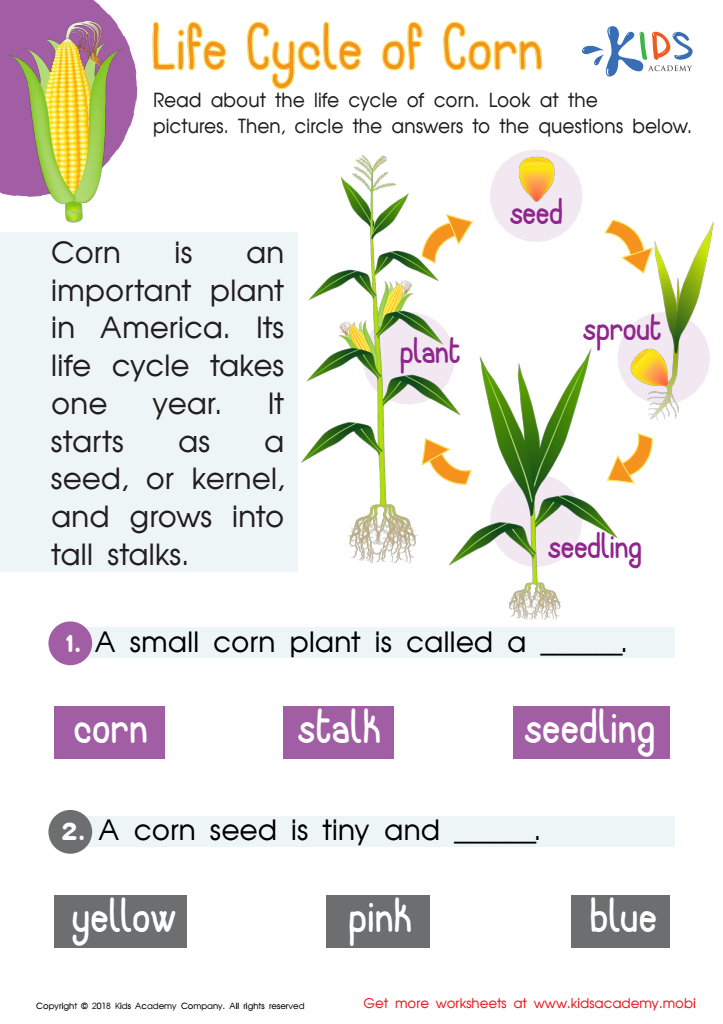
Life Cycle of Corn Worksheet








Understanding life cycles is crucial for young learners between the ages of 3-7, as it lays the foundation for essential scientific concepts and a deeper appreciation for the natural world. By introducing children to the fascinating stages of growth and change that living things undergo—such as the metamorphosis of a butterfly or the development of a plant from seed to flower—teachers and parents tap into children's natural curiosity and encourage inquiry-based learning.
This awareness fosters a sense of respect and responsibility towards nature, inspiring sustainable behaviors as children grow. Easy reading non-fiction texts designed for this age group make these complex ideas accessible and engaging, using simple language and vivid illustrations. They promote literacy skills while making learning fun. Moreover, life cycle understanding enhances critical thinking, as students begin to recognize patterns, make connections, and ask questions about the environment around them.
By caring about the introduction of life cycles in a supportive learning atmosphere, parents and teachers empower children to explore biology and life sciences. This holistic approach aids personal development and inspires a future generation of environmentally conscious individuals. Ultimately, it equips kids with knowledge that extends beyond the classroom and into their everyday lives.







