Basic Addition Skills Easy Addition & Subtraction Worksheets for Ages 3-8
6 filtered results
-
From - To
Welcome to our "Basic Addition Skills" page, featuring engaging and easy-to-follow addition and subtraction worksheets designed specifically for children ages 3-8. Our resources will help young learners build a solid foundation in basic math concepts while having fun. These worksheets focus on simple addition and subtraction problems, perfect for developing crucial numerical skills. Ideal for kindergarten and early primary students, each activity promotes counting practice and enhances problem-solving abilities. Dive into our vibrant and interactive worksheets to spark your child's interest in math, making learning enjoyable and effective. Start their journey to math mastery today!
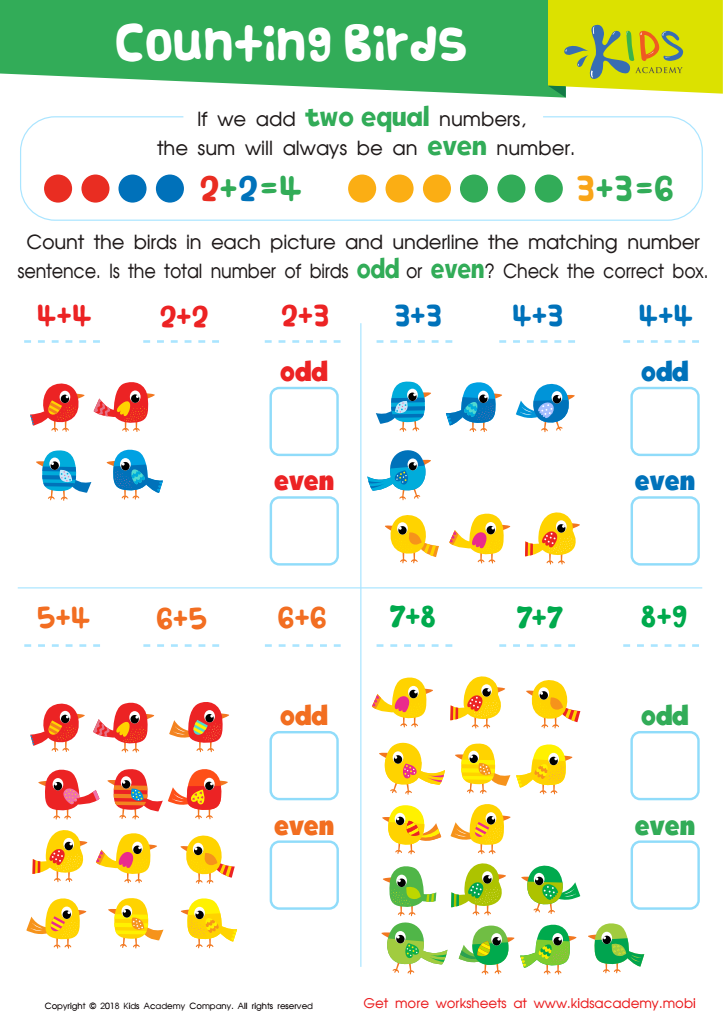
Counting Birds Worksheet
 Assign to My Students
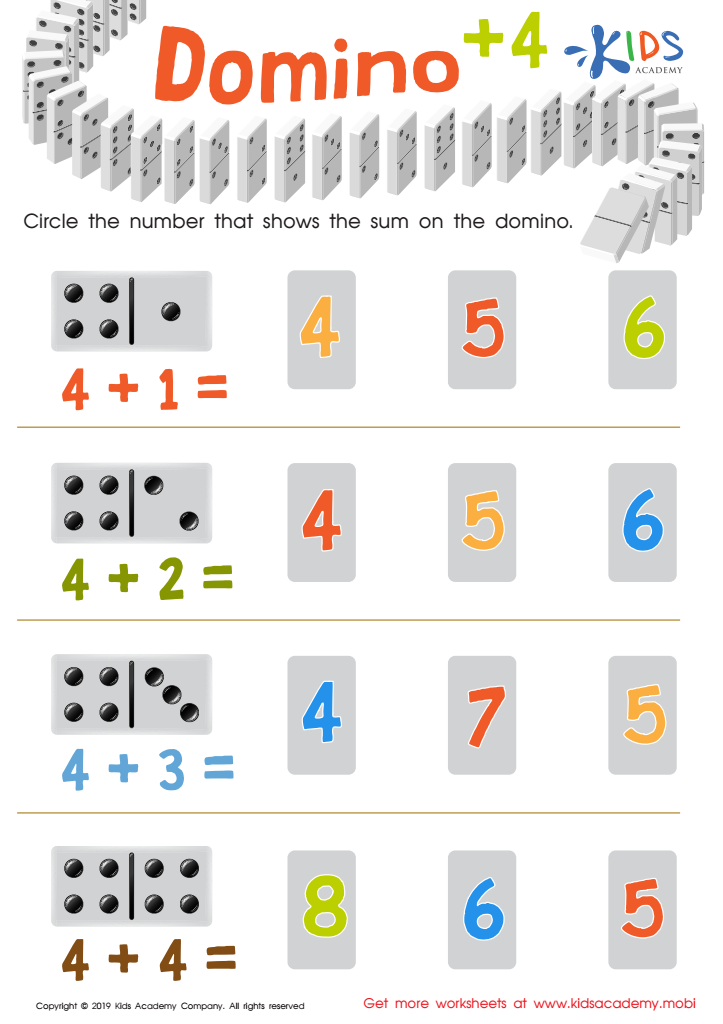
Domino +4 Worksheet
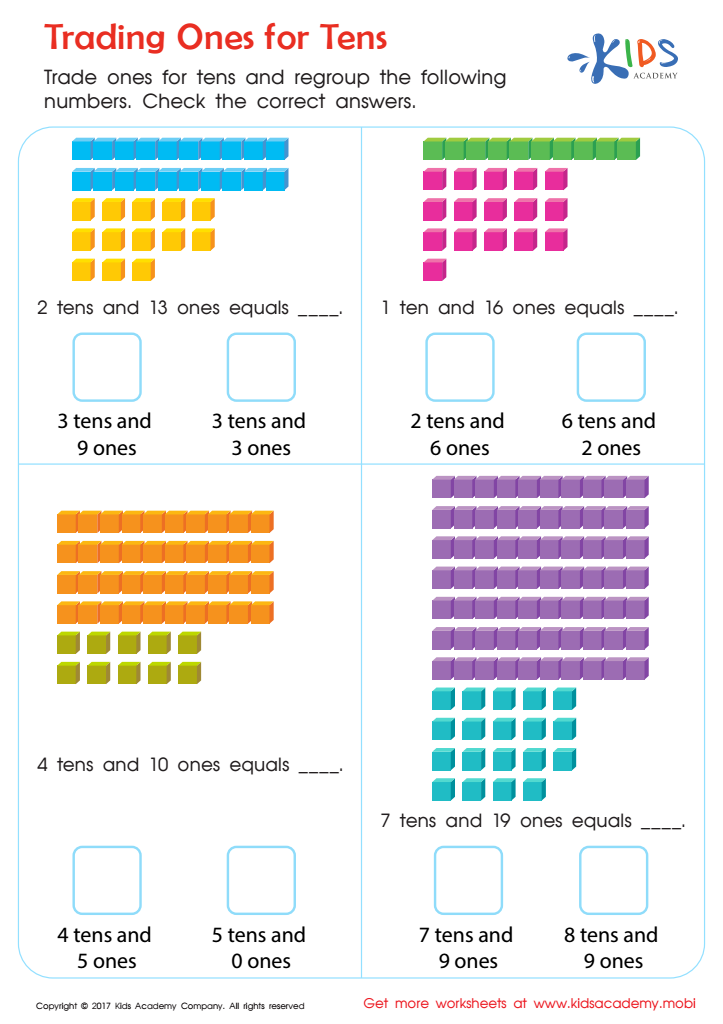
Trading Ones for Tens Worksheet
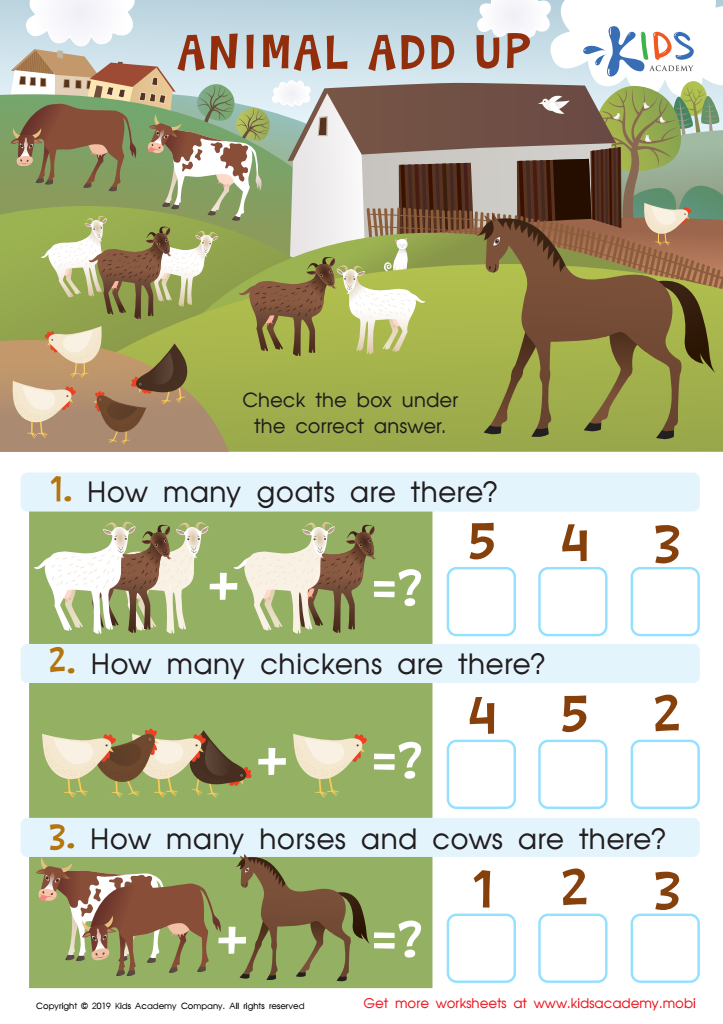
Animal Add Up Worksheet
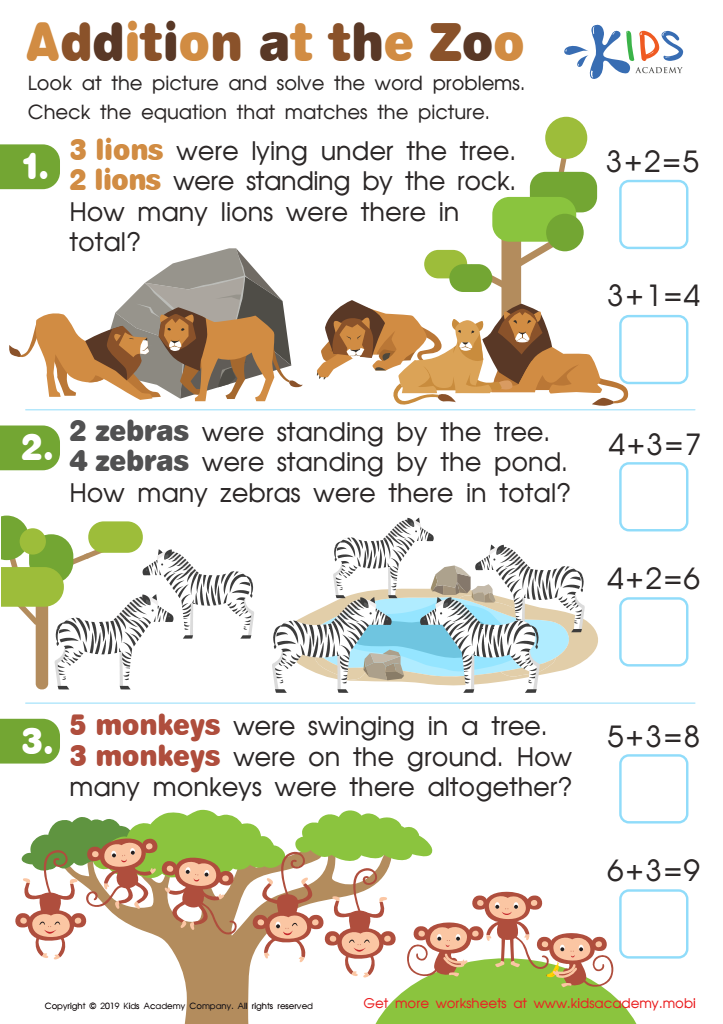
Addition at the Zoo Worksheet
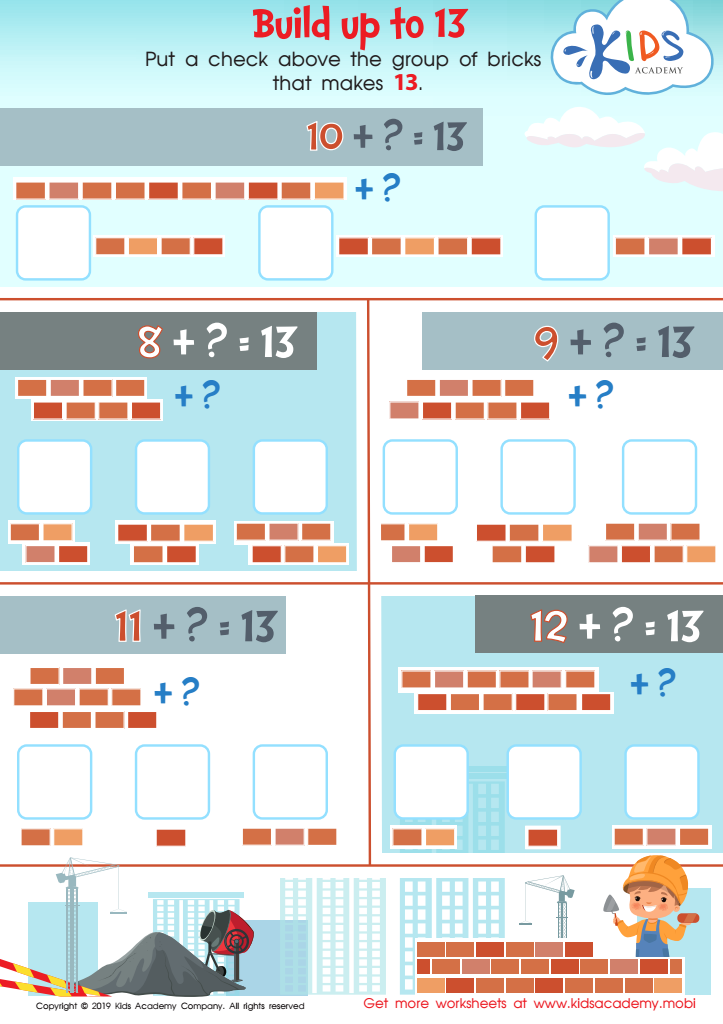
Build up to 13 Worksheet








Basic addition and subtraction skills are foundational to a child's overall development and academic success. For children aged 3-8, mastering these skills sets the stage for future learning in mathematics and critical thinking. Parents and teachers should prioritize these skills for several reasons.
First, basic math skills enhance problem-solving abilities, helping children to tackle challenges independently. Early proficiency in addition and subtraction fosters cognitive development, enabling them to draw comparisons, recognize patterns, and build logical reasoning skills.
Second, these skills are crucial for daily life tasks. Understanding basic math helps children in real-world situations, like counting objects, sharing equally, or managing simple money transactions. This practical application reinforces their confidence and independence.
Furthermore, strong numeracy skills contribute to educational engagement, as children who grasp these concepts are more likely to participate actively in math-related activities and discussions. This engagement nurtures a positive attitude toward learning and cultivates a growth mindset.
Investing time and resources in teaching basic addition and subtraction not only prepares children for higher-level math but also cultivates important life skills. Overall, promoting these skills creates a strong academic foundation, better equipping children for success in school and beyond.








