Color recognition Easy Arrays Worksheets for Ages 3-8
3 filtered results
-
From - To
Unlock the colorful world of learning with our "Color Recognition Easy Arrays Worksheets" designed specifically for children aged 3-8! These engaging worksheets combine the fun of color recognition with early math skills, helping kids identify and differentiate colors while exploring simple arrays. Each worksheet is crafted to enhance visual perception, cognitive skills, and creativity through interactive activities. Perfect for preschool and early grade classrooms, parents, and tutors, these resources encourage independent learning and help build a solid foundation in both color recognition and basic mathematics. Immerse your child in a vibrant educational experience that sparks curiosity and fosters a love for learning!
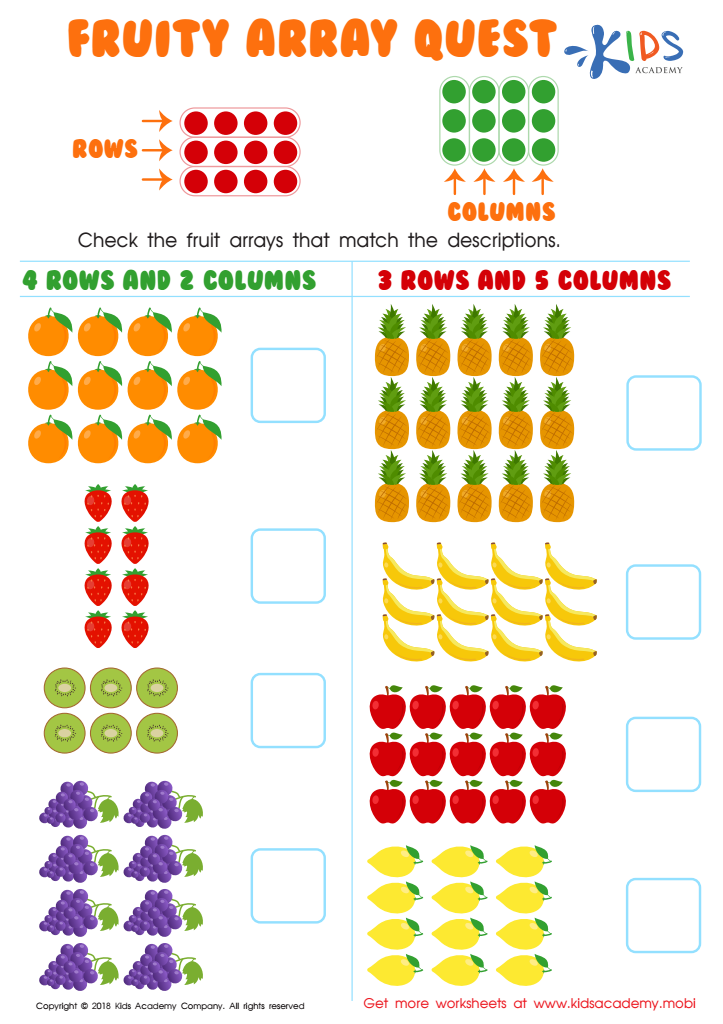
Fruity Array Quest Worksheet
 Assign to My Students
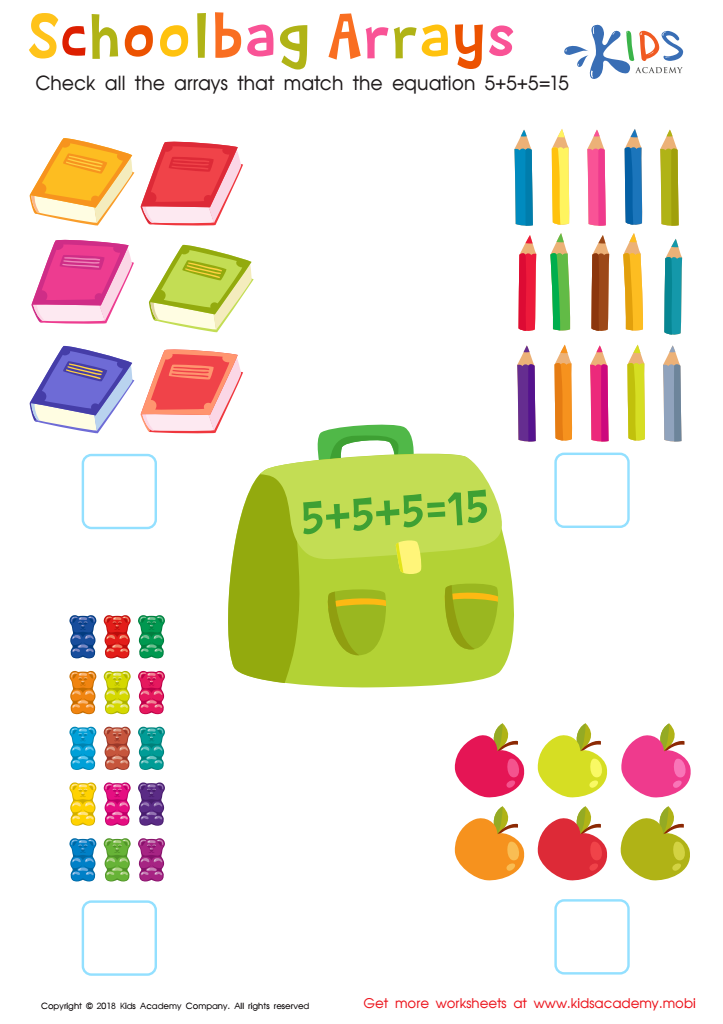
Schoolbag Arrays Worksheet
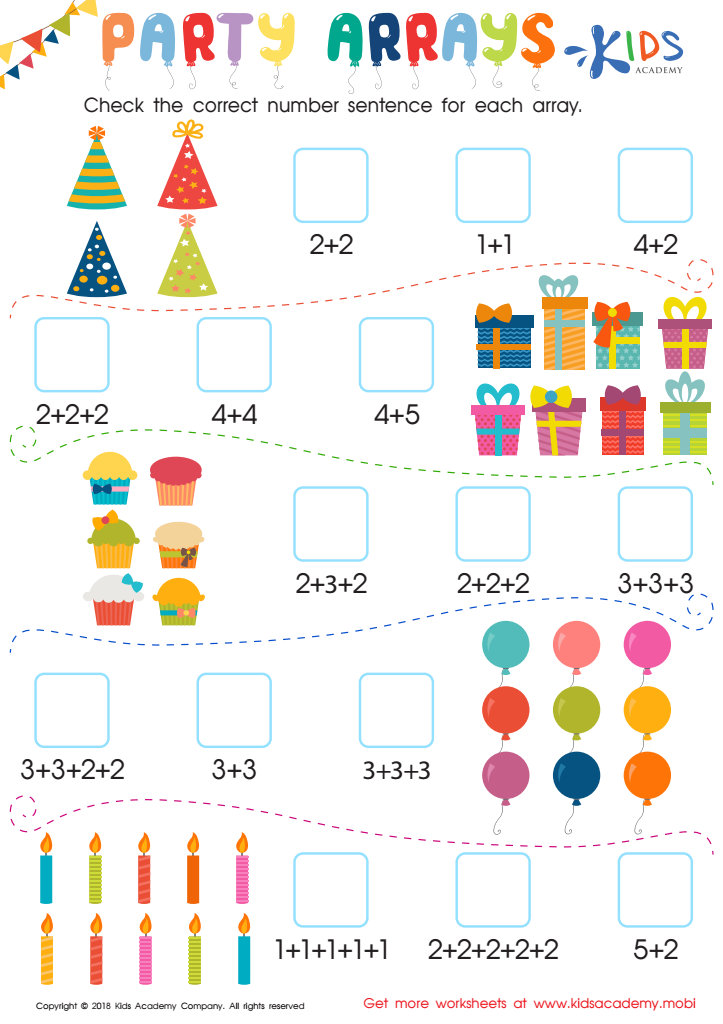
Party Arrays Worksheet








Color recognition is a crucial developmental milestone for children ages 3-8, laying the foundation for various cognitive and social skills. By incorporating methods like Color Recognition Easy Arrays, parents and teachers can create engaging and interactive learning experiences that enhance this essential skill.
Firstly, color recognition aids in language development. Children learn to identify and articulate colors, expanding their vocabulary and fostering communication skills. This could also lead to more complex discussions about shades and associations with emotions, enhancing their ability to express themselves.
Furthermore, learning colors through Easy Arrays can improve problem-solving and critical thinking. Children interact with colorful arrays, which helps them categorize and differentiate, strengthening their cognitive processing. This method promotes active learning naturally through play, making educational experiences more enjoyable.
Lastly, color recognition enhances a child’s ability to navigate their environment. By naming and categorizing colors, children can more confidently express their preferences and could potentially improve social interactions with peers.
Overall, incorporating Color Recognition Easy Arrays in early childhood education benefits not only cognitive development but also emotional connection and social skills, making it an investment that can positively impact a child’s overall growth and learning journey.








