Shape Recognition Easy Numbers Worksheets for Ages 3-8
3 filtered results
-
From - To
Unlock your child's potential with our "Shape Recognition Easy Numbers Worksheets for Ages 3-8." Tailored to ignite young minds, these engaging worksheets blend fundamental math concepts with delightful shape recognition activities. Perfectly designed for early learners, each worksheet fosters cognitive development while nurturing fine motor skills. The vibrant illustrations and simple exercises make learning numbers and shapes fun and interactive. Ideal for both classroom and home use, our worksheets provide the perfect foundation for early math success. Help your child develop essential skills with ease and confidence. Explore now and watch them excel!
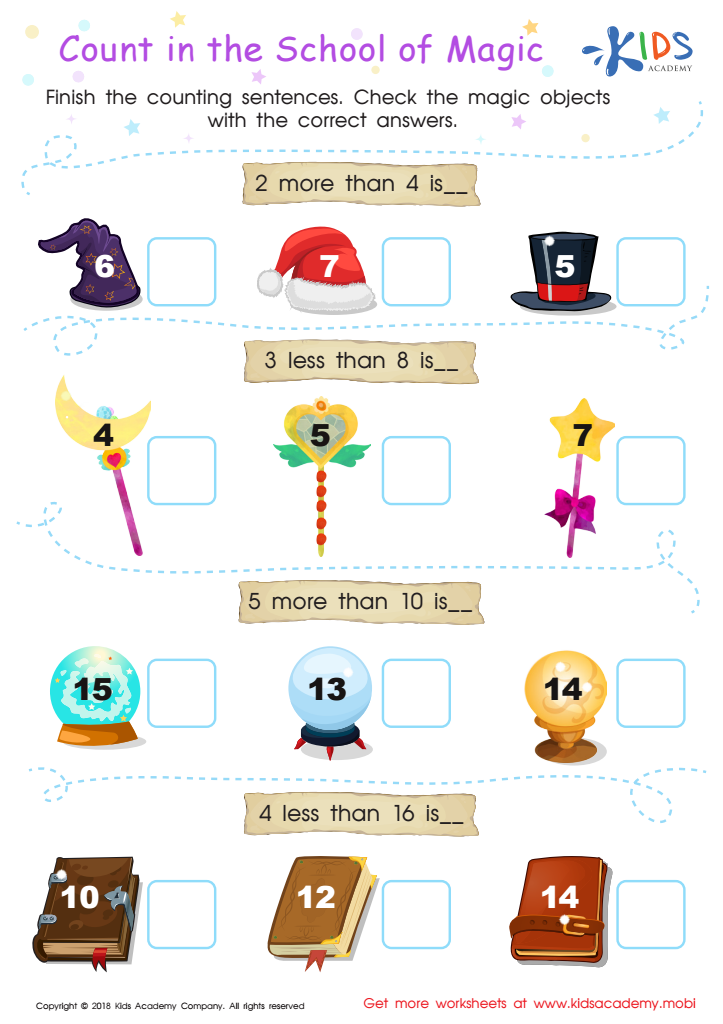
Count in the School of Magic Worksheet
 Assign to My Students
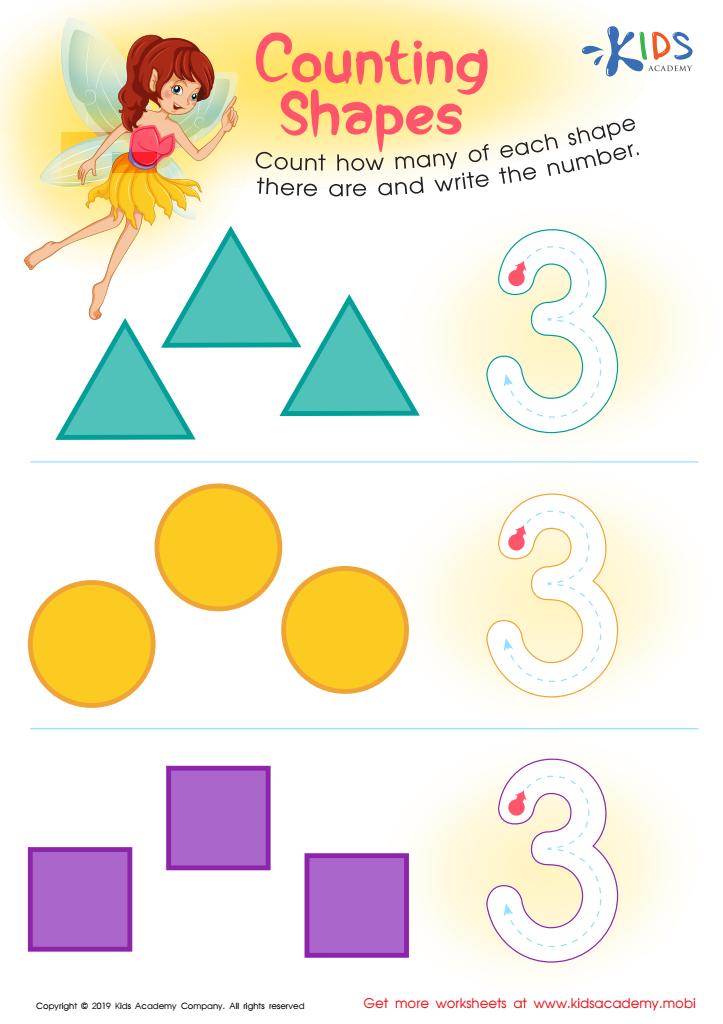
Counting Shapes Worksheet
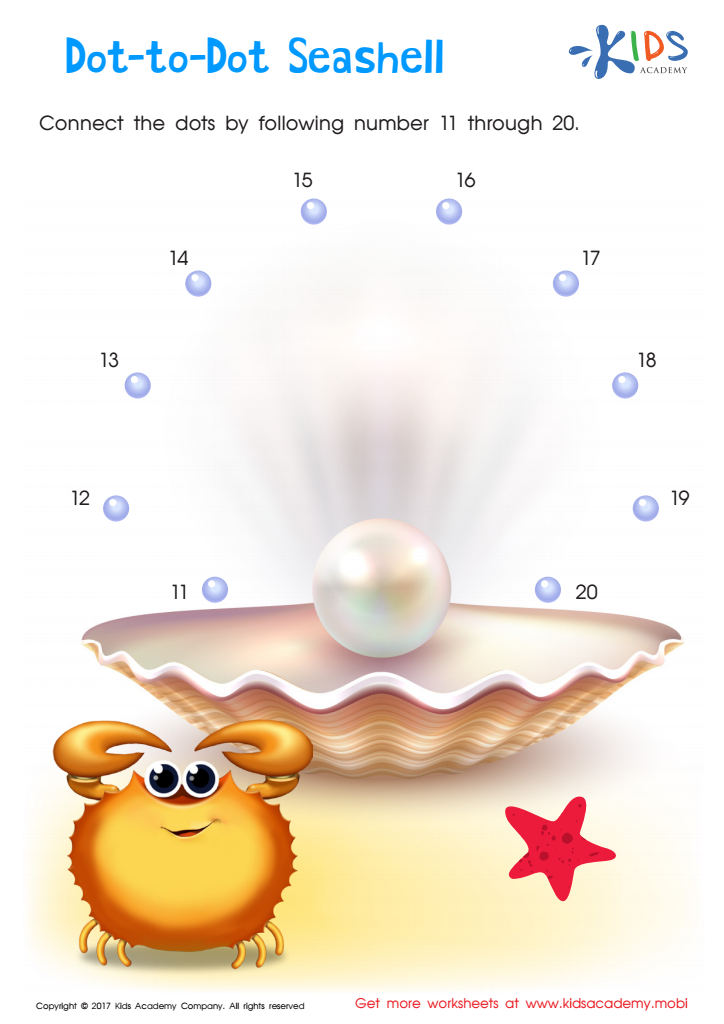
Ordering 11–20: Dot–to–dot Seashell Printable







Shape recognition and basic number skills play a fundamental role in the cognitive development of children ages 3-8. When parents and teachers prioritize these learning elements, they lay the groundwork for essential problem-solving and critical thinking skills that children will use throughout their academic and everyday life.
For one, recognizing shapes helps children understand and organize the visual world around them. Shapes are the building blocks of mathematical understanding and form the basis of geometry. When children learn to identify and describe shapes, they begin to notice patterns and categorization, which are vital for more complex mathematical concepts. Recognizing different shapes sharpens their spatial awareness and fine motor skills, facilitating better hand-eye coordination and pre-writing skills.
On the other hand, early number recognition sets the stage for numeracy. Young children develop a sense of quantity and the relationship between numbers, enabling them to perform basic arithmetic, which is a gateway to more advanced mathematical operations. Early exposure to numbers also enhances their memory and sequencing abilities, contributing to smoother cognitive development.
Moreover, integrating shape and number recognition into engaging activities fosters creativity and keeps learning fun and interactive, making children more eager and motivated to learn. Prioritizing shape and number recognition equips children with foundational knowledge, confident cognitive skills, and an intrinsic love for learning that stretches far beyond the classroom.








