Observational skills Easy Math Worksheets for Ages 3-8
4 filtered results
-
From - To
Enhance your child's learning experience with our "Observational Skills Easy Math Worksheets," designed specifically for children aged 3 to 8. These engaging worksheets focus on developing foundational math skills through observation and critical thinking. Kids will practice identifying shapes, patterns, and spatial relationships while having fun! Our user-friendly printable resources cater to different learning styles, ensuring that every child can thrive. Perfect for teachers and parents, these worksheets make math enjoyable and accessible. Encourage your child's confidence and curiosity in mathematics while building essential observational skills for lifelong learning! Explore our collection and help your child embark on an educational adventure today!
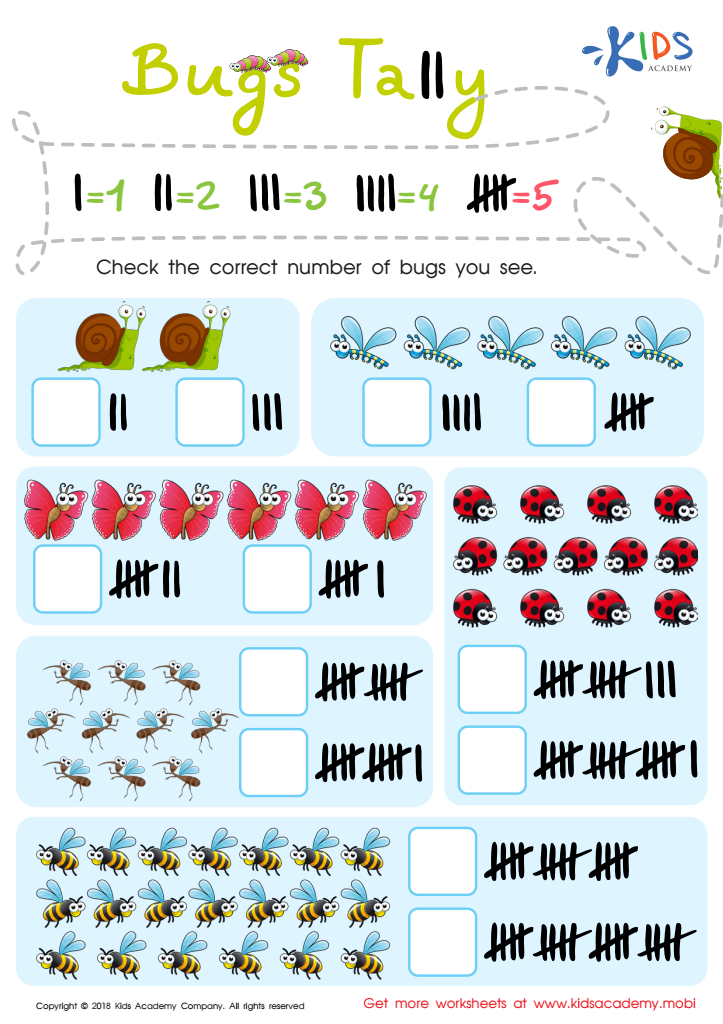
Bugs Tally Worksheet
 Assign to My Students
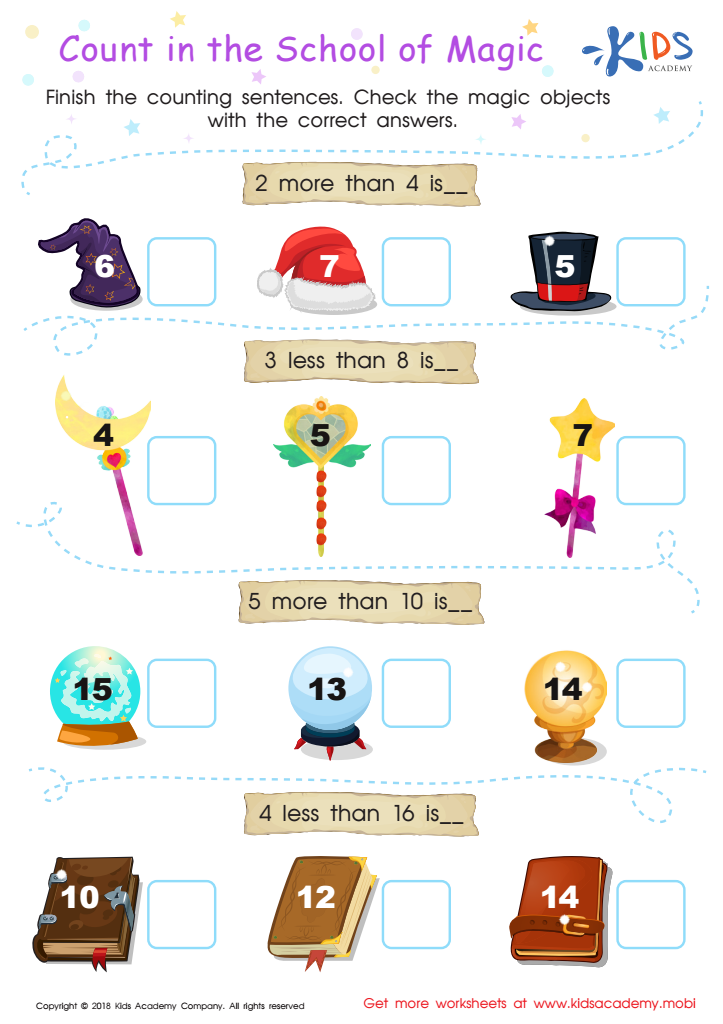
Count in the School of Magic Worksheet
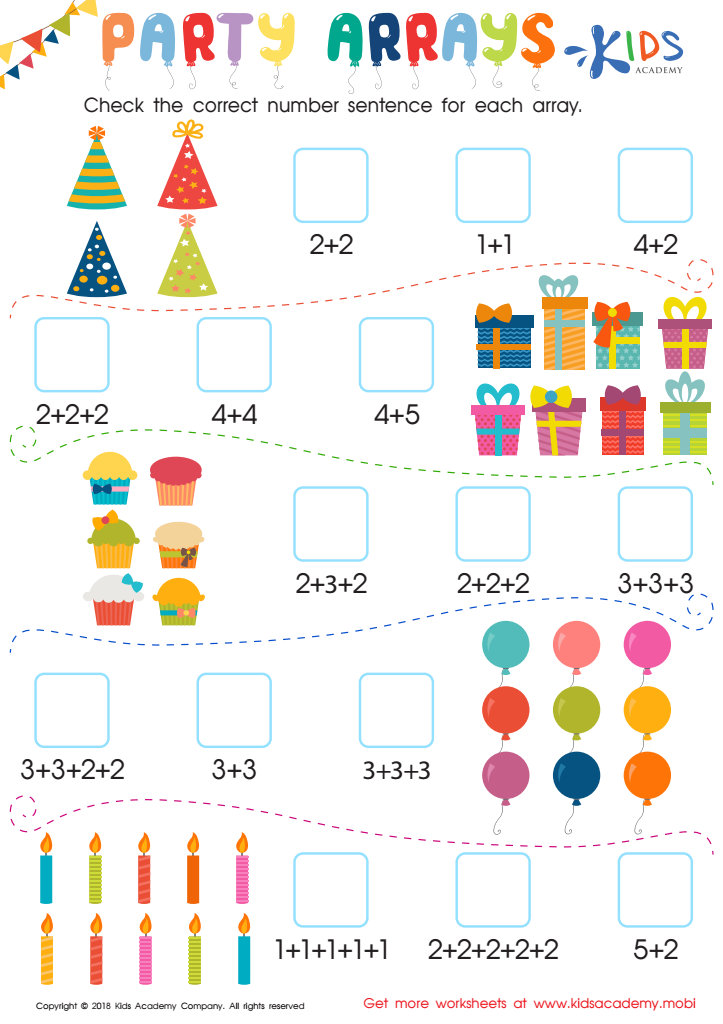
Party Arrays Worksheet
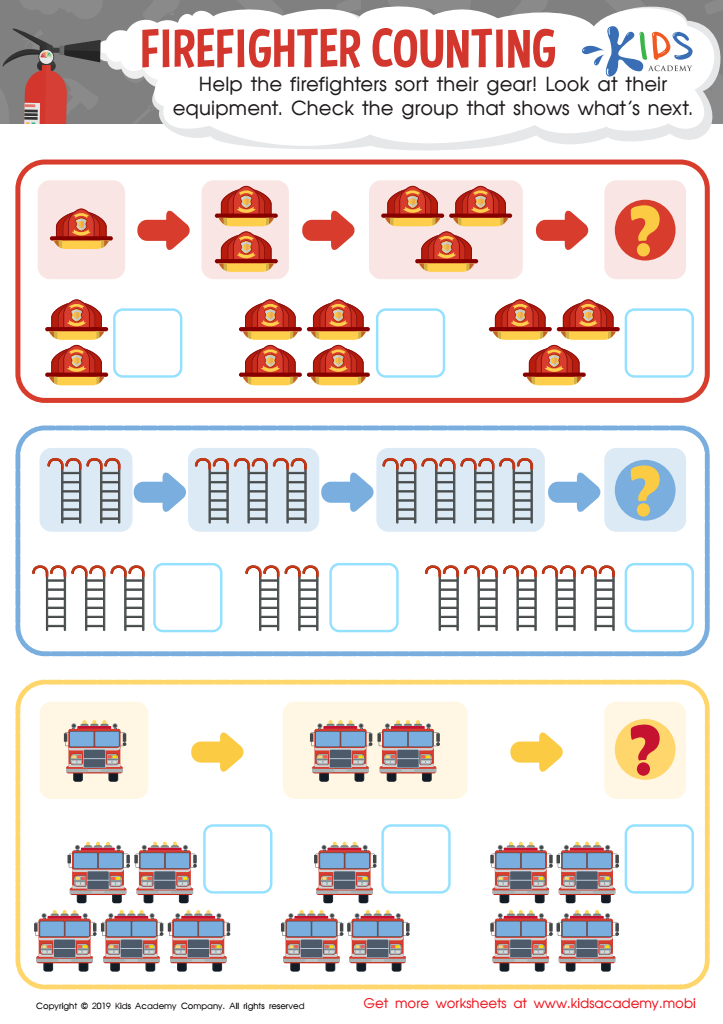
Firefighter Counting Worksheet








Observational skills are fundamental in helping young children develop their mathematical understanding. For ages 3-8, these skills enable students to notice patterns, make comparisons, and solve problems effectively. Parents and teachers should prioritize enhancing observational skills through Easy Math activities, as this lays the groundwork for critical thinking and analytical abilities.
By engaging in early math experiences that emphasize observation, children learn to categorize shapes, measure objects, and recognize numbers in their environment. This learning promotes spatial awareness and enhances their ability to manipulate concepts like addition and subtraction. Moreover, observational activities foster curiosity, inviting children to explore and ask questions, which is vital for cognitive development.
Effective observational skills also support the development of language, as children learn to describe and articulate their observations, allowing them to communicate mathematical ideas more effectively. By creating a learning atmosphere that highlights observation, parents and teachers can cultivate a positive attitude toward mathematics, countering any anxiety that may arise later in their education.
Overall, investing in these foundational skills is crucial for fostering not only mathematical ability but also a love for learning that lasts a lifetime. Parents and teachers hold the key to unlocking this potential through purposeful engagement in observational activities.








