Understanding measurements Easy Math Worksheets for Ages 3-8
10 filtered results
-
From - To
Introducing our "Understanding Measurements Easy Math Worksheets for Ages 3-8"! Specifically designed for young learners, these engaging and colorful worksheets help kids grasp measurement concepts effortlessly. Featuring activities that teach length, weight, and volume using everyday objects, your child will build a strong foundation in math. Ideal for preschool to early elementary students, these printable worksheets make learning fun and interactive. Boost your child's confidence in measuring skills today. Start now and watch them excel! Explore more on the Kids Academy website and embark on a wonderful educational journey with your little ones.
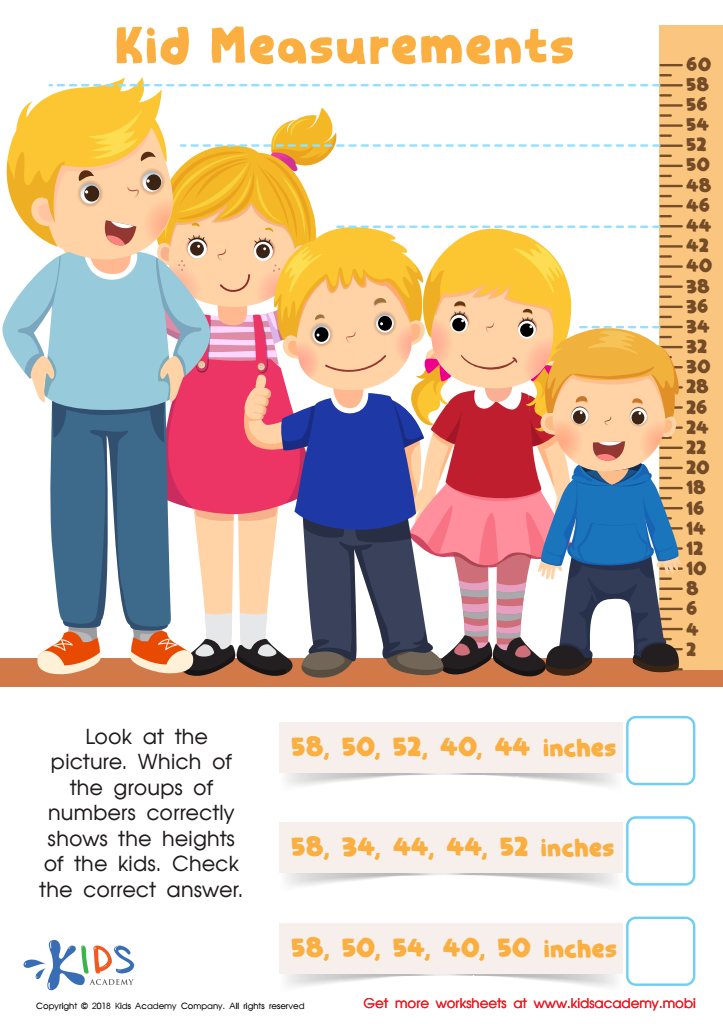
Kids Measurements Worksheet
 Assign to My Students
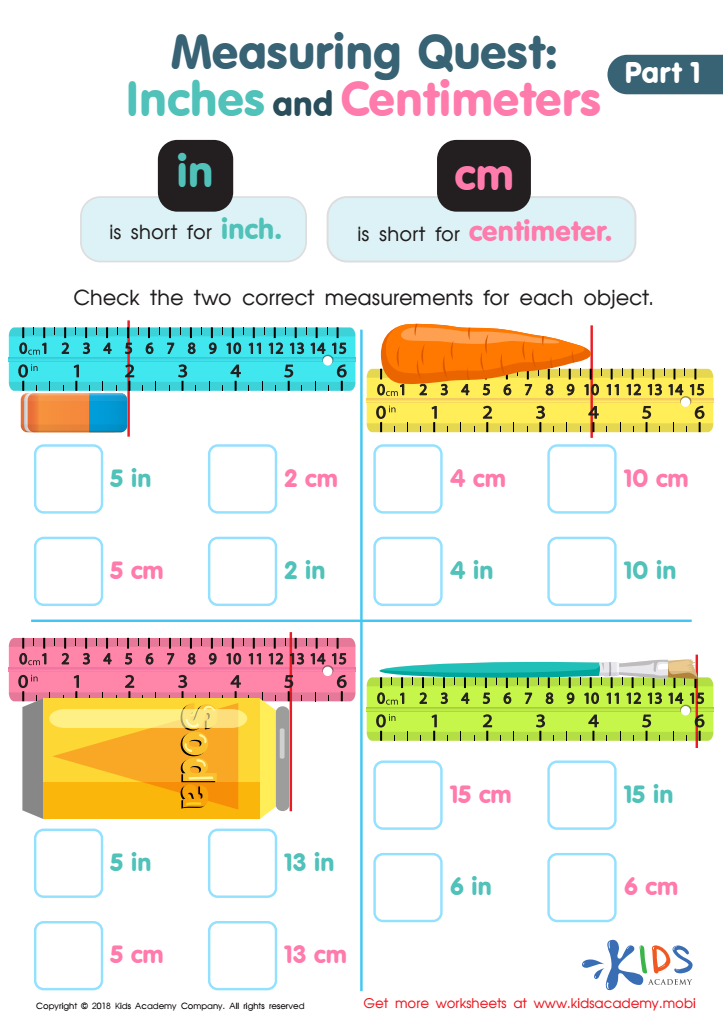
Measuring Quest: Inches and Centimeters Worksheet
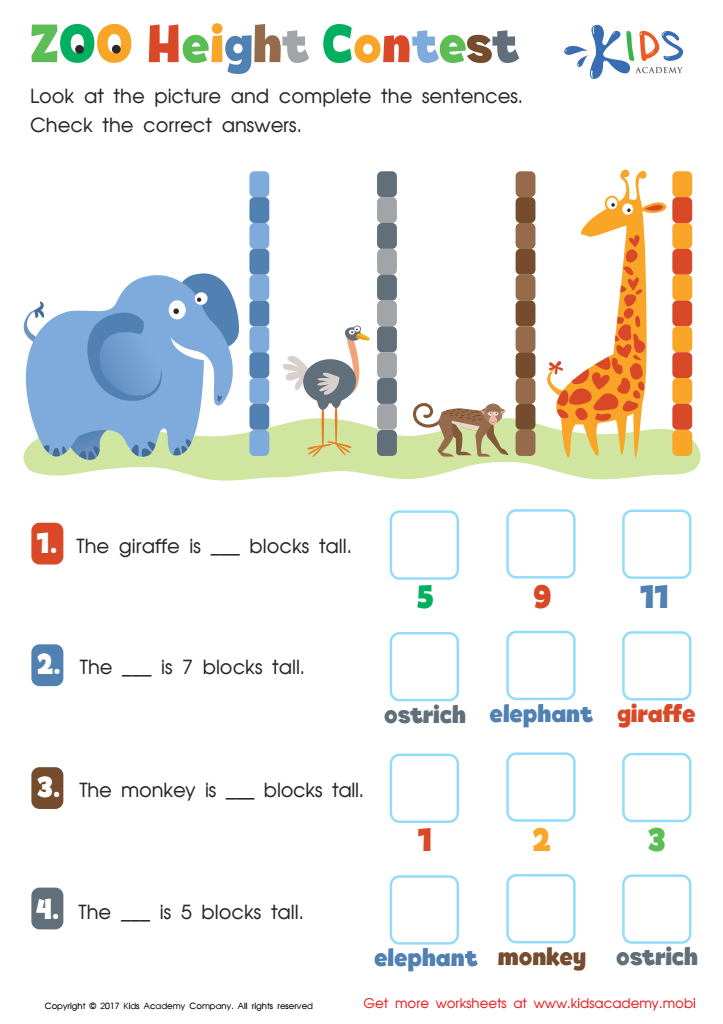
Zoo Height Contest Worksheet
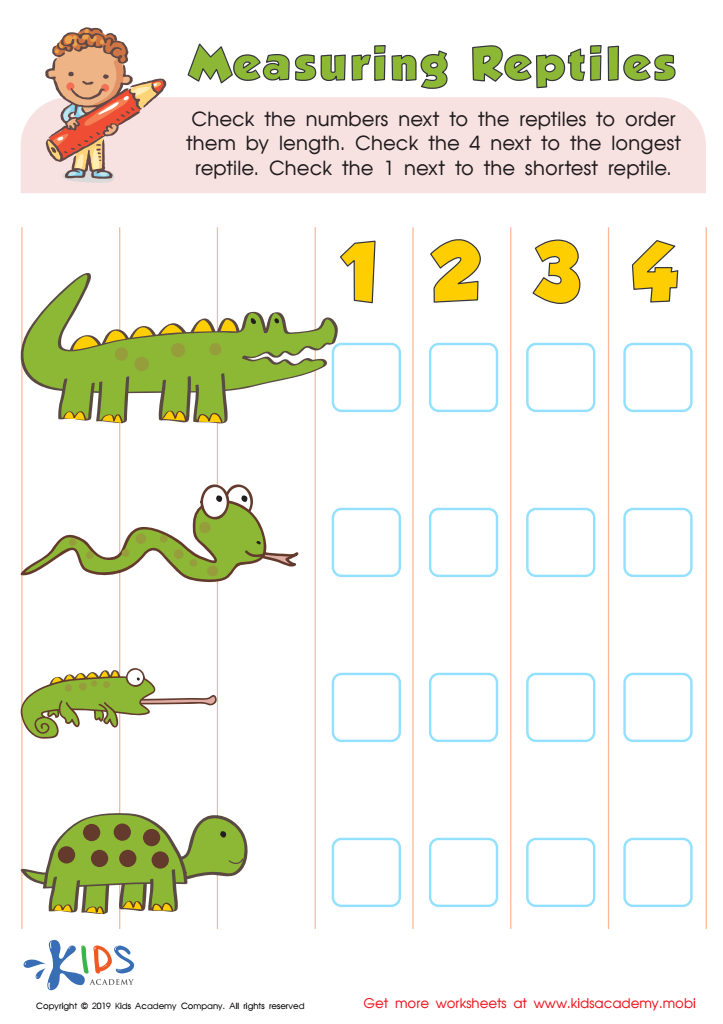
Measuring Reptiles Worksheet
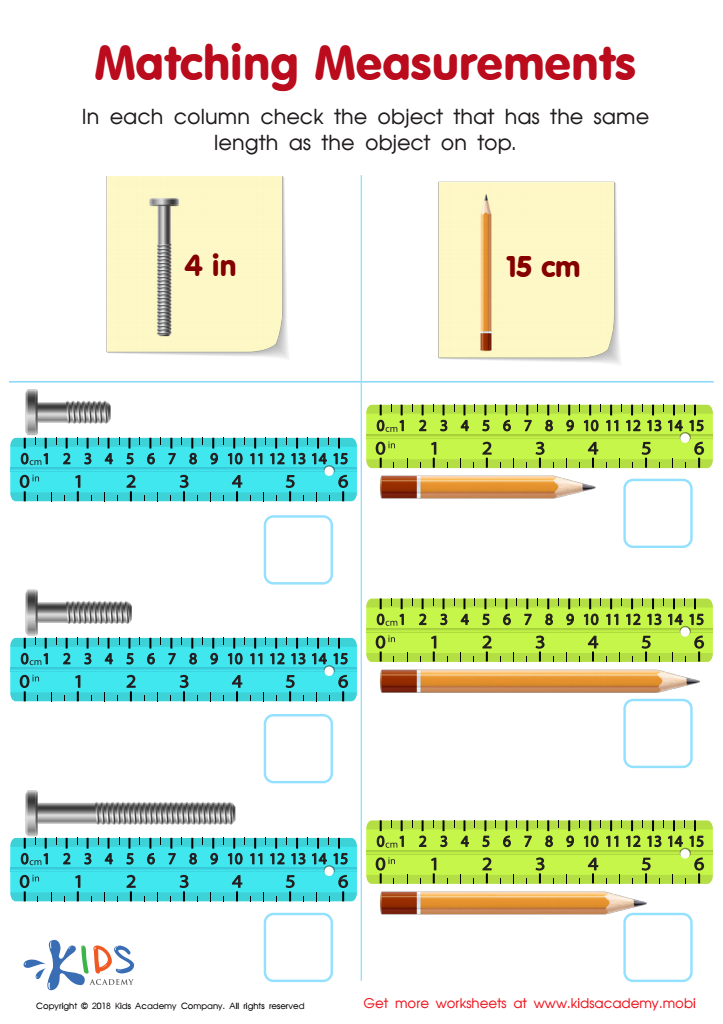
Matching Measurements Worksheet
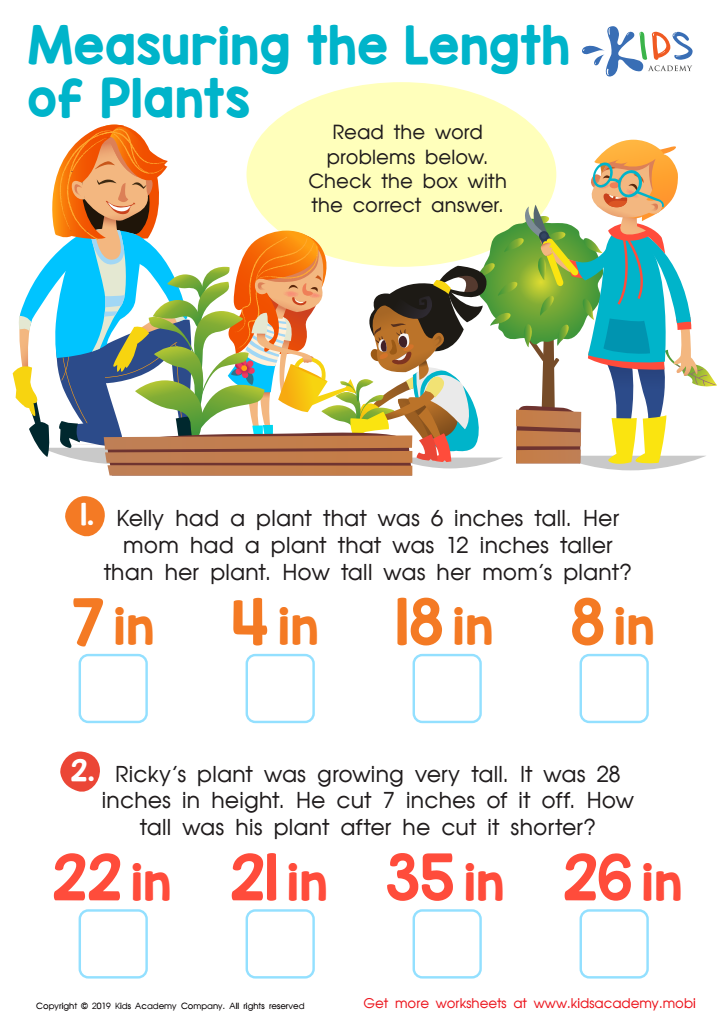
Measuring the Length of Plants Worksheet
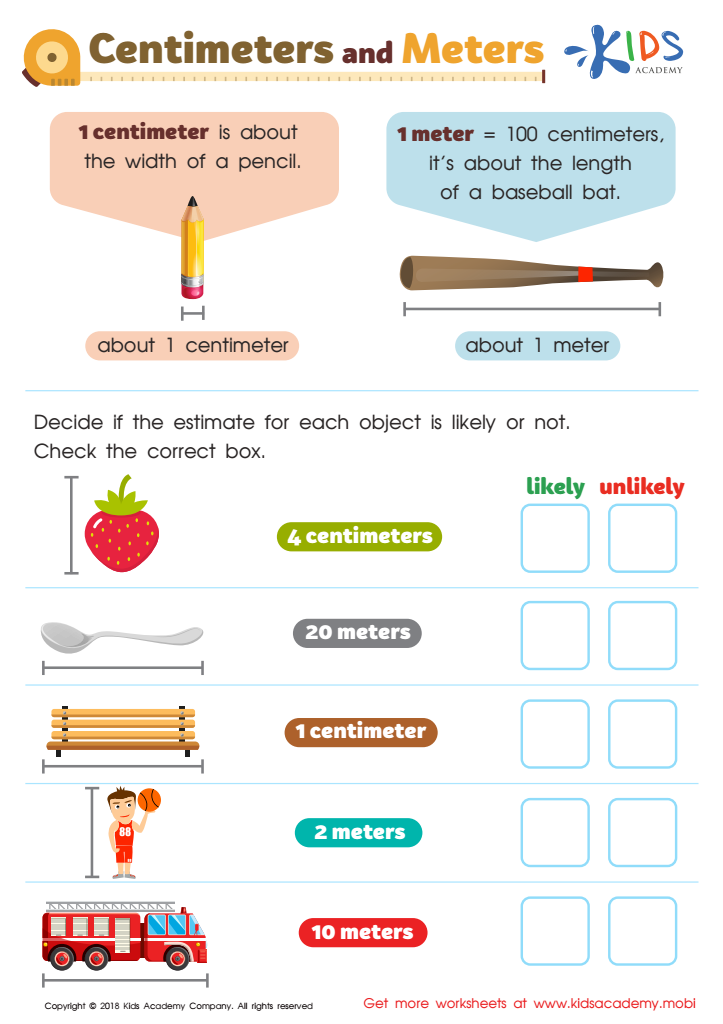
Centimeters and Meters Worksheet
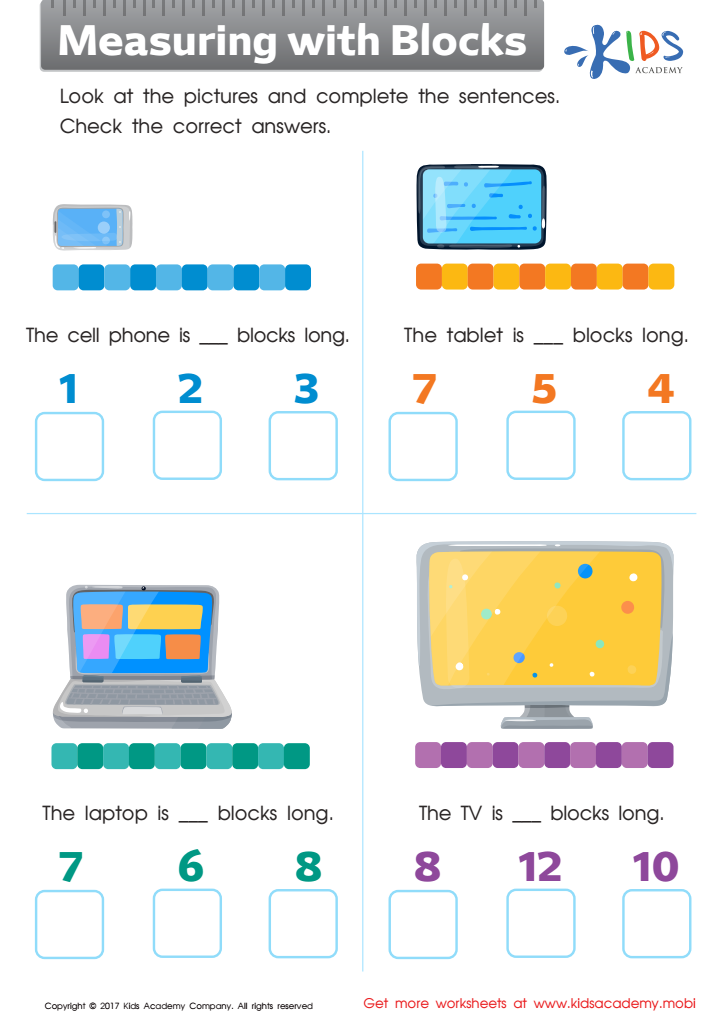
Measuring with Blocks Worksheet
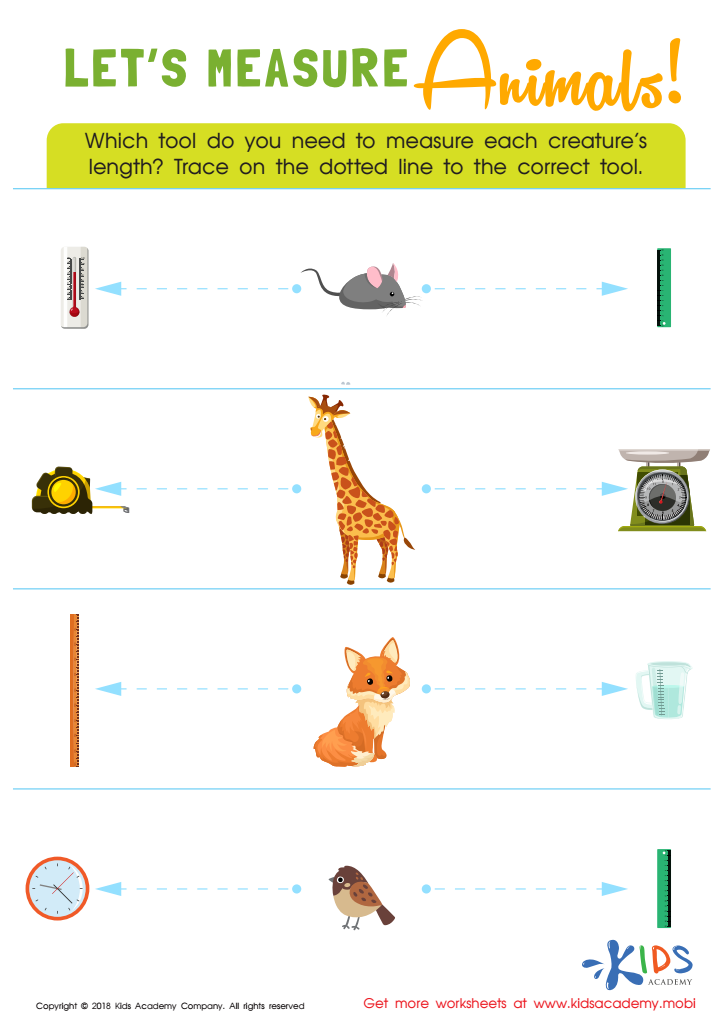
Let's Measure Animals! Worksheet
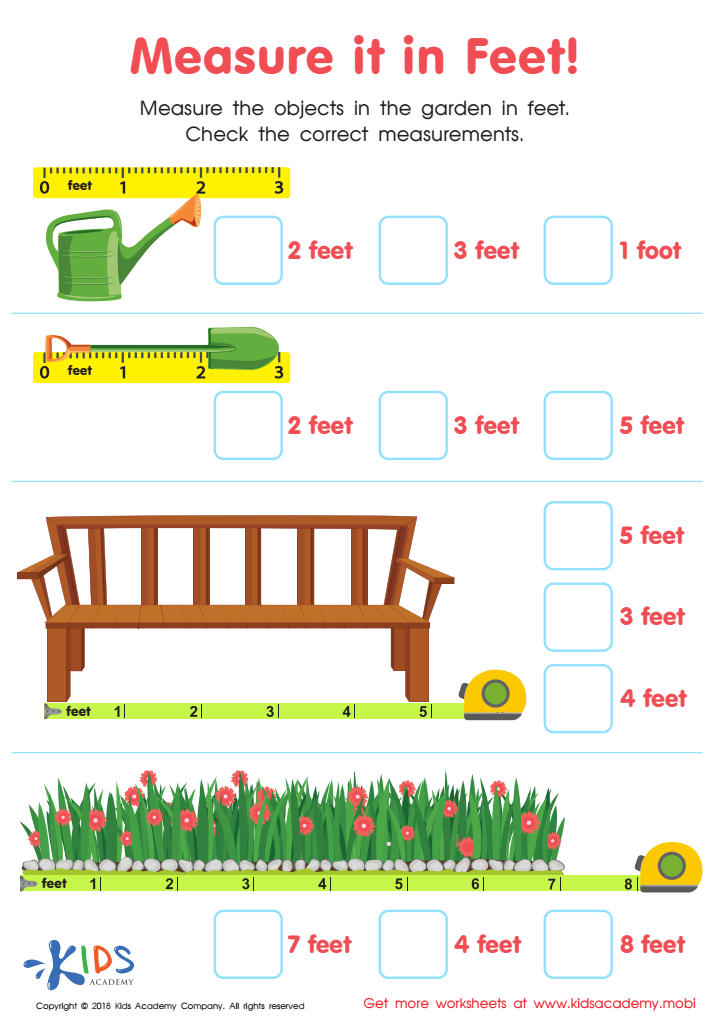
Measure it in Feet Worksheet







Understanding basic measurements is a key skill that lays the foundation for a child's future success in math and science. For children aged 3-8, mastering simple measurement concepts can enhance cognitive development and increase their confidence in handling everyday tasks.
Parents and teachers should pay close attention to teaching measurements because it can improve a child's problem-solving abilities. Whether they’re comparing the length of pens, measuring ingredients for a recipe, or understanding the weight of their toys, these activities promote critical thinking and foster a practical understanding of how math applies to the real world.
Additionally, early exposure to measurements boosts language development. When children learn terms like "longer," "shorter," "heavier," and "lighter," they expand their vocabulary and better articulate their observations. This improved language skill can enhance their overall communication abilities.
Incorporating measurement concepts early also ensures that children are better prepared for more complex math and science curricula as they progress through school. By understanding basic measurements, children build a strong foundation that will help them grasp more advanced topics with ease.
Ultimately, engaging children in measurement-related activities can make learning math fun and interactive. When parents and teachers actively support and encourage this aspect of math education, they pave the way for a more positive and effective learning experience.








