Understanding sequencing Easy Math Worksheets for Ages 3-8
3 filtered results
-
From - To
Explore our "Understanding Sequencing Easy Math Worksheets" designed specifically for children ages 3 to 8. These engaging worksheets help young learners develop essential sequencing skills through fun and interactive activities. By working through various exercises, kids will learn to recognize patterns, order events, and establish the relationship between numbers, enhancing their overall mathematical foundation. Our resources are tailored to support early education, fostering curiosity and promoting problem-solving. Perfect for classroom settings or at-home learning, these worksheets encourage children to think critically and independently. Let your child gain confidence in their math abilities while enjoying the process of learning through sequencing!
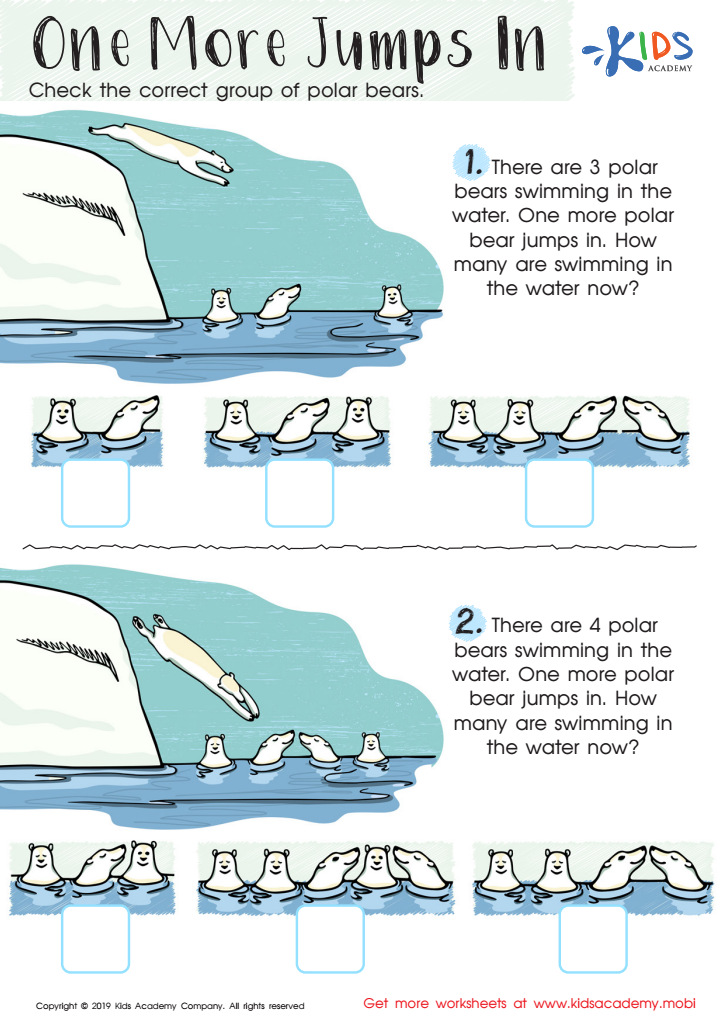
One More Jumps In Worksheet
 Assign to My Students
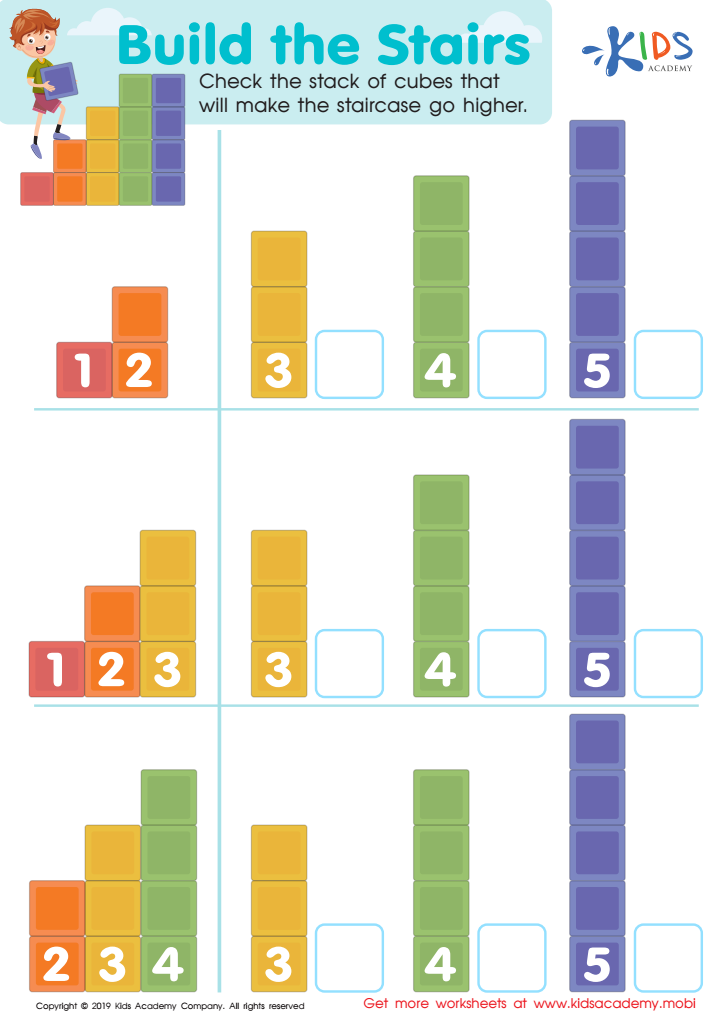
Build the Stairs Worksheet
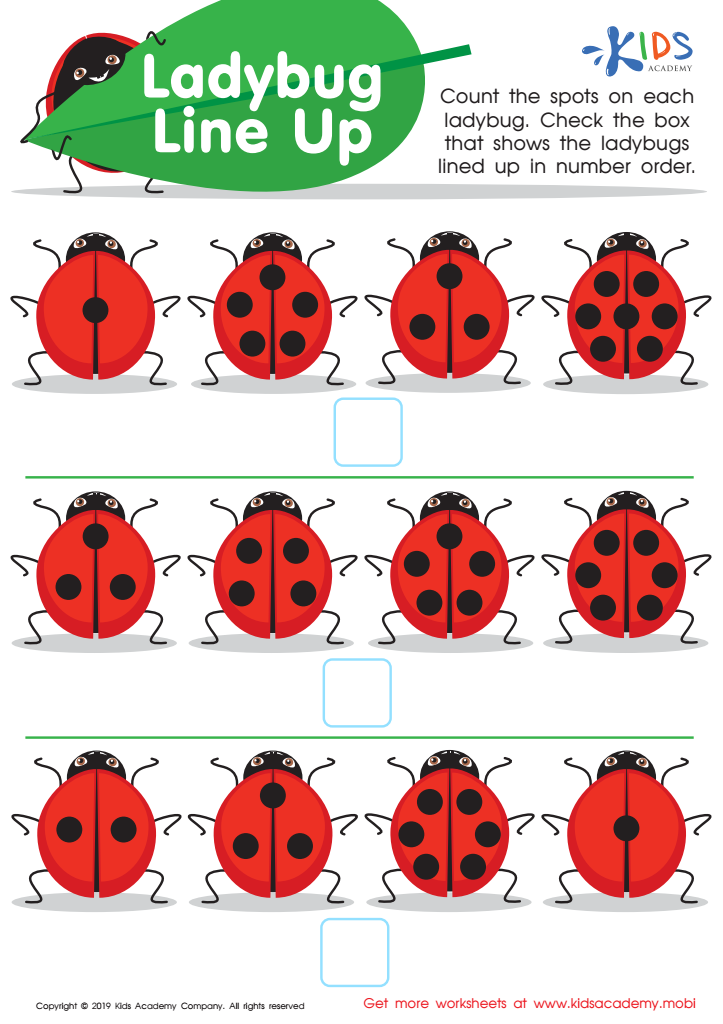
Ladybug Line Up Worksheet








Understanding sequencing in early math education is crucial for children aged 3-8, as it lays the foundation for critical thinking and problem-solving skills. Sequencing refers to the ability to recognize, recall, and reorder events or numbers, which is essential for grasping more complex math concepts later on. For parents and teachers, fostering sequencing skills helps children develop cognitive abilities that enhance their understanding of everyday situations.
Engaging in activities that promote sequencing—like storytelling, following directions, or completing puzzles—encourages memory retention and organization of thoughts. This skill also aids in developing literacy skills, as recognizing sequences in stories can enhance comprehension.
Moreover, mastering sequencing can improve a child’s ability to perform basic math operations. For instance, arranging numbers in order or understanding patterns will become easier as they advance. Early mastery of sequencing ultimately leads to increased confidence in mathematical abilities and prepares children for future academic success.
By prioritizing sequencing in early childhood education, parents and teachers provide children with vital tools that support not only math development but also overall cognitive growth, social skills, and daily life problem-solving. This makes sequencing a key focus in the formative years of a child's education.








