Understanding measurements Easy Measurement Worksheets for Ages 3-8
9 filtered results
-
From - To
Discover the joy of learning measurements with our engaging Easy Measurement Worksheets designed for ages 3-8. Foster essential math skills through fun activities and hands-on exercises that simplify complex concepts like length, width, weight, and volume. Perfect for early learners, these worksheets gradually build understanding and confidence in measuring techniques while keeping young minds captivated. Our carefully crafted resources support early development in critical thinking and problem-solving, ensuring a smooth learning journey. Equip your child with the foundational skills needed for future math success through playful, easy-to-follow measurement worksheets accessible to both parents and educators.
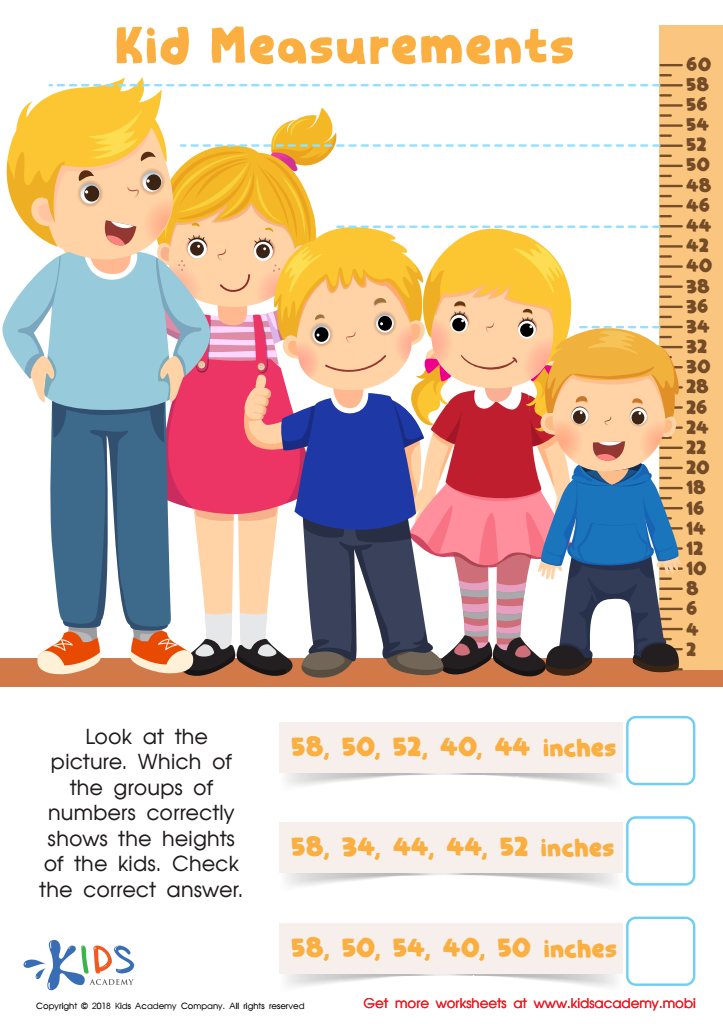
Kids Measurements Worksheet
 Assign to My Students
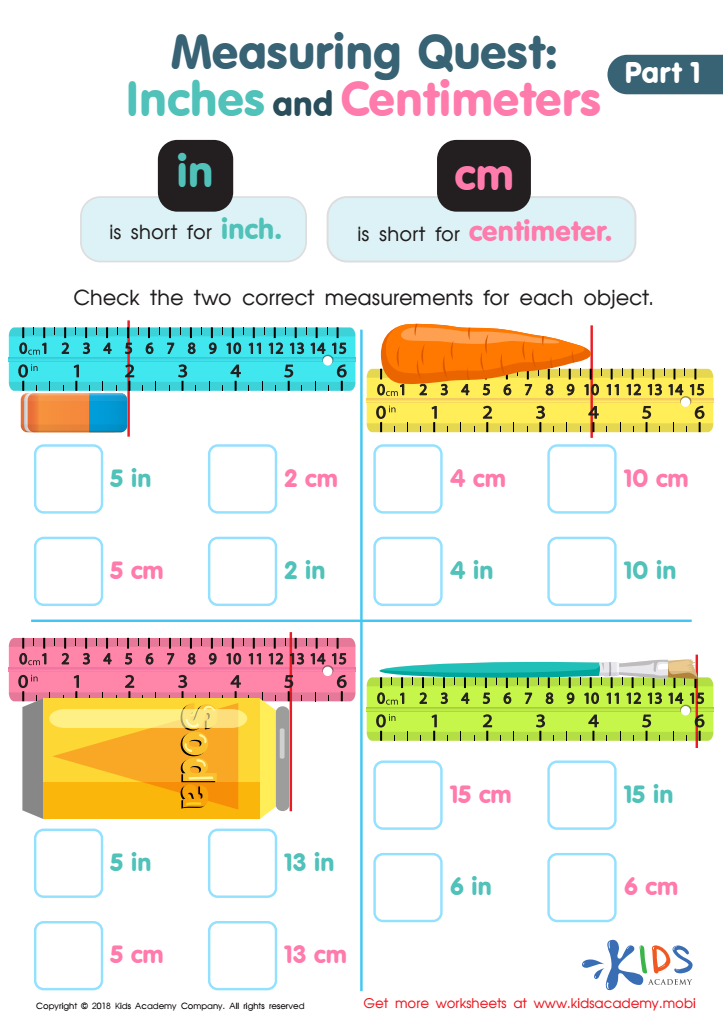
Measuring Quest: Inches and Centimeters Worksheet
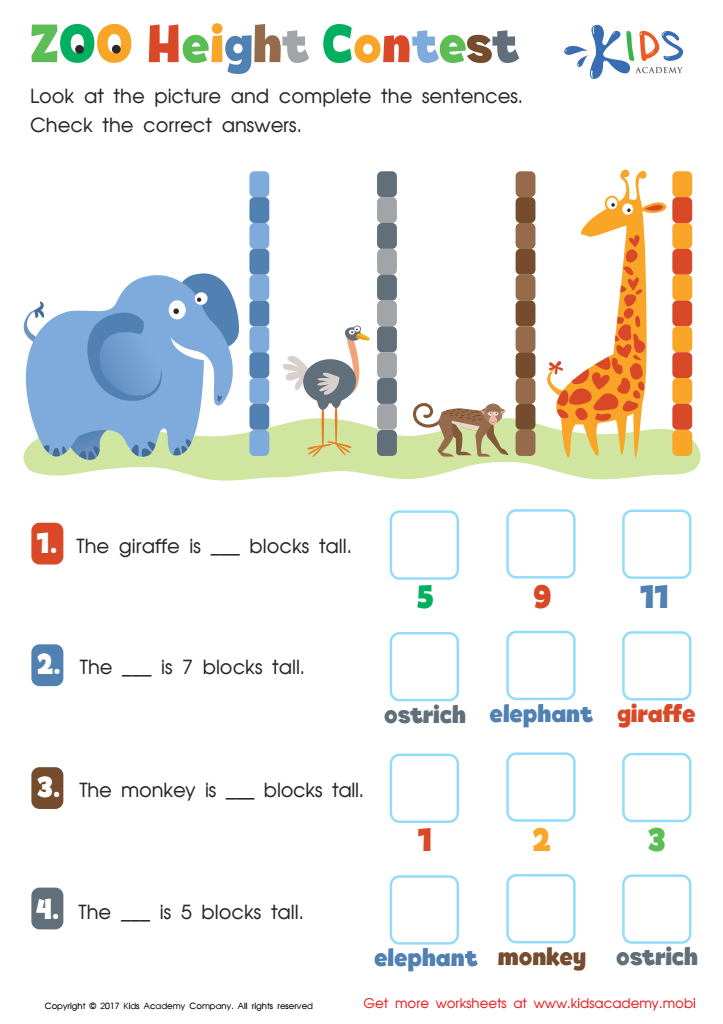
Zoo Height Contest Worksheet
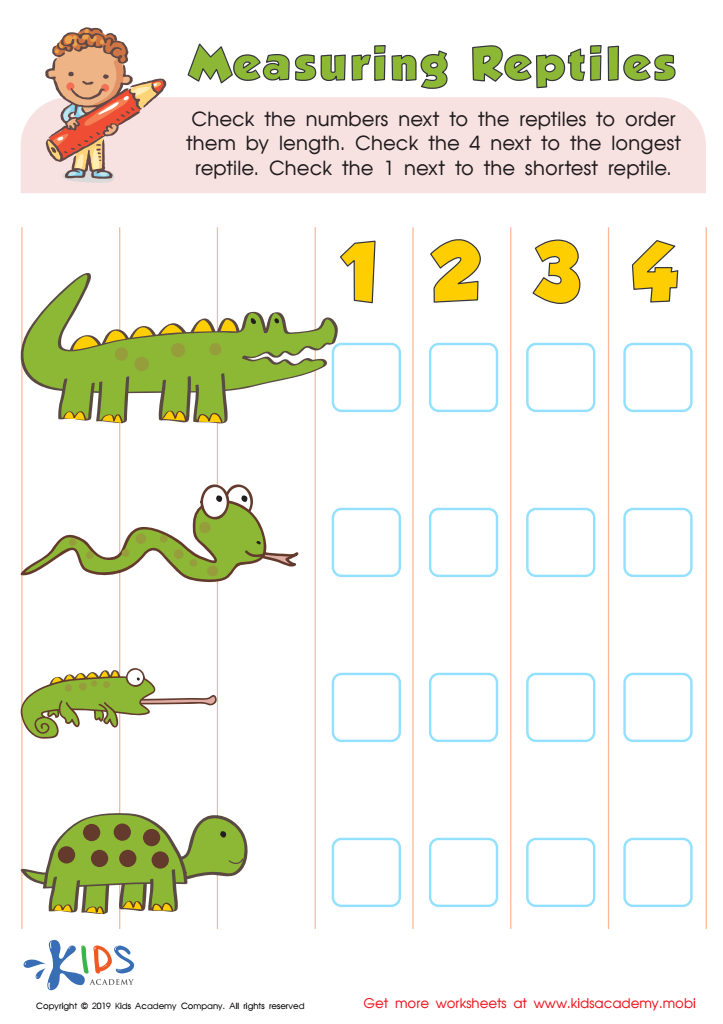
Measuring Reptiles Worksheet
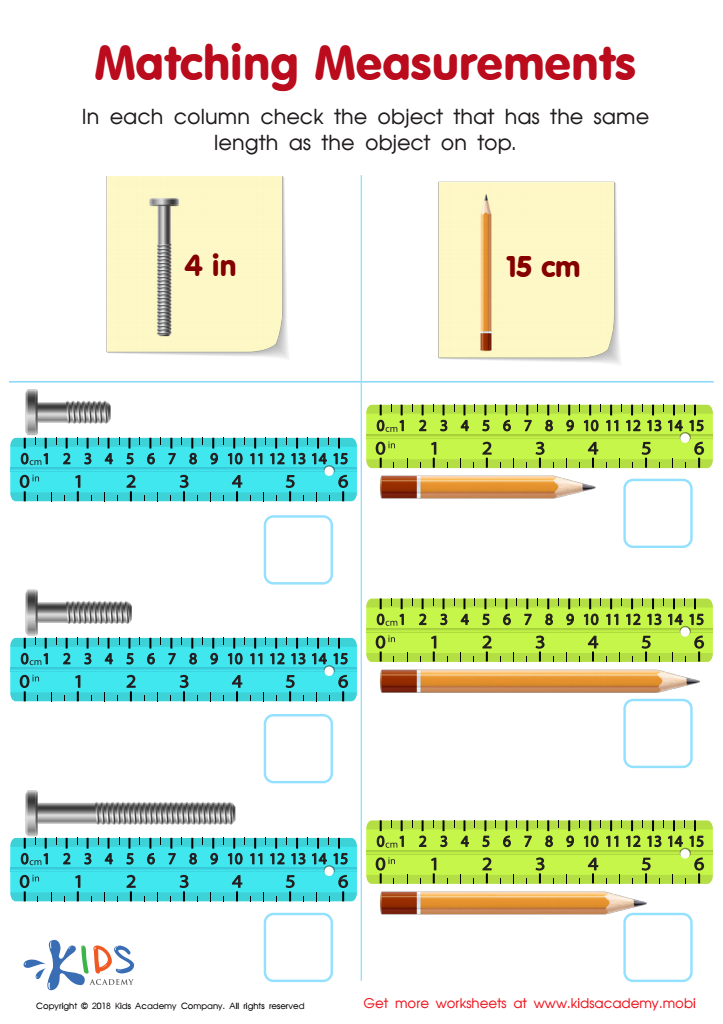
Matching Measurements Worksheet
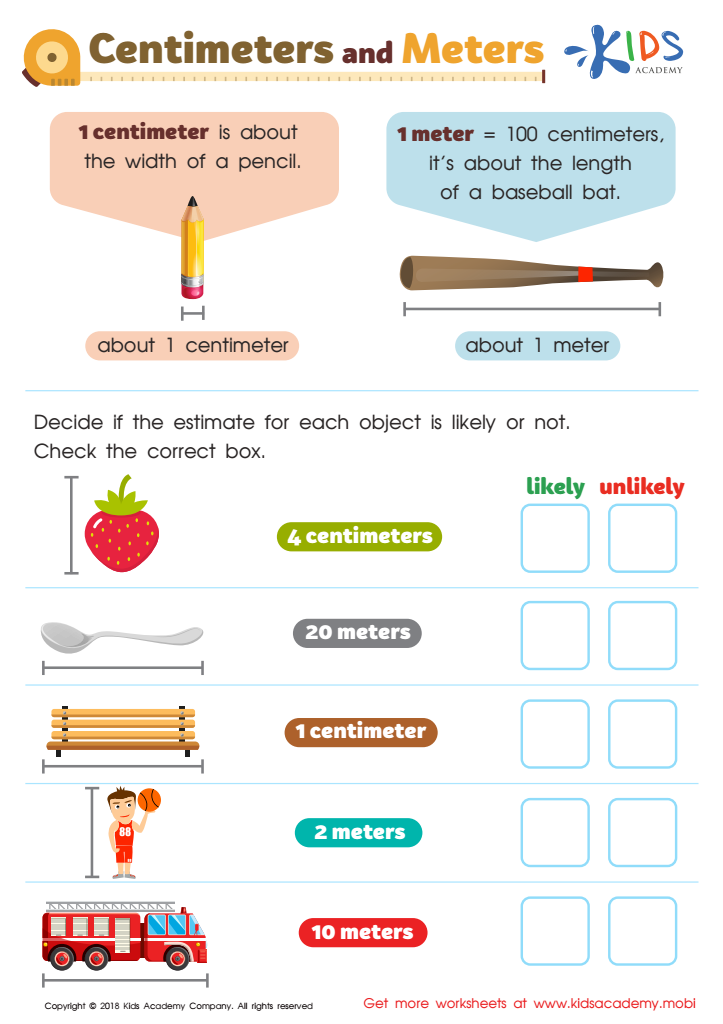
Centimeters and Meters Worksheet
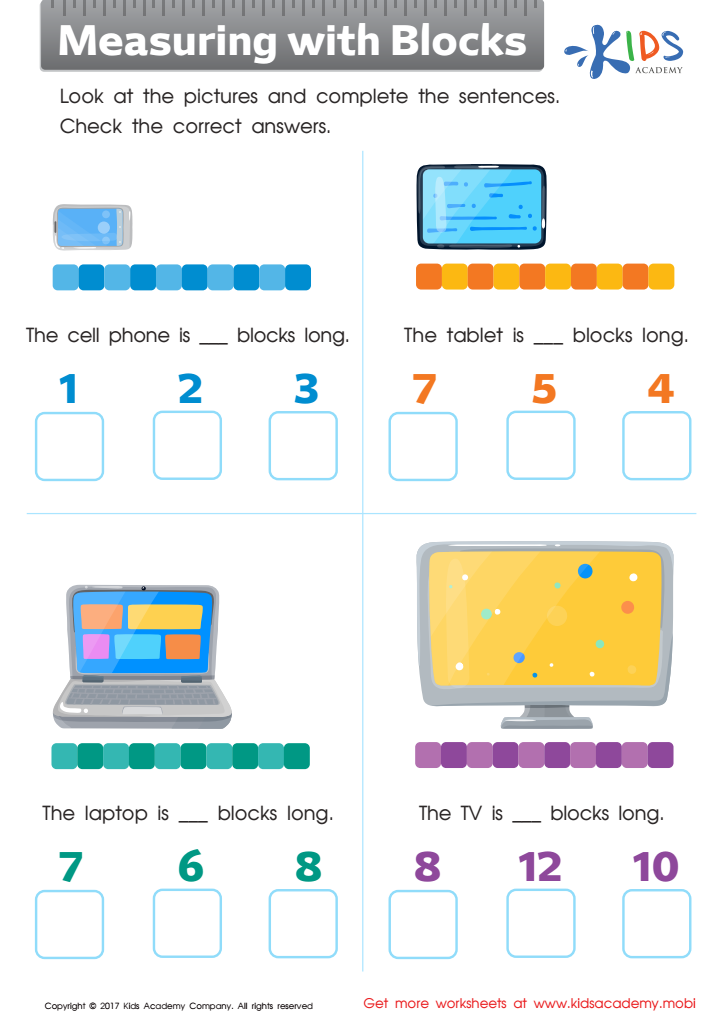
Measuring with Blocks Worksheet
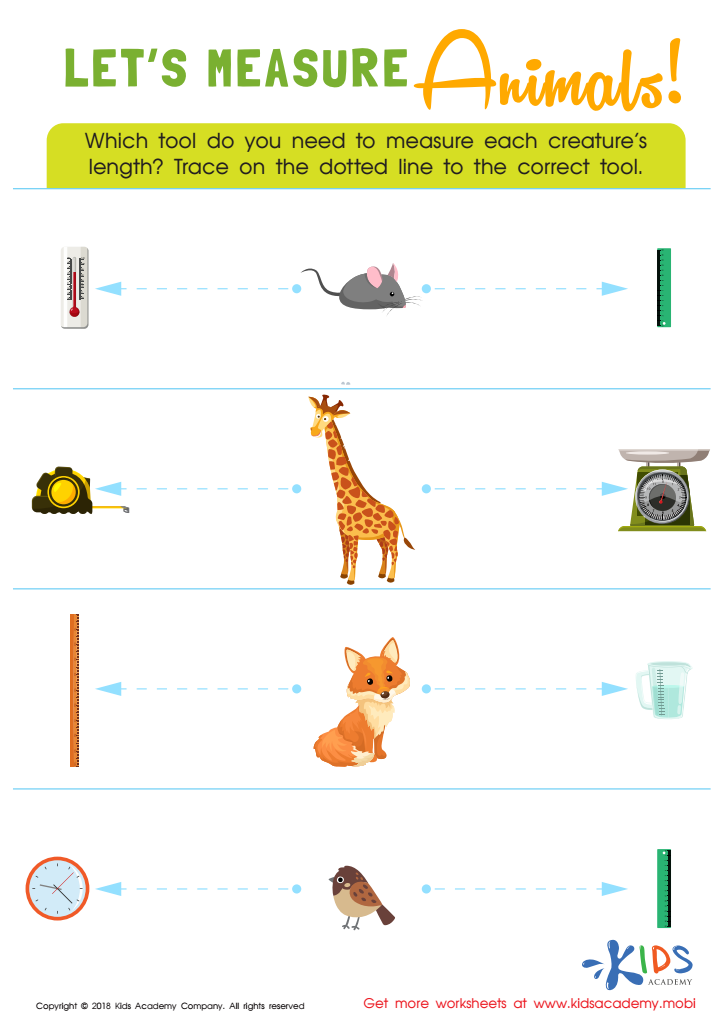
Let's Measure Animals! Worksheet
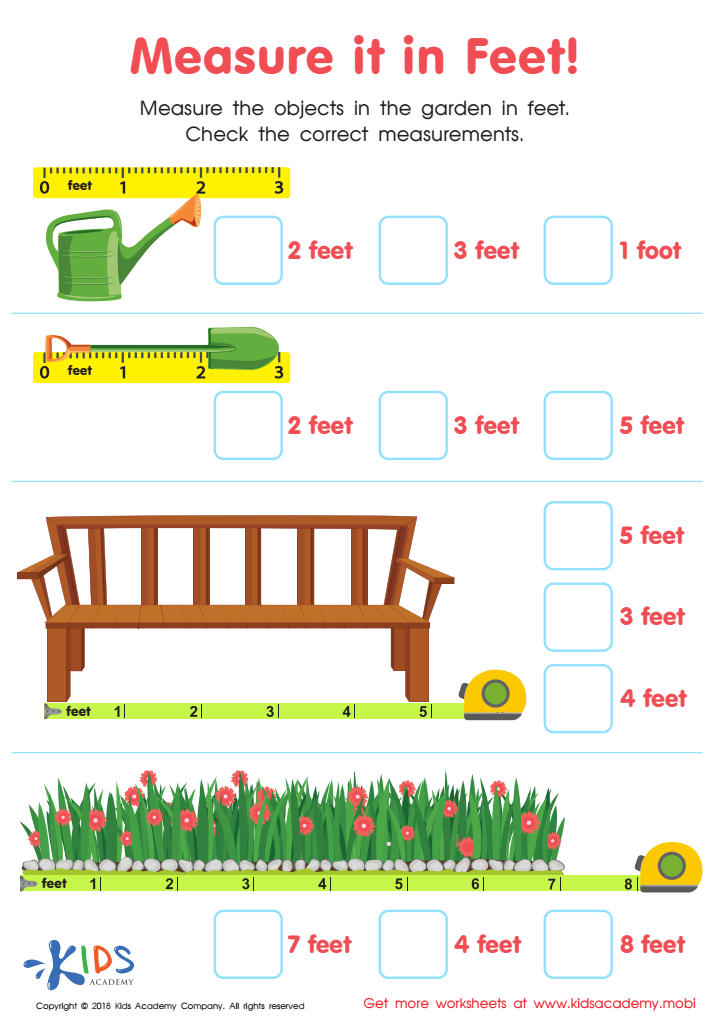
Measure it in Feet Worksheet








Understanding measurements is fundamental for children aged 3-8 as it lays the groundwork for various essential life skills. Parents and teachers should prioritize this early education for several reasons:
First, grasping basic measurement concepts—such as length, height, weight, and volume—helps young children develop spatial awareness. This is crucial for everyday tasks like understanding distances, judging the amount of food to eat, or even organizing their personal space.
Second, measurement is a key component of many subjects, particularly math and science. By learning about measurements, children also practice numerical and analytical skills, setting a robust foundation for more complex academic challenges ahead. Activities such as measuring ingredients for cooking build practical arithmetic skills, fostering an intuitive understanding of numbers.
Third, early measurement skills enhance cognitive development. Engaging in activities like comparing the heights of different objects or filling cups with water develops critical thinking and problem-solving abilities. These activities encourage observational skills and reasoning, crucial for cognitive growth.
Lastly, learning about measurements can be a fun and interactive experience, nurturing a love for learning. Parents and teachers can involve kids in playful, hands-on activities, making education enjoyable and meaningful.
Incorporating easy measurement concepts into everyday situations encourages a holistic development in young children, fostering both their intellectual growth and practical life skills.








