Understanding patterns Easy Multiplication Worksheets for Ages 3-8
4 filtered results
-
From - To
Welcome to our "Understanding Patterns" Easy Multiplication Worksheets! Designed for children ages 3-8, these engaging worksheets help young learners comprehend the foundational concept of multiplication through patterns. Our resources are perfect for supporting early math skills and boosting confidence in math basics. By recognizing patterns, kids will discover how multiplication works and develop critical thinking abilities. With colorful illustrations and fun exercises, these worksheets keep learning enjoyable and interactive. Whether in the classroom or at home, parents and teachers can use our materials to make math a delightful experience. Explore our collection and watch your child's math skills flourish!
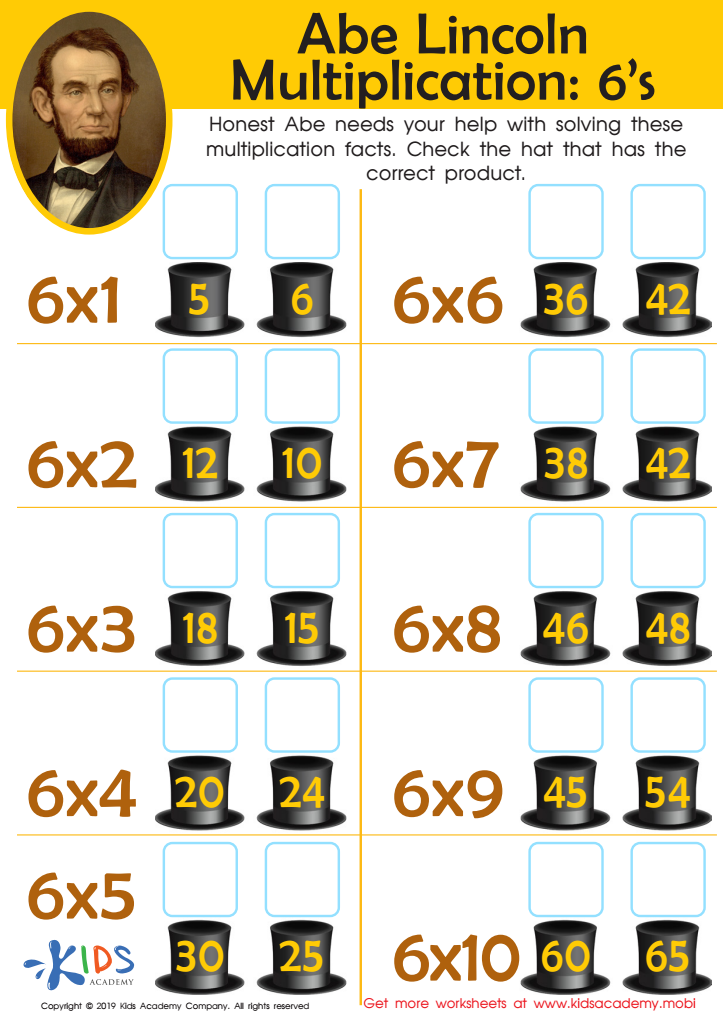
Abe Lincoln Multiplication: 6’s Worksheet
 Assign to My Students
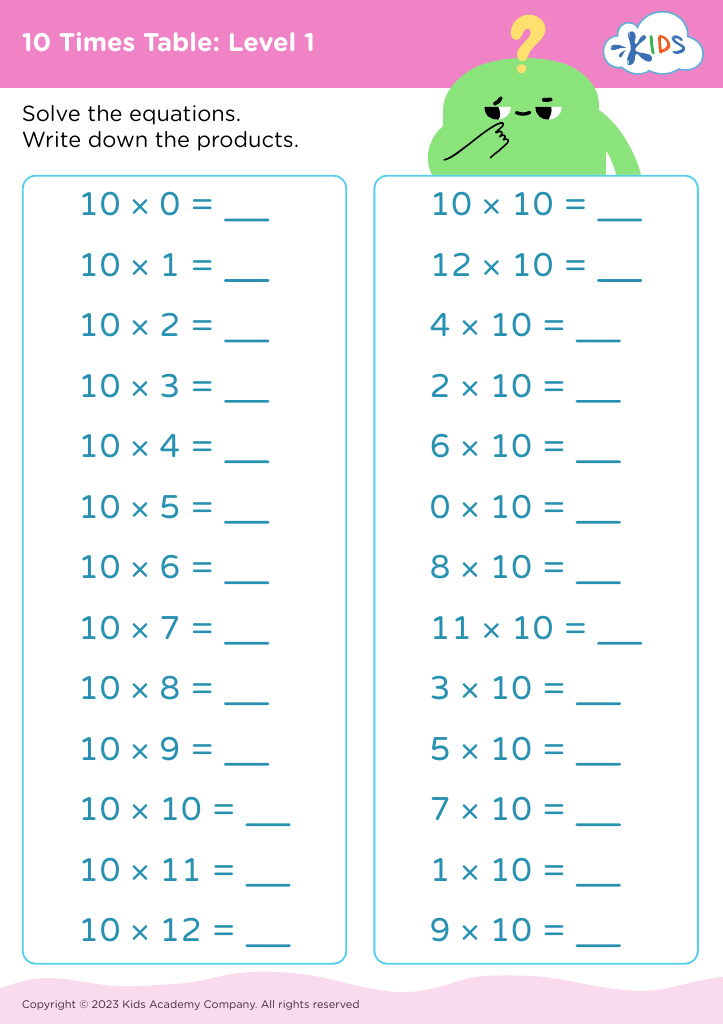
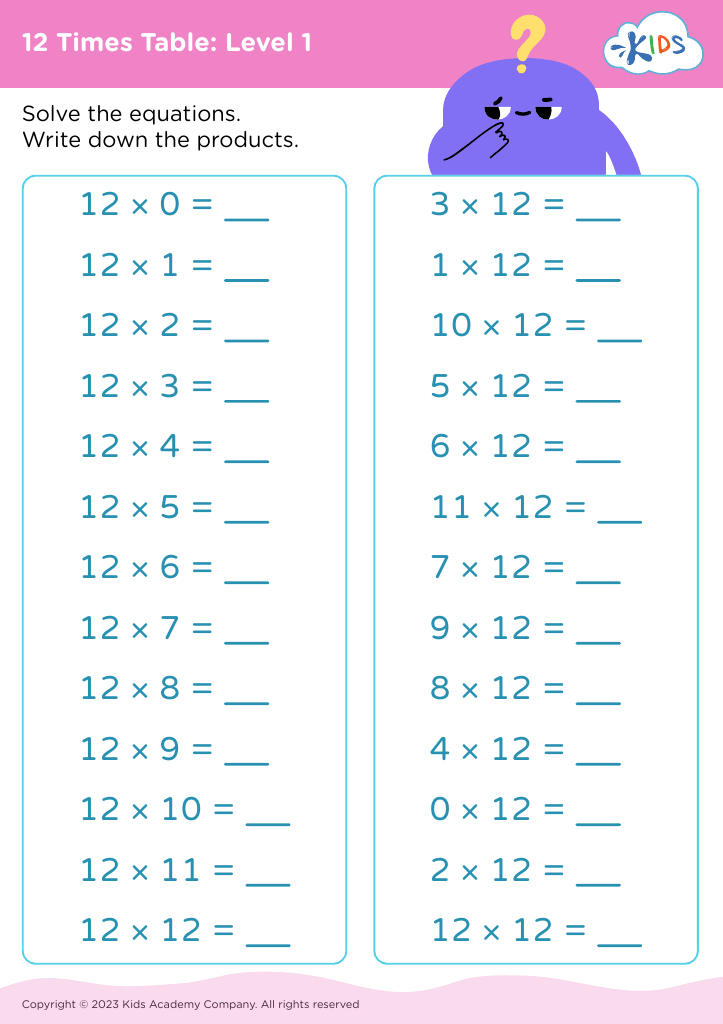
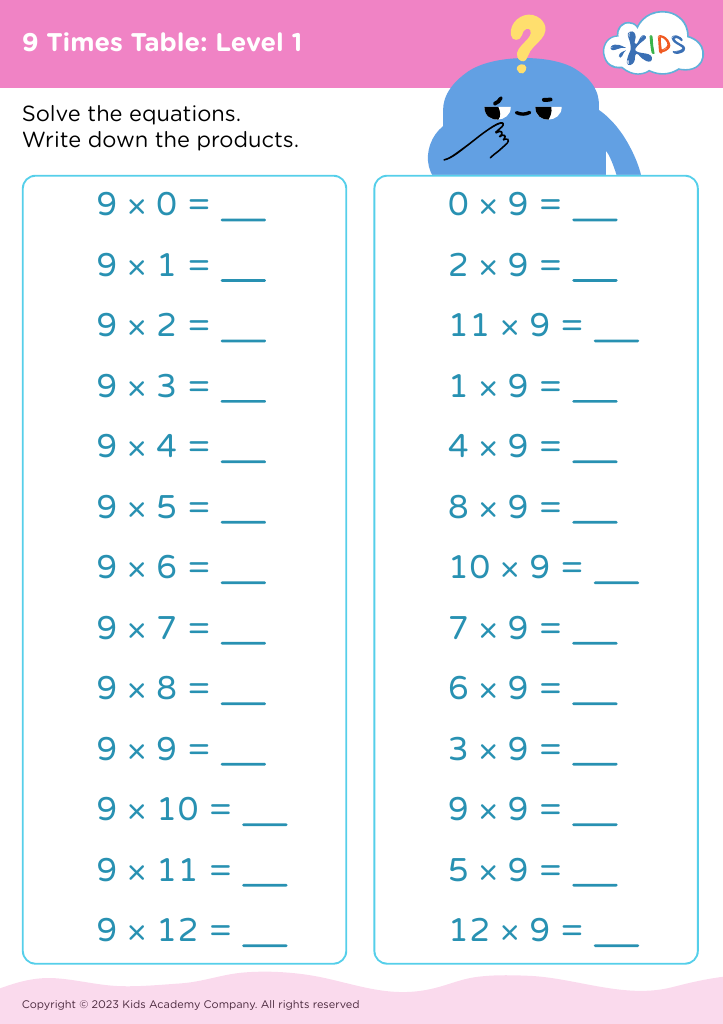








Understanding patterns and easy multiplication is crucial for children ages 3-8, laying a foundation for essential math skills. First, recognizing patterns helps young learners decode the world around them, enhancing their critical thinking and problem-solving abilities. It aids in developing logical reasoning as they begin to see relationships and structures in numbers and shapes.
Easy multiplication introduces children to fundamental concepts of repeated addition, helping them grasp how numbers interact in a manageable way. This insight not only strengthens their understanding of multiplication but also boosts their confidence in handling mathematical tasks. As children learn to recognize patterns in sequences—such as groups of objects or repeated numbers—they acquire skills that are integral to future mathematical concepts, including algebra.
Moreover, early exposure to these ideas promotes a positive attitude towards math, fostering a love for learning. Engaging children in activities involving patterns and multiplication can make learning enjoyable and relatable in day-to-day situations, enhancing their social skills as they collaborate with peers.
Ultimately, when parents and teachers prioritize understanding patterns and introduce easy multiplication, they cultivate a robust mathematical foundation that equips children for academic success and everyday problem-solving. This investment in early education can influence their attitude towards math for a lifetime.








