Number comparison Easy Numbers 0–10 Worksheets for Ages 3-8
3 filtered results
-
From - To
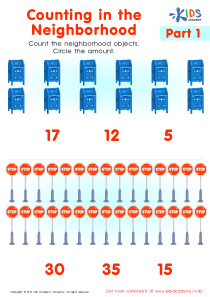
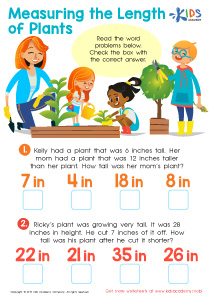
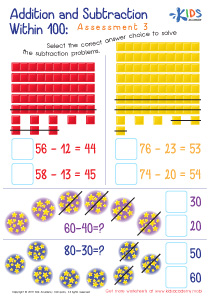
Explore our engaging "Number Comparison Easy Numbers 0–10 Worksheets" designed specifically for children ages 3-8. These worksheets offer a fun and interactive way for young learners to master number comparison skills. With colorful illustrations and simple exercises, children will practice comparing numbers in various formats, enhancing their understanding of larger vs. smaller, and developing critical thinking. Ideal for parents and educators, these printable resources can be seamlessly integrated into homeschool lessons or classroom activities. Foster your child's math confidence and build a strong foundational knowledge with our easy-to-use worksheets that make learning exciting! Perfect for early-grade math enthusiasts!
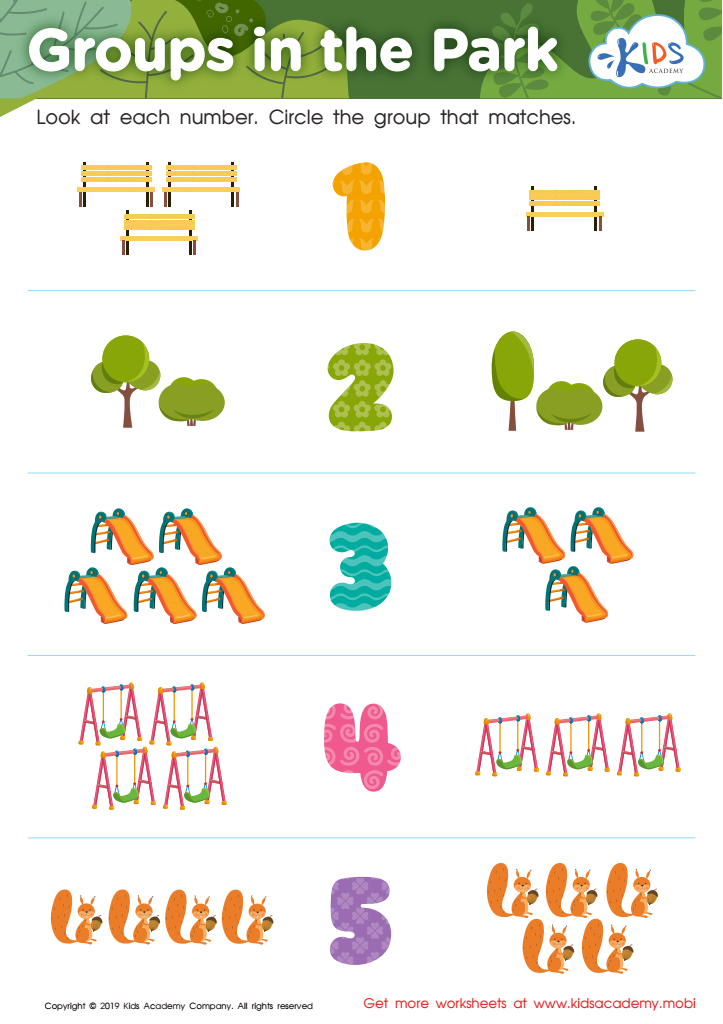
Groups in the Park Worksheet
 Assign to My Students
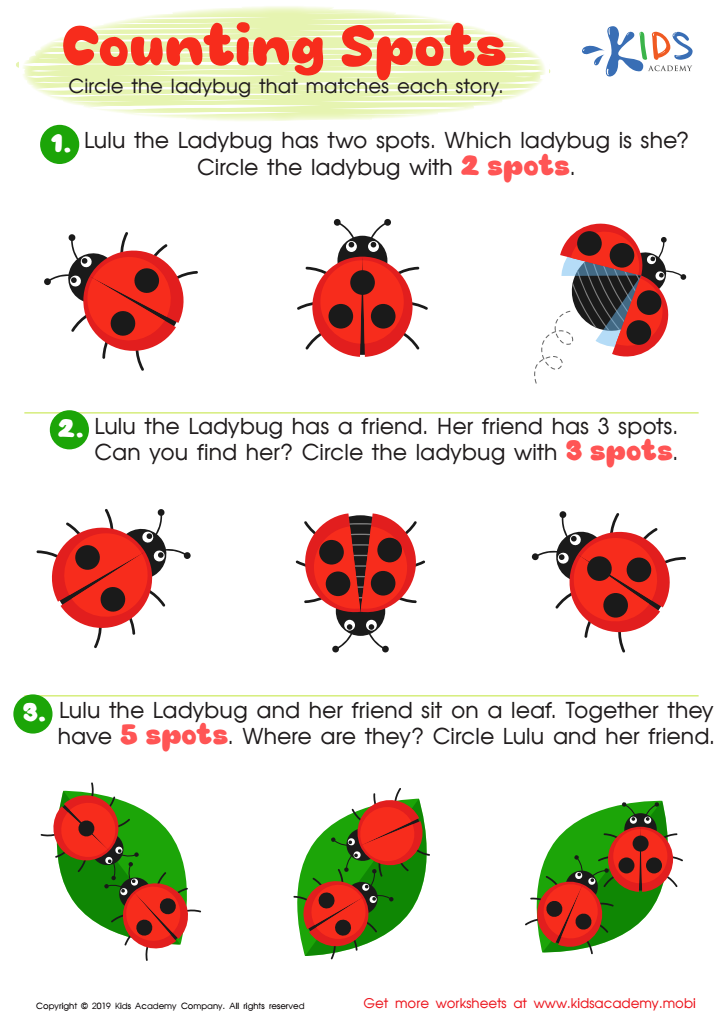
Counting Spots Worksheet
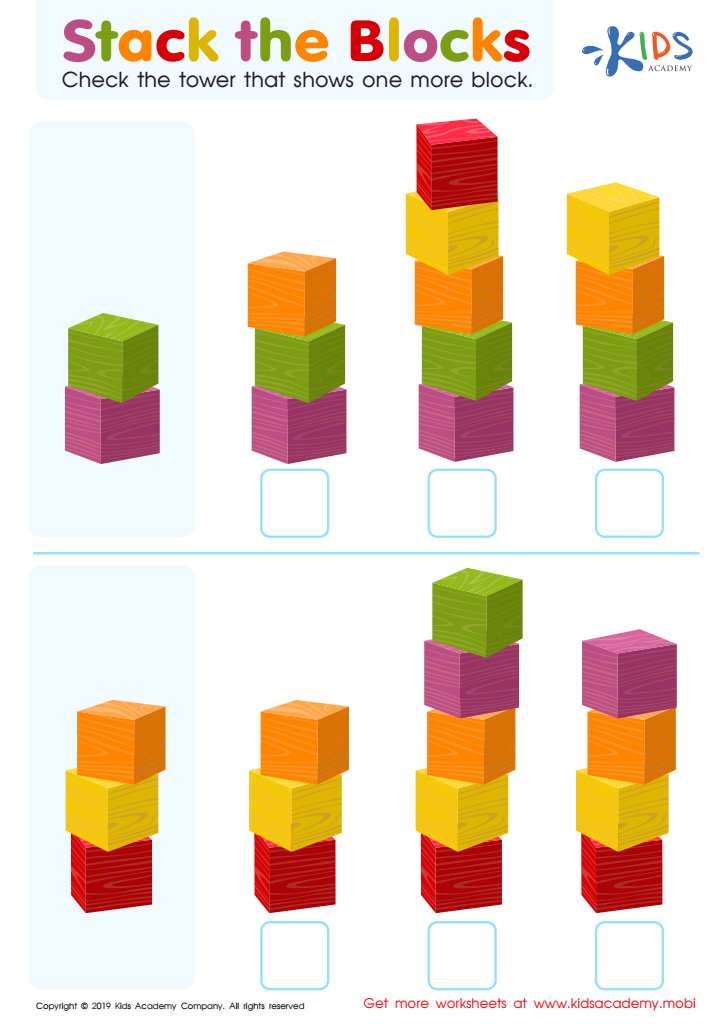
Stack the Blocks Worksheet








Parents and teachers should prioritize teaching number comparison for easy numbers between 0-10 for children aged 3-8 because it lays a foundational understanding of mathematics that is crucial for their future learning. Early number comparison fosters essential skills such as counting, recognition of numerical value, and the ability to discern greater or lesser quantities. This foundational knowledge develops critical thinking and problem-solving abilities in young learners, which are vital for all areas of learning.
Moreover, engaging children in number comparisons using tangible objects like toys, fruits, or counters makes learning interactive and fun. This hands-on approach captures their interest and encourages positive attitudes toward mathematics. Understanding number comparison also enhances their ability to navigate and resolve everyday situations, such as sharing, playing games, or comparing sizes, contributing to social skills and emotional development.
Additionally, early mathematical skills cultivate confidence in children, reducing anxiety around number-related tasks as they progress in their education. By focusing on these early number concepts, parents and teachers set the stage for a solid mathematical foundation, which supports more complex concepts as children grow, ultimately leading to academic success and lifelong critical thinking skills.