
Time reading skills Easy Time Worksheets for Ages 3-8
3 filtered results
Difficulty Level
Grade
Age
-
From - To
Subject
Activity
Standards
Welcome to our collection of "Time Reading Skills Easy Time Worksheets for Ages 3-8"! Perfect for young learners, these engaging worksheets help children master the basics of telling time through interactive and enjoyable activities. Designed to cater to different learning styles, these worksheets cover everything from recognizing clock hands to understanding hours and minutes. Each sheet is crafted to build confidence and improve time-reading proficiency, providing a solid foundation for future math success. Download now to provide your children with the tools they need to confidently navigate the world of time-telling!
Favorites
With answer key
Interactive
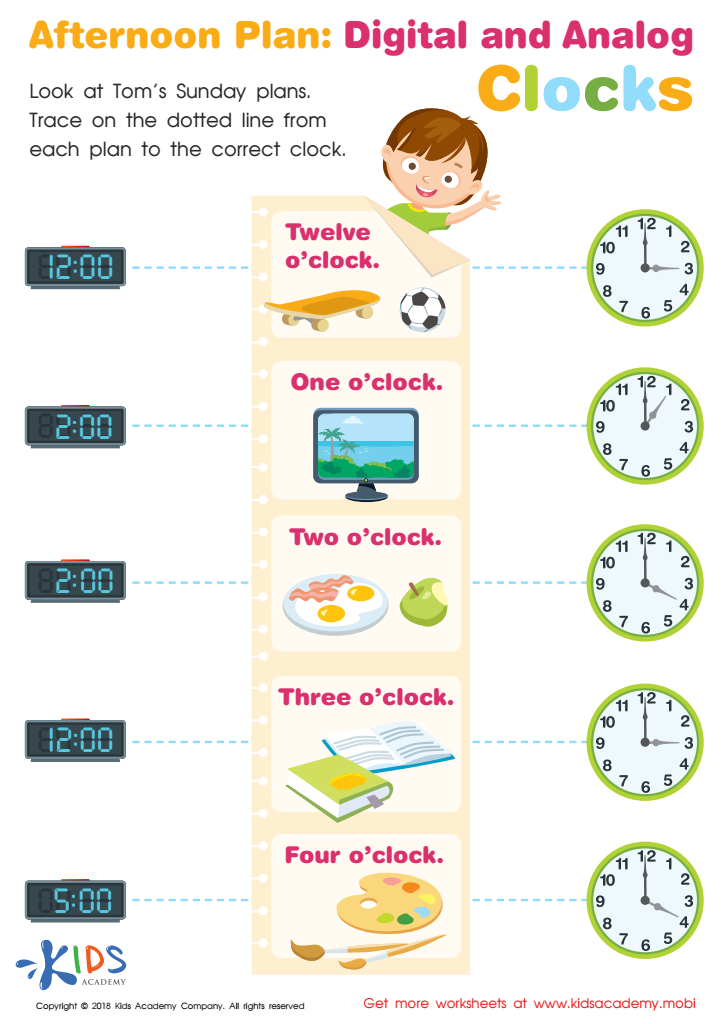
Afternoon Plan: Digital and Analog Clocks Worksheet
Tom's got Sunday plans and your kids can use this worksheet to help them learn how to tell the time. With tracing dotted lines from plans to the correct clock, they'll gain the skills to accurately convert digital time to analog. It'll be a great way to get them better at telling the time.
 Assign to My Students
Afternoon Plan: Digital and Analog Clocks Worksheet
Worksheet
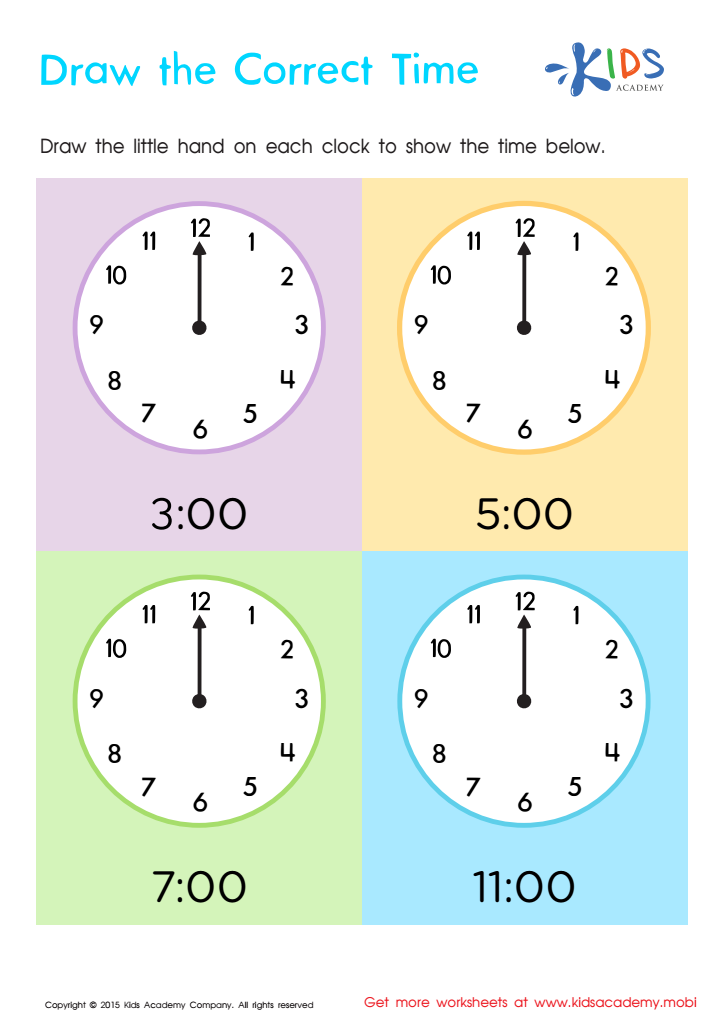
Telling The Time Worksheet: Part 1
Practice telling the time with Kids Academy. Our worksheets make it fun for kindergarteners to learn about clocks and reading the time. Find our free math worksheets on telling the time and draw the little hand on the clock faces to show the time. Let's learn together!
Telling The Time Worksheet: Part 1
Worksheet
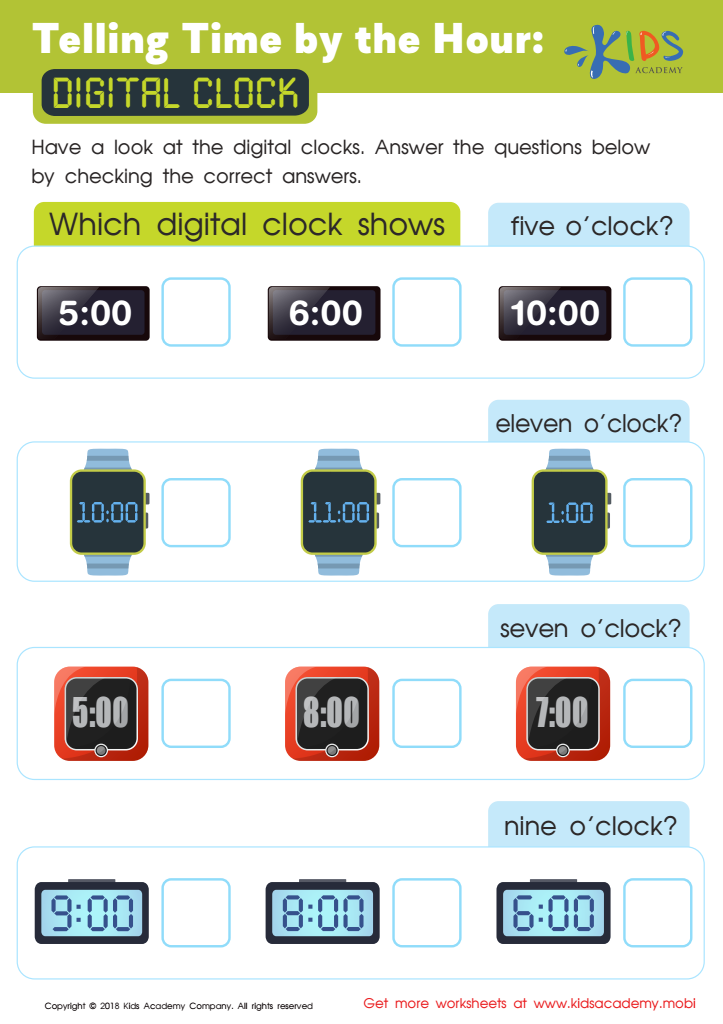
Telling Time by the Hour: Digital Clock Worksheet
Introduce your students to digital clocks. This worksheet will help them become familiar with them. Guide them through answering the questions - they're simple and stimulating. Encourage their young minds to explore the digital clocks in the exercise.
Telling Time by the Hour: Digital Clock Worksheet
Worksheet
Join Kids Academy for Free
Who is primarily going to use this learning content?






.jpg)
Time reading skills are fundamental for children aged 3-8, and parents and teachers should prioritize nurturing these abilities because they lay the groundwork for future academic and everyday achievements. At this developmental stage, children are naturally curious and absorb information like sponges. Teaching them to read time not only equips them with a necessary life skill but also bolsters their number recognition, sequencing abilities, and comprehension of daily routines.
Understanding time also encourages children's confidence and independence. They can manage transitions more smoothly, knowing when it's time for an activity to start or end. For example, knowing their bedtime or how long they have to play helps them understand expectations and promotes a sense of security.
Additionally, integrating time-reading exercises stimulates cognitive development. Activities like identifying numbers on a clock nurtures mathematical thinking, while discussing the concept of time fosters language skills and enriches their vocabulary.
Interactive activities such as games, storytelling with timed elements, and consistent practice with real and toy clocks make learning engaging and enjoyable. By investing time in teaching these skills, parents and teachers help children develop essential competencies for navigating their world, ultimately setting a solid foundation for lifelong learning and organisation.








