Alphabet Recognition Easy Letter Recognition Worksheets for Ages 3-9
5 filtered results
-
From - To
Empower young learners with our Alphabet Recognition Easy Letter Recognition Worksheets designed for ages 3-9 at Kids Academy. These engaging and educational activities help children seamlessly identify and differentiate letters. Our worksheets are crafted to develop early reading skills, supporting cognitive growth and phonemic awareness. Perfect for classroom use or home practice, these worksheets cater to different learning styles, ensuring every child can thrive. Boost your child's letter recognition abilities with fun and effective exercises that make learning the alphabet a joyous journey. Start exploring our vast collection and give your child the foundation for lifelong literacy success.
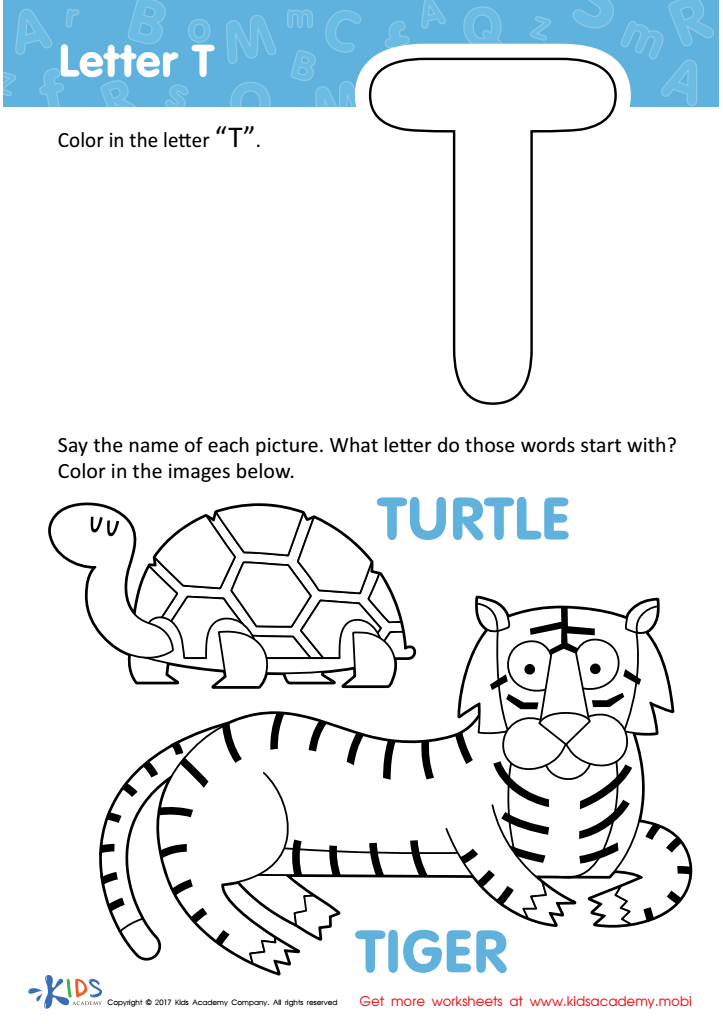
Letter T Coloring Sheet
 Assign to My Students
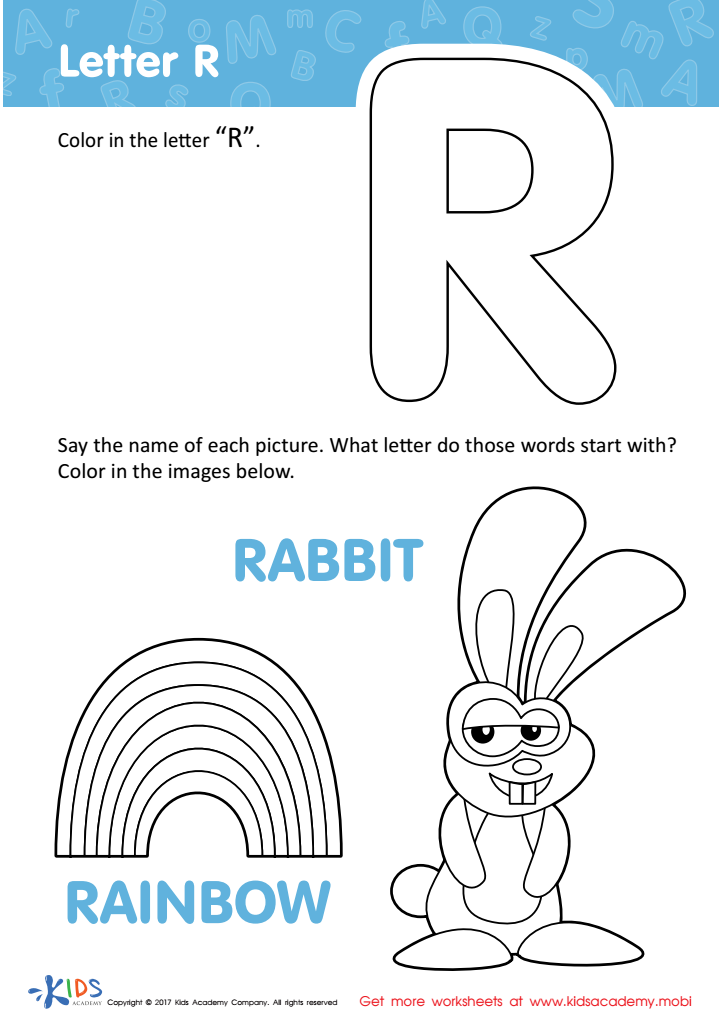
Letter R Coloring Sheet
Assign to My Students
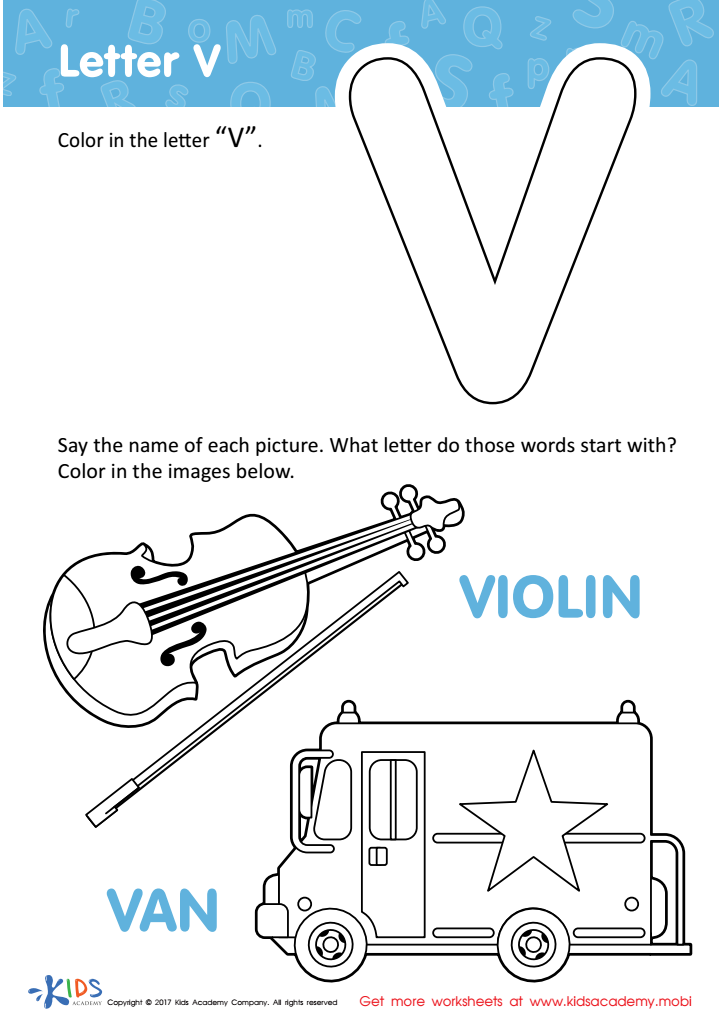
Letter V Coloring Sheet
Assign to My Students
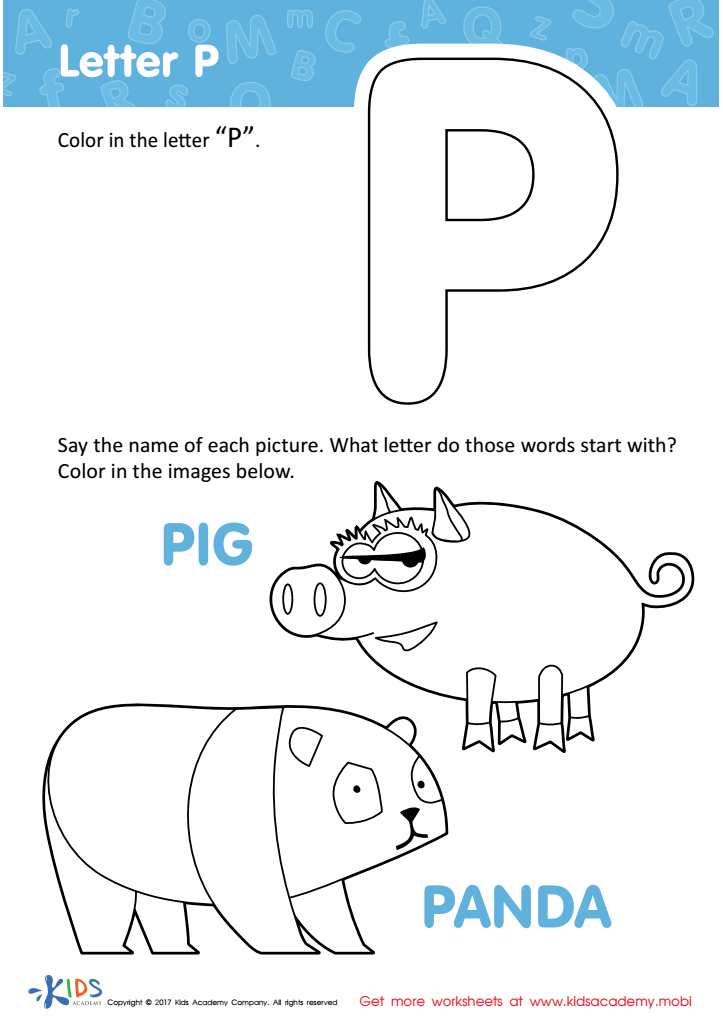
Letter P Coloring Sheet
Assign to My Students
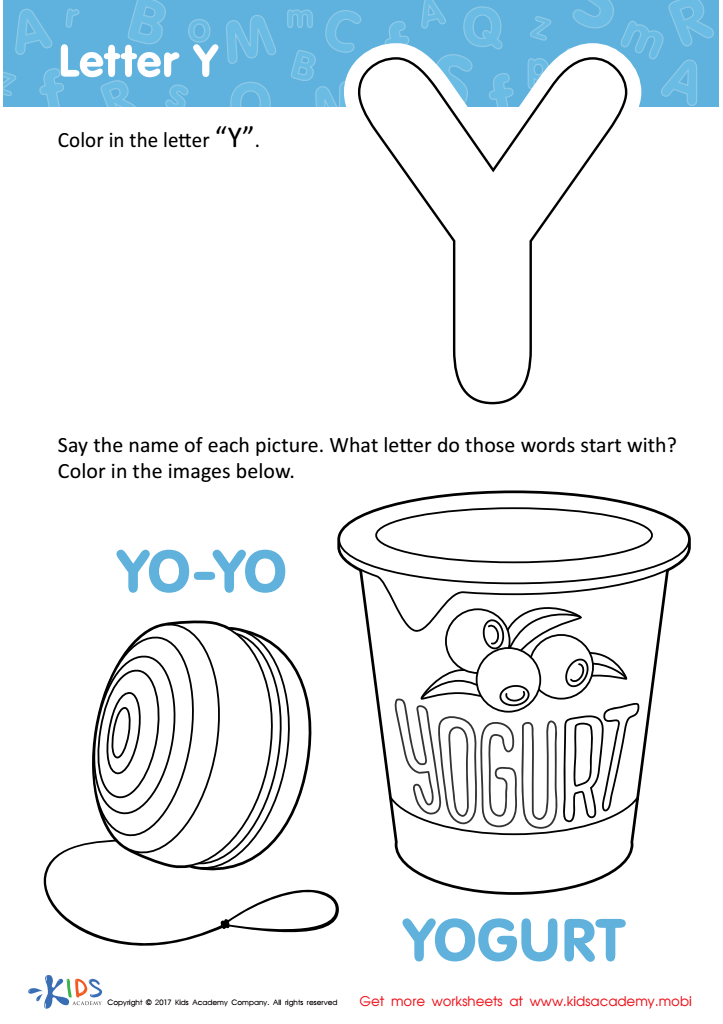
Letter Y Coloring Sheet
Assign to My Students








Alphabet recognition is a critical foundational skill for children aged 3-9 as it lays the groundwork for future literacy and academic success. Parents and teachers play a pivotal role in fostering this skill early on. Mastering letter recognition is the first step towards reading fluency. When children can easily distinguish each letter, they are more capable of linking these letters to their corresponding sounds (phonics), which is essential for word formation and reading.
Early alphabet recognition contributes to better vocabulary development; as children encounter new words, they can confidently identify the letters and sounds, enhancing their ability to understand and remember the words. This, in turn, boosts their overall language skills, aiding in effective communication.
Additionally, children who develop strong alphabet recognition are better equipped to tackle more advanced literacy skills, such as reading comprehension and writing. They can read more fluidly, interpret texts accurately, and express their thoughts coherently in written form.
Furthermore, engaging in alphabet recognition activities stimulates cognitive development, fine motor skills (through writing), and visual discrimination. By providing a wealth of alphabet-related activities and games, parents and teachers can make learning fun while preparing children for academic challenges, thereby ensuring a smoother, more confident transition into more complex subjects.