Identifying objects Easy Worksheets for Ages 3-9
3 filtered results
-
From - To
Enhance your child's learning with our "Identifying Objects Easy Worksheets" designed specifically for ages 3-9. These engaging worksheets make it simple and fun for young learners to hone their object recognition skills. With colorful illustrations and age-appropriate activities, children will enjoy identifying everyday items, boosting their vocabulary and cognitive development in the process. Perfect for both home and classroom environments, these worksheets cater to various learning levels, enabling every child to thrive. Encourage exploration and curiosity while reinforcing important skills in an enjoyable way. Explore our collection today and watch your little ones thrive as they learn through play!
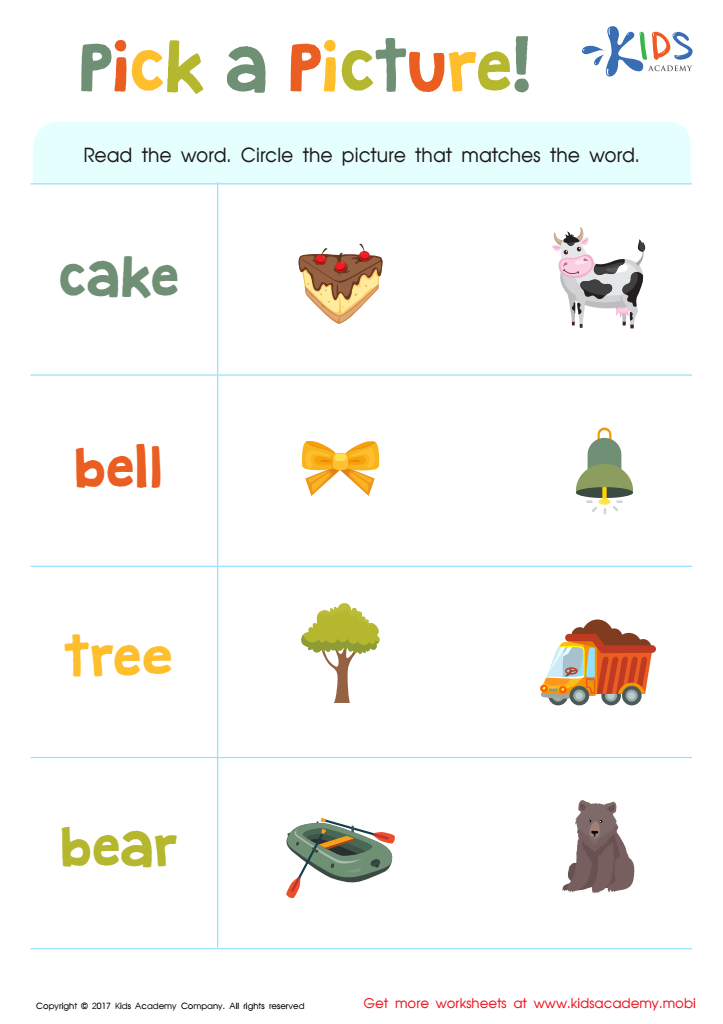
Pick a Picture Word Recognition Worksheet
 Assign to My Students
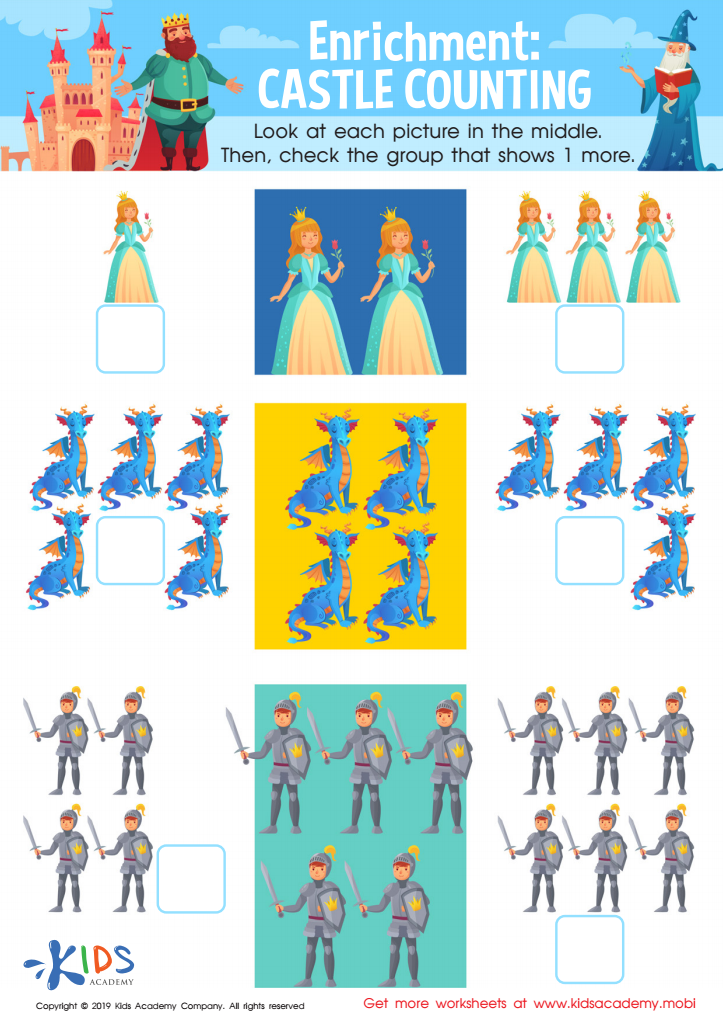
Enrichment: Castle Counting Worksheet
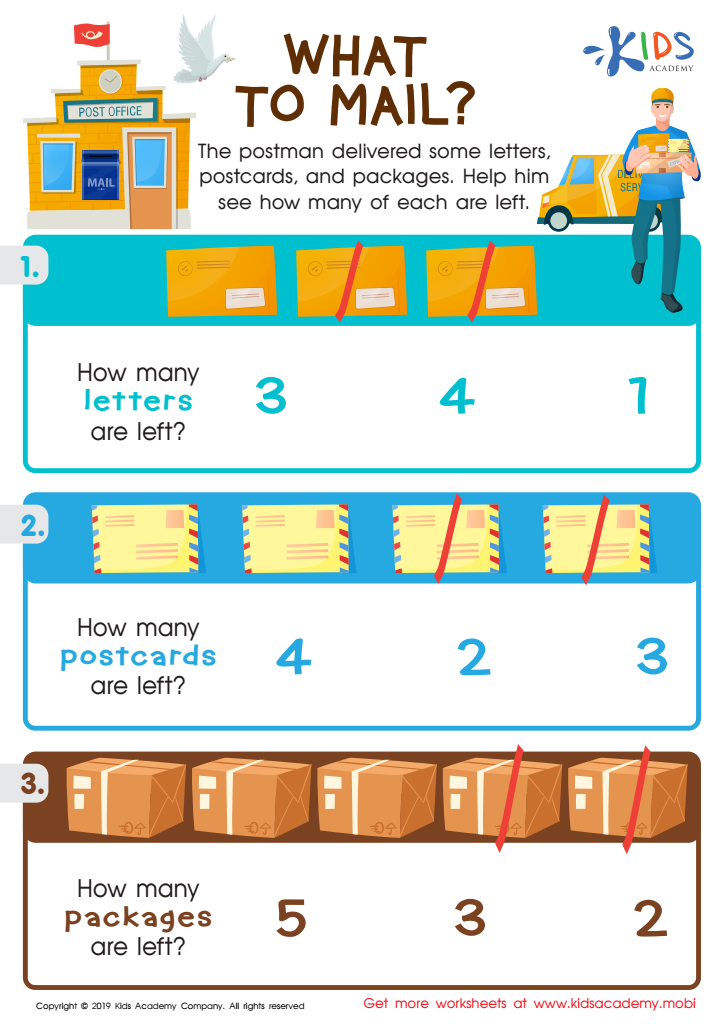
What to Mail? Worksheet







Identifying objects is a fundamental skill that children aged 3-9 years are developing as part of their early learning journey. Parents and teachers should care about this skill as it is crucial for cognitive development, language acquisition, and social interaction.
Firstly, recognizing and naming objects helps in expanding a child’s vocabulary. As children learn to identify items in their environment, they also learn the words associated with those objects, which promotes effective communication.
Secondly, identifying objects enhances cognitive abilities. It encourages critical thinking, as children begin to categorize and make connections between different items. This skill is foundational for problem-solving and analytical thinking in later academic endeavors.
Furthermore, involving parents and teachers in this process can foster a supportive learning environment. When adults actively engage with children in identifying objects—whether through play, reading, or everyday activities—they reinforce positive associations and encourage exploration.
Lastly, this skill aids in social interactions, granting children the confidence to participate in group settings, make observations, and share experiences with peers.
Ultimately, helping young learners identify objects provides the building blocks for future learning, supports emotional growth, and cultivates curiosity, making it an essential focus for both parents and educators.








