Improving vocabulary Easy Worksheets for Ages 3-9
3 filtered results
-
From - To
Boost your child's language skills with our "Improving Vocabulary Easy Worksheets for Ages 3-9"! Our engaging and fun worksheets are designed to enrich young learners' word knowledge, enhancing their reading, writing, and communication abilities. Perfect for at-home practice or classroom use, these activities provide age-appropriate challenges for children ages 3 to 9, encouraging them to explore new words and their meanings. With a variety of exercises, these worksheets support critical thinking and make learning exciting. Help your child build a strong vocabulary foundation today. Visit Kids Academy for more resources!
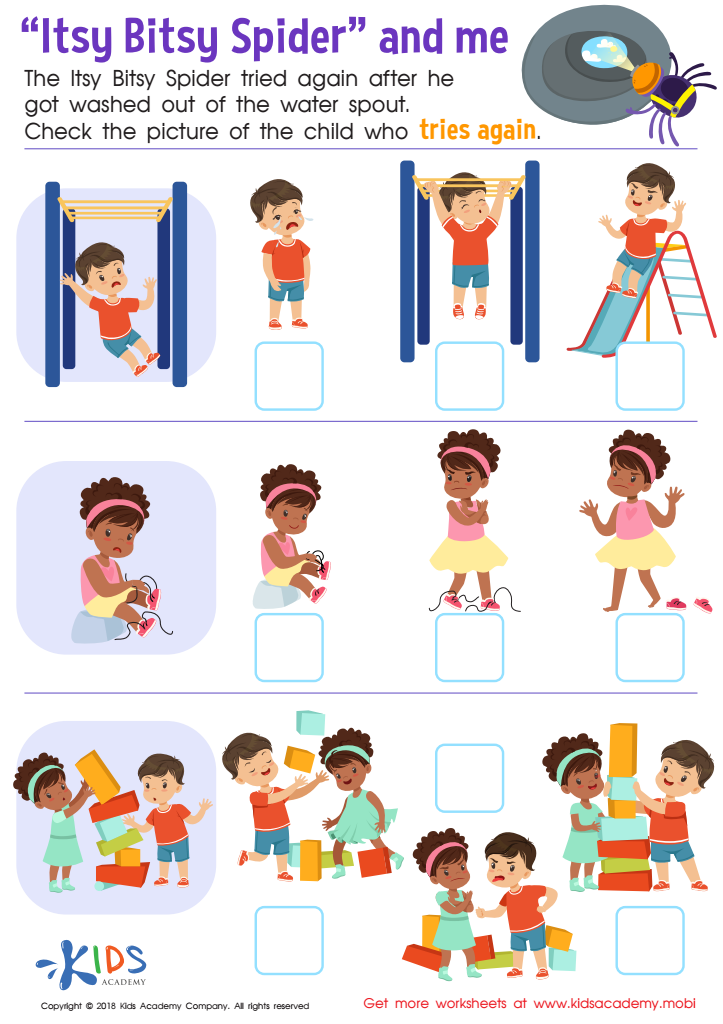
Itsy Bitsy Spider and Me Worksheet
 Assign to My Students
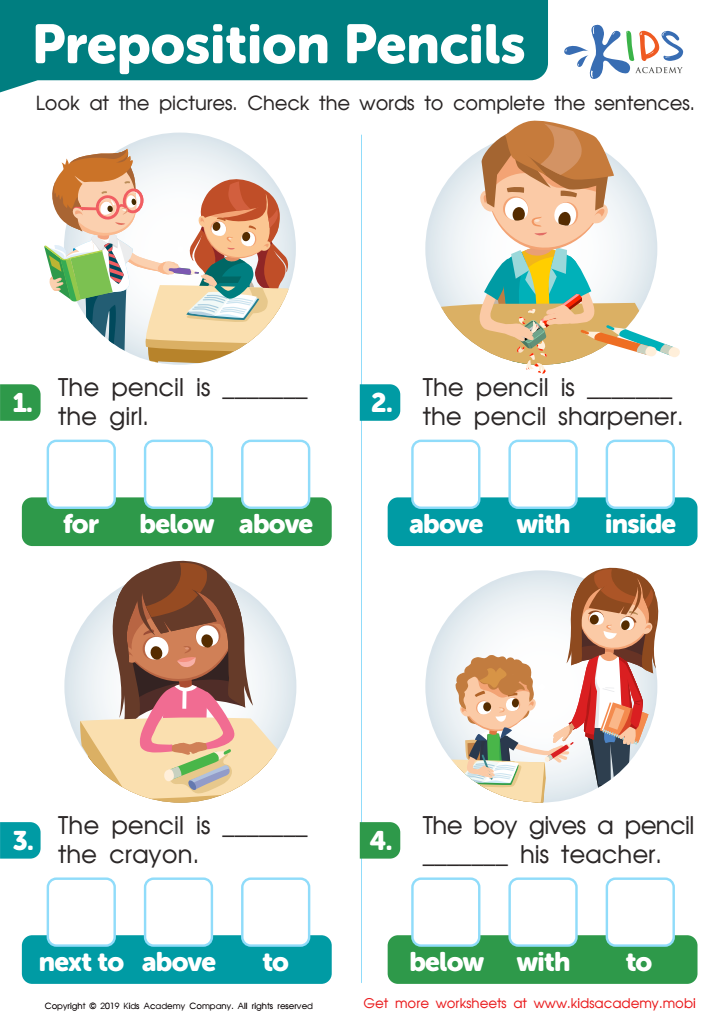
Preposition Pencils Worksheet
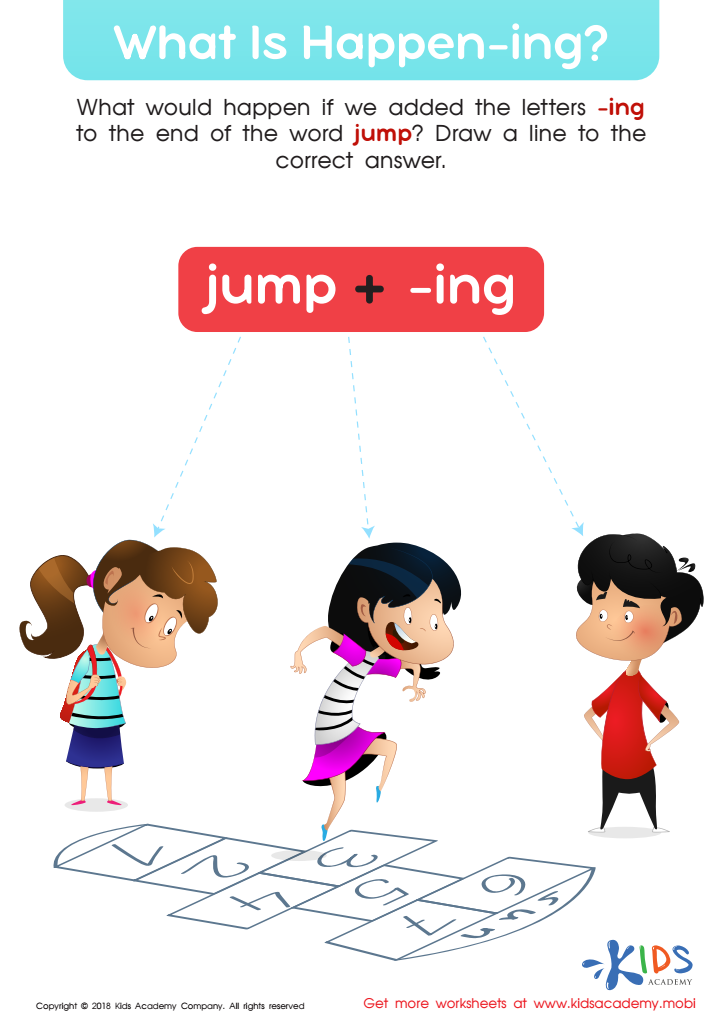
What Is Happen-Ing? Worksheet








Improving vocabulary for children aged 3-9 is crucial for their overall development and future success. At this young age, children's brains are incredibly receptive to learning new words. A robust vocabulary can significantly enhance their communication skills. Being able to express themselves clearly and effectively can reduce frustration and boost their confidence in interacting with others.
Additionally, a rich vocabulary is foundational for academic success. Children with a well-developed vocabulary can better understand and follow instructions in the classroom, leading to improved performance in reading, writing, and other subjects. Studies show that early vocabulary development is linked to later reading comprehension and overall literacy, which are essential skills for lifelong learning.
Moreover, a strong vocabulary fosters critical thinking. The more words children know, the better they can think and articulate their thoughts, reason, and make sense of the world around them. Engaging in conversations, storytelling, and reading activities are all effective ways to build vocabulary. Parents and teachers have a unique role in providing these enriching experiences.
Ultimately, investing time in enhancing a child's vocabulary sets the foundation for their cognitive development, emotional intelligence, and academic success, making it an essential aspect of early childhood education.








