
Sentence construction Easy Worksheets for Ages 3-9
6 filtered results
Difficulty Level
Grade
Age
-
From - To
Subject
Activity
Standards
Unlock your child's potential with our "Sentence Construction Easy Worksheets for Ages 3-9"! Specially designed for young learners, these engaging worksheets simplify sentence building into fun and interactive activities. Perfect for both classroom and at-home use, our worksheets enhance reading, writing, and comprehension skills through colorful illustrations and step-by-step exercises. Our expertly crafted resources make learning enjoyable, fostering creativity, and boosting confidence in early literacy. Visit Kid’s Academy and provide your young ones with the tools they need to excel in language arts. Ignite a love for learning and watch their sentence construction skills flourish!
Favorites
With answer key
Interactive
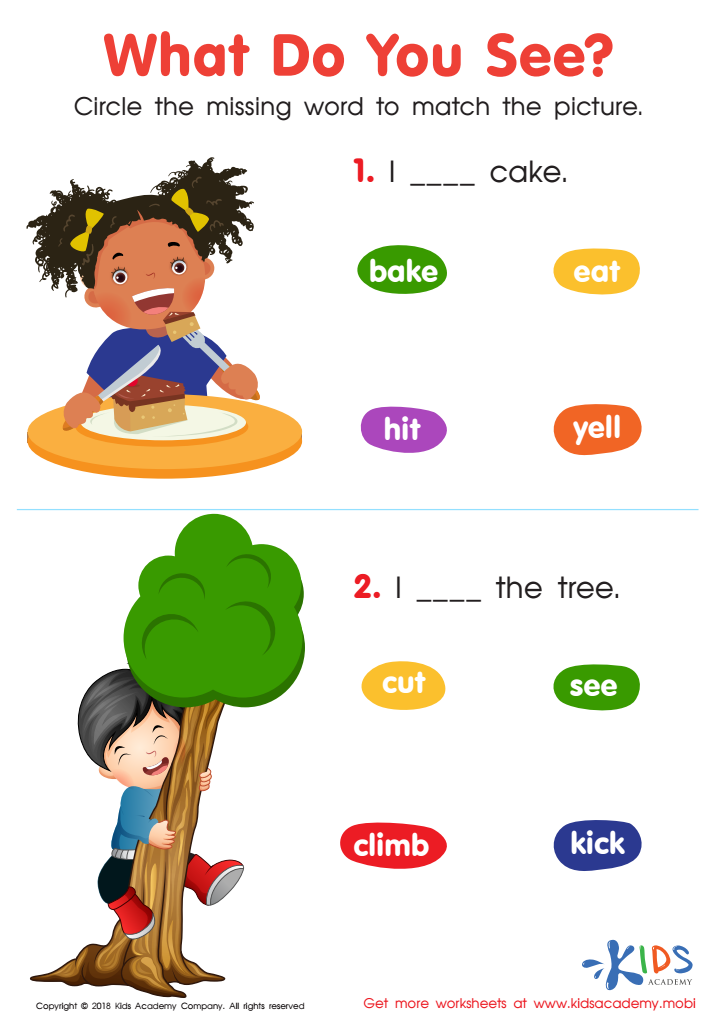
What Do You See? Reading Worksheet
New readers can use the attractive pictures and high-frequency words on this worksheet to practice expressive language skills and decode as they fill in the blanks. As they circle the correct words, they'll feel like reading superstars!
 Assign to My Students
What Do You See? Reading Worksheet
Worksheet
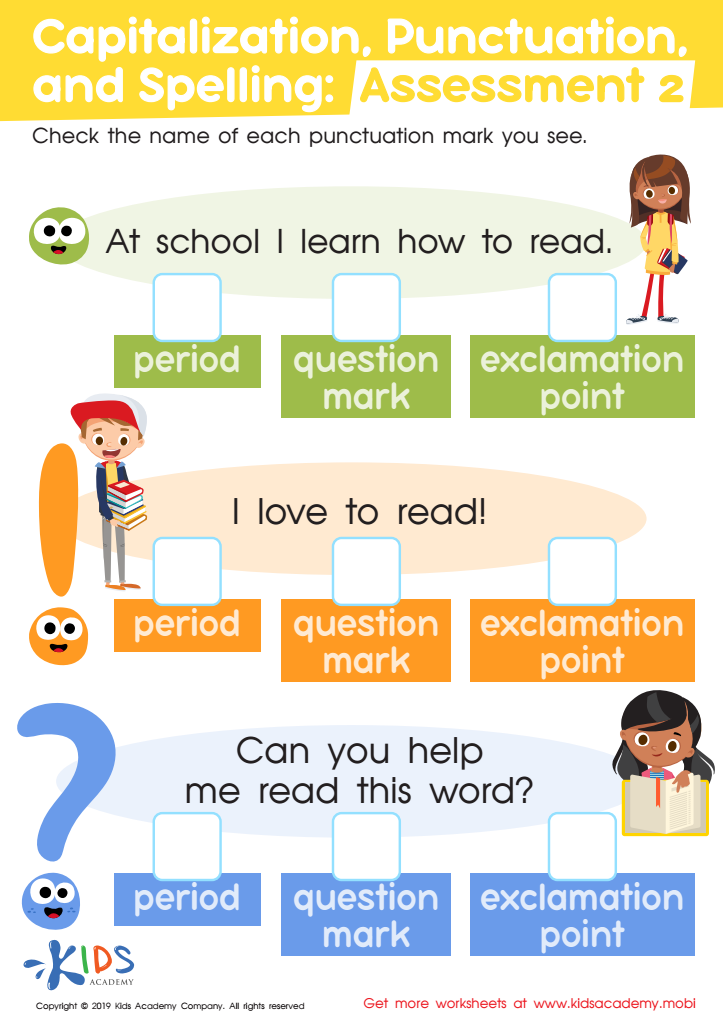
Capitalization. Punctuation. Spelling: Assessment 2 Worksheet
Teach your kids the basics of punctuation. Ask them to name the punctuation marks they know and review a worksheet together. Start with the full stop, question mark and exclamation mark. Show them examples and explain the differences between a comma and semi colon. Teaching proper use of punctuation marks is key to their development.
Capitalization. Punctuation. Spelling: Assessment 2 Worksheet
Worksheet
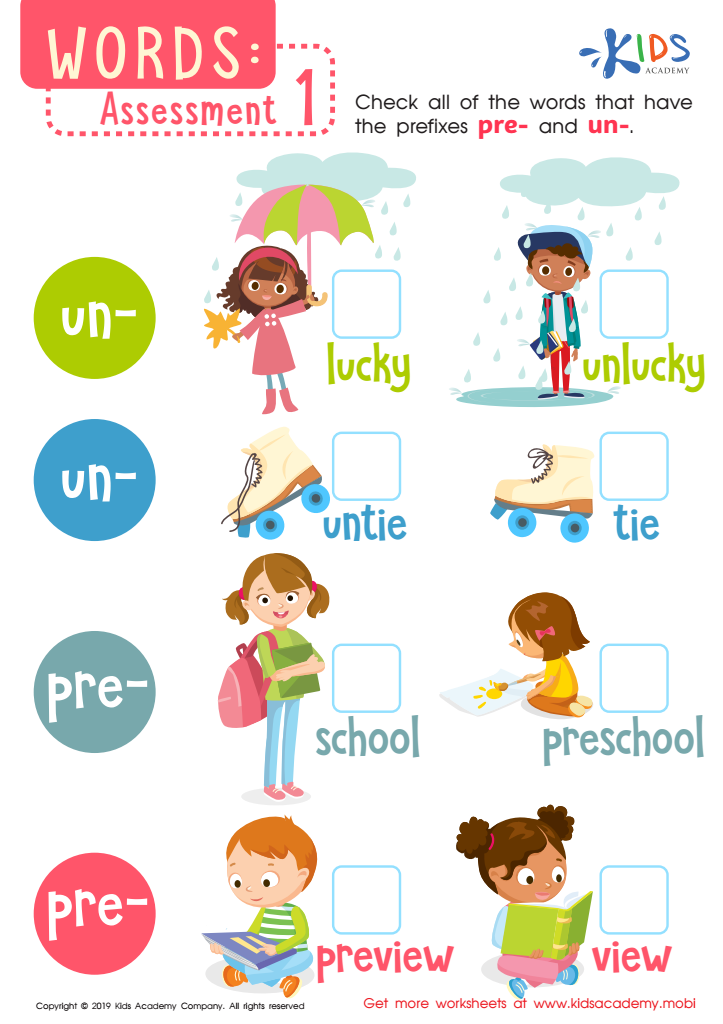
Words: Assessment 1 Worksheet
Help your child develop their knowledge of prefixes and suffixes with Kids Academy! This worksheet can test their understanding of pre- and un-. Have them view the illustrations and read the words to find the targeted prefix in each row. This is a great way to enhance their words and clarify meanings!
Words: Assessment 1 Worksheet
Worksheet
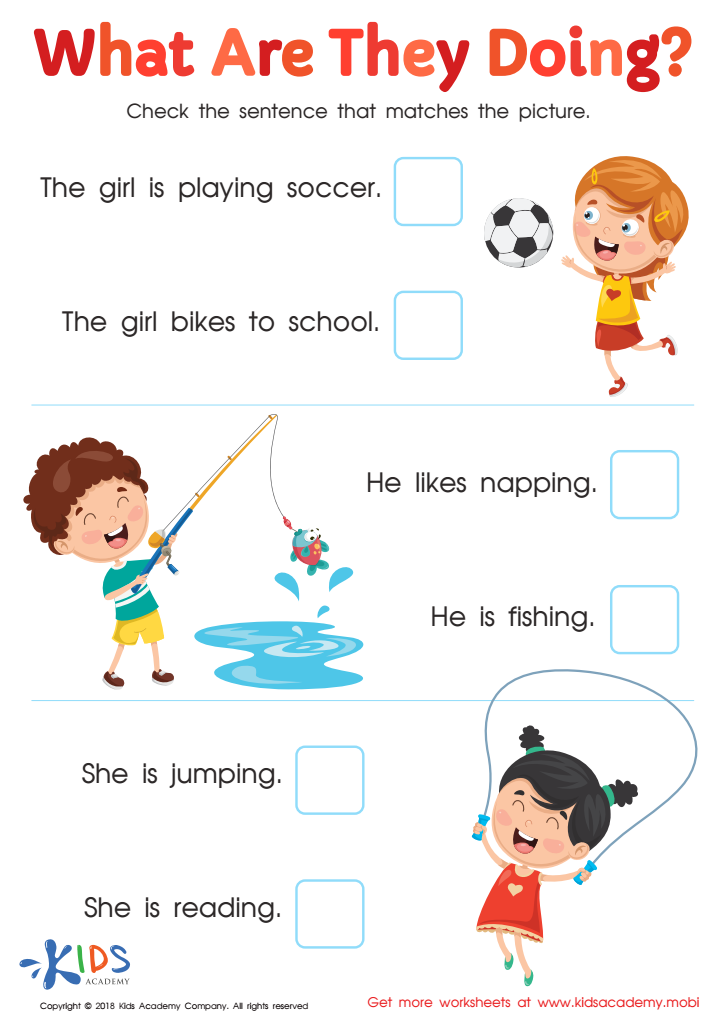
What Are They Doing? Worksheet
Look at the pdf with your child and ask which activities they like. Ask them to match the pictures with the sentences. Read the sentences aloud and help them check the right answers. Encourage them to talk about what they see in the pictures. It's a great way to help them learn.
What Are They Doing? Worksheet
Worksheet
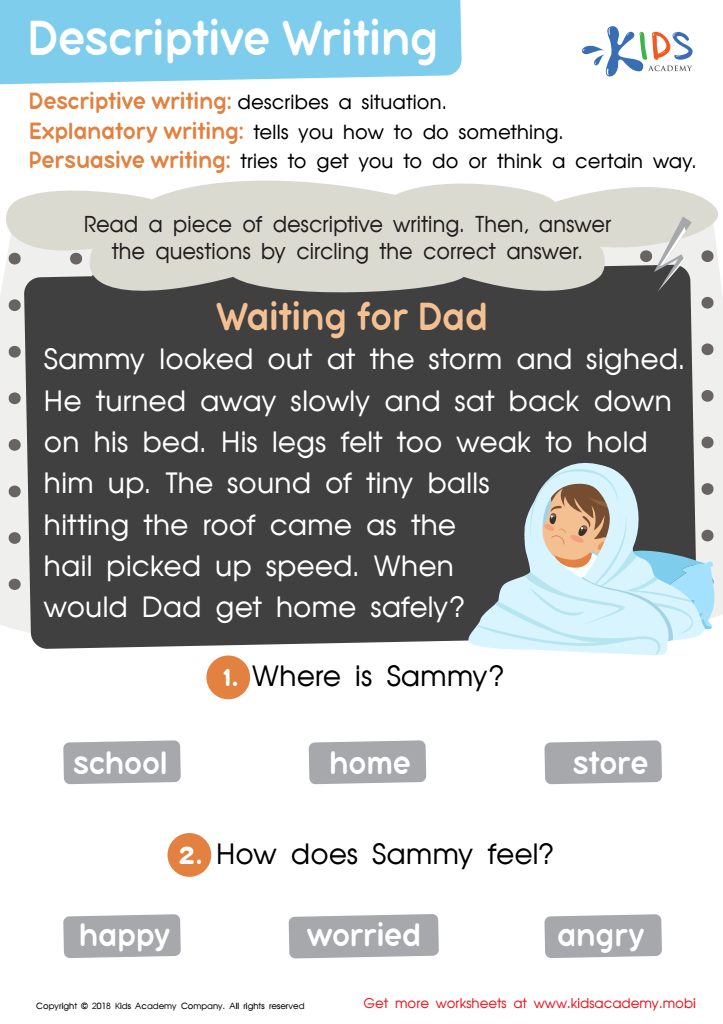
Descriptive Writing Worksheet: Part 2
In this worksheet, your kids will explore writing styles like descriptive, explanatory and persuasive. Read them the descriptive text, then have them answer the questions. Writing is an art – it's a way to express emotions, tell stories and share information.
Descriptive Writing Worksheet: Part 2
Worksheet
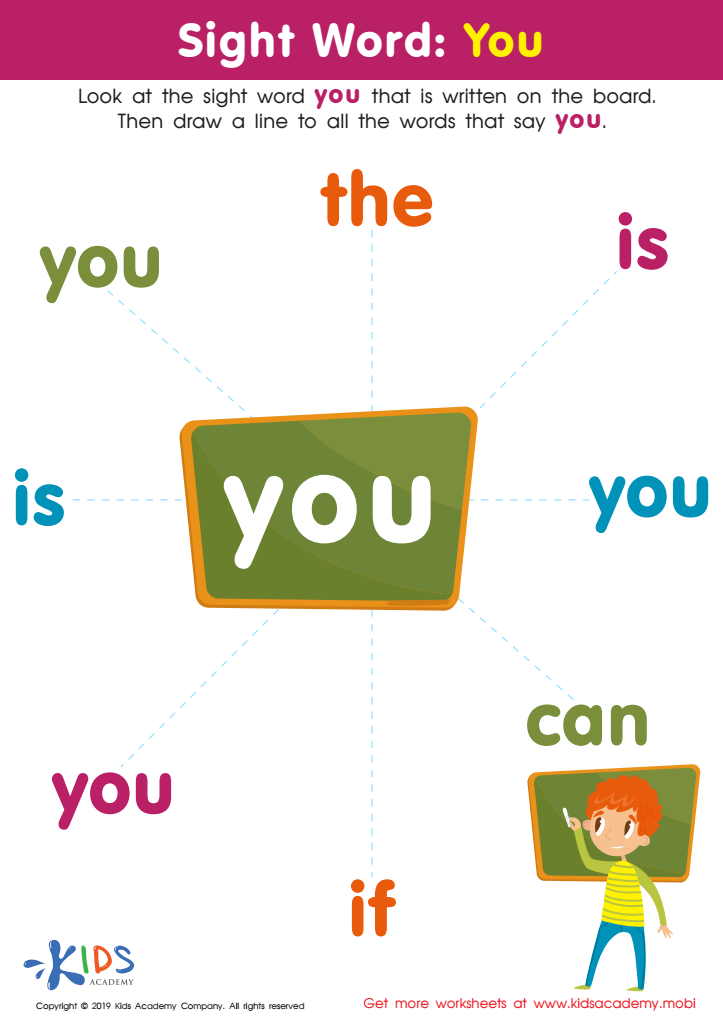
Sight Word You Worksheet
This free worksheet features the word 'you' and helps beginning readers practice visual-discriminatory skills. Using traceable lines and different colored words, it's an easy way to reinforce their identification of the word and build fluency.
Sight Word You Worksheet
Worksheet
Join Kids Academy for Free
Who is primarily going to use this learning content?




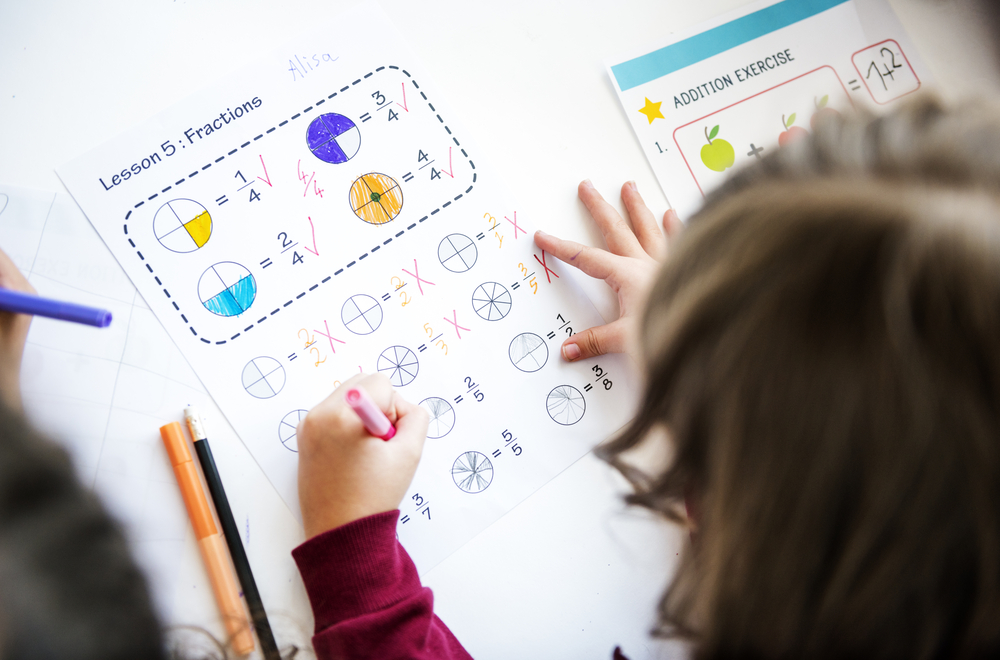

Parents and teachers should care about easy sentence construction for children ages 3-9 because this foundational skill plays a critical role in their overall language development and academic success. During these early years, children are in a crucial phase of cognitive and linguistic growth. By learning to construct simple sentences, they develop essential skills in grammar, vocabulary, and communication, which serve as the building blocks for more complex language abilities.
Moreover, sentence construction helps children to clearly express their thoughts, needs, and feelings, fostering better social interactions and emotional intelligence. When children can effectively communicate, they are more likely to succeed in both academic and personal settings, leading to enhanced self-esteem and confidence.
Easy sentence construction lessons also support reading comprehension and writing skills. As children learn to put words together to form sentences, they better understand the structure and meaning of texts they read. This strengthens their ability to interpret and analyze information, enabling them to perform well across various subjects.
Finally, early mastery of sentence construction sets the stage for lifelong learning. It prepares children for future educational challenges and helps them develop a love for reading and writing that can last a lifetime. Therefore, ensuring that young learners are proficient in constructing sentences holds significant long-term benefits for their educational journeys.








