
Understanding sequencing Easy Worksheets for Ages 3-9
3 filtered results
Difficulty Level
Grade
Age
-
From - To
Subject
Activity
Standards
Unlock the power of sequencing with our easy worksheets designed for ages 3 to 9! Sequencing is a fundamental skill that lays the groundwork for reading comprehension, math, and problem-solving abilities. Our engaging worksheets help young learners identify and organize events in a logical order, enhancing their cognitive skills. Each worksheet features colorful illustrations and fun activities to keep children motivated while they learn. Perfect for parents and teachers, these resources promote interactive learning at home or in the classroom. Help your child master sequencing concepts easily and effectively, setting the stage for future academic success! Explore our collection today!
Favorites
With answer key
Interactive
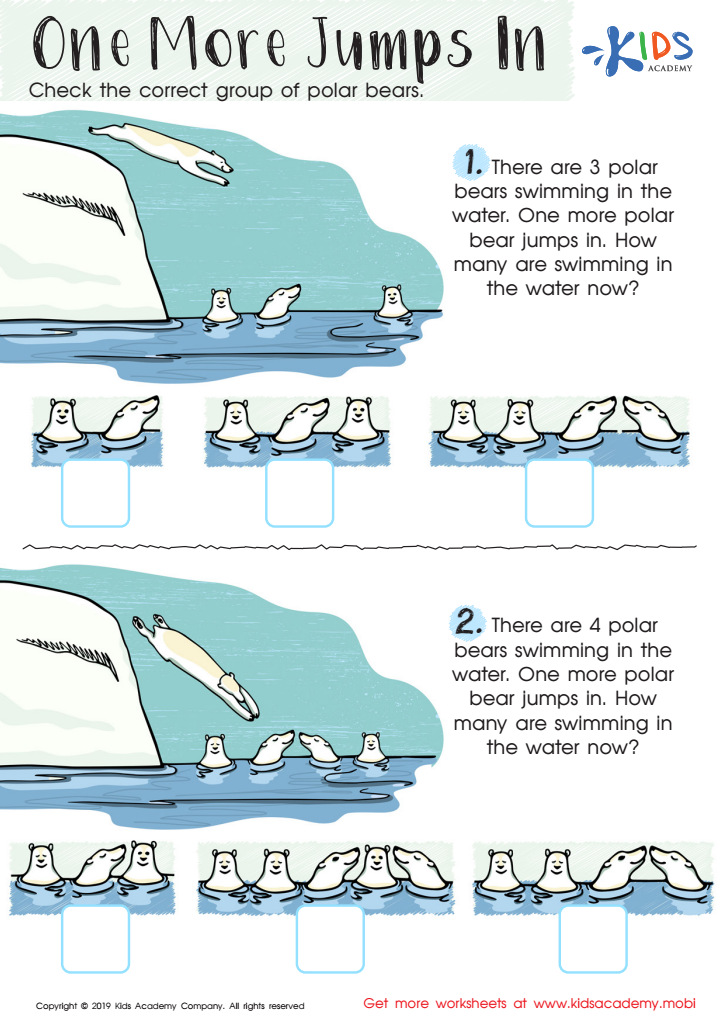
One More Jumps In Worksheet
Polar bears live in the Arctic which is always cold and snowy. Show your kids pictures of polar bears swimming in the water. Read the text and help them count correctly to answer the questions in the first and second sections.
 Assign to My Students
One More Jumps In Worksheet
Worksheet
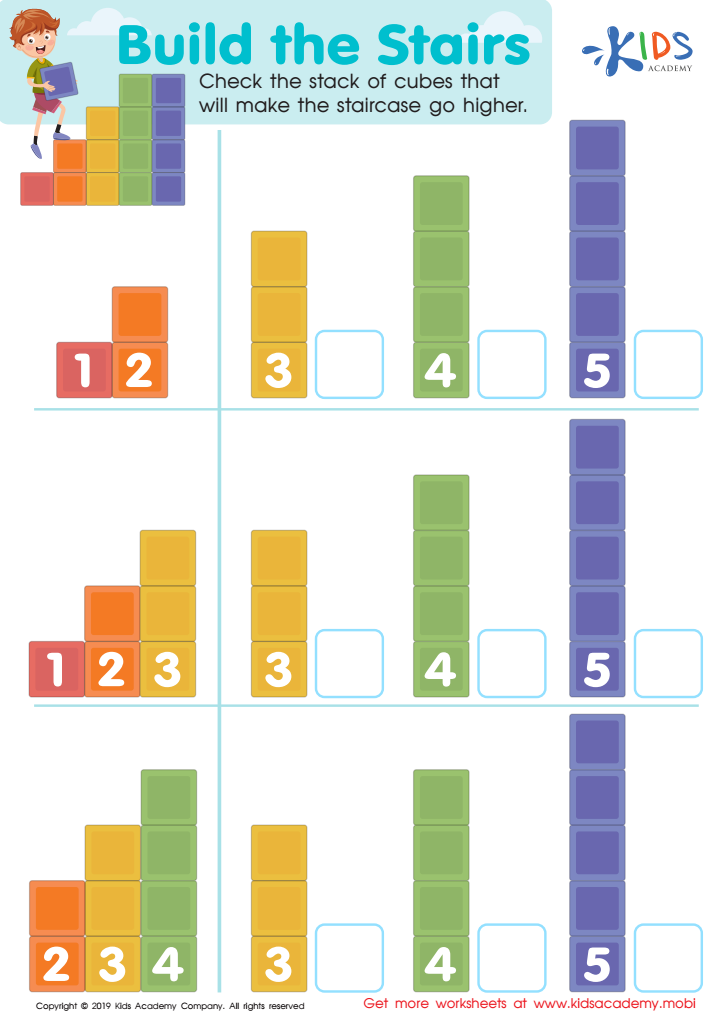
Build the Stairs Worksheet
Does your kid need help counting numbers? Make it fun with a staircase math worksheet! This printable PDF uses stairs to help your preschooler practice counting. Let them build the staircase by picking the next highest number as they go up! It's an interactive way to teach counting and sure to please your little one.
Build the Stairs Worksheet
Worksheet
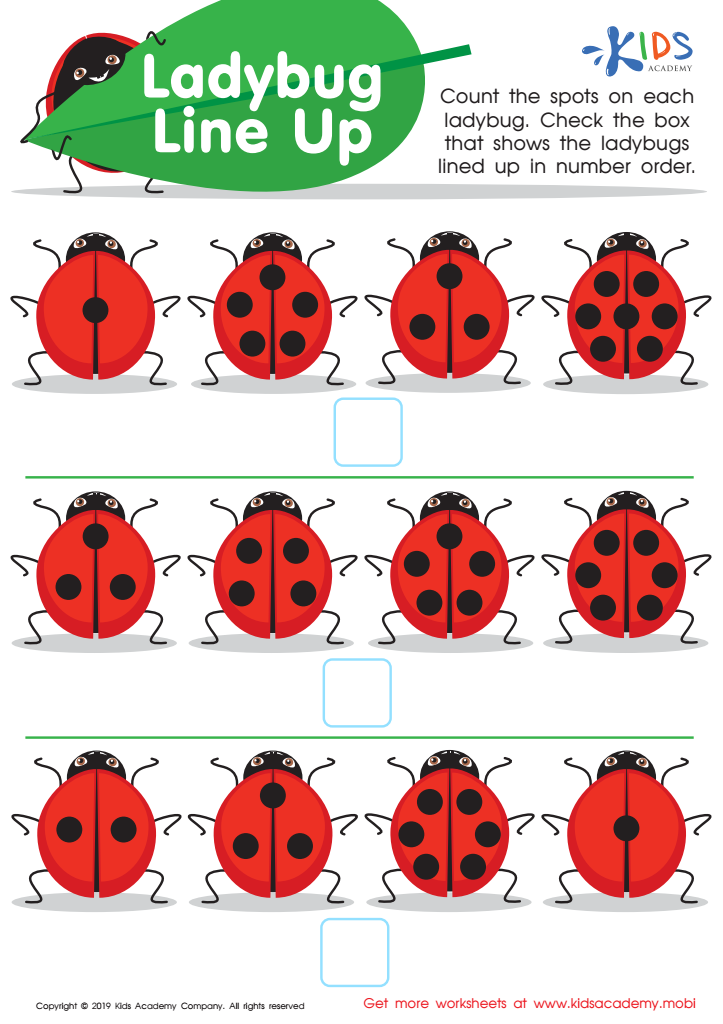
Ladybug Line Up Worksheet
Count the spots on the back of each ladybug in the three groups. Help kids check the box under each group that shows the ladybugs in proper number order. Ladybugs are an adorable insect with unique spots. This worksheet encourages counting and ordering.
Ladybug Line Up Worksheet
Worksheet
Join Kids Academy for Free
Who is primarily going to use this learning content?








Understanding sequencing is essential for children aged 3-9 because it lays the foundation for critical thinking and problem-solving skills. Sequencing involves recognizing the order of events or steps in a process, which is fundamental in various areas of learning. For instance, in reading, students learn to comprehend narratives by identifying the order in which events occur, leading to better understanding and retention of stories.
In math, sequencing helps children grasp concepts like patterns and functions, which are vital for advanced mathematical thinking. Furthermore, sequencing enhances organizational skills, enabling children to plan and execute tasks effectively. This skill is crucial not only in academic settings but also in everyday life, such as following a recipe or completing a chore.
By encouraging sequencing, parents and teachers can help build children’s memory and attention skills, fostering independence and self-regulation. Moreover, integrating sequencing activities in play promotes engagement and enjoyment in learning, creating positive educational experiences.
In conclusion, cultivating sequencing abilities among young children is important for their cognitive, social, and emotional development. Educators and parents should incorporate sequencing concepts across various subjects and activities to support well-rounded growth in their students and children.








